Green Anole
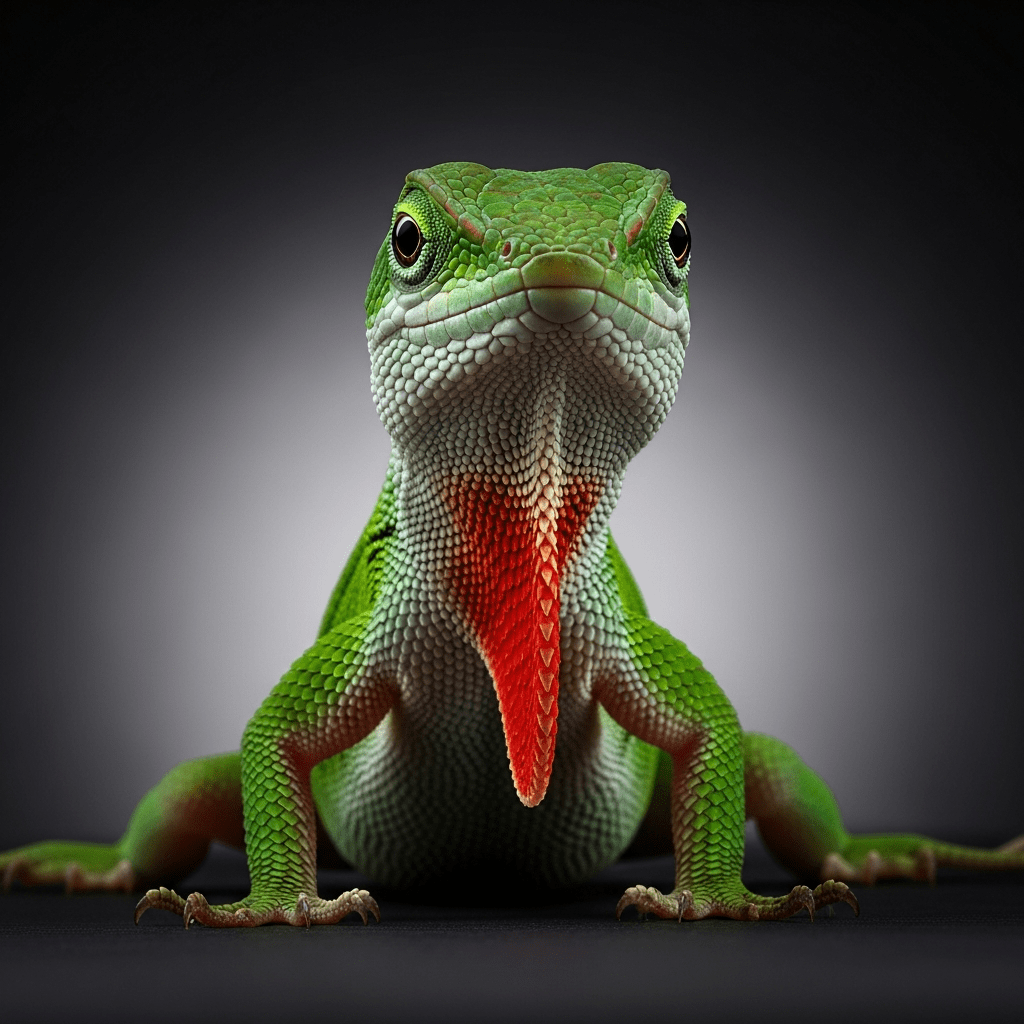
The Green Anole (Anolis carolinensis) is a small, arboreal lizard native to the southeastern United States, known for its vibrant green color and ability to shift to brown, making it a distinctive and adaptable reptile species.
The Green Anole (Anolis carolinensis) is a small, arboreal lizard native to the southeastern United States, known for its vibrant green color and ability to shift to brown, making it a distinctive and adaptable reptile species.
First described in 1832 by Friedrich Siegmund Voigt, the Green Anole originates from the southeastern United States. It thrives in wild arboreal habitats and has been introduced to other regions like Hawaii through human activity, with no known commercial breeding or hybridization lines.
The Green Anole belongs to the class Reptilia and order Squamata, within the family Dactyloidae. Its genus is Anolis and species carolinensis, placing it among the diverse group of lizards known for their climbing abilities and territorial displays.
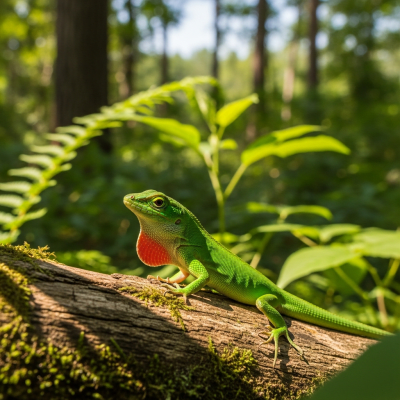
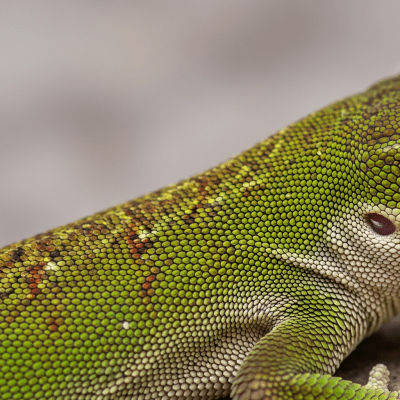
The Green Anole is a slender lizard typically measuring up to 20 cm in length, including its tail. Its most striking feature is its bright green coloration, which can change to brown depending on temperature, stress, or environment. Males are larger than females and display a prominent pinkish-red dewlap used in mating and territorial signaling. Equipped with adhesive toe pads, it is well adapted for climbing in arboreal settings.
Active during the day, the Green Anole is primarily insectivorous, feeding on small arthropods. It is arboreal, often found navigating trees and shrubs. Hatchlings grow rapidly, reaching maturity within a year. This species is resilient to moderate habitat disturbances but vulnerable to extreme cold and habitat loss.
Bring this kind into your world illustrated posters, mugs, and shirts.

Archival print, museum-grade paper
Buy Poster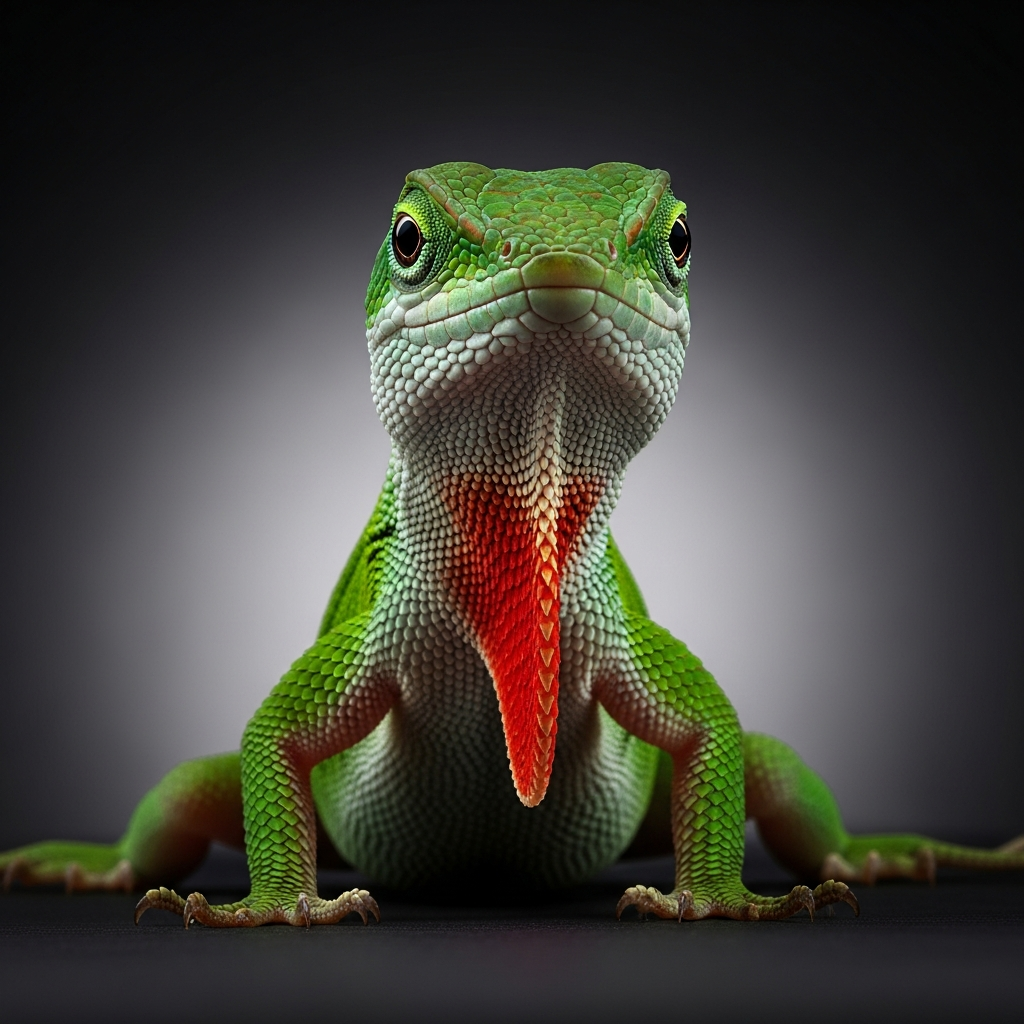
Stoneware mug, dishwasher safe
Buy Mug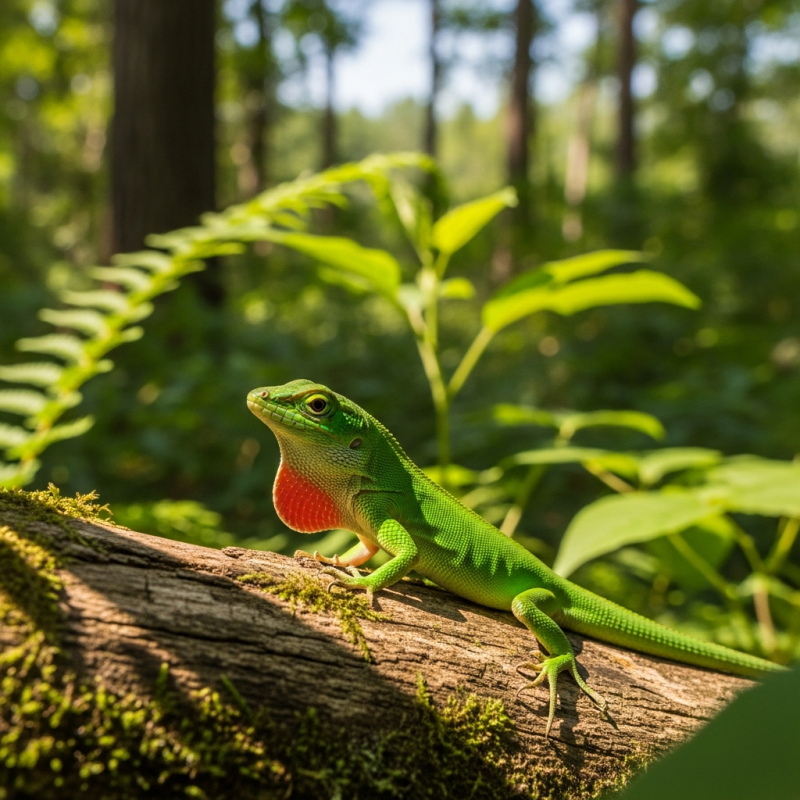
Soft cotton tee, unisex sizes
Buy ShirtWhile not widely prominent in folklore or art, the Green Anole is sometimes mistakenly called the "American Chameleon" due to its color-changing ability, though it is not a true chameleon. It serves as an important biological indicator of environmental health and is valued in scientific research and education.
The Green Anole inhabits arboreal environments across the southeastern United States, including urban and suburban areas where it adapts well to human presence. It has also established populations outside its native range, notably in Hawaii, where it is considered invasive.
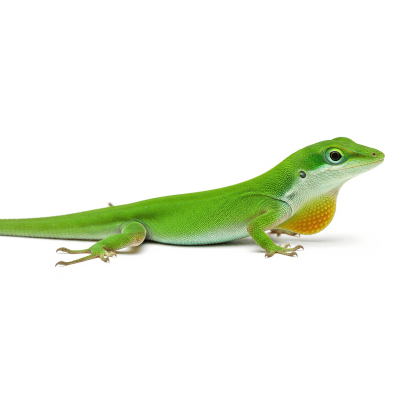

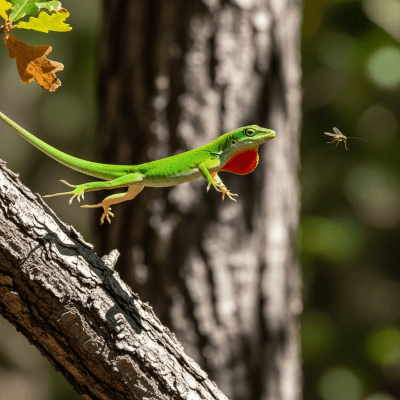
Green Anoles grow rapidly, with hatchlings typically reaching sexual maturity within one year. While detailed breeding behaviors are less documented here, males use their dewlap prominently during mating displays. The species lays eggs, consistent with reptilian reproduction, though clutch size and lifespan specifics are not extensively detailed.
Currently, the Green Anole is not listed with a specific IUCN conservation status. It faces threats primarily from habitat loss and extreme cold temperatures. Its adaptability to moderate habitat disturbance helps maintain stable populations, but introduced populations may impact local ecosystems.
The Green Anole interacts with humans mainly through its presence in urban areas and occasional pet trade. It contributes to natural pest control by feeding on insects and serves as a valuable subject in ecological and behavioral research. No culinary or commercial breeding uses are documented.