
Corn Snake
The corn snake (Pantherophis guttatus) is a non-venomous, medium-sized snake native to the southeastern and central United States, celebrated for its striking coloration and gentle temperament.
The corn snake (Pantherophis guttatus) is a non-venomous, medium-sized snake native to the southeastern and central United States, celebrated for its striking coloration and gentle temperament.
First described by Johann David Schlegel in 1837, the corn snake originates from wild populations across the southeastern and central United States. While numerous captive-bred color morphs have been developed worldwide since the late 20th century, the species' lineage traces directly to these native North American populations.
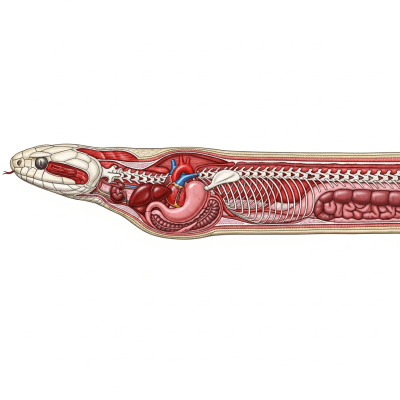
The corn snake belongs to the class Reptilia, order Squamata, and family Colubridae. Its scientific name is Pantherophis guttatus, placing it among the colubrid snakes known for their diversity and non-venomous nature.
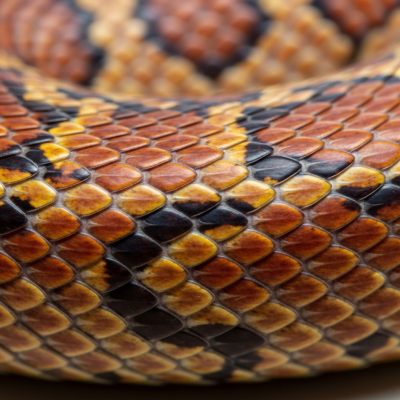
This slender, muscular snake typically grows up to 1.8 meters (6 feet) in length. It features an orange or brownish-yellow background adorned with large, black-bordered red blotches along its back, complemented by a distinctive black-and-white checkerboard pattern on its belly. Captive breeding has produced a variety of color morphs, including albino, snow, anerythristic, and motley, enhancing its visual diversity.
Corn snakes are known for their moderate growth rate, reaching sexual maturity between 18 and 36 months. They are resistant to many common reptile diseases but can be vulnerable to respiratory infections and mites when kept in captivity. Their calm disposition and manageable size make them popular in education, biological research, and as display animals in zoos and nature centers.
Bring this kind into your world illustrated posters, mugs, and shirts.

Archival print, museum-grade paper
Buy Poster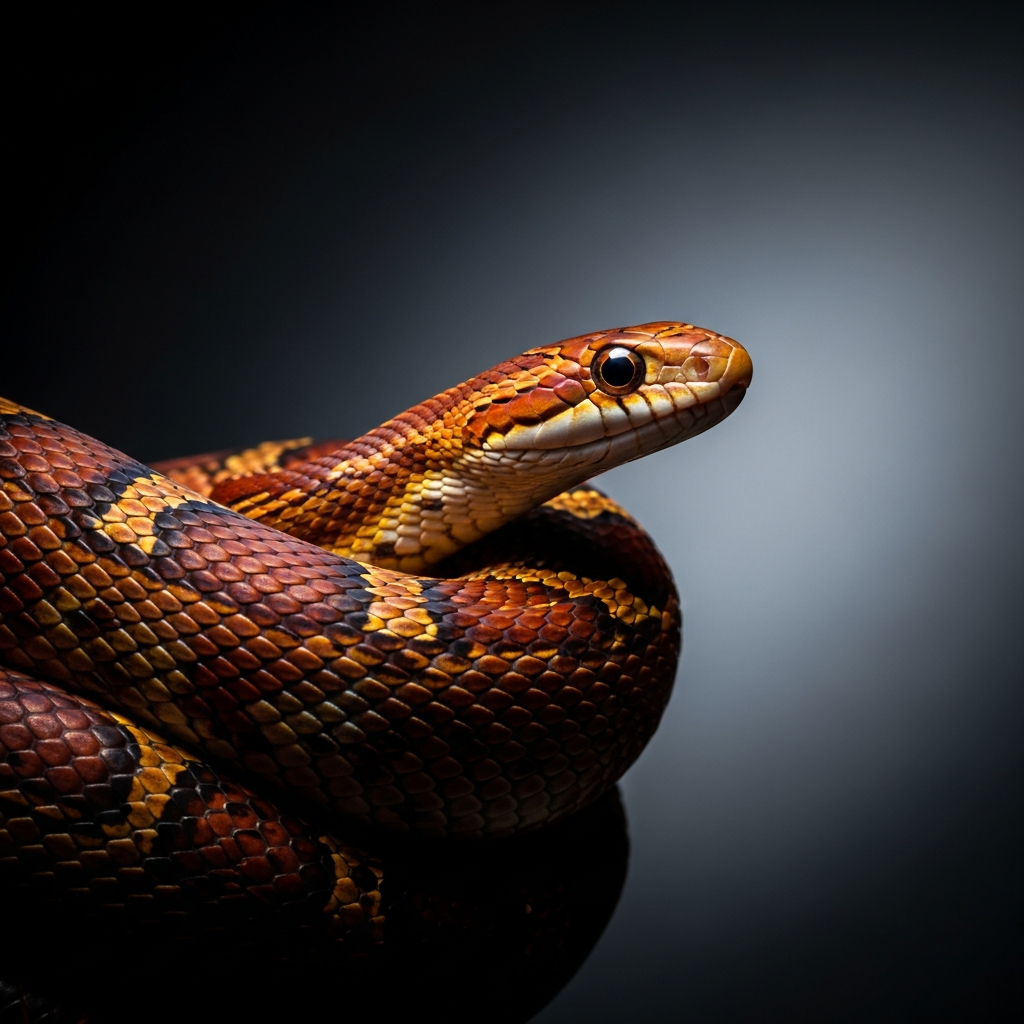
Stoneware mug, dishwasher safe
Buy Mug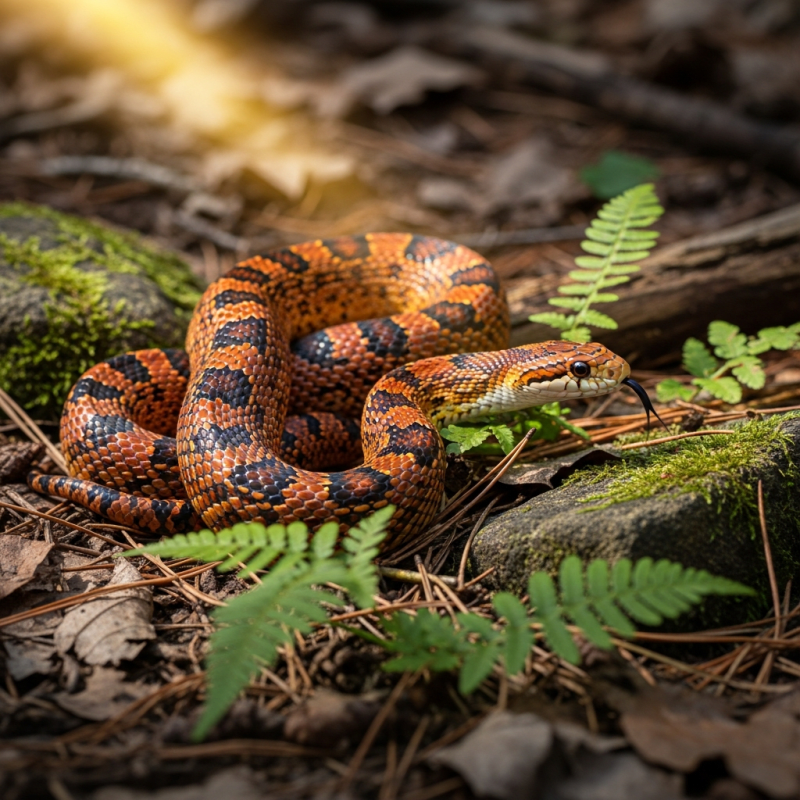
Soft cotton tee, unisex sizes
Buy ShirtWhile the corn snake does not feature prominently in traditional myth or art, it holds a significant place in modern herpetoculture and education. Its approachable nature and vivid patterns have made it a favorite among reptile enthusiasts and educators, symbolizing the accessibility and beauty of native North American wildlife.
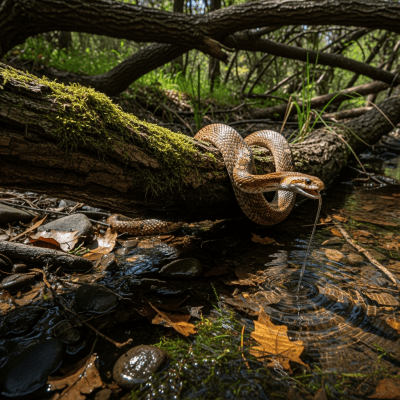
The corn snake is native to the southeastern and central United States, inhabiting a variety of environments including forests, grasslands, and agricultural areas. Its adaptability allows it to thrive in both wild and suburban settings across this broad geographic range.
Corn snakes reproduce by laying clutches of 10 to 30 eggs during the breeding season. Juveniles grow at a moderate pace, reaching sexual maturity within 18 to 36 months. In the wild, their lifespan averages 6 to 8 years, while captive individuals can live up to 20 years under optimal care.
Currently, the corn snake is not listed as threatened or endangered. It faces few significant conservation concerns due to its wide distribution and adaptability. However, habitat loss and misidentification sometimes lead to unnecessary killing. Conservation efforts focus on habitat preservation and public education to reduce human-wildlife conflicts.
Corn snakes have a long-standing relationship with humans primarily through the pet trade, where their docile nature and vibrant appearance make them highly sought after. They are also valuable in educational settings and biological research. While not used for food, their presence in captivity supports conservation awareness and appreciation for native reptiles.