
Common Snapping Turtle
The Common Snapping Turtle (Chelydra serpentina) is a large, aggressive freshwater turtle native to North America, known for its powerful jaws and rugged, distinctive appearance.
The Common Snapping Turtle (Chelydra serpentina) is a large, aggressive freshwater turtle native to North America, known for its powerful jaws and rugged, distinctive appearance.
First described by Carl Linnaeus in 1758, the Common Snapping Turtle is a wild species with a broad natural distribution across North America. It is not a product of captive breeding, though individuals are occasionally bred in captivity for conservation or commercial purposes.
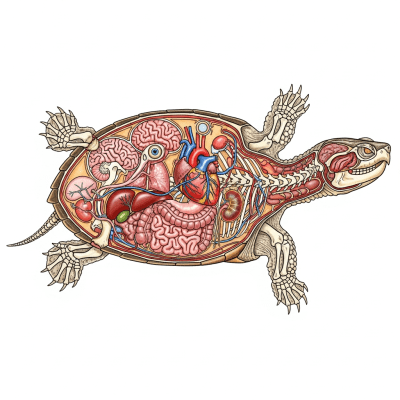
The Common Snapping Turtle belongs to the class Reptilia, order Testudines, and family Chelydridae. Its scientific name is Chelydra serpentina, placing it among the large freshwater turtles known for their distinctive morphology and behavior.
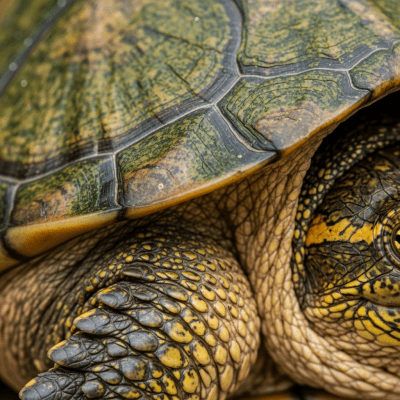
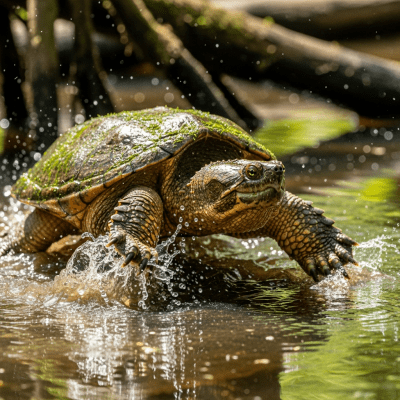
This turtle features a rough, dark brown to olive carapace often covered in algae, a relatively small plastron exposing much of its limbs, and gray to brown skin marked with tubercles on the neck and legs. It has a large head with strong hooked jaws and a long, muscular tail, giving it a rugged and formidable appearance.
The Common Snapping Turtle is primarily aquatic and functions as both a predator and scavenger within its freshwater habitats. It exhibits aggressive defensive behavior when on land and is highly adaptable, tolerating a range of aquatic environments including polluted waters. Its diet is carnivorous, feeding on various aquatic animals and carrion.
Bring this kind into your world illustrated posters, mugs, and shirts.

Archival print, museum-grade paper
Buy Poster
Stoneware mug, dishwasher safe
Buy Mug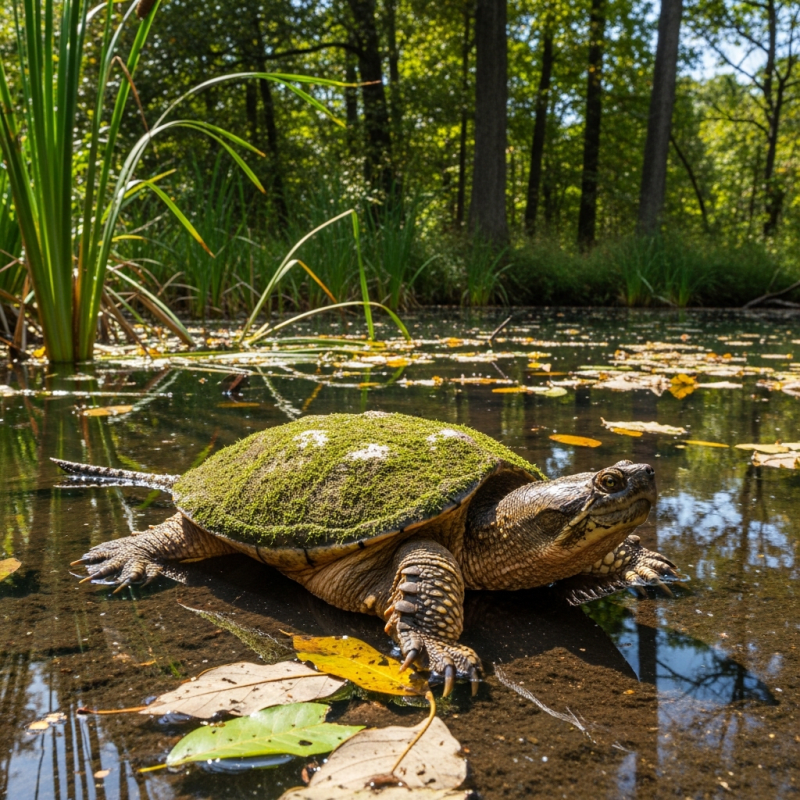
Soft cotton tee, unisex sizes
Buy ShirtHistorically, the Common Snapping Turtle has been valued for its meat, especially in traditional turtle soup recipes in the southern United States. Its shells have also been used decoratively or culturally in some regions. Though less common today due to conservation efforts, it remains a recognizable figure in local folklore and culinary traditions.
The Common Snapping Turtle inhabits freshwater ecosystems across North America, including ponds, lakes, rivers, and marshes. It thrives in diverse aquatic environments, often favoring slow-moving or still waters with abundant vegetation.

While specific reproductive details vary, Common Snapping Turtles reach sexual maturity after several years and lay clutches of eggs in sandy or soft soil near water. Hatchlings emerge after incubation and begin an aquatic life, growing slowly over decades. Lifespan typically reaches 30 to 40 years in the wild.
Though not currently listed with a specific IUCN status, the Common Snapping Turtle faces threats from habitat loss, water pollution, and historical overharvesting for food. Conservation efforts focus on habitat protection and regulated harvesting to maintain stable populations.
Humans have historically harvested snapping turtles for their meat and shells, and the species remains part of the pet trade and educational exhibits. Its aggressive behavior and large size require careful handling. Habitat alteration and pollution from human activity continue to impact wild populations.