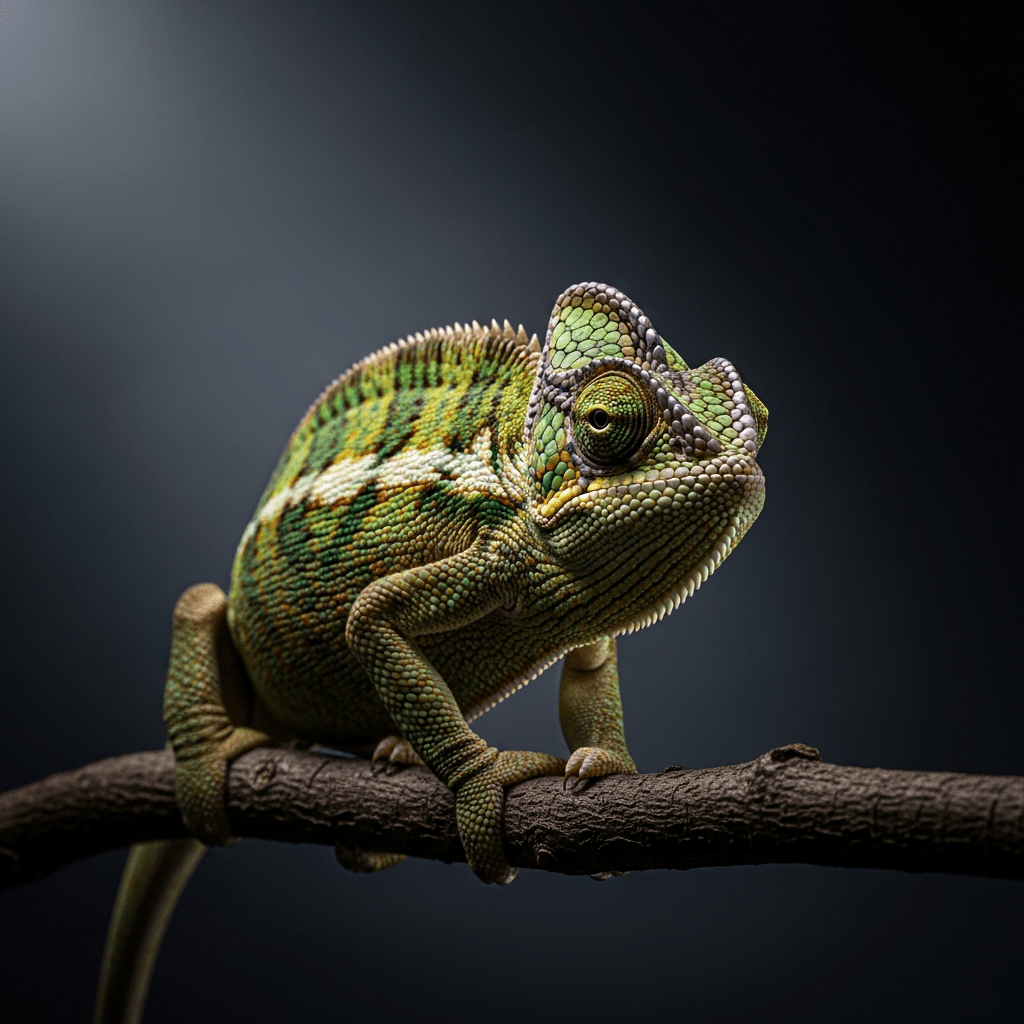
Common Chameleon
The Common Chameleon (Chamaeleo chamaeleon) is a medium-sized, arboreal lizard famed for its remarkable ability to change skin color and its independently mobile turret-like eyes.
The Common Chameleon (Chamaeleo chamaeleon) is a medium-sized, arboreal lizard famed for its remarkable ability to change skin color and its independently mobile turret-like eyes.
First described by Carl Linnaeus in 1758, the Common Chameleon has a long-established presence across the Mediterranean basin, including southern Europe, North Africa, and parts of the Middle East. Wild populations have thrived in these temperate regions since antiquity, with captive breeding being rare and most captive individuals originating from wild-caught stock.
The Common Chameleon belongs to the family Chamaeleonidae within the order Squamata, class Reptilia. Its scientific name is Chamaeleo chamaeleon, and it is the only chameleon species native to Europe, representing the Old World chameleons in temperate habitats.
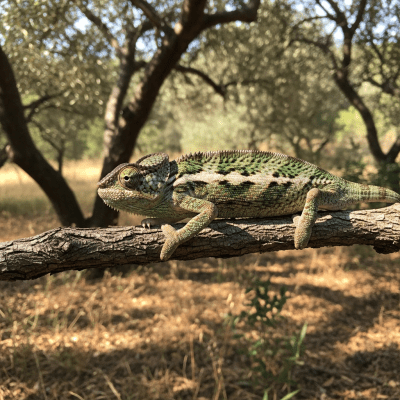
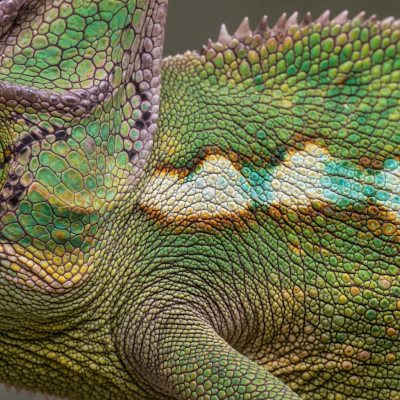
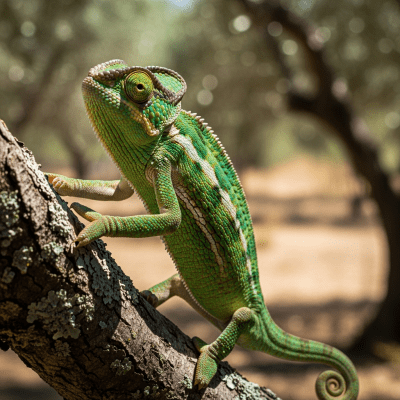
This species typically measures 20 to 40 centimeters in length, with males generally larger than females. Its body is laterally compressed, equipped with a prehensile tail and zygodactylous feet that expertly grasp branches. The skin is covered in granular scales and can shift colors from green to brown, yellow, or grey, primarily for camouflage and social signaling rather than temperature control. Its most distinctive feature is its turret-like eyes that move independently, granting a wide field of vision.
The Common Chameleon is diurnal and arboreal, feeding mainly on insects. It exhibits moderate growth, reaching sexual maturity between one and two years. Its color-changing ability aids in blending with its environment and communicating with other chameleons. While tolerant of arid conditions and moderate temperature changes, it is vulnerable to habitat disturbances and pesticide exposure.
Bring this kind into your world illustrated posters, mugs, and shirts.

Archival print, museum-grade paper
Buy Poster
Stoneware mug, dishwasher safe
Buy Mug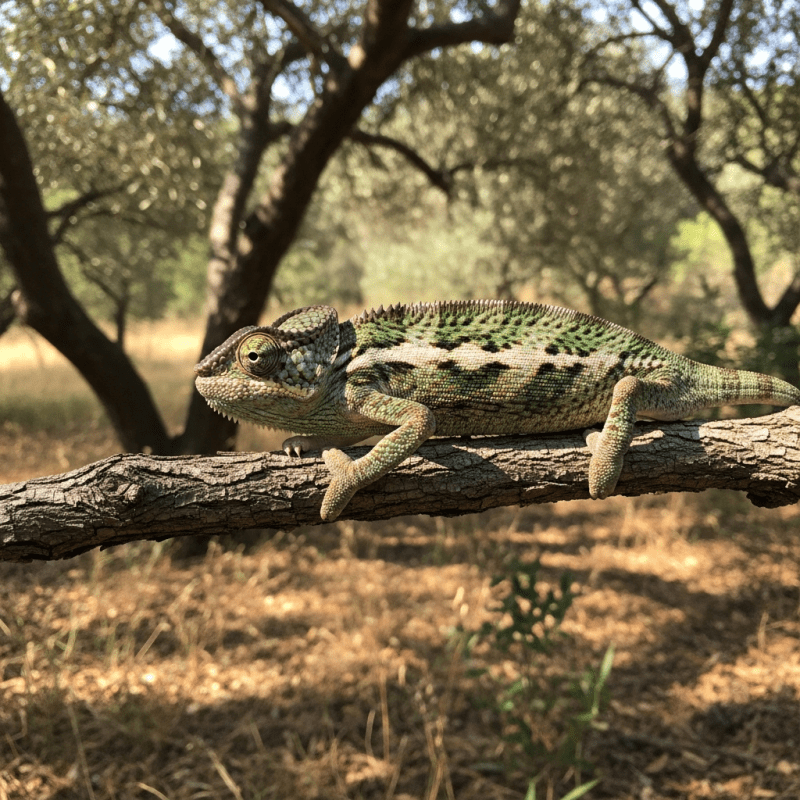
Soft cotton tee, unisex sizes
Buy ShirtIn Mediterranean folklore, the Common Chameleon is often seen as a symbol of patience and adaptability. It appears in various regional myths and is occasionally used in North African folk medicine, though such uses are rare and lack scientific validation. Its unique appearance and behaviors have also inspired artistic representations across cultures within its native range.
The Common Chameleon inhabits arboreal environments within temperate Mediterranean ecosystems. Its native range spans the Mediterranean basin, covering southern Europe, North Africa, and parts of the Middle East. It thrives in shrublands, woodlands, and areas with abundant vegetation suitable for climbing and hunting insects.
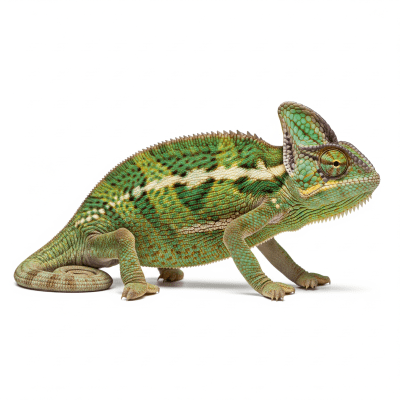

The species reaches sexual maturity around 1.5 years of age. Females lay clutches of 20 to 40 eggs in sandy soil, where the eggs incubate until hatching. Growth is moderate, and individuals typically live between 3 and 5 years in the wild, with some living longer under captive care.
Classified as Least Concern by the IUCN, the Common Chameleon faces no immediate threat of extinction. However, habitat disturbance and pesticide exposure pose risks to local populations. It is not listed under any CITES appendix and is not considered invasive outside its native range. Conservation efforts focus on habitat preservation and monitoring population health.
Humans impact the Common Chameleon primarily through habitat alteration and collection for the pet trade. While it holds cultural significance in Mediterranean folklore and rare medicinal uses in North Africa, there is no widespread commercial breeding. International trade is regulated to prevent overexploitation, and the species benefits from protected natural habitats within its range.