Common Basilisk
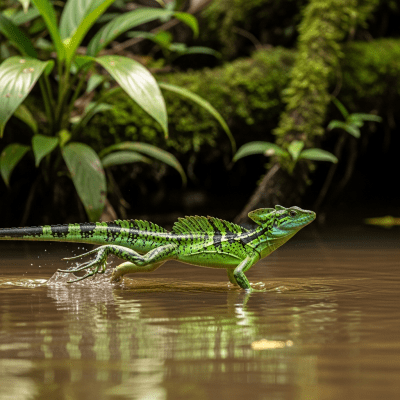
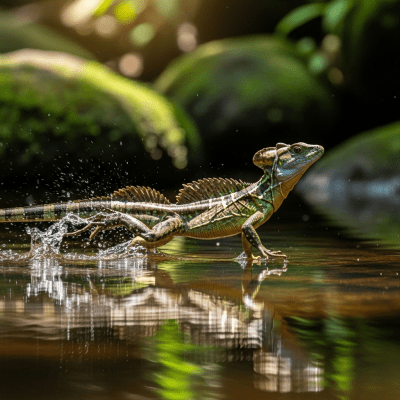
The Common Basilisk (Basiliscus basiliscus) is a distinctive Central and South American lizard famed for its remarkable ability to run across water surfaces, earning it the nickname "Jesus lizard."
The Common Basilisk (Basiliscus basiliscus) is a distinctive Central and South American lizard famed for its remarkable ability to run across water surfaces, earning it the nickname "Jesus lizard."
First described by Carl Linnaeus in 1758, the Common Basilisk is a wild species native to the tropical regions of Central and South America. Its lineage is natural and not the product of captive breeding or hybridization.
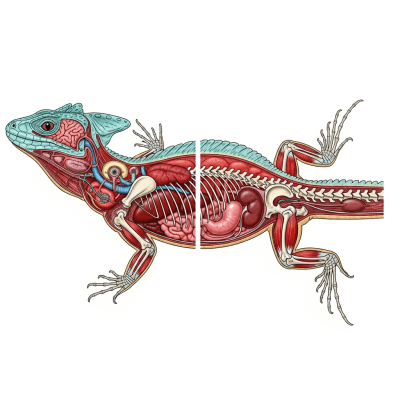
Belonging to the family Corytophanidae within the order Squamata, the Common Basilisk is classified under the genus Basiliscus. It is part of the class Reptilia, encompassing cold-blooded, scaly vertebrates.
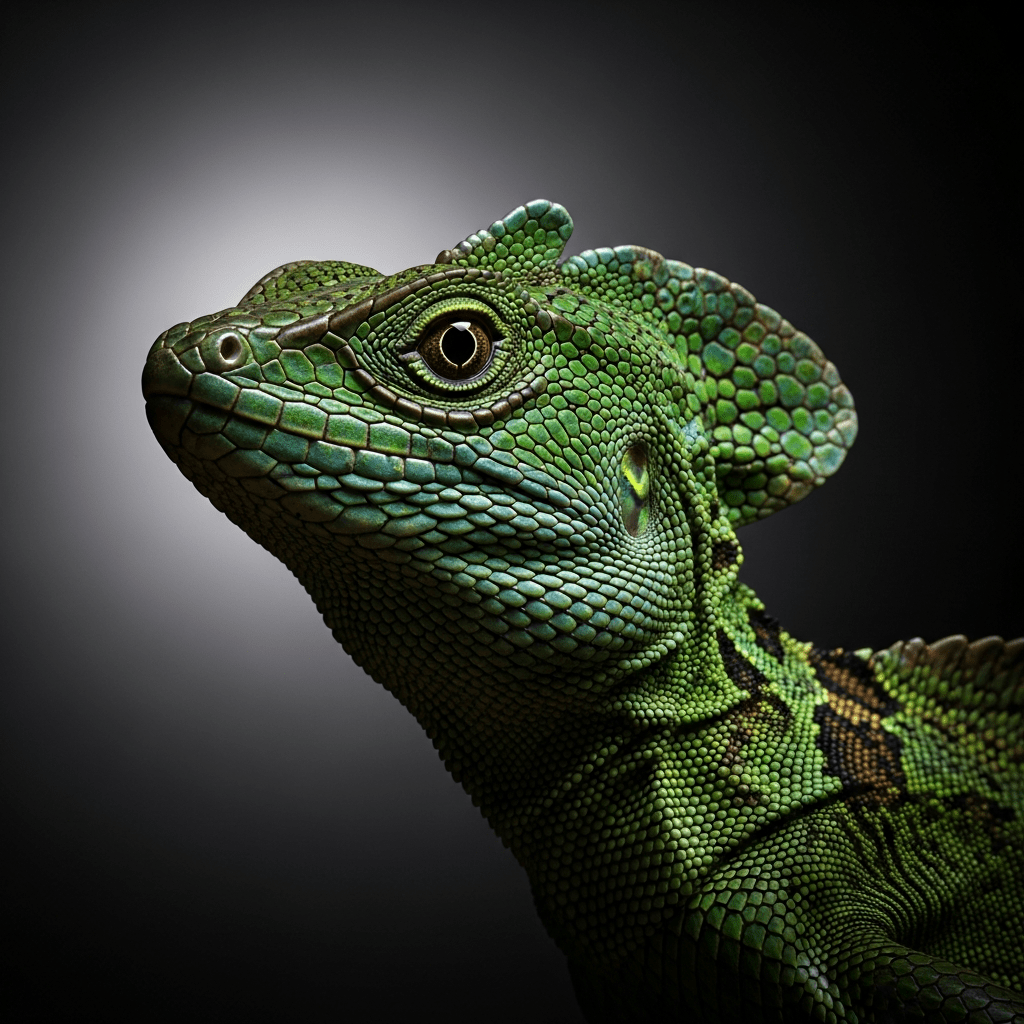
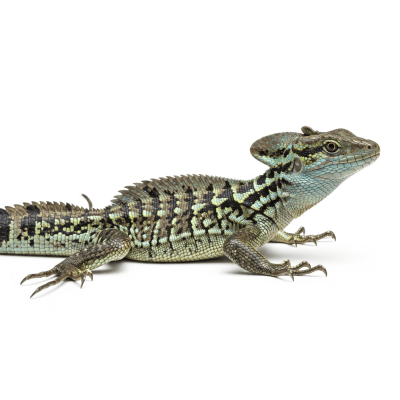
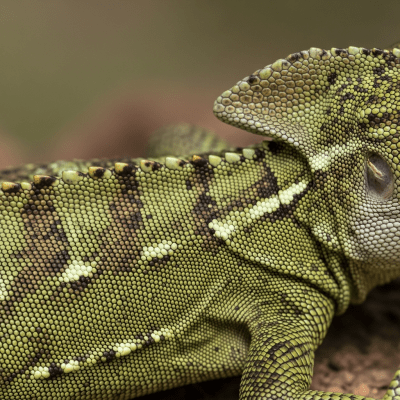
The Common Basilisk features a slender, elongated body typically measuring around 70 cm in length. Its coloration ranges from olive-green to brown, often accented with lighter stripes or spots. Males are notable for their larger, more pronounced dorsal crests that extend from head to tail, a key identifying trait. Specialized fringes on their hind toes enable their extraordinary water-running ability.
This lizard is primarily insectivorous but also feeds on small vertebrates, fruits, and flowers. Its most remarkable behavior is its capacity to sprint bipedally across water for short distances, a unique adaptation that aids in escaping predators. Lifespan in the wild averages around seven years.
Bring this kind into your world illustrated posters, mugs, and shirts.
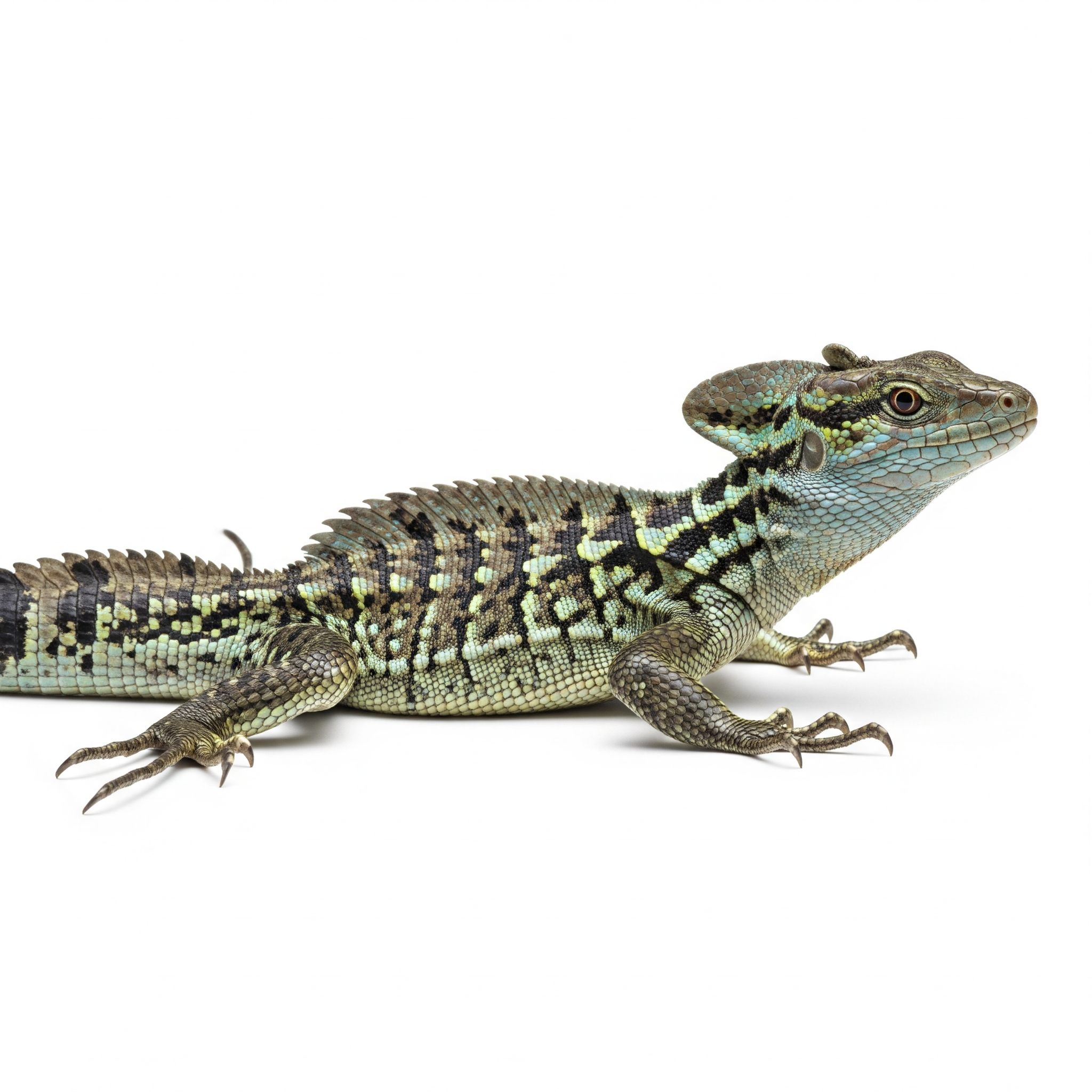
Archival print, museum-grade paper
Buy Poster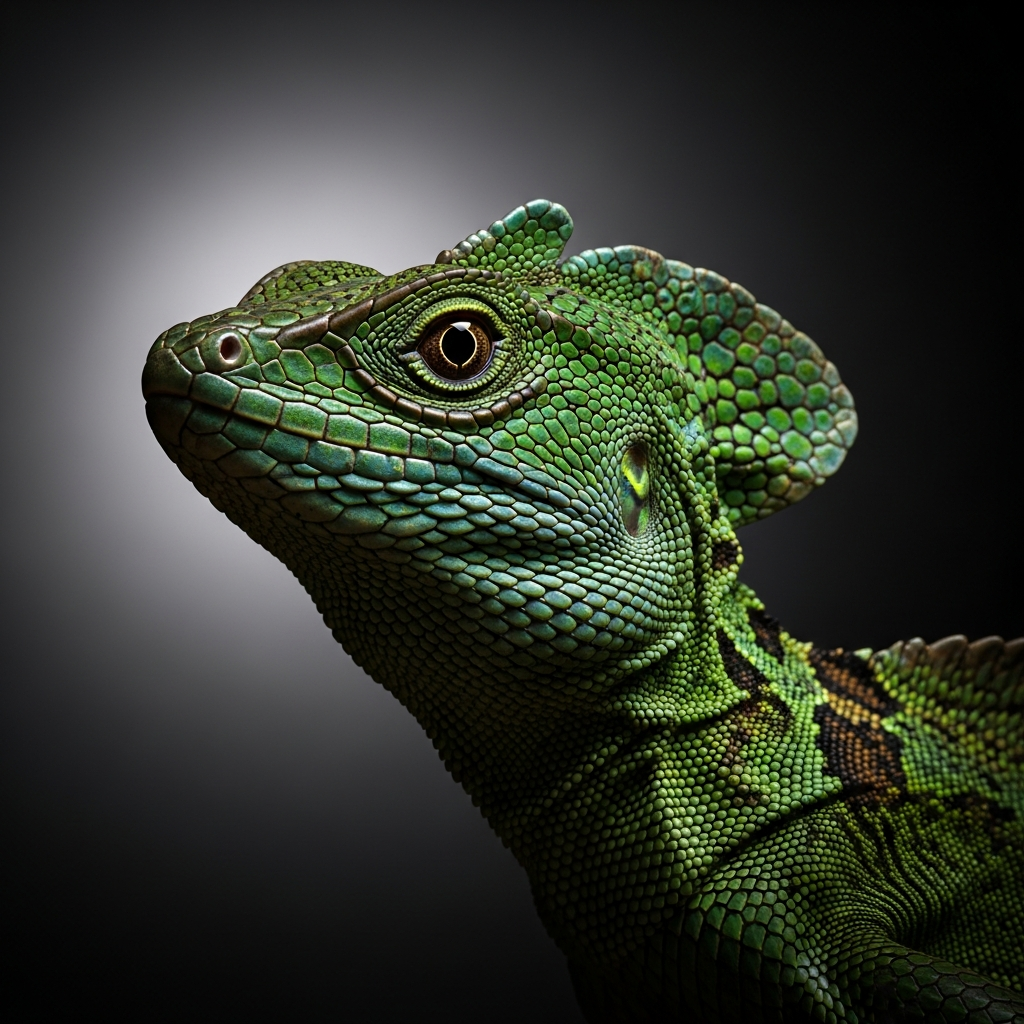
Stoneware mug, dishwasher safe
Buy Mug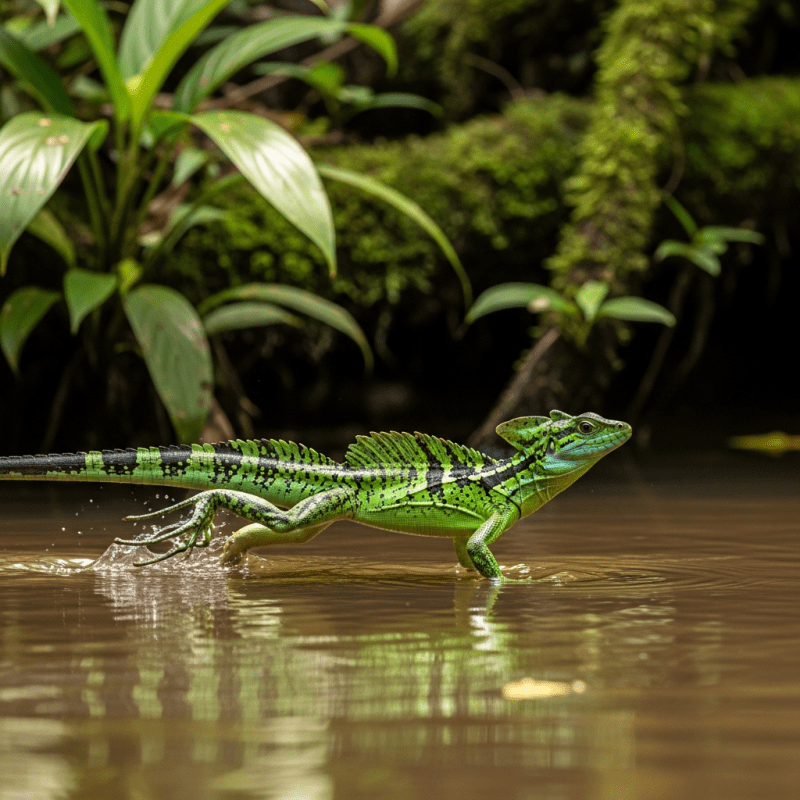
Soft cotton tee, unisex sizes
Buy ShirtThe Common Basilisk holds a special place in local folklore and ecotourism due to its striking appearance and water-running skill. Known regionally as "Lagarto de Jesus Cristo," it symbolizes agility and escape, inspiring awe and curiosity among locals and visitors alike.
The Common Basilisk inhabits tropical forests across Central and South America. It thrives near rivers, streams, and other bodies of water where its water-running ability provides an advantage for escaping predators and navigating its environment.
Details on the Common Basilisk’s reproductive habits are limited, but like many reptiles, it lays eggs. Individuals reach sexual maturity within a few years and can live up to seven or eight years in the wild, undergoing typical growth stages from hatchling to adult.
While the Common Basilisk is not currently listed as threatened, it faces pressures from habitat loss and predation. Conservation efforts focus on preserving its natural tropical forest habitats to ensure population stability.
The Common Basilisk occasionally appears in the exotic pet trade due to its striking appearance and unique locomotion. It also plays a role in ecotourism and local folklore. However, it is not widely exploited commercially and generally coexists with human activity in its native range.