
Burmese Python
The Burmese Python (Python bivittatus) is one of the largest snake species globally, known for its impressive size, muscular build, and distinctive patterned skin.
The Burmese Python (Python bivittatus) is one of the largest snake species globally, known for its impressive size, muscular build, and distinctive patterned skin.
First described by François Marie Daudin in 1803, the Burmese Python originates from Southeast Asia, with native populations spanning Myanmar, Thailand, Vietnam, Laos, Cambodia, parts of Indonesia, and southern China. While wild populations thrive in these regions, captive-bred individuals are now widespread worldwide, maintained by zoos, private breeders, and research facilities.
The Burmese Python belongs to the kingdom Animalia, phylum Chordata, and class Reptilia. It is classified within the order Squamata, family Pythonidae, genus Python, and species bivittatus. It was formerly considered a subspecies of the Indian Python (Python molurus), reflected in its synonym Python molurus bivittatus.
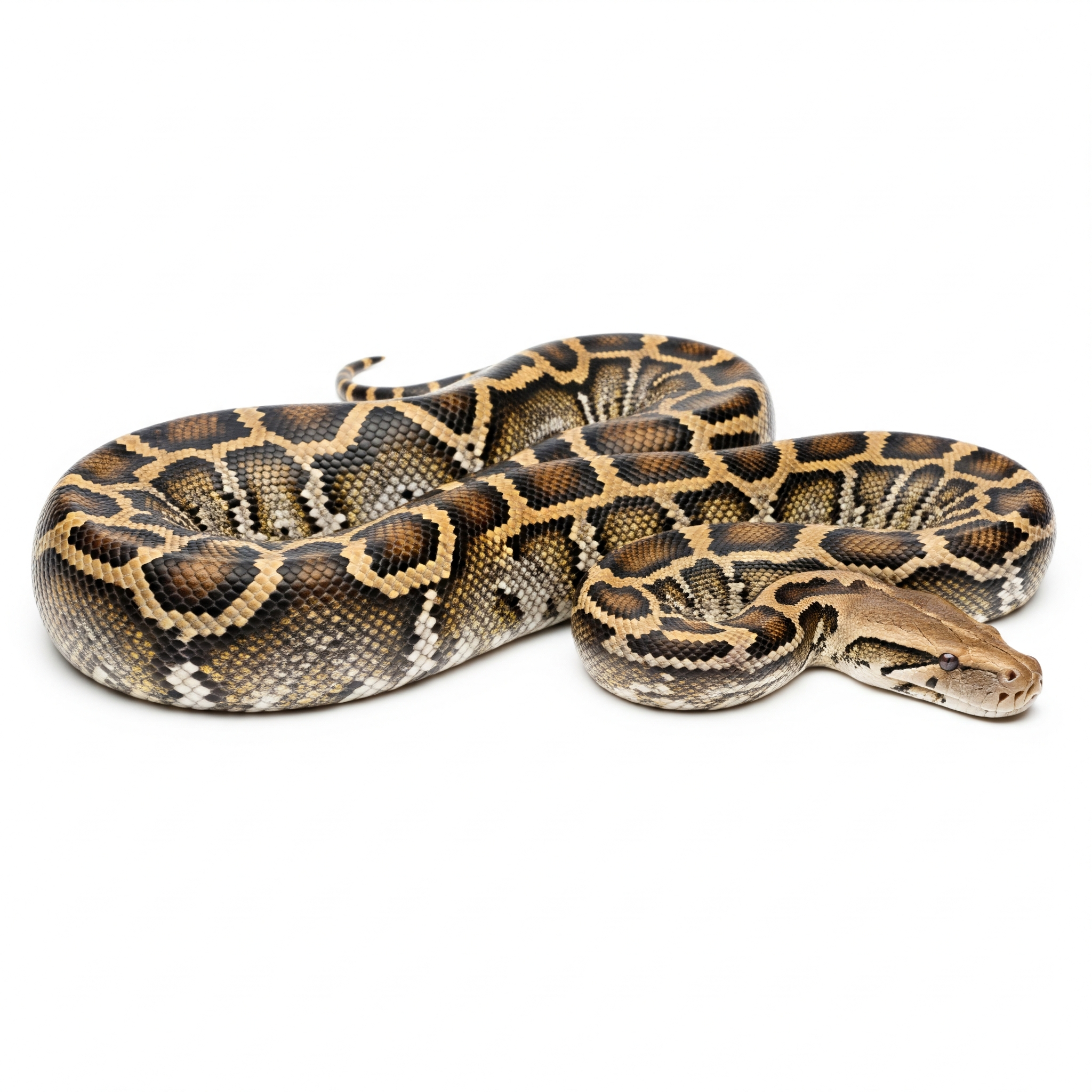
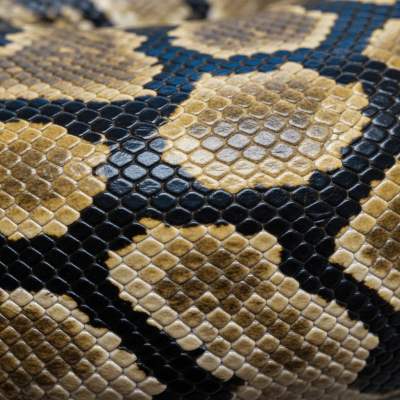
This snake features a robust, muscular body and a triangular head. Its skin displays a striking pattern of dark brown blotches outlined in black against a tan or cream background, while the ventral surface is pale yellowish. Juveniles resemble adults in pattern but are more slender. Its distinctive markings and size make it easily recognizable among large constrictors.
The Burmese Python is a powerful ambush predator, feeding mainly on mammals and birds. It can subdue large prey such as deer and pigs through constriction. Growth is rapid in early years, slowing as the snake matures. Females lay clutches of 12 to 100 eggs, which they incubate by coiling and generating heat through muscular contractions. The species tolerates a broad range of environmental conditions but is vulnerable to cold temperatures and certain diseases in captivity.
Bring this kind into your world illustrated posters, mugs, and shirts.
Archival print, museum-grade paper
Buy Poster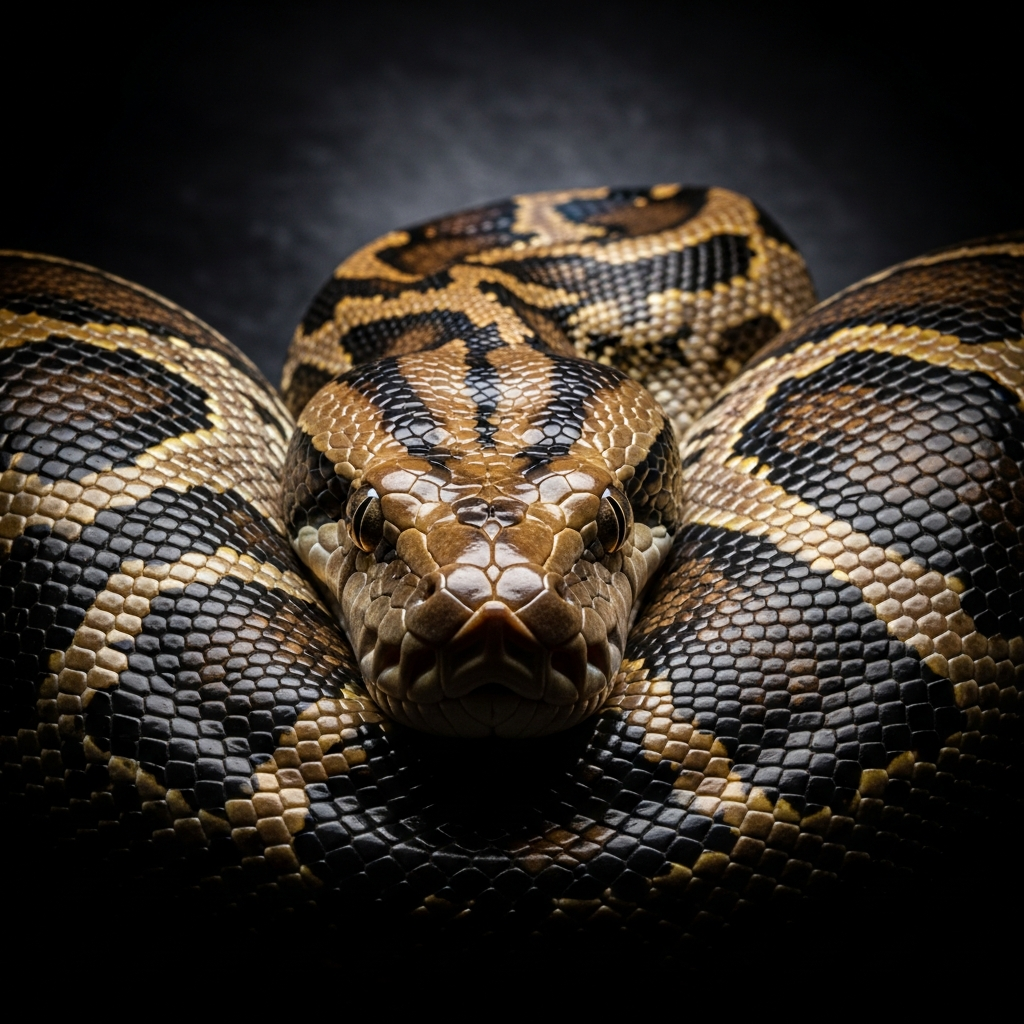
Stoneware mug, dishwasher safe
Buy Mug
Soft cotton tee, unisex sizes
Buy ShirtIn its native range, the Burmese Python holds cultural importance, featuring in traditional medicine and ritual practices in some Southeast Asian communities. Its skin is highly prized in the leather industry for crafting belts, boots, handbags, and other goods. Additionally, it is popular in the exotic pet trade due to its size and generally docile nature when captive-bred, though ownership is often regulated or prohibited because of safety concerns.
Native to a broad region of Southeast Asia, the Burmese Python inhabits Myanmar, Thailand, Vietnam, Laos, Cambodia, parts of Indonesia, and southern China. While specific habitat preferences vary, they typically occupy tropical and subtropical environments. Outside their native range, they have become invasive in southern Florida, where they thrive in wetlands and marshes.


Burmese Pythons reach sexual maturity at varying ages, with females laying large clutches ranging from 12 to 100 eggs. After laying, females incubate their eggs by coiling tightly around them and generating heat through muscular contractions to maintain optimal temperatures. Hatchlings resemble smaller versions of adults and grow rapidly during their first years. In captivity, these snakes can live over 20 years, though wild lifespans tend to be shorter due to environmental pressures.
While the Burmese Python is not currently listed with a specific IUCN status, it faces pressures from habitat loss and hunting in parts of its native range. It is also regulated in trade due to its popularity in the pet industry. Conversely, its invasive populations, especially in Florida, pose significant threats to local ecosystems, prompting active management and control efforts.
Burmese Pythons interact with humans in multiple ways: they are sought after in the exotic pet trade for their size and temperament, though ownership is often restricted. Their skins are valuable in the leather industry, and they hold cultural significance in some Southeast Asian traditions. Invasive populations in the United States have led to ecological concerns, resulting in control programs that include removal and utilization of the snakes for meat and leather products.