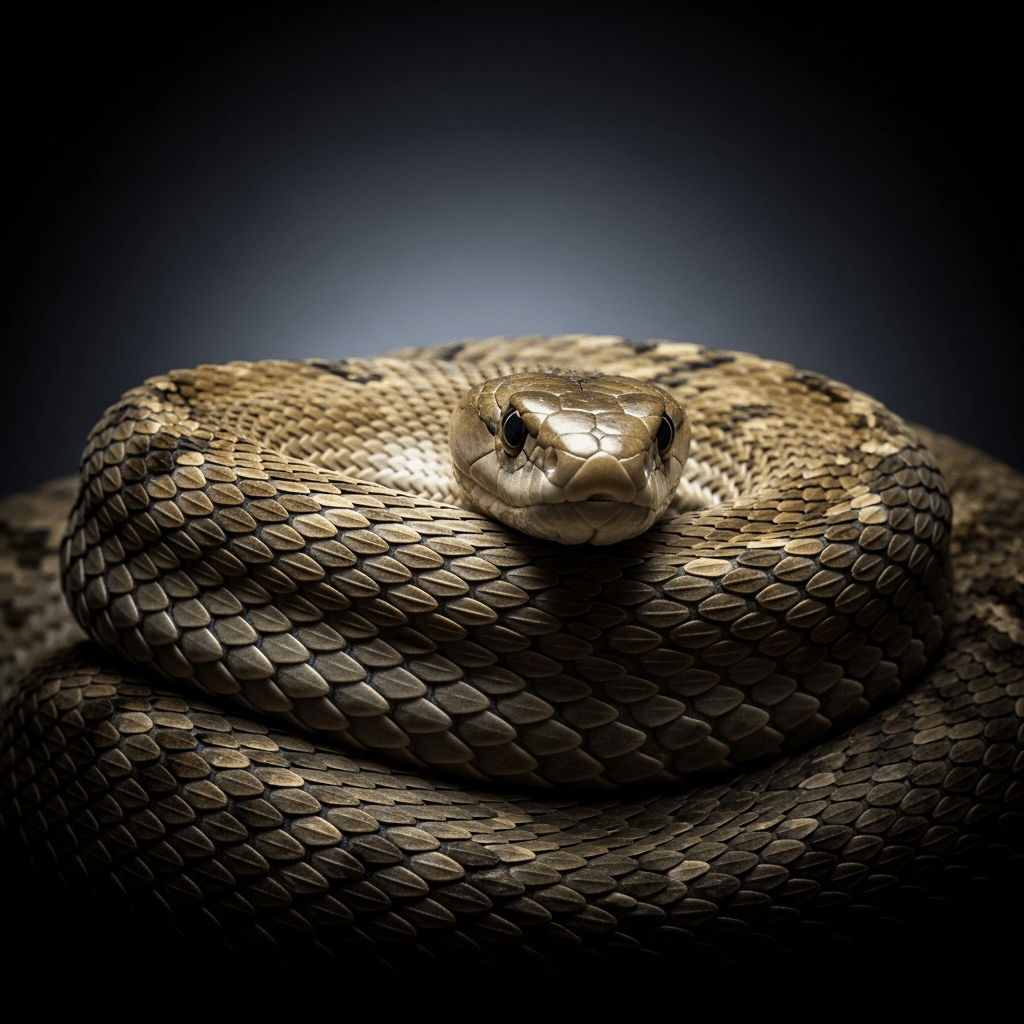
Black Mamba
The Black Mamba (Dendroaspis polylepis) is a large, highly venomous African snake renowned for its speed, potent neurotoxic venom, and distinctive black mouth interior.
The Black Mamba (Dendroaspis polylepis) is a large, highly venomous African snake renowned for its speed, potent neurotoxic venom, and distinctive black mouth interior.
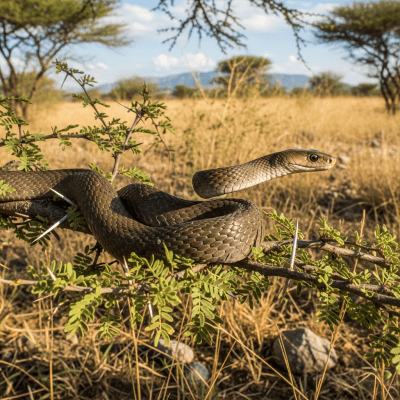
First described scientifically by Albert Günther in 1864, the Black Mamba is native to sub-Saharan Africa. It thrives in savannas, woodlands, and rocky hills, with wild populations dominating its range and no known captive-bred lineages or hybridization events recorded.
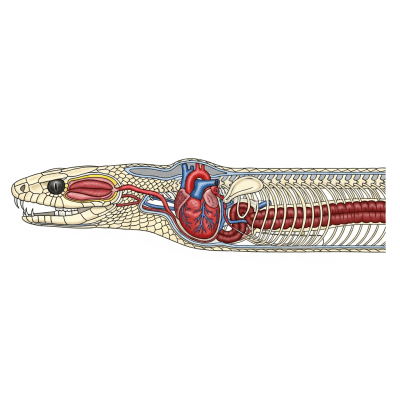
The Black Mamba belongs to the class Reptilia and order Squamata, within the family Elapidae. Its genus is Dendroaspis, and its species name is polylepis. This places it among venomous snakes known for their fixed front fangs and neurotoxic venom.
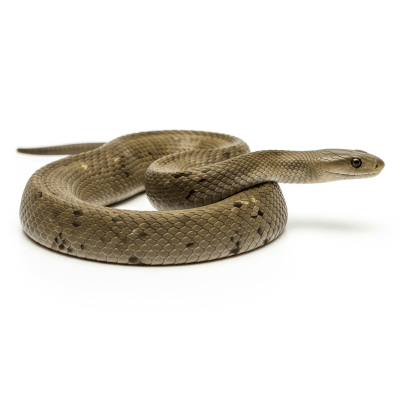
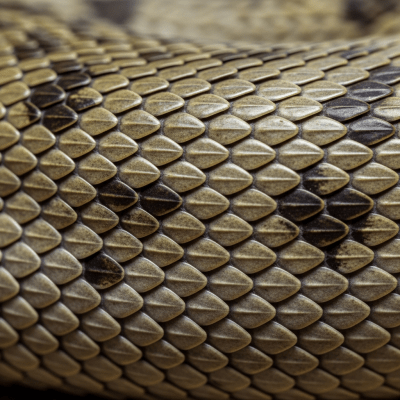
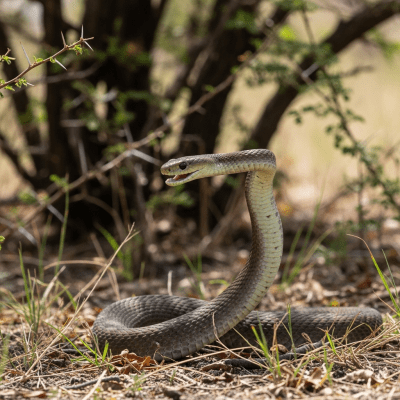
Despite its name, the Black Mamba's dorsal scales range from olive and brownish-grey to dark grey, while its most striking feature is the inky black coloration inside its mouth. It has a slender, agile body that can grow up to 4.5 meters long, making it one of the longest venomous snakes in the world.
Diurnal and terrestrial, the Black Mamba is known for its incredible speed, capable of moving up to 20 km/h. It is a carnivore, relying on its potent neurotoxic venom to subdue prey quickly. When threatened, it exhibits aggressive defensive behavior, making it both feared and respected in its environment.
Bring this kind into your world illustrated posters, mugs, and shirts.
Archival print, museum-grade paper
Buy Poster
Stoneware mug, dishwasher safe
Buy Mug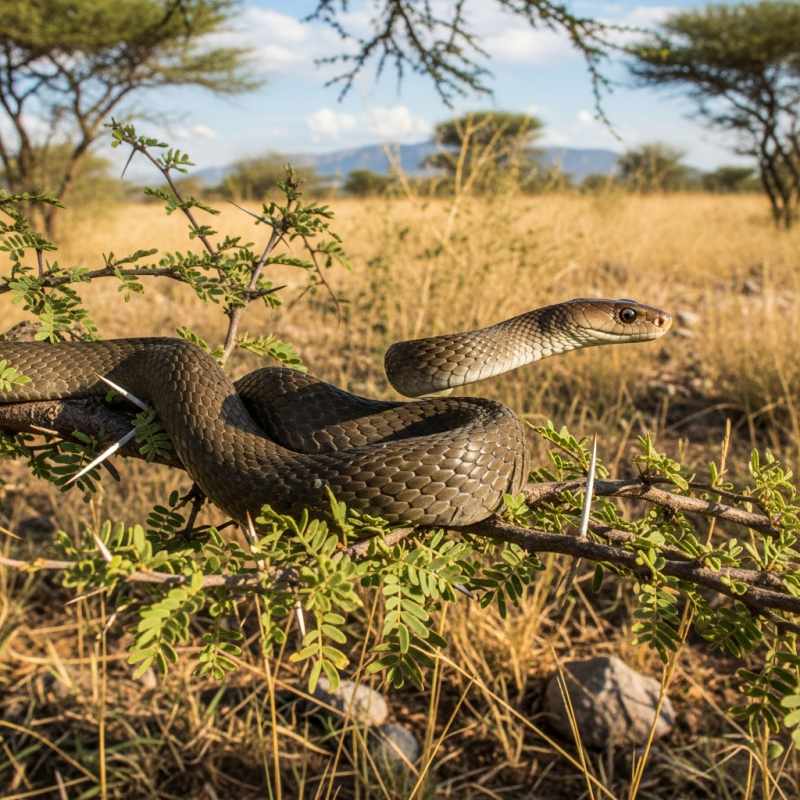
Soft cotton tee, unisex sizes
Buy ShirtThe Black Mamba holds a prominent place in African folklore and popular culture, often symbolizing danger and lethal precision. Its reputation as one of the deadliest snakes has inspired references in literature, film, and even sports, where its name evokes speed and power.
The Black Mamba is native to sub-Saharan Africa, favoring savannas, open woodlands, and rocky hills. It prefers terrestrial habitats where it can hunt and seek shelter in burrows or termite mounds, adapting well to a range of dry environments within its broad geographic range.
The Black Mamba is oviparous, laying clutches of 6 to 20 eggs typically in burrows or termite mounds. Details on sexual maturity age are limited, but the species follows a typical snake lifecycle from egg to hatchling to adult, with no recognized subspecies or captive breeding programs documented.
Classified as Least Concern by the IUCN, the Black Mamba faces threats primarily from habitat destruction and human persecution. While not currently endangered, ongoing habitat loss and fear-driven killings pose risks to local populations, underscoring the need for habitat protection and public education.
The Black Mamba impacts humans mainly through its medically significant venom, which has prompted the development of antivenoms and biomedical research into neurotoxins. Although it is not part of the pet trade or culinary use, its venom and live specimens are occasionally traded under strict regulation for scientific purposes. Human encounters often result in fear-driven killings, highlighting the importance of awareness and conservation efforts.