
Alligator Snapping Turtle
The alligator snapping turtle (Macrochelys temminckii) is North America's largest freshwater turtle, famed for its massive size, powerful jaws, and unique worm-like tongue used to lure prey.
The alligator snapping turtle (Macrochelys temminckii) is North America's largest freshwater turtle, famed for its massive size, powerful jaws, and unique worm-like tongue used to lure prey.
First described by Louis Agassiz in 1857, the alligator snapping turtle originates from the freshwater wetlands and rivers of the southeastern United States. Its discovery marked the identification of a distinct species with no recognized subspecies, primarily wild-caught for study and conservation.
Belonging to the class Reptilia, the alligator snapping turtle is classified within the order Testudines and family Chelydridae. Its genus is Macrochelys, with the species name temminckii, distinguishing it as a unique member of North America's freshwater turtles.
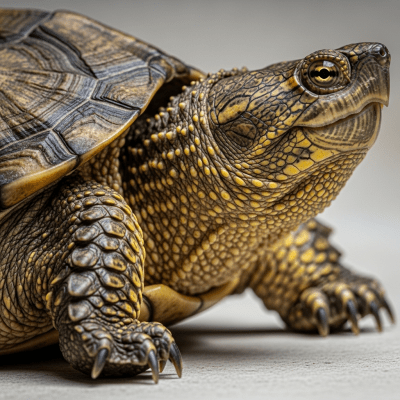
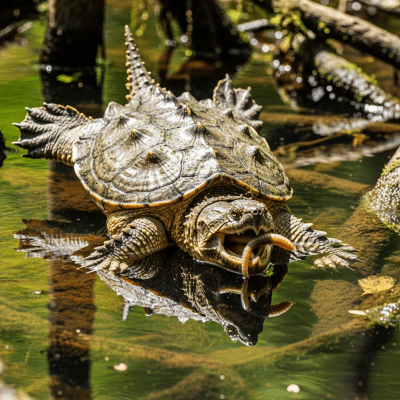
This turtle is notable for its rugged, heavily ridged shell featuring three pronounced keels, and rough, dark brown to olive skin often covered in algae. It has a massive head with a hooked, powerful beak and a distinctive worm-like appendage on its tongue that acts as a lure to attract prey.
The alligator snapping turtle is a specialized ambush predator, relying on its vermiform tongue to entice fish and other prey within striking distance. It is highly aquatic, spending nearly all its time submerged and only leaving water to nest. Its slow growth leads to sexual maturity between 11 and 13 years, and it can live over 70 years in the wild.
Bring this kind into your world illustrated posters, mugs, and shirts.
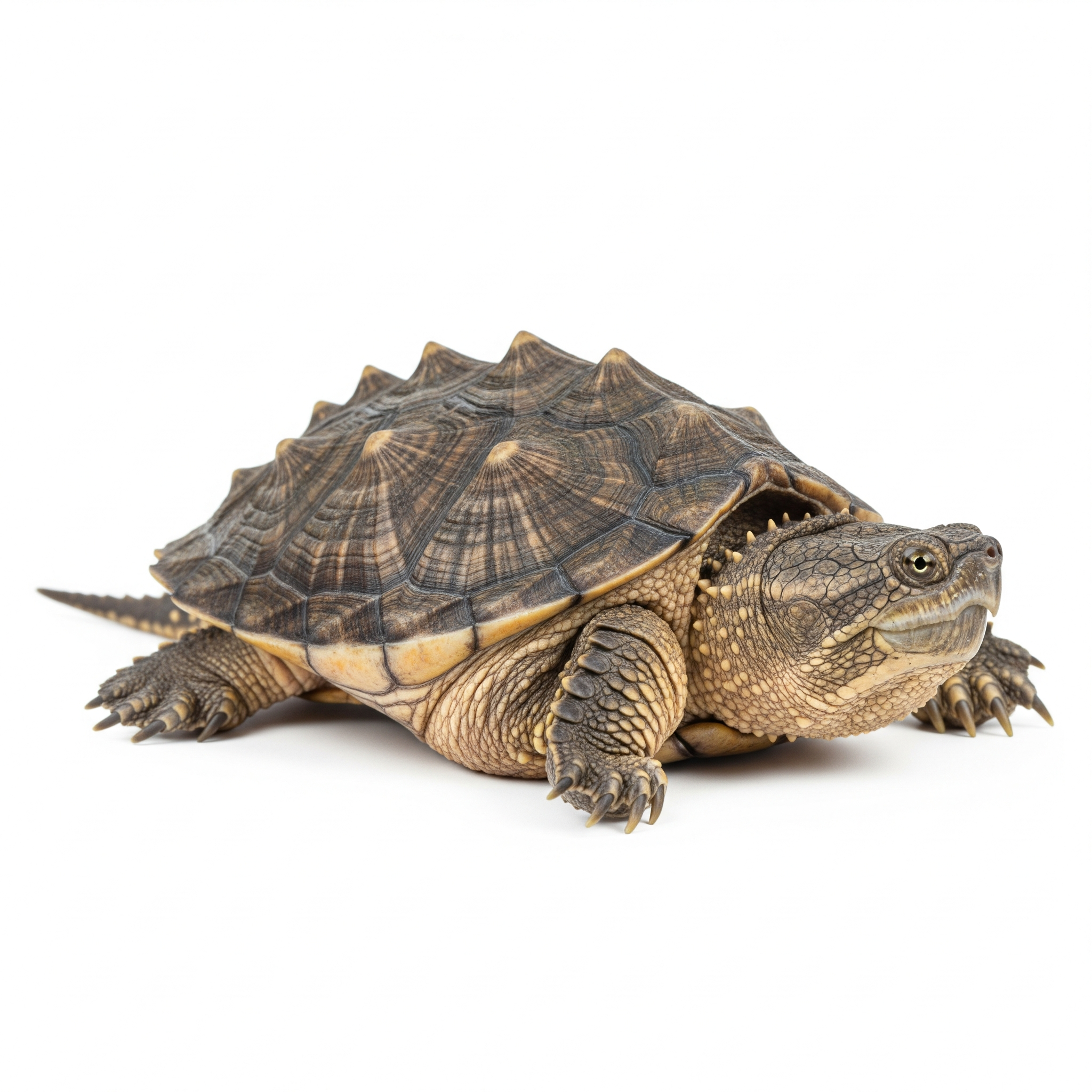
Archival print, museum-grade paper
Buy Poster
Stoneware mug, dishwasher safe
Buy Mug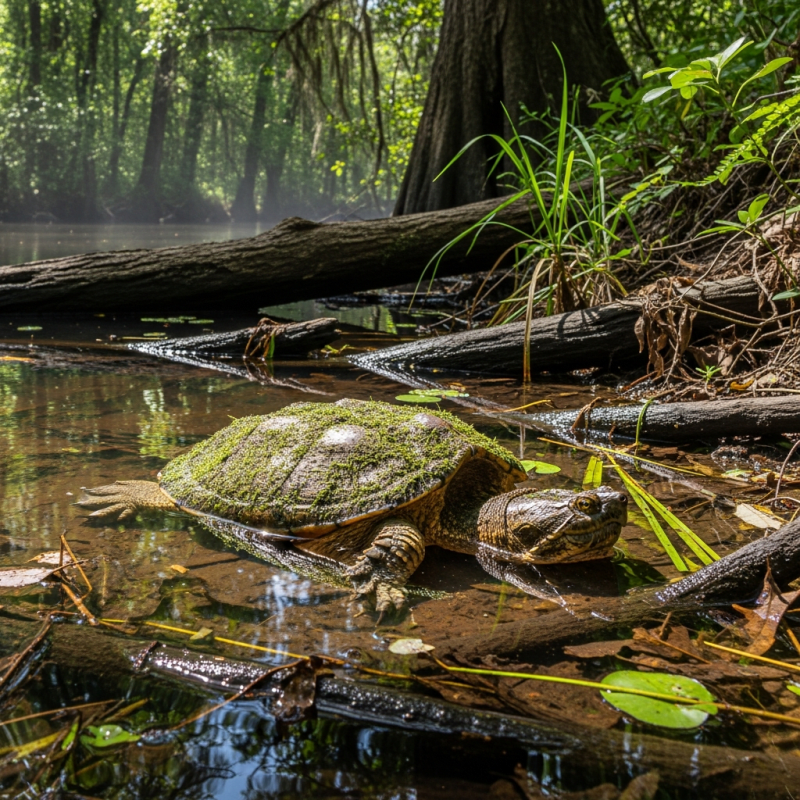
Soft cotton tee, unisex sizes
Buy ShirtHistorically, the alligator snapping turtle held a place in southern U.S. cuisine as a prized ingredient in turtle soup, symbolizing regional culinary traditions. Today, it serves as a flagship species for wetland conservation efforts, representing the ecological importance of freshwater habitats in the southeastern United States.
Native to the southeastern United States, the alligator snapping turtle inhabits freshwater wetlands, rivers, and swamps. It thrives in slow-moving or still waters rich in vegetation, where it can remain concealed as an effective ambush predator.
Reaching sexual maturity between 11 and 13 years, the alligator snapping turtle has a slow growth rate and a long lifespan exceeding 70 years in the wild. Females leave the water to nest, but detailed reproductive behaviors and clutch sizes remain less documented.
Once heavily harvested for its meat, the alligator snapping turtle has experienced significant population declines. Today, legal protections and trade restrictions limit its consumption and commercial use. Its primary threats include habitat destruction and overharvesting, making it a key species for wetland conservation initiatives.
Historically valued for its meat, the alligator snapping turtle is now primarily involved in conservation and educational programs within zoos and aquaria. Its large size and specialized care requirements, combined with legal restrictions, have curtailed its presence in the pet trade and commercial breeding.