Aldabra Giant Tortoise
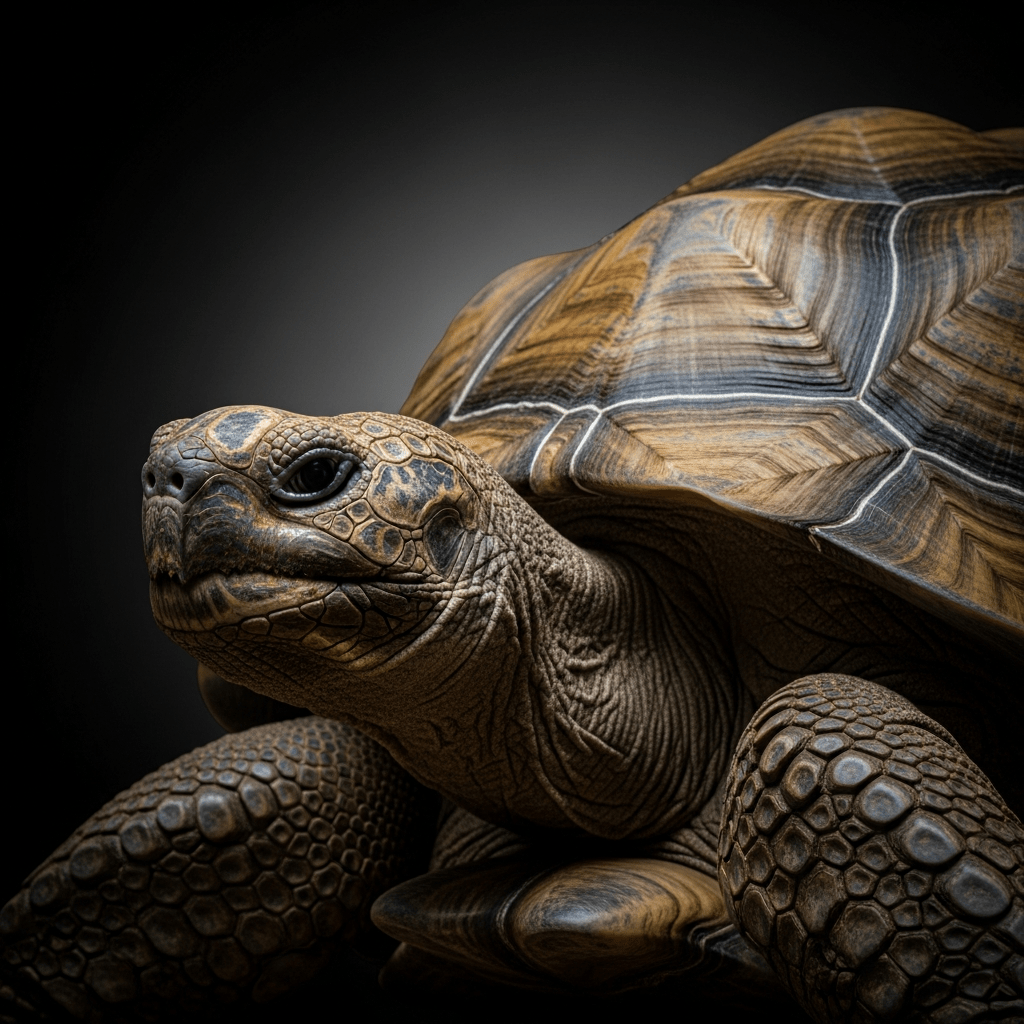
The Aldabra Giant Tortoise (Aldabrachelys gigantea) is a massive, long-lived tortoise species native to the Aldabra Atoll, celebrated for its impressive size and vital role as a keystone herbivore in its island ecosystem.
The Aldabra Giant Tortoise (Aldabrachelys gigantea) is a massive, long-lived tortoise species native to the Aldabra Atoll, celebrated for its impressive size and vital role as a keystone herbivore in its island ecosystem.
First described in 1812 by August Friedrich Schweigger, the Aldabra Giant Tortoise is endemic to the remote Aldabra Atoll in the Seychelles. Its wild populations have remained isolated, with captive and introduced groups worldwide all tracing their lineage back to this unique island habitat.
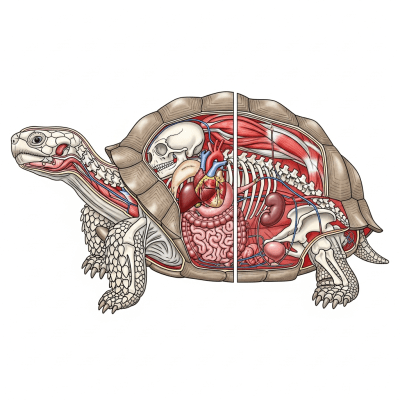
Belonging to the class Reptilia and order Testudines, the Aldabra Giant Tortoise is classified within the genus Aldabrachelys and species gigantea. It is part of the broader group of terrestrial turtles known as tortoises, distinguished by their domed shells and slow terrestrial habits.
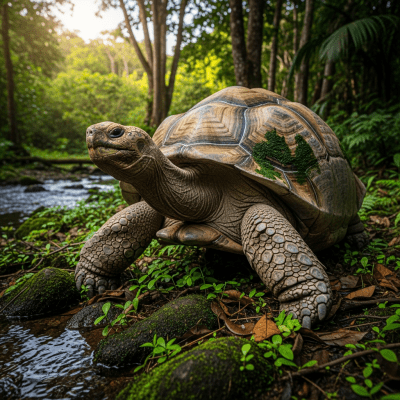
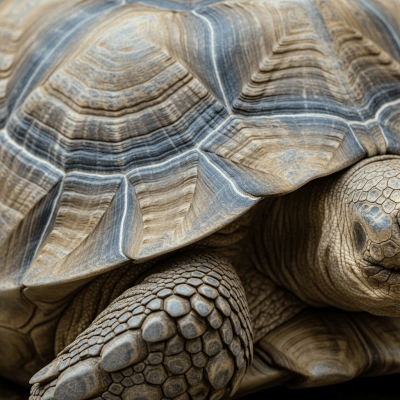
This tortoise features a highly domed carapace ranging from dark brown to gray, reaching lengths up to 122 cm and weights exceeding 250 kg. Its robust, scaly limbs support a heavy body, while a long, flexible neck allows it to browse vegetation up to a meter above the ground, a distinctive adaptation for feeding.
The Aldabra Giant Tortoise is a slow-growing, terrestrial herbivore that feeds primarily on grasses, leaves, woody stems, and occasionally fruit. Its activity patterns are adapted to the island environment, with remarkable drought resistance enabling survival through dry spells. It matures slowly, often taking 20 to 30 years to reach sexual maturity, and can live over a century.
Bring this kind into your world illustrated posters, mugs, and shirts.
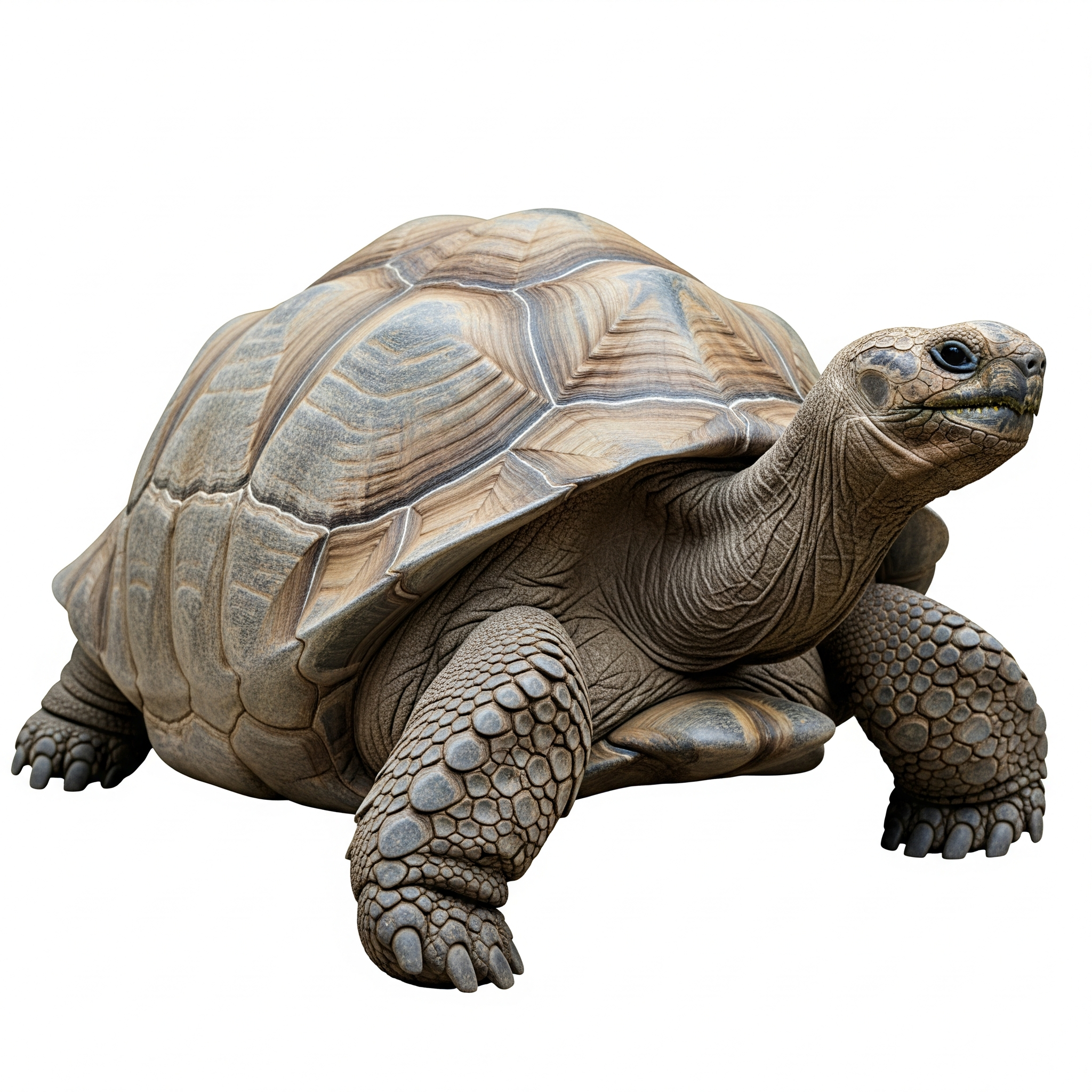
Archival print, museum-grade paper
Buy Poster
Stoneware mug, dishwasher safe
Buy Mug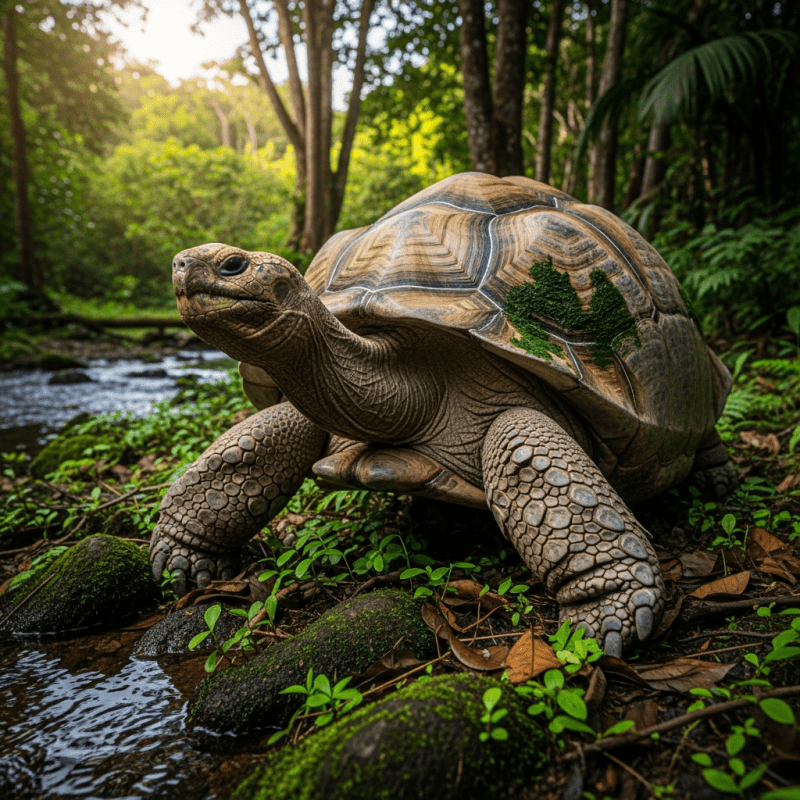
Soft cotton tee, unisex sizes
Buy ShirtAs an emblem of island gigantism and a flagship species for conservation, the Aldabra Giant Tortoise holds a special place in ecotourism and environmental education. Its iconic presence on the Aldabra Atoll has inspired awareness of island biodiversity and the importance of protecting fragile ecosystems.
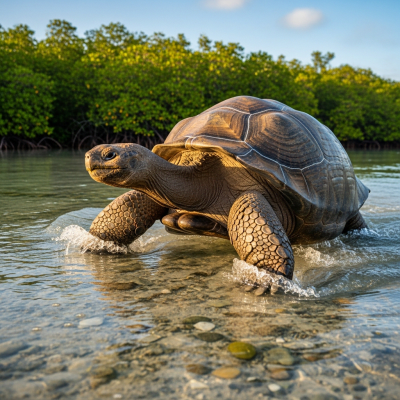
The Aldabra Giant Tortoise inhabits the terrestrial island atoll environment of Aldabra in the Seychelles. This remote coral atoll provides a unique ecosystem where the tortoise thrives, feeding on native vegetation and playing a crucial ecological role. Outside its native range, populations exist only in captivity or controlled introductions.
These tortoises grow slowly and reach sexual maturity between 20 and 30 years of age. While specific breeding behaviors are not extensively documented, their long lifespan and slow development reflect an evolutionary strategy suited to stable island conditions. Hatchlings grow gradually to reach the impressive adult size over many decades.
The Aldabra Giant Tortoise is protected under CITES Appendices I and II, reflecting strict international regulation of trade. Though currently stable in its native habitat, it faces threats from habitat disturbance and introduced predators. Conservation efforts focus on habitat preservation, preventing poaching, and maintaining captive breeding programs to safeguard its future.
Human interaction with the Aldabra Giant Tortoise is largely centered on conservation, ecotourism, and education. Historically exploited for meat and oil, such practices are now illegal. The species is a charismatic ambassador for island biodiversity, attracting visitors and researchers while benefiting from international protections that regulate trade and captive management.