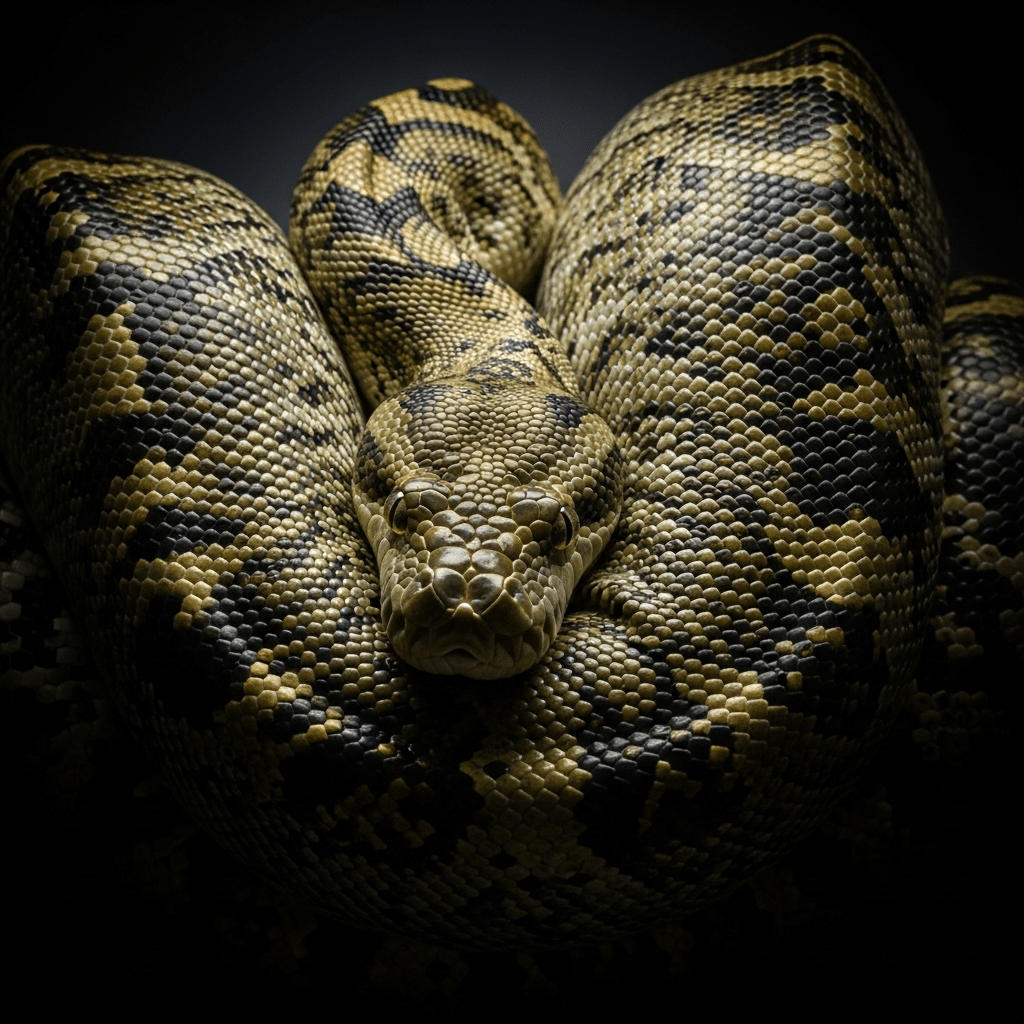
African Rock Python
The African Rock Python (Python sebae) is Africa's largest native snake and one of the world’s largest constrictors, known for its impressive size and striking patterned skin.
The African Rock Python (Python sebae) is Africa's largest native snake and one of the world’s largest constrictors, known for its impressive size and striking patterned skin.
First described in 1789 by Johann Friedrich Gmelin, the African Rock Python is a wild species native to West Africa and other regions across the continent. It is a naturally occurring lineage with no history of captive breeding or hybridization.
Belonging to the class Reptilia, the African Rock Python is classified within the order Squamata and family Pythonidae. Its genus is Python and species sebae, placing it among the large, non-venomous constrictor snakes.
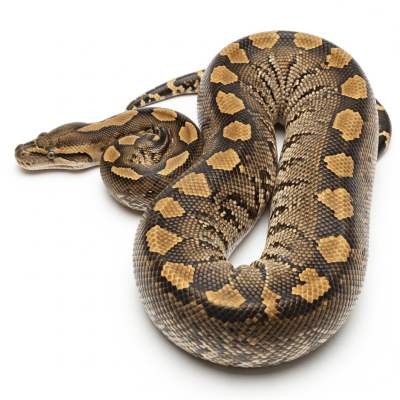
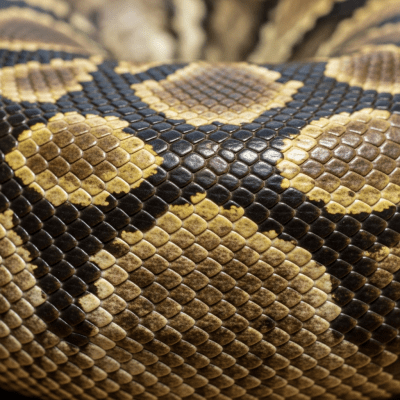
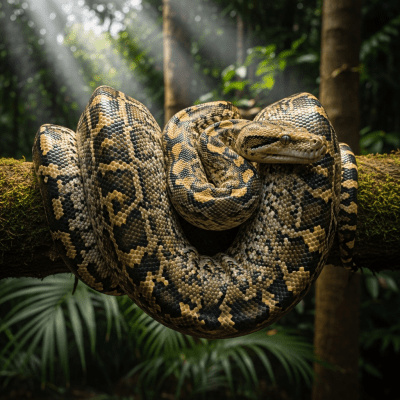
This python boasts a muscular, thick-set body reaching lengths typically between 3 and 5 meters, with some individuals exceeding 6 meters and weighing up to 90 kilograms. Its skin displays irregular dark brown, olive, and tan blotches outlined in black, creating a distinctive net-like pattern. The lighter ventral side contrasts with the darker dorsal colors. It has a triangular head and medium-sized eyes with vertical pupils, giving it a formidable yet elegant appearance.
The African Rock Python is a powerful carnivore that subdues prey through constriction. Juveniles grow rapidly before slowing as they mature. Females exhibit dedicated parental care by incubating and guarding clutches of 20 to 100 eggs. This species is highly adaptable, tolerating a wide range of environmental conditions, though it can be vulnerable to respiratory illnesses in captivity and stress from habitat disruption.
Bring this kind into your world illustrated posters, mugs, and shirts.
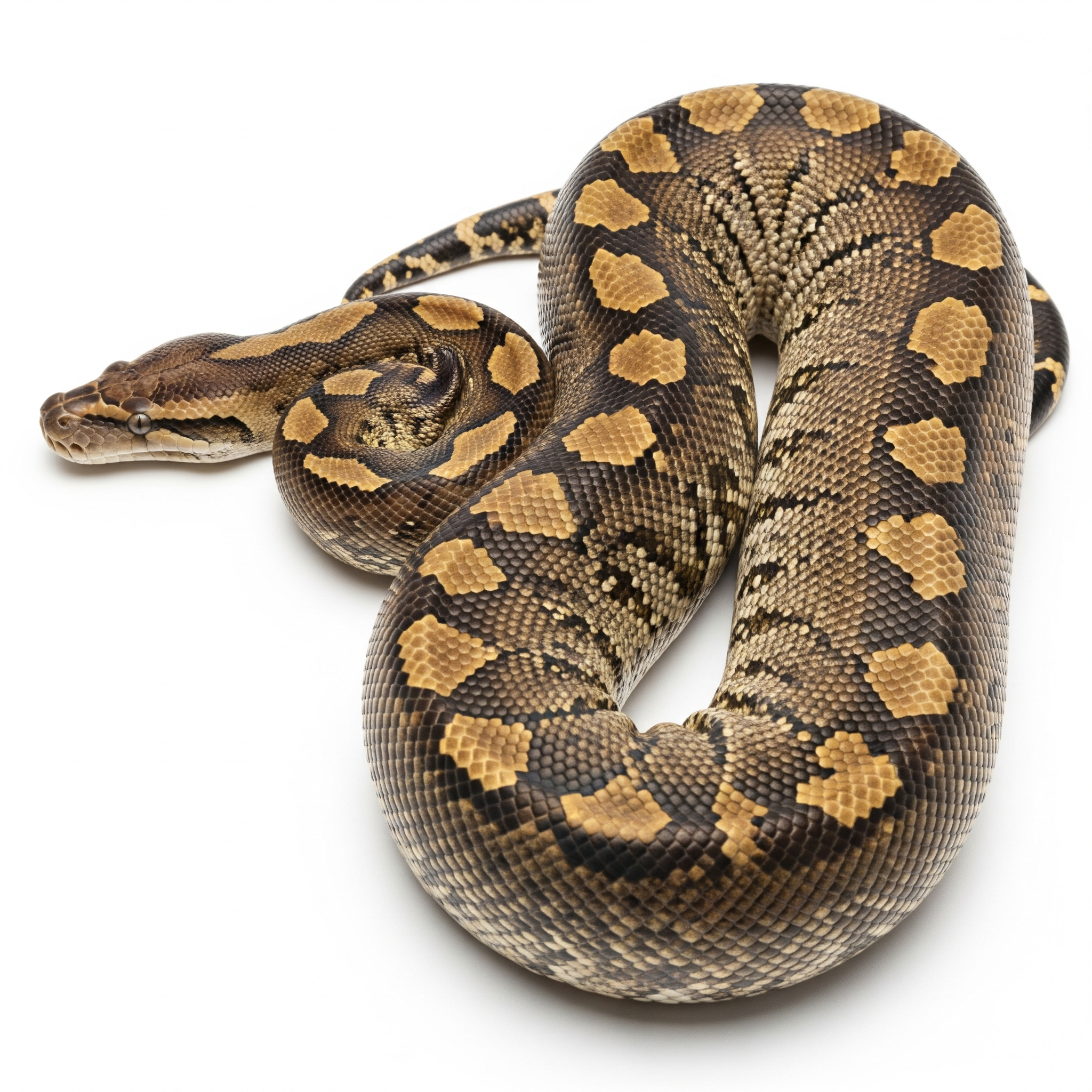
Archival print, museum-grade paper
Buy Poster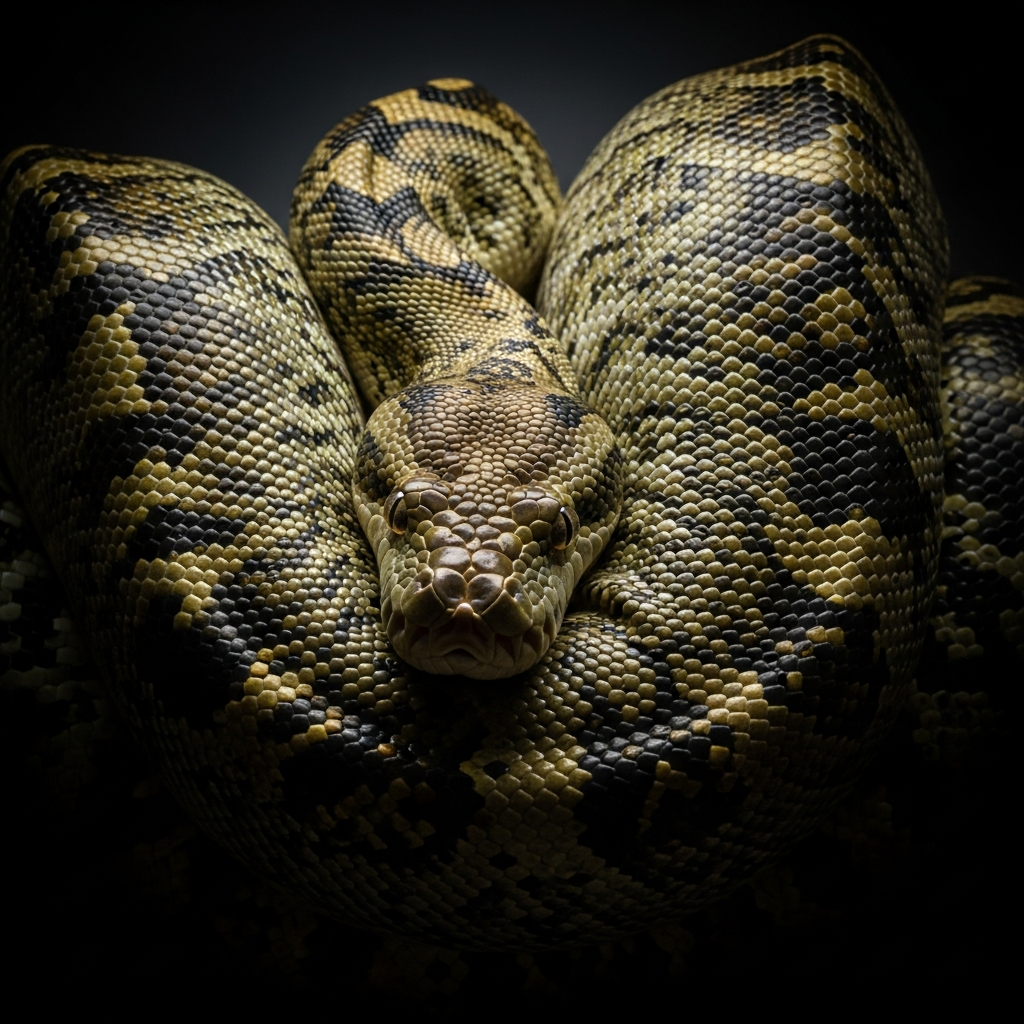
Stoneware mug, dishwasher safe
Buy Mug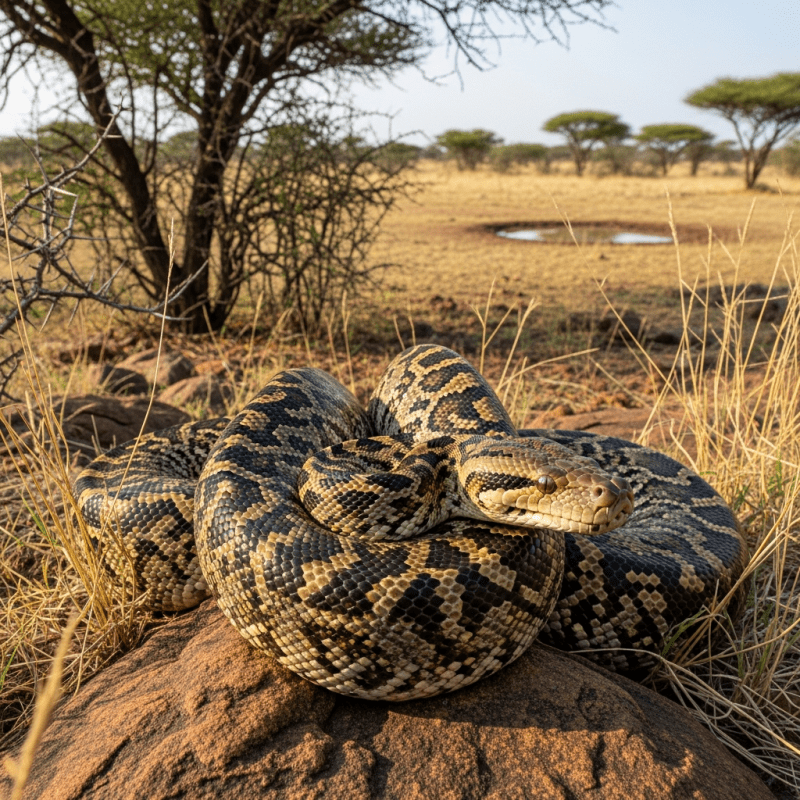
Soft cotton tee, unisex sizes
Buy ShirtIn various African cultures, the African Rock Python holds symbolic importance and is sometimes featured in traditional medicine and ritual practices. Its skin is prized in the leather industry for crafting belts, shoes, and bags, reflecting its economic and cultural value beyond its ecological role.
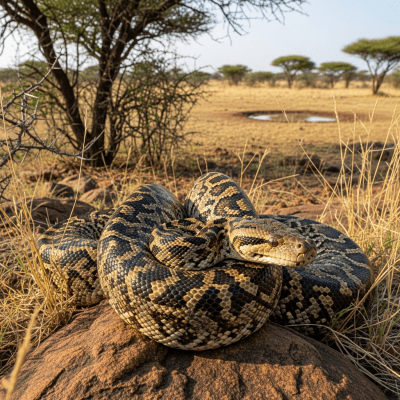
Native to Africa, the African Rock Python inhabits a wide range of environments such as savannas, forests, and rocky terrains. Its adaptability allows it to thrive across much of the continent, from West Africa through Central and Southern regions, often favoring areas that provide ample cover and prey.
The species is oviparous, with females laying between 20 and 100 eggs per clutch. They exhibit maternal care by incubating and guarding their eggs until hatching. Juveniles grow rapidly during their early years, gradually slowing as they reach adulthood. Details on sexual maturity age and lifespan remain less documented but align with typical large python life histories.
While specific conservation status details are limited, the African Rock Python faces threats from habitat disturbance and capture for the leather trade and pet market. Its resilience to environmental changes helps its survival, but pressures from human activity and disease in captivity remain concerns for its long-term well-being.
The African Rock Python interacts with humans in several ways: it is hunted for its valuable skin used in leather goods, occasionally consumed locally as food, and sought after in the exotic pet trade despite its challenging nature. Additionally, it holds cultural significance in some African traditions, where parts of the snake are used in rituals and traditional medicine.