Sugar Palm
The Sugar Palm (Arenga pinnata) is a towering, clustering palm native to Southeast Asia, celebrated for its sweet sap and versatile uses in food, crafts, and agroforestry.
The Sugar Palm (Arenga pinnata) is a towering, clustering palm native to Southeast Asia, celebrated for its sweet sap and versatile uses in food, crafts, and agroforestry.
Indigenous to the humid tropics of Southeast Asia—including Indonesia, Malaysia, Thailand, and the Philippines—the Sugar Palm has been part of local landscapes and livelihoods for centuries. First described scientifically by Wurmb and later revised by Merrill, this wild species has no single point of domestication or breeder, but rather a deep-rooted history intertwined with traditional cultivation and village economies.
The Sugar Palm belongs to the family Arecaceae, which encompasses all true palms. Its accepted scientific name is Arenga pinnata (Wurmb) Merr., and it is classified within the genus Arenga. While commonly known as Sugar Palm, it also appears under synonyms such as Arenga saccharifera and Saguerus pinnatus. This species is part of the monocotyledonous flowering plants, sharing the family with coconuts, dates, and other economically important palms.
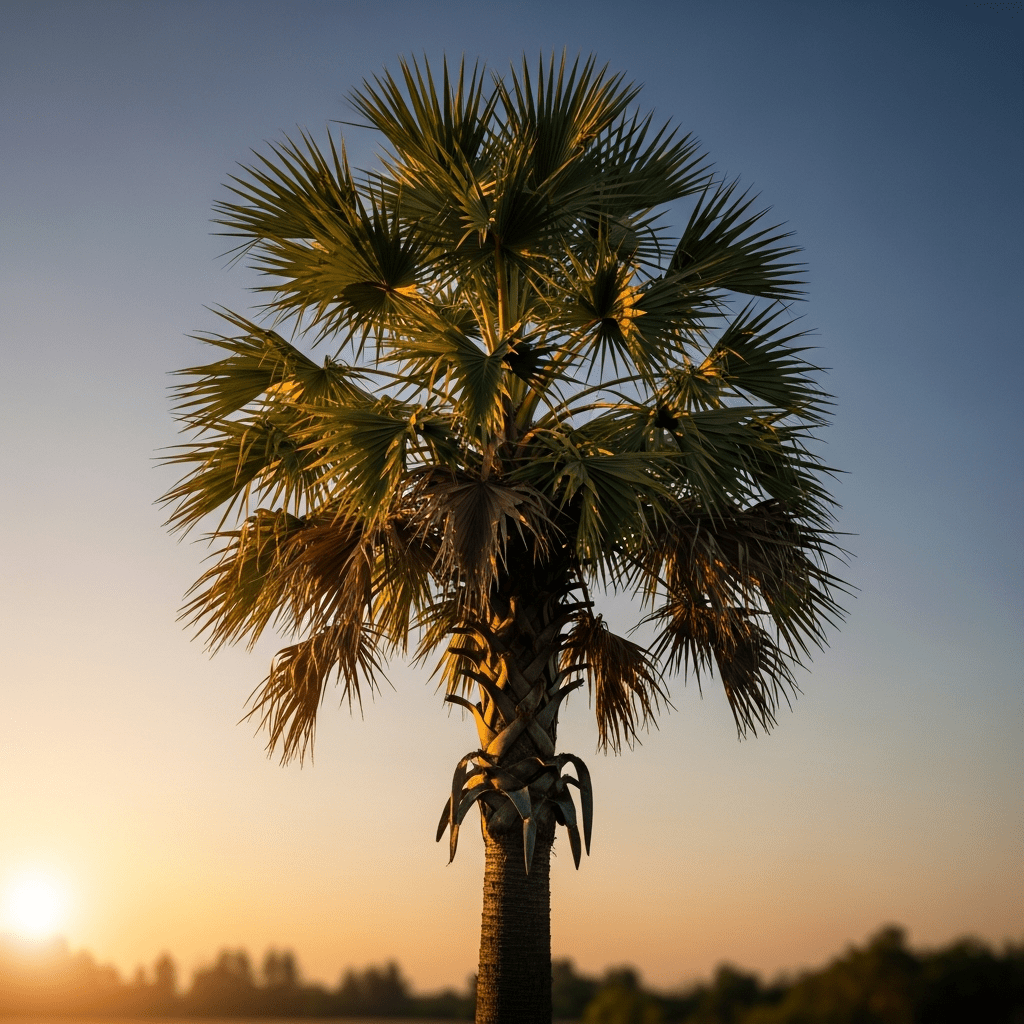
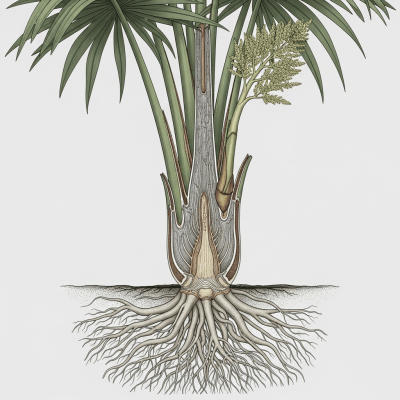
Sugar Palm is a large, robust palm reaching heights of 12–20 meters. Its trunk is covered with persistent leaf bases and coarse black fibers, giving it a rugged texture. The leaves are pinnate and feathery, stretching up to 6–8 meters long, with leaflets arranged in a single plane. Striking, branched inflorescences emerge from the trunk below the leaves, and the palm produces oval, greenish fruits (5–7 cm in diameter) that contain three seeds and are covered in irritating crystals. The overall form is dramatic and architectural, with a dense, clustering habit.
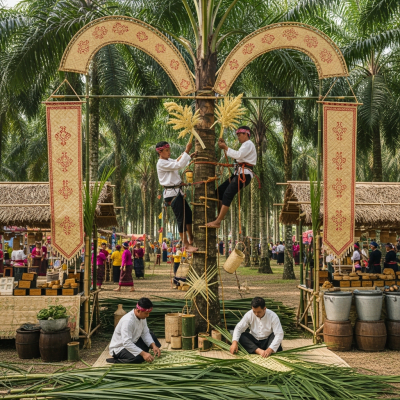
Functionally, the Sugar Palm is a cornerstone of tropical agroforestry and rural economies. Its sweet sap is tapped from inflorescences and rapidly processed into palm sugar, syrup, or fermented beverages. The palm is monocarpic—each stem flowers once and then dies—requiring careful management for sustained harvest. Beyond food, its fibers are essential for ropes and brushes, leaves for thatching and basketry, and its presence helps stabilize soil and support biodiversity in mixed farming systems.
Bring this kind into your world illustrated posters, mugs, and shirts.
Archival print, museum-grade paper
Buy Poster
Stoneware mug, dishwasher safe
Buy Mug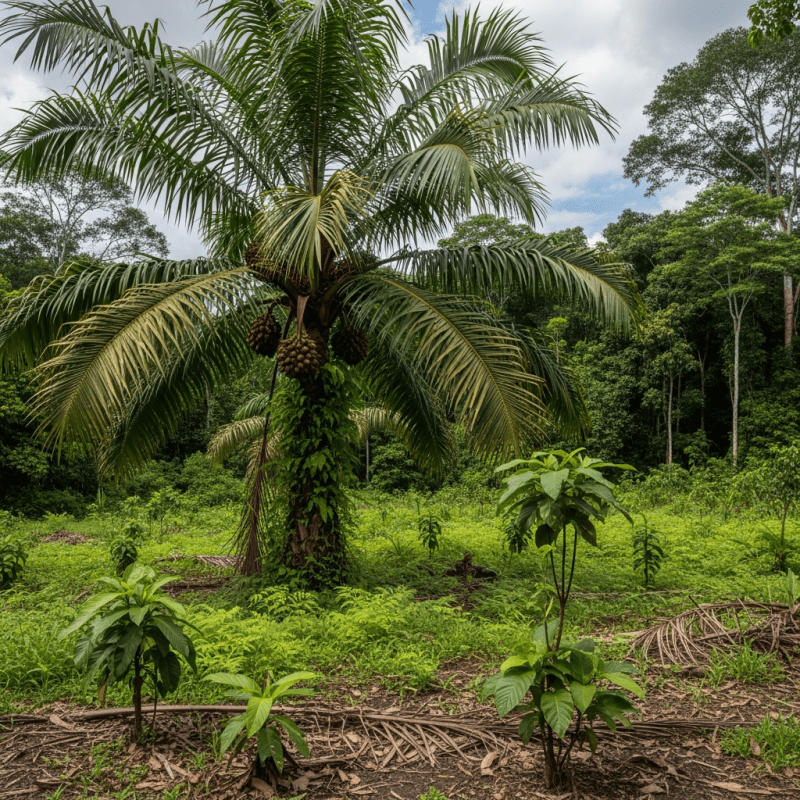
Soft cotton tee, unisex sizes
Buy ShirtSugar Palm is deeply woven into the cultural fabric of Southeast Asia. Palm sugar, known locally as gula aren or kaong, is a staple in traditional sweets and ceremonies. The processed fruit features in festive desserts like kolang-kaling in Indonesia. Its materials are used in crafts, construction, and daily life, while the palm itself symbolizes sustainability and resourcefulness in rural communities.
Within the genus Arenga, several species exist, but Arenga pinnata is the most widely cultivated and economically significant. The palm family (Arecaceae) itself includes over 2,600 species across 180+ genera, ranging from the iconic coconut to the ornamental date palm.

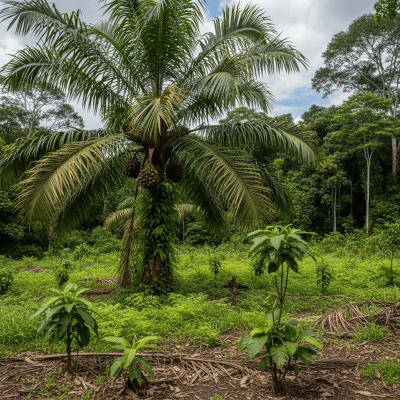
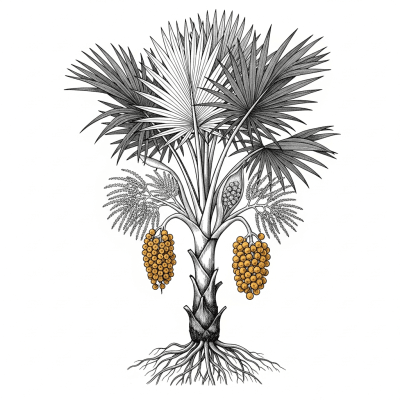
Sugar Palm is native to the humid lowlands and foothills of Southeast Asia, flourishing in countries such as Indonesia, Malaysia, Thailand, and the Philippines. It adapts well to a variety of soils, including marginal and degraded lands, and is commonly found in agroforestry systems, mixed forests, and village gardens throughout its range.
Growing Sugar Palm requires patience, as it is slow-growing and monocarpic. It prefers humid tropical climates and tolerates a wide range of soils, including poor and degraded areas. Regular watering, minimal fertilizer, and protection from pests like rhinoceros beetle help ensure healthy growth. Harvesting sap for sugar involves careful tapping of inflorescences, and managing the clump for ongoing productivity is key, as each stem dies after flowering.
Sugar Palm is a major source of palm sugar (gula aren), a vital ingredient in Southeast Asian cuisine and confectionery. Its sap is also used for syrup and traditional alcoholic drinks. Beyond food, the palm provides fibers for ropes, brushes, and construction, leaves for thatching and crafts, and plays a role in soil stabilization and agroforestry, making it economically indispensable in rural communities.
Sugar Palm contributes positively to the environment by thriving on degraded soils, stabilizing land, and supporting biodiversity within agroforestry systems. Its cultivation can help restore marginal areas and reduce erosion. However, overharvesting or unsustainable practices may threaten local populations, so balanced management is essential for long-term ecological benefits.
The main pest affecting Sugar Palm is the rhinoceros beetle, which can damage stems and inflorescences. While the palm shows resilience to drought and poor soils, growers should monitor for beetle infestations and employ integrated pest management strategies to maintain plant health. Specific disease threats are not well documented, but general palm care practices apply.
Sugar Palm is not currently listed as threatened on major conservation indices, thanks to its widespread cultivation and adaptability. Nonetheless, habitat loss and unsustainable harvesting could pose future risks. Conservation efforts focus on sustainable management, agroforestry integration, and maintaining genetic diversity within local populations.