Saw Palmetto
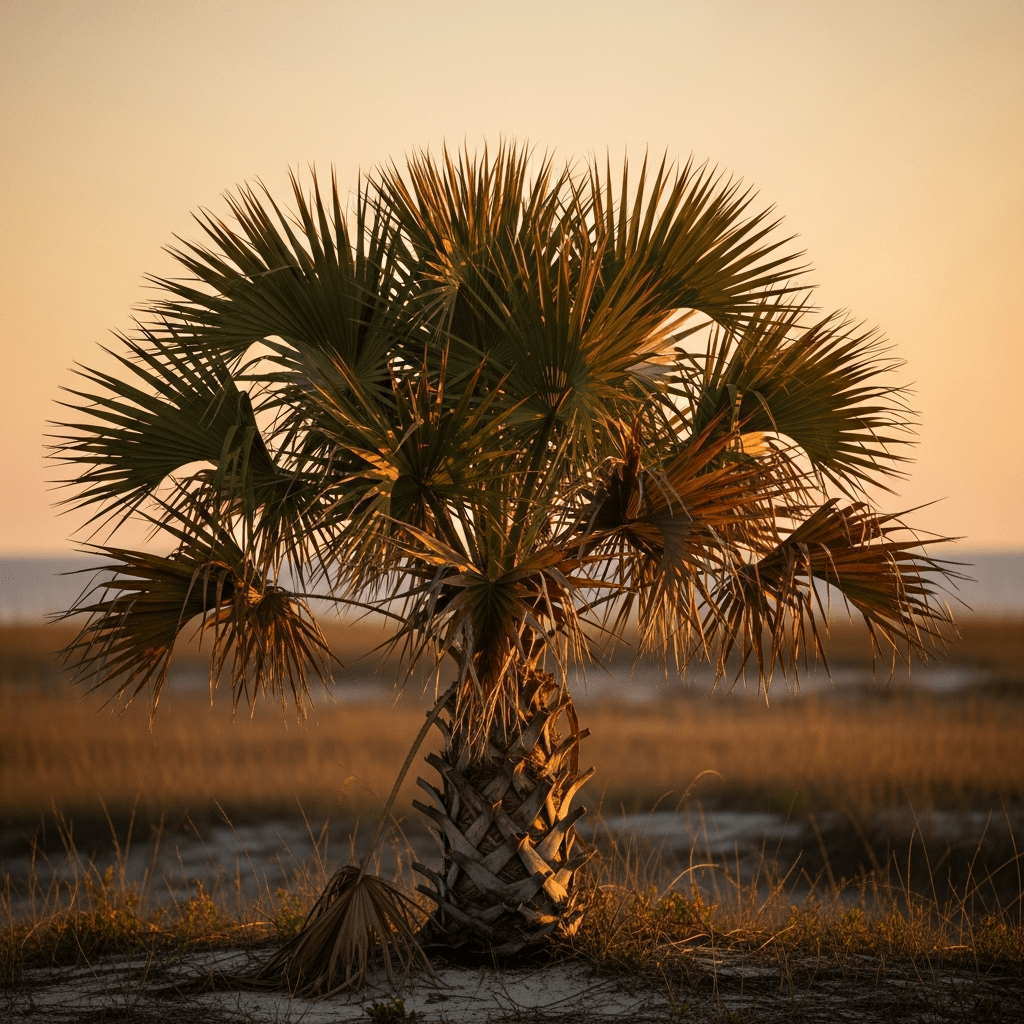
Saw Palmetto is a low-growing, fan-leaved palm native to the southeastern United States, renowned for its ecological resilience and medicinally valued berries.
Saw Palmetto is a low-growing, fan-leaved palm native to the southeastern United States, renowned for its ecological resilience and medicinally valued berries.
Saw Palmetto (Serenoa repens) traces its roots to the sandy soils and pine flatwoods of Florida and neighboring states. First described by William Bartram and formally named by John Kunkel Small in 1926, this palm has remained largely undomesticated, thriving in wild habitats and forming extensive clonal colonies over centuries. Its evolutionary lineage is monotypic, with no recognized subspecies or cultivated varieties, reflecting a stable adaptation to its native landscapes.
Saw Palmetto belongs to the family Arecaceae, the botanical group encompassing all true palms. Within this family, it is the sole species of the genus Serenoa, and is closely allied with other fan-leaved palms in the tribe Livistoneae. Its accepted scientific name is Serenoa repens (W. Bartram) Small, with notable synonyms including Serenoa serrulata and Sabal serrulata. This clear taxonomic placement distinguishes it from palm-like but unrelated plants.
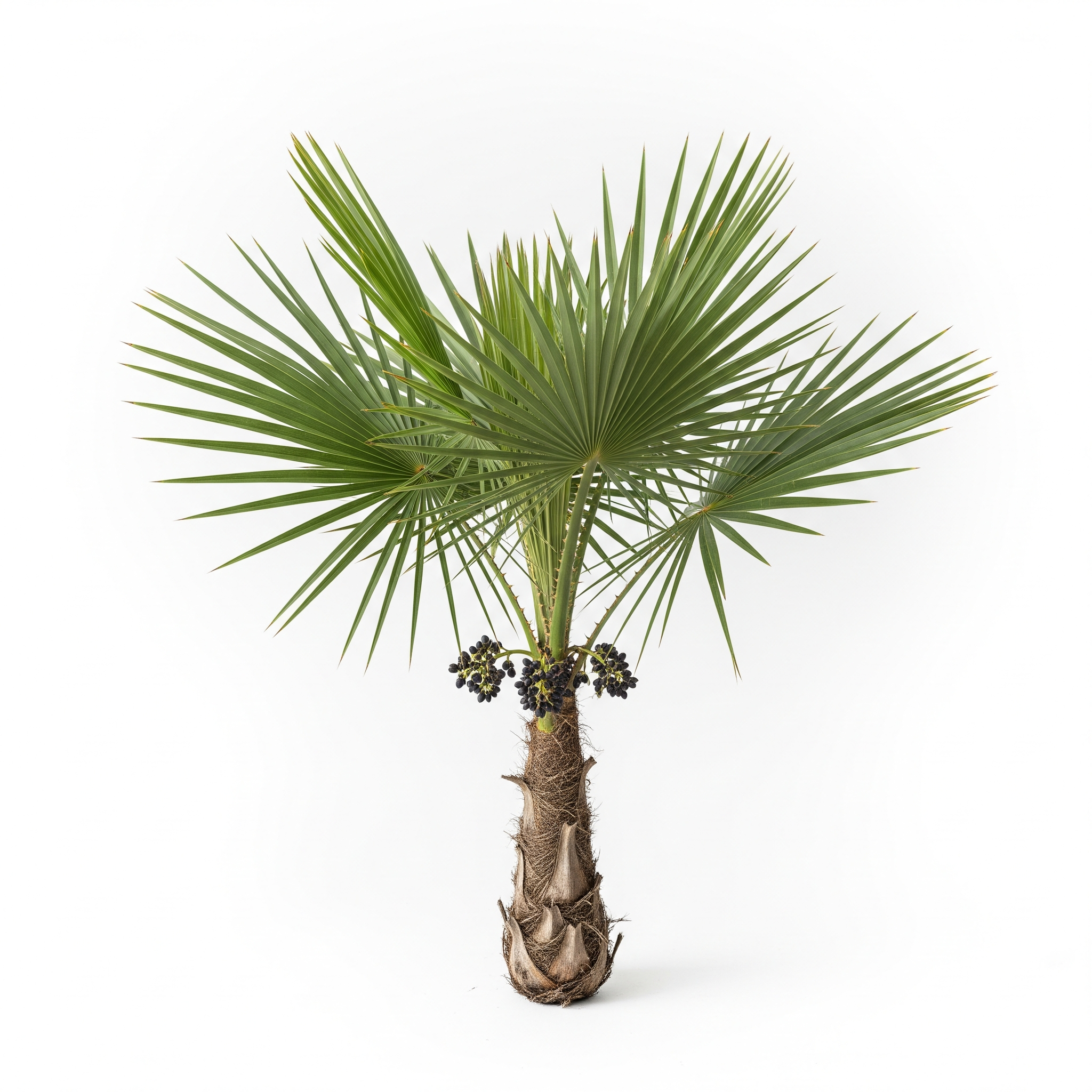
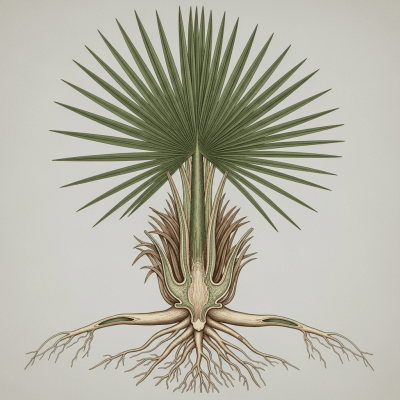
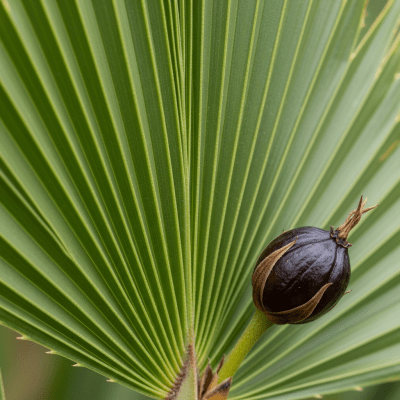
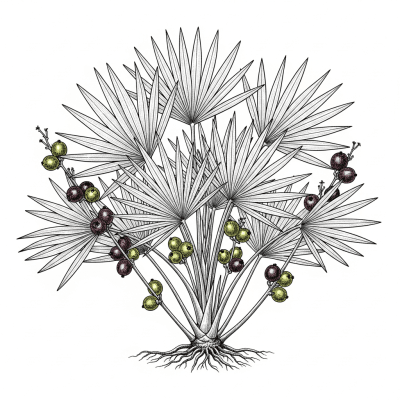
Saw Palmetto presents as a compact, shrubby palm, typically reaching 1–3 meters in height. Its stems creep horizontally, often just below the surface, forming dense thickets. The leaves are strikingly fan-shaped (costapalmate), silvery-green, and up to a meter wide, with petioles edged in small, sharp teeth that give the plant its "saw" moniker. In spring, it produces slender panicles of small, white flowers, followed by ovoid drupes that ripen from green to bluish-black. The overall effect is both rugged and graceful, well-suited to its wild habitats.
Saw Palmetto is celebrated for its resilience—thriving in drought, poor soils, and fire-prone environments. Ecologically, it provides cover and food for wildlife, resprouting vigorously after burns. For humans, its berries are harvested for herbal supplements reputed to support prostate and urinary tract health. Though not widely cultivated, it is occasionally used in landscaping for its hardiness and distinctive texture. Most commercial use relies on wild harvesting, with regulations in place to protect natural populations.
Bring this kind into your world illustrated posters, mugs, and shirts.
Archival print, museum-grade paper
Buy Poster
Stoneware mug, dishwasher safe
Buy Mug
Soft cotton tee, unisex sizes
Buy ShirtThis palm holds a special place in traditional medicine, particularly among Native American communities and modern herbalists, due to its association with men's health. Its presence in the southeastern U.S. landscape is iconic, shaping the character of coastal dunes and pine savannas. While not a frequent subject in art or myth, its medicinal reputation has made it a symbol of natural healing and ecological persistence.
Saw Palmetto is monotypic—Serenoa repens is the only species in its genus. While the palm family (Arecaceae) boasts over 2,600 species worldwide, Saw Palmetto stands alone among North American fan palms, with no recognized subspecies or varieties. Its closest relatives include other fan-leaved palms like Acoelorrhaphe, but none share its exact ecological niche or medicinal prominence.
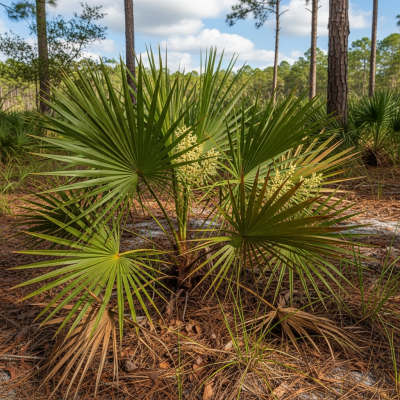

Saw Palmetto is native to the coastal plains and pine flatwoods of the southeastern United States, especially Florida, Georgia, and the Carolinas. It thrives in sandy, well-drained soils, often forming dense understory thickets in scrub, dunes, and open woodlands. Its distribution is tightly linked to fire-adapted ecosystems, where periodic burns promote vigorous regrowth and maintain healthy populations.
While rarely cultivated on a commercial scale, Saw Palmetto can be grown in gardens and landscapes with sandy, well-drained soil and full sun. It tolerates drought, poor soils, and periodic fire, requiring minimal maintenance once established. Slow growth is typical, and propagation is usually from seed, though patience is needed due to its gradual development. Protection from overharvesting is important for wild populations.
The economic value of Saw Palmetto centers on its berries, which are harvested for use in herbal supplements targeting prostate and urinary tract health. The wild berry harvest supports a niche industry in the southeastern U.S., with regulatory oversight to prevent depletion. Ornamental use is minor but growing, as landscapers appreciate its resilience and distinctive form. Unlike many palms, it is not a source of food, oil, or fiber for large-scale industries.
Saw Palmetto plays a vital ecological role in stabilizing sandy soils, providing shelter and food for wildlife, and maintaining biodiversity in fire-prone habitats. Its fire-adapted nature helps restore landscapes after burns. Overharvesting of berries can threaten local populations, but otherwise, the species is robust and contributes positively to its native ecosystems.
Saw Palmetto is notably resistant to most pests and diseases, with no major threats widely reported. Its tough leaves and adaptive growth help it withstand environmental stresses. Routine care in landscaping involves monitoring for root rot in poorly drained soils, but otherwise, management is minimal compared to other palms.
The primary utilitarian part of Saw Palmetto is its berry, a bluish-black drupe valued for medicinal extracts. While not a popular food, the fruit is consumed by various wildlife. The plant's leaves and stems are occasionally used for minor ornamental or craft purposes, but it is not a major source of edible oils, fibers, or timber.
Saw Palmetto is not currently listed as threatened, but concerns exist over unsustainable wild harvesting of its berries. Regulatory measures in some states aim to protect populations from overexploitation. Its natural resilience to fire and drought supports stable numbers, but continued monitoring is recommended to ensure long-term viability in its native range.