Palmyra Palm
The Palmyra Palm (Borassus flabellifer) is a towering, fan-leaved palm native to South and Southeast Asia, revered for its edible fruits, sweet sap, durable timber, and deep cultural roots.
The Palmyra Palm (Borassus flabellifer) is a towering, fan-leaved palm native to South and Southeast Asia, revered for its edible fruits, sweet sap, durable timber, and deep cultural roots.
First described by Carl Linnaeus in 1753, the Palmyra Palm traces its origins to tropical Asia, flourishing naturally across the Indian subcontinent, Sri Lanka, Myanmar, and much of Southeast Asia. Ancient cultivation and trade have extended its presence to Africa—especially Madagascar—and other tropical regions, marking it as a species with both wild and domesticated histories. Its long-standing relationship with human societies is evident in centuries-old traditions of tapping its sap, harvesting its fruit, and using its leaves for writing and shelter.
Belonging to the botanical family Arecaceae (the palms), the Palmyra Palm is classified as Borassus flabellifer within the genus Borassus. It is a true palm, distinct from palm-like plants such as cycads or screw pines. The species is dioecious, meaning male and female flowers grow on separate trees, and is part of a lineage that includes several other economically and ecologically important palms.
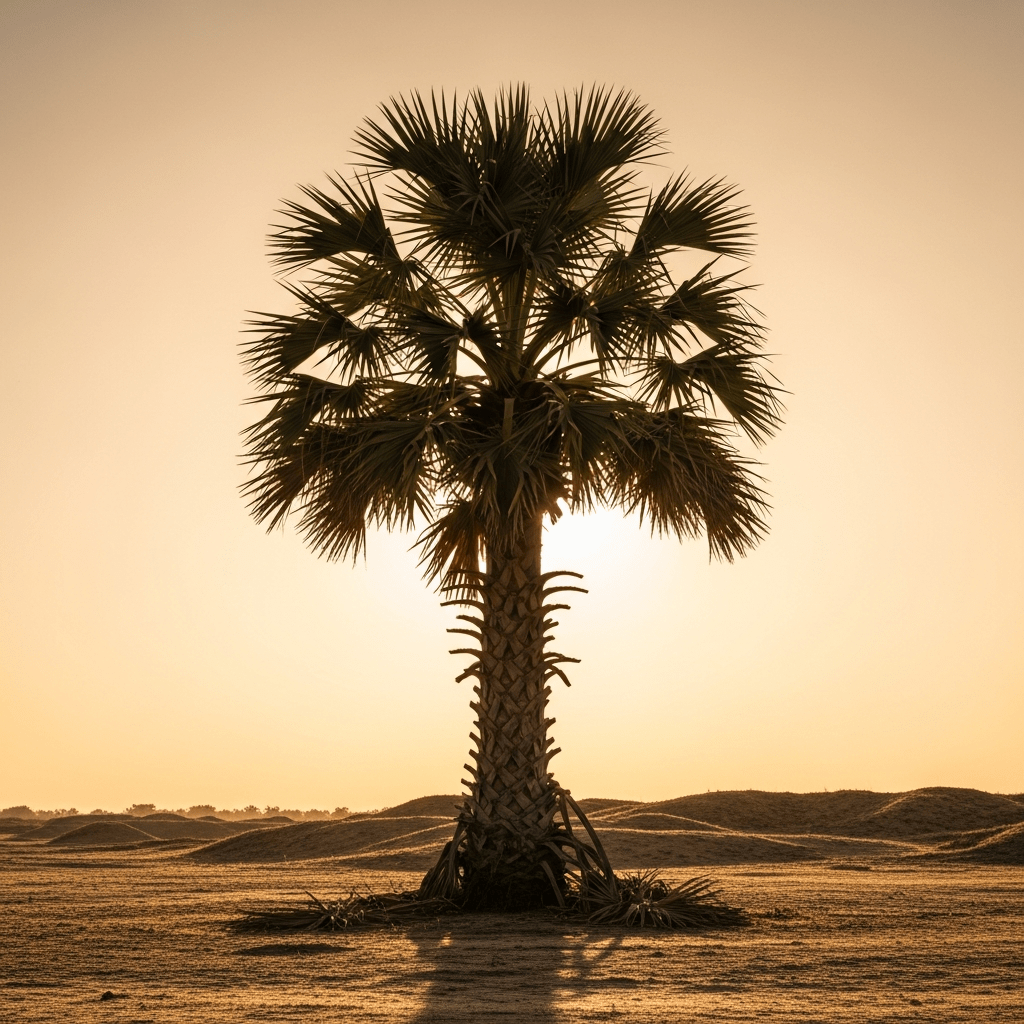
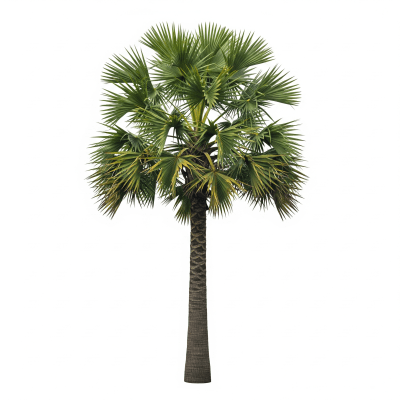
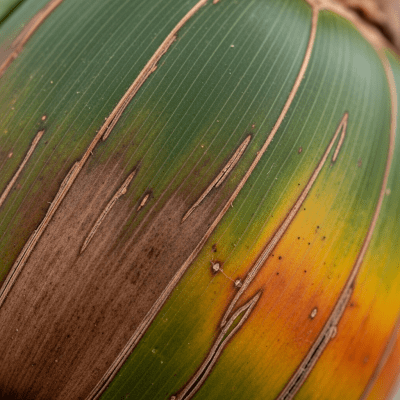
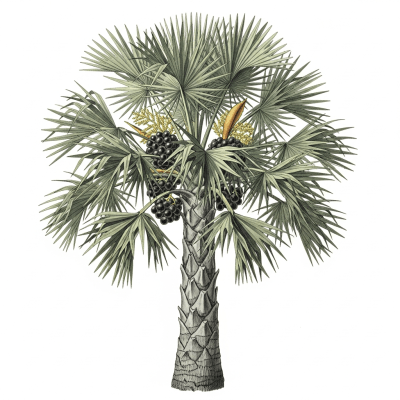
The Palmyra Palm is visually striking, growing up to 20–30 meters tall with a straight, robust trunk that can reach 1 meter in diameter. Its crown is composed of massive, fan-shaped leaves—each up to 3 meters wide—supported by stout, spiny petioles. The trunk displays prominent leaf scars, and the tree produces large, globose fruits (15–20 cm across) with a fibrous outer layer and translucent, edible seed endosperm known as "ice apple." The overall form is solitary and stately, often dominating the landscape where it grows.
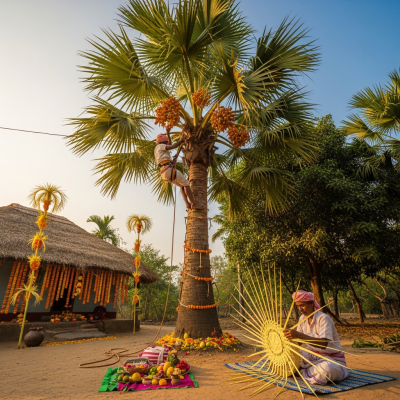
Palmyra Palms are slow-growing and long-lived, with some individuals surviving for a century or more. Their sap is tapped daily to produce palm sugar, toddy, and arrack, while the fruits are harvested for fresh consumption and culinary use. Leaves are routinely cut for thatching, weaving, and crafting writing material, and the timber is valued for its durability in construction. The palm’s resilience to drought and saline soils makes it a reliable resource in challenging environments, and its seedlings are sometimes consumed as a vegetable.
Bring this kind into your world illustrated posters, mugs, and shirts.
Archival print, museum-grade paper
Buy Poster
Stoneware mug, dishwasher safe
Buy Mug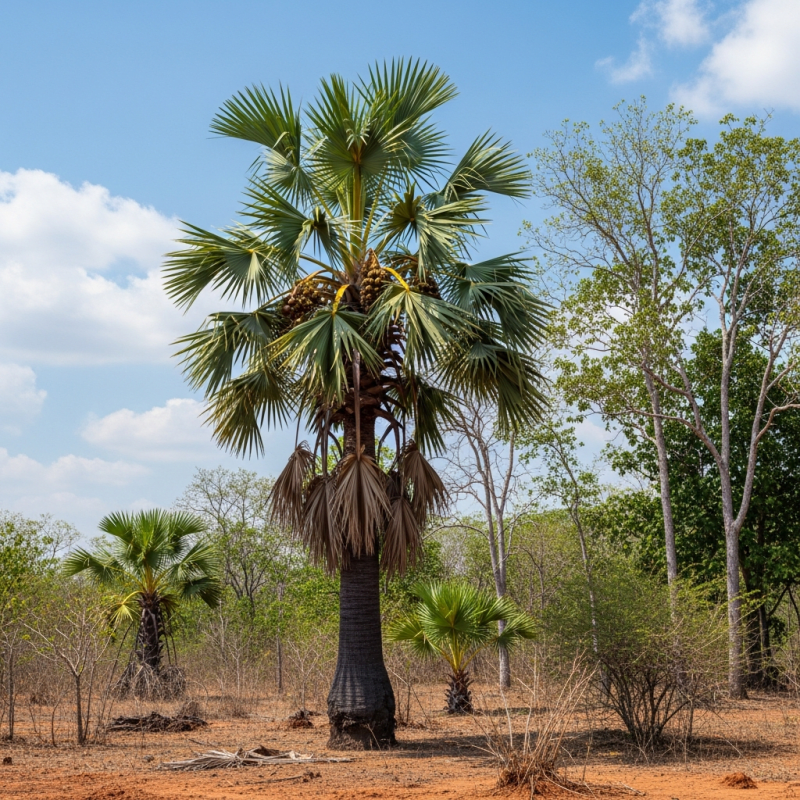
Soft cotton tee, unisex sizes
Buy ShirtThe Palmyra Palm holds a revered place in South and Southeast Asian cultures. Its leaves have been used for centuries to create palm-leaf manuscripts, preserving religious texts and literature. The palm is celebrated in local festivals, folklore, and traditional medicine, symbolizing sustenance, resilience, and wisdom. In many regions, it is considered a "tree of life," providing food, shelter, and economic opportunity to rural communities.
The genus Borassus comprises several species, but Borassus flabellifer is the most prominent in Asia. The palm family (Arecaceae) itself is vast, with over 180 genera and approximately 2,600 species worldwide, ranging from slender rattan palms to the iconic coconut and date palms. Palmyra Palm stands out for its size, utility, and cultural importance among fan palms.
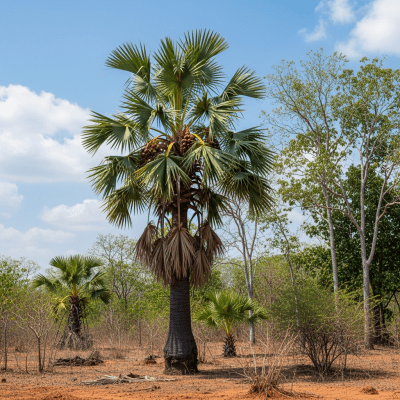

Palmyra Palms thrive in tropical climates, favoring open plains, coastal regions, and agricultural landscapes across South and Southeast Asia. Their natural distribution includes India, Sri Lanka, Myanmar, Thailand, Cambodia, Laos, Vietnam, Malaysia, and Indonesia. Ancient human cultivation has also spread them to Africa, notably Madagascar, and other tropical regions. The species is well-adapted to drought and saline soils, making it a staple in environments where water is scarce.
Growing Palmyra Palms requires patience, as they are slow to mature and can live for over a century. They prefer full sun and tolerate a wide range of soils, including saline and dry conditions. Saplings need protection from grazing and should be spaced widely due to their eventual size. Regular tapping for sap and harvesting of fruits are traditional practices, but care should be taken to prevent fungal rot in humid climates. Minimal irrigation is needed once established, and the palm is generally low-maintenance.
The Palmyra Palm is a cornerstone of rural economies in its native range. Its sap is the source of palm sugar (jaggery), toddy, and arrack, supporting local food and beverage industries. The fruit and seedlings are important food sources, while the leaves are essential for weaving, thatching, and manuscript production. Timber from mature trunks is used in construction, and the palm’s products are traded widely in regional markets. Its versatility ensures economic relevance from agriculture to handicrafts.
Palmyra Palms contribute significantly to ecosystem stability in arid and coastal regions. Their deep roots help prevent soil erosion, and their drought tolerance allows them to thrive where other trees cannot. The palm provides habitat and food for wildlife, and its widespread cultivation supports agroforestry systems. However, overexploitation for sap or timber and habitat loss can threaten local populations, underscoring the need for sustainable management.
While generally resilient, Palmyra Palms are susceptible to fungal rot in humid conditions, particularly affecting roots and trunks. Good drainage and careful harvesting practices help minimize disease risk. Grazing animals may damage young seedlings, so protection during early growth is advised. No major insect pests are widely reported, but vigilance is required in regions with high humidity.
Nearly every part of the Palmyra Palm is useful: the sweet sap yields palm sugar and beverages; the large fruits provide edible "ice apples" and mesocarp pulp for sweets; young seedlings are eaten as a vegetable; leaves are crafted into mats, baskets, and writing material; and the timber is prized for construction. Its versatility makes it a true "tree of life" in many cultures.
The Palmyra Palm is not currently listed as threatened on major conservation indices. However, local populations may be impacted by habitat loss, overharvesting, or changing agricultural practices. Sustainable management, replanting, and protection of traditional uses are key to ensuring its continued abundance and cultural significance.