Origin Story

The Nipa Palm traces its origins to the brackish coastal and estuarine zones of Southeast Asia and the Indian Ocean region. First formally described by Friedrich von Wurmb in 1779, this ancient palm is the sole surviving member of its genus, with fossil records dating back to the Eocene epoch. Unlike cultivated palms, Nipa populations remain wild or semi-wild, thriving in tidal mudflats where freshwater meets the sea.

Classification

Nipa Palm belongs to the family Arecaceae, subfamily Nypoideae, and is the only extant species in the genus Nypa. Its scientific name is Nypa fruticans Wurmb. This places it firmly within the true palm family, yet its unique morphology distinguishes it from most other palms, which typically have upright trunks and different leaf arrangements.

Appearance or Form

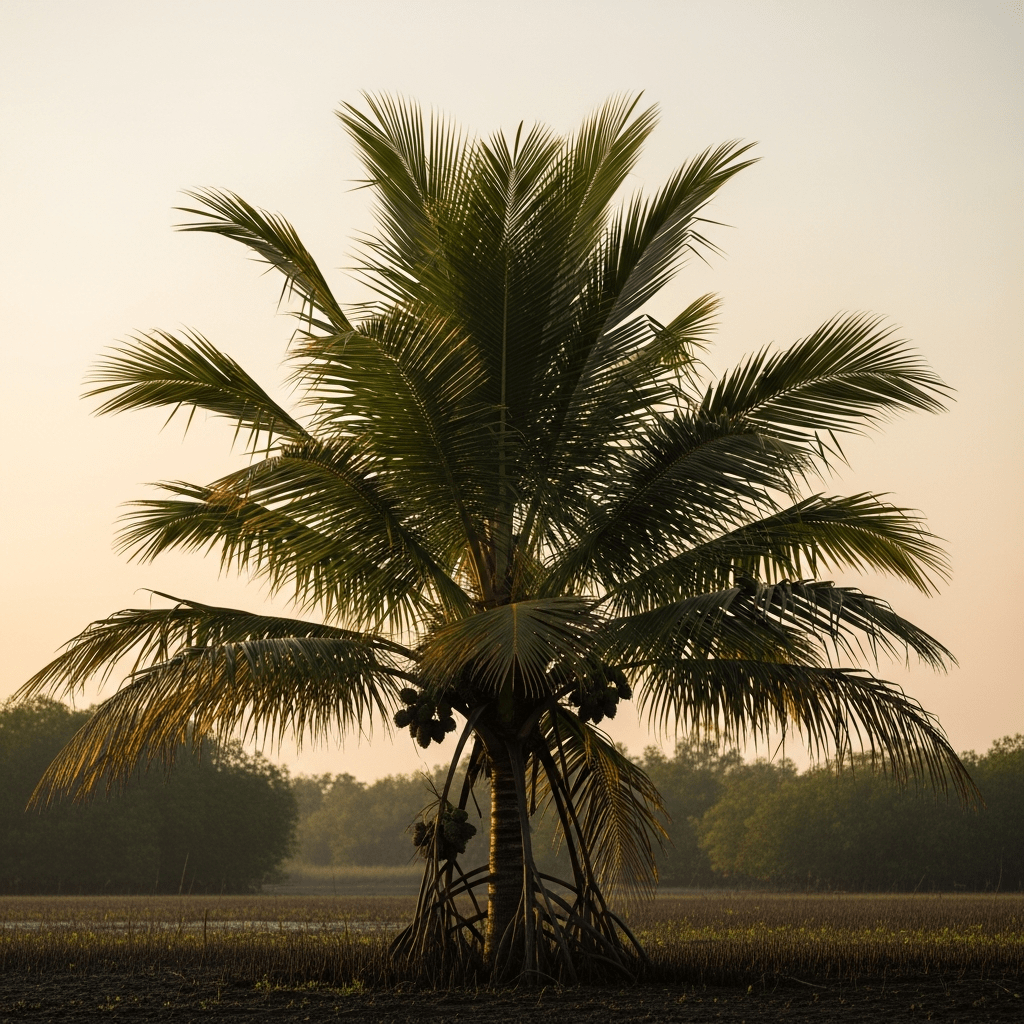
The Nipa Palm stands out for its horizontal, underground stem (rhizome) and absence of an upright trunk. Instead, its large, feather-like pinnate leaves—sometimes reaching up to 9 meters—emerge directly from the ground in dense clusters. The inflorescences are borne on short, erect stalks, with separate male and female flowers. Its fruits form large, woody, globular clusters that float and disperse via water, contributing to its spread along tidal zones.

Behavior or Usage

Functionally, the Nipa Palm is a keystone species in tidal wetlands, stabilizing mudflats and providing habitat for wildlife. For humans, it is tapped for sweet sap used in sugar, vinegar, and alcoholic beverages, while its immature seeds are enjoyed as a dessert delicacy. The leaves are prized for thatching and weaving, and other parts serve as construction material and fuel. Nipa is managed in situ for local use rather than large-scale cultivation.

Merchandise & Prints

Bring this kind into your world � illustrated posters, mugs, and shirts.

Nipa Palm Nipa Palm Poster

Nipa Palm Poster

Archival print, museum-grade paper

Nipa Palm Nipa Palm Mug

Nipa Palm Mug

Stoneware mug, dishwasher safe

Nipa Palm Nipa Palm Shirt

Nipa Palm Shirt

Soft cotton tee, unisex sizes

Attributes & Insights

Taxon-Specific Insights

🌍Cultural Significance

Throughout Southeast Asia, the Nipa Palm holds deep economic and cultural importance. Its sap is central to traditional sugar and alcohol production, and its leaves are woven into roofs and mats, shaping the architecture of coastal villages. The palm is integral to local livelihoods, featuring in festivals, daily life, and wetland ecology. Its presence in mangrove landscapes is often celebrated in regional art and folklore.

📌Notable Facts

  • The Nipa Palm is the only palm species with a horizontal, underground stem and no upright trunk.
  • Its fruits can float and are dispersed by water, allowing the species to colonize new tidal areas.
  • Nipa sap is one of the world's most important sources of traditional palm sugar and local alcohols in Southeast Asia.
  • The palm's leaves can reach up to 9 meters in length, making them among the longest in the palm family.
  • Fossil evidence shows Nipa palms have existed since the Eocene, making them living relics of ancient coastal ecosystems.

Species Diversity

The Nipa Palm (Nypa fruticans) is unique in being the only species within its genus. While the palm family (Arecaceae) includes over 2,600 species, Nipa stands alone in its lineage, with no known cultivars or subspecies. Its singular status highlights both its evolutionary distinctiveness and its specialized adaptation to tidal environments.

Visual Variations

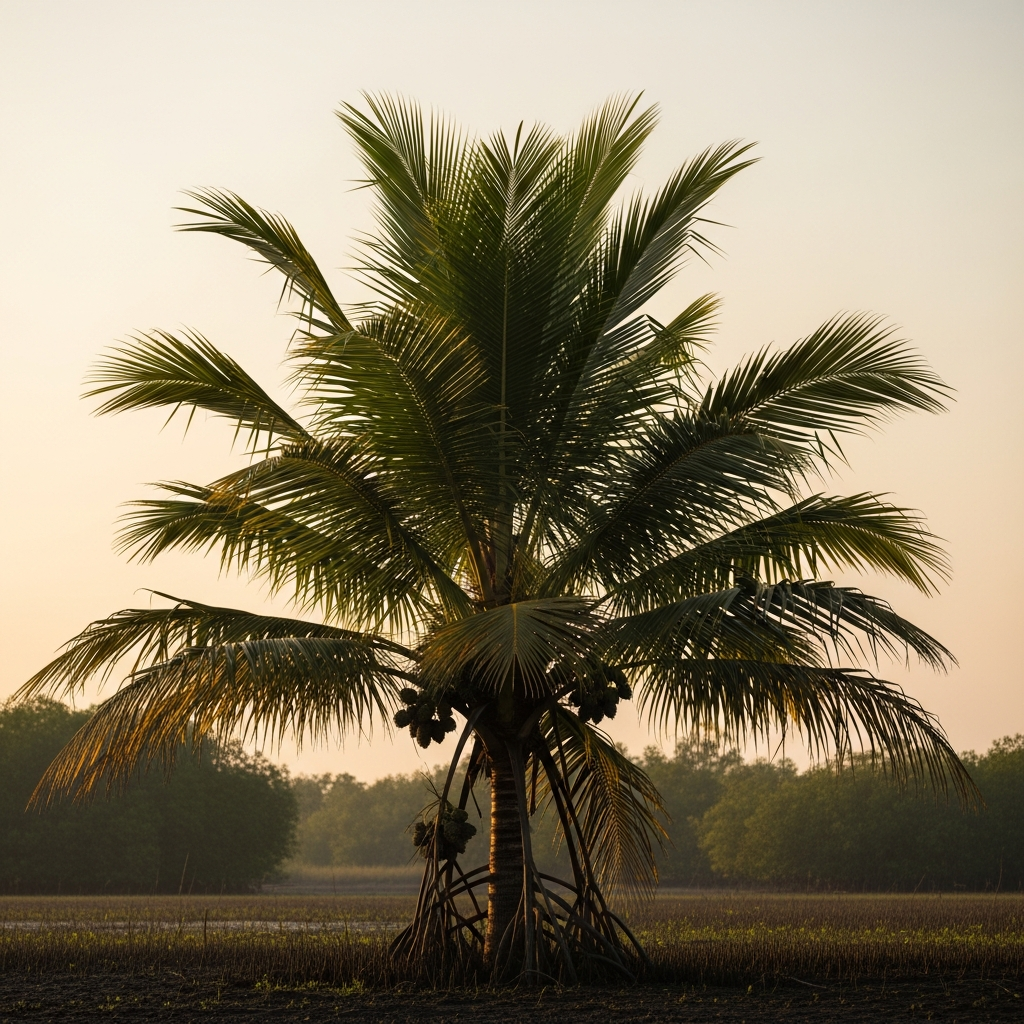
High quality studio photograph of a single Nipa Palm
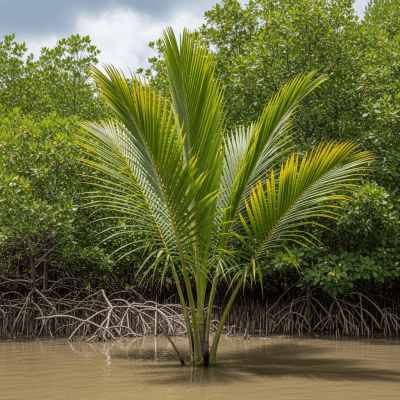
A detailed image of the Nipa Palm (palms) in its native environment
Cross-sectional scientific illustration of a Nipa Palm
A photograph of the Nipa Palm (palms) in cultural context
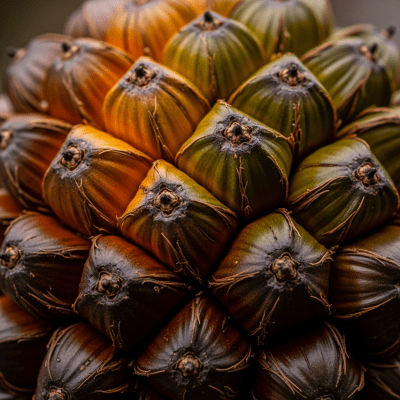
Close-up macro image of the leaf or fruit of a Nipa Palm
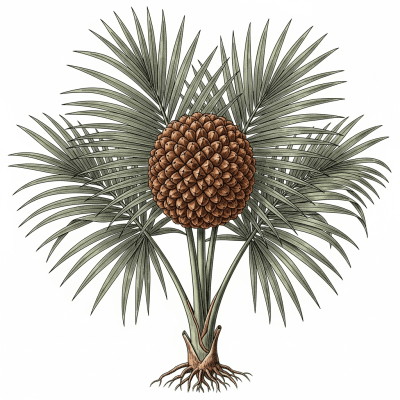
Botanical illustration of a whole Nipa Palm

Composition & Context

Taxon-Specific Insights

🌍Habitat And Distribution

Nipa Palm is native to coastal and estuarine habitats throughout Southeast Asia and the Indian Ocean rim. It flourishes in brackish tidal mudflats, estuaries, and mangrove zones, where it tolerates periodic inundation and saline conditions. Its distribution spans Malaysia, Indonesia, Vietnam, Bangladesh, and extends to other tropical coasts, always favoring areas where freshwater meets the sea.

🌱Cultivation And Care

Nipa Palm is not typically cultivated in plantations but managed in situ within its natural habitat. It prefers brackish, waterlogged soils and thrives in tidal wetlands. Clonal expansion occurs via its rhizome, and it is resilient to flooding and saline conditions. Care generally involves sustainable harvesting of sap and leaves, with minimal intervention required for growth.

💰Economic Importance

The Nipa Palm plays a vital economic role in coastal communities. Its sap is a major source of traditional sugar, vinegar, and alcoholic beverages, supporting local industries and livelihoods. The leaves are extensively used for thatching and weaving, while other parts provide construction materials and fuel. Though not widely commercialized, its products are central to rural economies across Southeast Asia.

Environmental Impact

Ecologically, the Nipa Palm stabilizes tidal mudflats, reduces erosion, and supports wetland biodiversity. Its dense stands offer shelter for fish, birds, and other wildlife. While resilient to flooding, Nipa habitats are threatened by coastal development and land conversion. The palm’s presence is essential for maintaining healthy mangrove ecosystems and protecting vulnerable shorelines.

Pests And Diseases

No major pests or diseases have been documented for Nipa Palm in current literature. Its resilience to periodic flooding and saline conditions helps protect it from many common threats faced by other palms. Management focuses on habitat conservation rather than pest control.

Edible And Utilitarian Parts

  • Sap: Tapped for sugar, vinegar, and alcoholic beverages such as toddy and arrack.
  • Immature seeds: Consumed as a delicacy in desserts.
  • Leaves: Used for thatching roofs and weaving mats.
  • Petioles and other parts: Employed as construction material and fuel.

🛡️Conservation Status

The Nipa Palm is not currently listed as threatened, but its habitats face pressure from coastal development and wetland drainage. Conservation efforts focus on protecting tidal zones and mangrove ecosystems, which are vital for the palm’s survival. Maintaining healthy estuarine environments ensures the continued ecological and economic benefits of Nipa Palm.

Faq

  • Is the Nipa Palm edible?
    Yes, its sap is used for sugar and alcoholic drinks, and the immature seeds are eaten as a dessert.
  • Where does the Nipa Palm grow?
    It thrives in tidal mudflats and estuaries across Southeast Asia and the Indian Ocean region.
  • Does the Nipa Palm have an upright trunk?
    No, it grows horizontally underground, with leaves emerging directly from the ground.