Foxtail Palm
The Foxtail Palm (Wodyetia bifurcata) is a striking, fast-growing palm native to northern Queensland, Australia, admired worldwide for its feathery, plume-like leaves and exceptional adaptability in tropical landscapes.
The Foxtail Palm (Wodyetia bifurcata) is a striking, fast-growing palm native to northern Queensland, Australia, admired worldwide for its feathery, plume-like leaves and exceptional adaptability in tropical landscapes.
Discovered in the remote Cape Melville region of northern Queensland, the Foxtail Palm was first described in 1983 by botanist Alan D. Jones. Its genus name, Wodyetia, honors Wodyeti, an Aboriginal elder who helped identify the species. The palm’s wild origins and recent scientific recognition make it a unique addition to cultivated gardens, with no known hybrids or cultivars.
Belonging to the family Arecaceae, the Foxtail Palm is the sole species in the genus Wodyetia. It is a true palm, distinct from palm-like plants outside the family, and is classified as a monocotyledonous flowering plant. Its scientific name is Wodyetia bifurcata A.D. Jones, and it is recognized globally for its unique morphology within the palm family.
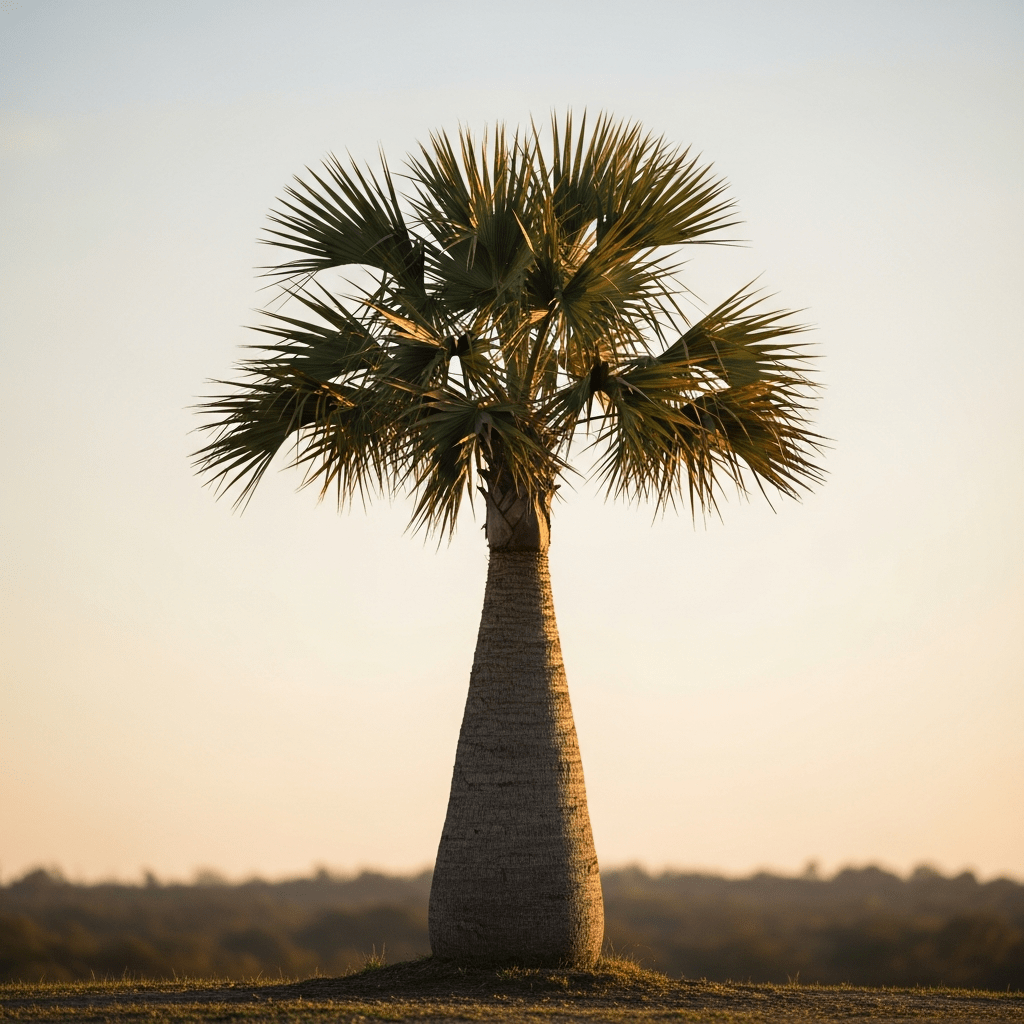
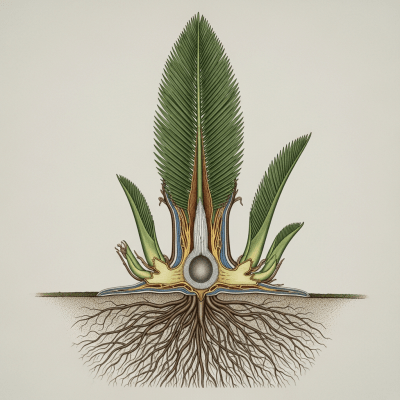
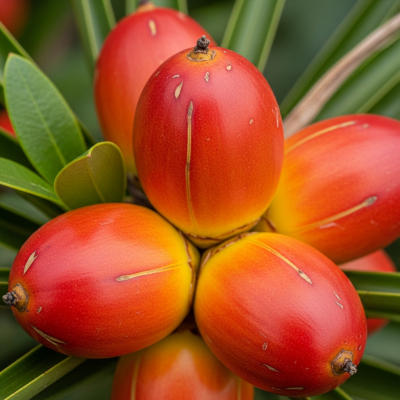
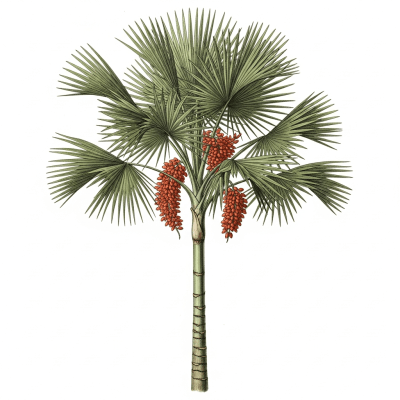
The Foxtail Palm features a solitary, smooth, light gray trunk that grows 7–12 meters tall and 15–30 cm in diameter. Its crown consists of 8–10 arching leaves, each 2–3 meters long, with bright green, linear leaflets arranged in a dense, feathery pattern reminiscent of a fox’s tail. The palm produces creamy-white flowers on interfoliar inflorescences and bears oval, orange-red drupes up to 7 cm long, each containing a single seed.
Primarily grown for ornamental purposes, the Foxtail Palm is a favorite in landscaping across tropical and subtropical regions. Its rapid growth, resilience, and striking foliage make it highly desirable for gardens, parks, and streetscapes. The palm thrives in well-drained soils and full sun, tolerates moderate drought once established, and is propagated mainly by seed.
Bring this kind into your world illustrated posters, mugs, and shirts.

Archival print, museum-grade paper
Buy Poster
Stoneware mug, dishwasher safe
Buy Mug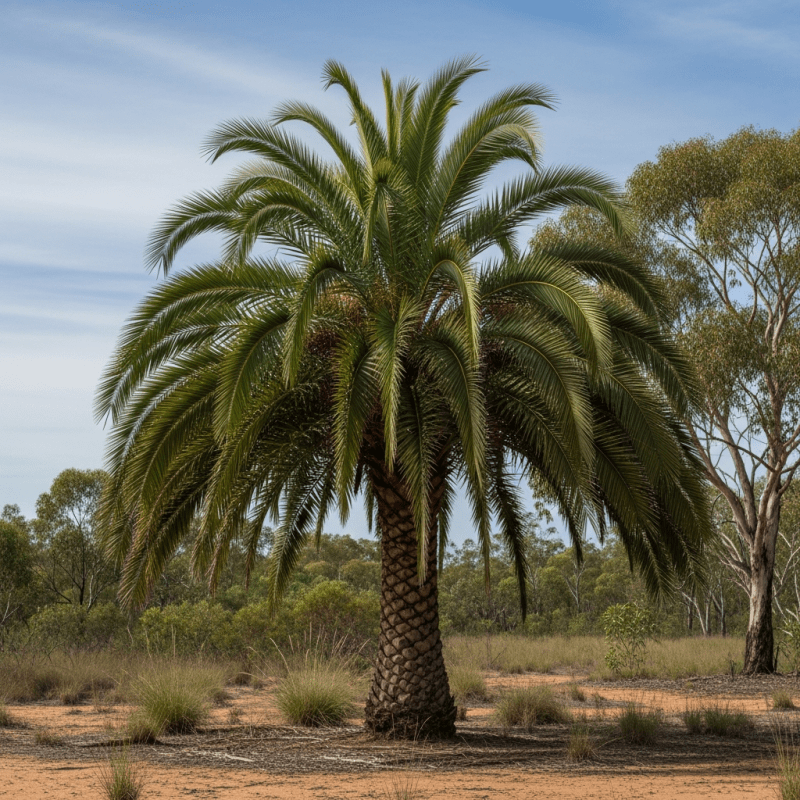
Soft cotton tee, unisex sizes
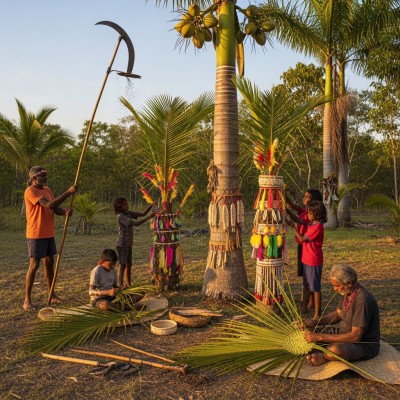
Buy ShirtThis palm is closely linked to the Cape Melville region and Aboriginal heritage, with its genus name commemorating Wodyeti, an elder who contributed to its discovery. While it holds no documented ritual or medicinal roles, its story and striking appearance have made it a symbol of Australian botanical uniqueness in global horticulture.
The Foxtail Palm is a monotypic species, meaning it is the only member of its genus, Wodyetia. In contrast, the palm family (Arecaceae) encompasses over 180 genera and approximately 2,600 species, ranging from the iconic coconut and date palms to diverse ornamental and wild varieties worldwide.

Native to the rugged Cape Melville region of northern Queensland, Australia, the Foxtail Palm thrives in tropical and subtropical climates. It prefers well-drained, sandy or rocky soils and full sun exposure. Today, it is widely cultivated and naturalized in warm regions around the world, from Australia to Southeast Asia, the Americas, and beyond.
To cultivate Foxtail Palms, plant seeds fresh in well-drained soil and provide full sun. The palm grows rapidly under optimal conditions and tolerates sandy or rocky substrates. Regular watering is needed during establishment, but mature trees handle moderate drought. Watch for nutrient deficiencies, especially potassium and magnesium, and avoid exposure to severe cold.
The Foxtail Palm holds significant value in ornamental horticulture and landscaping, prized for its distinctive foliage and adaptability. It is exported and propagated globally, contributing to the nursery and landscaping industries in tropical and subtropical regions. Unlike some palms, it has no major agricultural or industrial uses beyond its decorative appeal.
As a robust ornamental species, the Foxtail Palm enhances urban green spaces and gardens, supporting biodiversity and aesthetic value. Its resilience to pests and adaptability to various soils make it a low-maintenance choice for sustainable landscaping. However, as with all introduced species, responsible cultivation is important to avoid potential ecological disruption outside its native range.
The Foxtail Palm does not produce edible fruits or seeds, and there are no known utilitarian uses for its parts. Its primary value lies in its ornamental foliage and aesthetic contribution to landscapes.
Wild populations of the Foxtail Palm are native to a restricted area in Cape Melville, Queensland. While not currently listed as threatened, its limited natural range highlights the importance of habitat protection. Widespread cultivation has helped preserve the species, but ongoing conservation efforts ensure its survival in the wild.