Origin Story

First described by Carl Linnaeus in 1753, the European Fan Palm traces its origins to the western Mediterranean Basin. It thrives in southern Europe—including Spain, Portugal, France, Italy, and Malta—as well as North Africa and several Mediterranean islands. As a wild, naturally occurring species, it has no breeder or cultivation origin, but instead represents a botanical lineage unique to its native range, with regional varieties emerging in places like Morocco and southern Spain.

Classification

Belonging to the family Arecaceae, the European Fan Palm is classified within the monotypic genus Chamaerops. It is distinct among palms for being the sole representative of its genus and the only palm indigenous to continental Europe. Its closest relatives are other members of the Arecaceae family, which includes a vast array of palms worldwide, but Chamaerops humilis stands apart for its unique adaptation to Mediterranean climates.

Appearance or Form

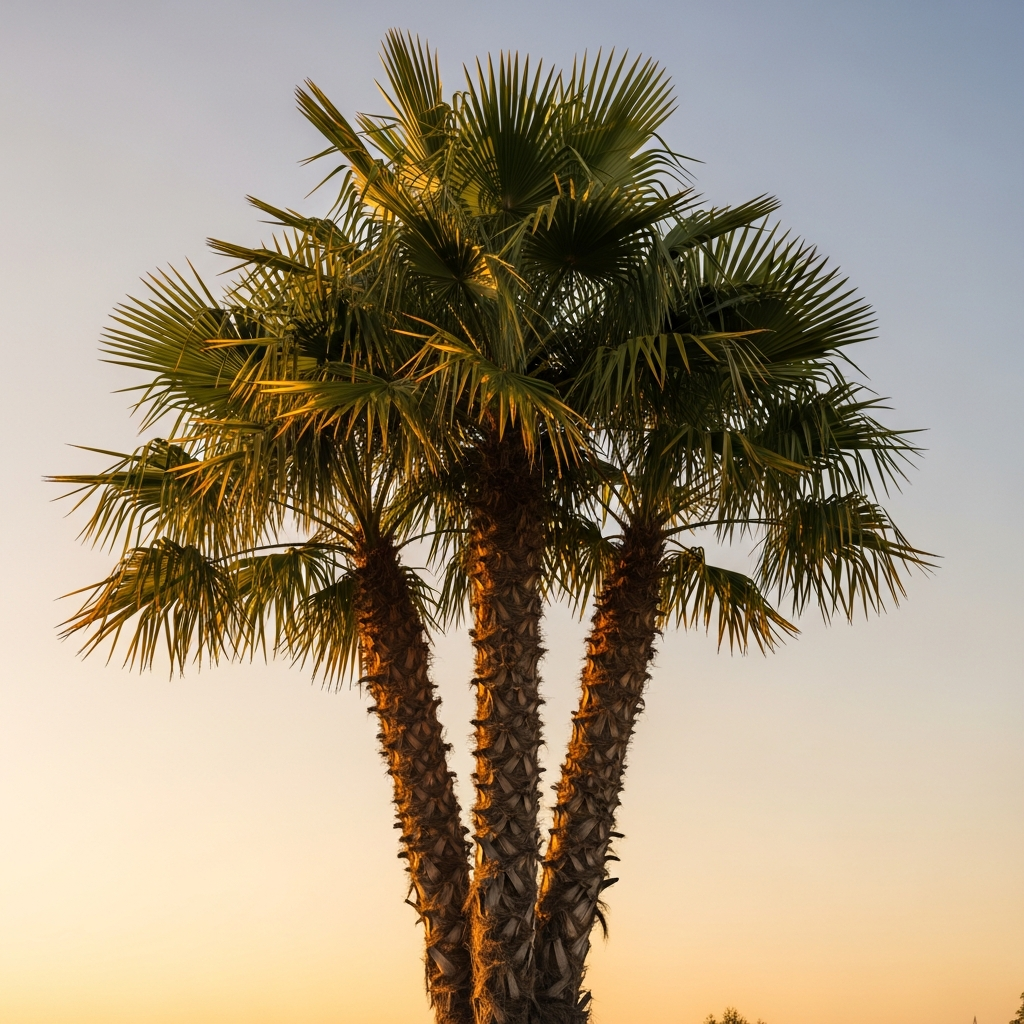
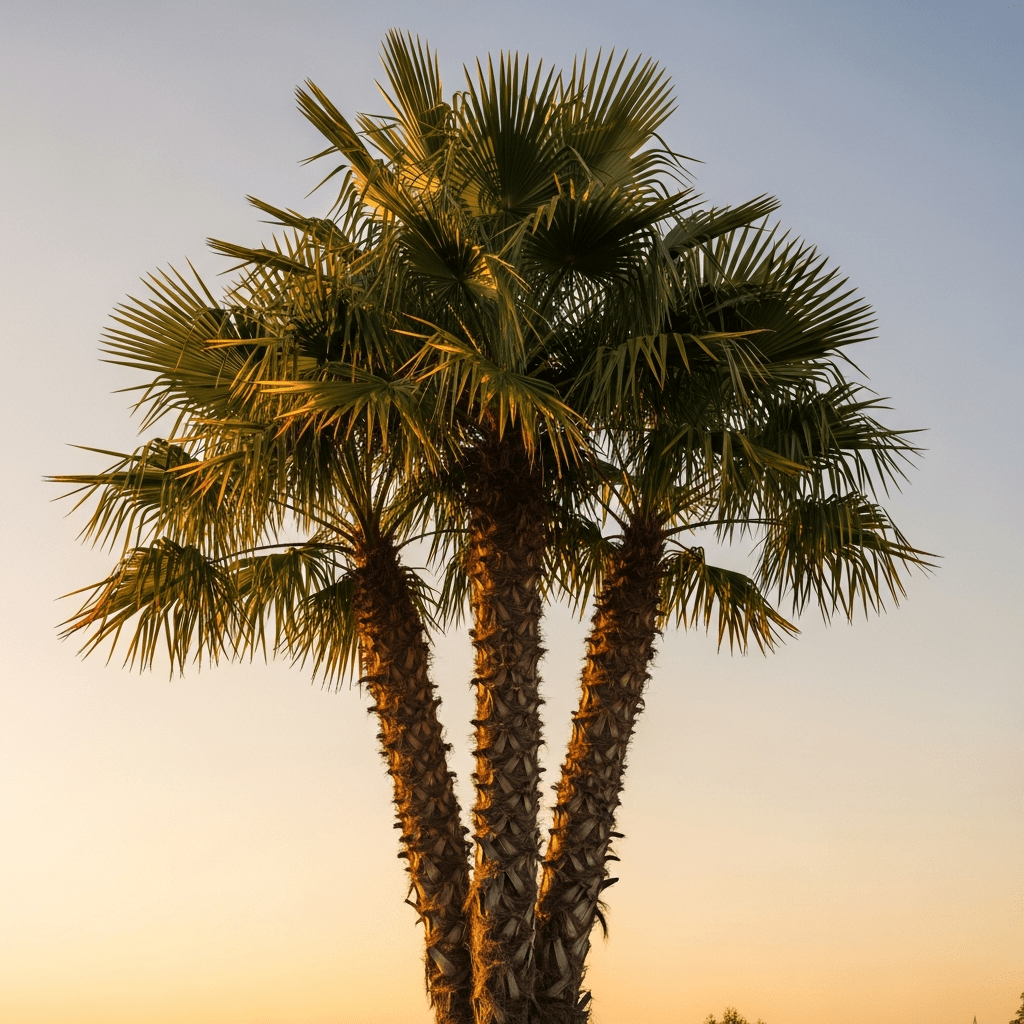
This palm is characterized by its dense, multi-stemmed clumps that typically reach heights of 1.5 to 5 meters. Its leaves are strikingly palmate—fan-shaped and up to 80 cm across—with 10 to 20 leaflets per leaf, and petioles armed with sharp spines. Leaf color ranges from deep green to bluish-green, especially in certain regional varieties. Small, yellowish flowers appear in spring, followed by ovoid drupes that ripen from green to brown. The overall impression is one of robust, compact elegance, well-suited to both gardens and wild landscapes.

Behavior or Usage

Renowned for its adaptability, the European Fan Palm is a favorite in ornamental landscaping, container cultivation, and xeriscaping. It thrives in well-drained, calcareous or sandy soils, tolerates drought, wind, salt spray, and even moderate cold down to -12°C. Its slow to moderate growth and compact stature make it ideal for urban and garden environments. Traditionally, its leaf fibers have been woven into baskets and mats in rural Mediterranean communities, and its seeds are sometimes used for crafts and rosaries.

Merchandise & Prints

Bring this kind into your world � illustrated posters, mugs, and shirts.

European Fan Palm European Fan Palm Poster

European Fan Palm Poster

Archival print, museum-grade paper

European Fan Palm European Fan Palm Mug

European Fan Palm Mug

Stoneware mug, dishwasher safe

European Fan Palm European Fan Palm Shirt

European Fan Palm Shirt

Soft cotton tee, unisex sizes

Attributes & Insights

Taxon-Specific Insights

🌍Cultural Significance

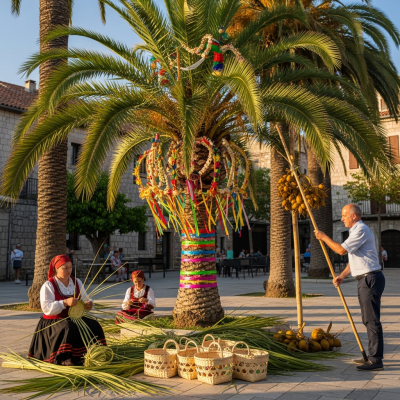
As the only palm native to continental Europe, Chamaerops humilis holds a special place in Mediterranean heritage. Its leaves have been woven into everyday objects for generations, symbolizing resourcefulness and connection to the land. In local folklore and rural tradition, the palm is often associated with resilience and the enduring beauty of Mediterranean landscapes.

📌Notable Facts

  • The European Fan Palm is the only palm species naturally found in continental Europe.
  • It can survive temperatures as low as -12°C, making it one of the most cold-tolerant palms.
  • Its compact, clumping growth habit allows it to thrive in rocky, exposed sites and coastal areas.
  • Regional varieties, such as the bluish-leaved cerifera, are recognized in North Africa and southern Spain.
  • Despite producing fruit, it is not cultivated for food or fiber at a commercial scale.

Species Diversity

Within the genus Chamaerops, humilis is the sole species, though regional varieties such as argentea and cerifera are recognized for their distinctive leaf colors and forms. The broader palm family, Arecaceae, encompasses over 180 genera and approximately 2,600 species worldwide, ranging from towering coconut palms to diminutive understory species, but the European Fan Palm remains unique in its continental European origin.

Visual Variations

High quality studio photograph of a single European Fan Palm
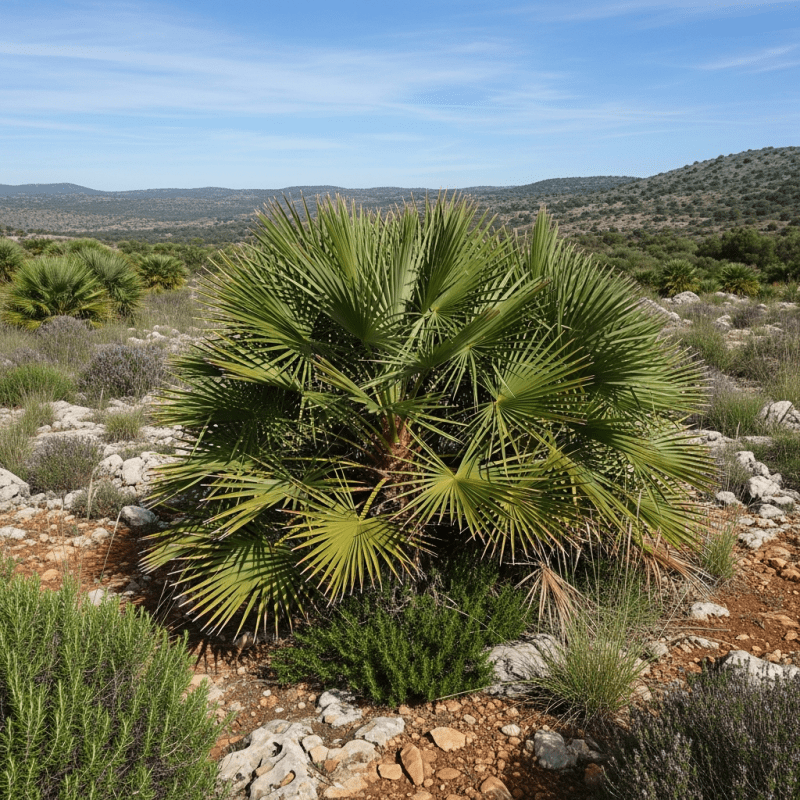
A detailed image of the European Fan Palm (palms) in its native environment
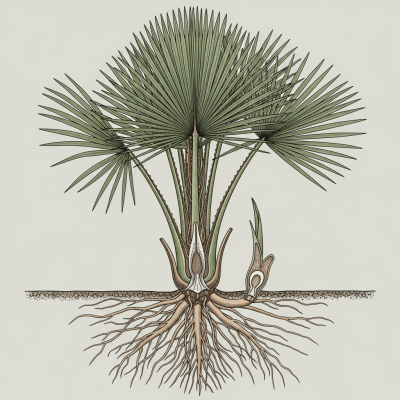
Cross-sectional scientific illustration of a European Fan Palm
A photograph of the European Fan Palm (palms) in cultural context
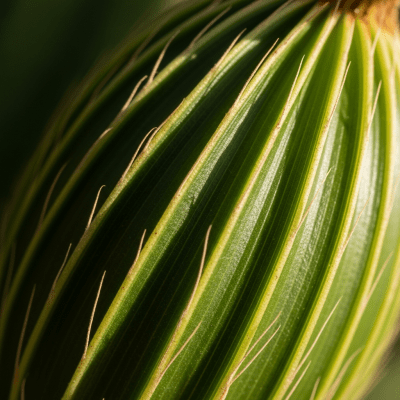
Close-up macro image of the leaf or fruit of a European Fan Palm
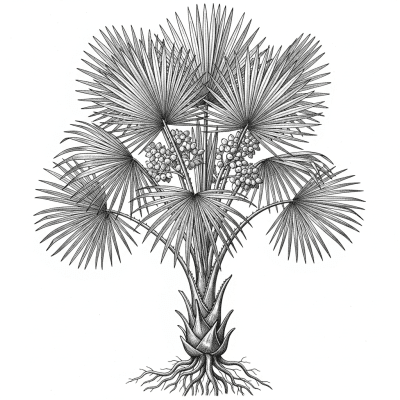
Botanical illustration of a whole European Fan Palm

Composition & Context

Taxon-Specific Insights

🌍Habitat And Distribution

The European Fan Palm is native to the western Mediterranean Basin, thriving in southern Europe, North Africa, and several Mediterranean islands. It favors rocky hillsides, coastal scrub, and open woodlands, often found in well-drained, calcareous or sandy soils. Its natural distribution includes Spain, Portugal, France, Italy, Malta, Morocco, Algeria, Tunisia, Libya, Sicily, Sardinia, Corsica, and the Balearic Islands.

🌱Cultivation And Care

This palm is easy to cultivate in Mediterranean and temperate climates. It prefers full sun and well-drained soils, tolerates drought and salt spray, and withstands moderate cold. Watering should be infrequent but deep, especially once established. Regular removal of dead leaves maintains its tidy appearance, and container cultivation is possible for smaller spaces. Protection from palm weevil and fungal leaf spot is advised in humid regions.

💰Economic Importance

While not a major commercial crop, the European Fan Palm is highly valued for ornamental landscaping in gardens, parks, and urban spaces. Its leaf fibers have traditional uses in basketry and mat weaving, but large-scale economic exploitation is negligible. Its popularity continues to grow in horticulture due to its hardiness and aesthetic appeal.

Environmental Impact

The European Fan Palm plays a vital ecological role in Mediterranean habitats, stabilizing soils, providing shelter for wildlife, and contributing to local biodiversity. Its drought and salt tolerance make it an important species in restoring degraded or coastal landscapes. As a native species, it supports the integrity of Mediterranean ecosystems without posing invasive risks.

Pests And Diseases

Major threats to the European Fan Palm include the palm weevil (Rhynchophorus ferrugineus) and fungal leaf spot, particularly in humid climates. Management strategies involve regular inspection, removal of affected leaves, and, where necessary, targeted biological or chemical controls. Good air circulation and avoidance of overwatering help prevent disease outbreaks.

Edible And Utilitarian Parts

While the fruit of the European Fan Palm is not considered edible, its leaf fibers have long been used for weaving baskets and mats in rural Mediterranean communities. Seeds are occasionally crafted into rosaries and small decorative objects, reflecting the palm's utilitarian value beyond its ornamental appeal.

🛡️Conservation Status

The European Fan Palm is not currently considered threatened, with stable populations across its native range. However, habitat loss, urbanization, and the spread of pests like the palm weevil pose localized risks. Conservation efforts focus on habitat protection and monitoring of pest outbreaks, ensuring the continued survival of this emblematic Mediterranean species.

Faq

  • Is the European Fan Palm suitable for cold climates?
    Yes, it tolerates temperatures down to -12°C, making it ideal for temperate regions.
  • Can the fruit of the European Fan Palm be eaten?
    No, the fruit is not considered edible and has limited local use.
  • What are common uses for this palm?
    It is mainly grown as an ornamental plant and for traditional weaving of baskets and mats from its leaf fibers.