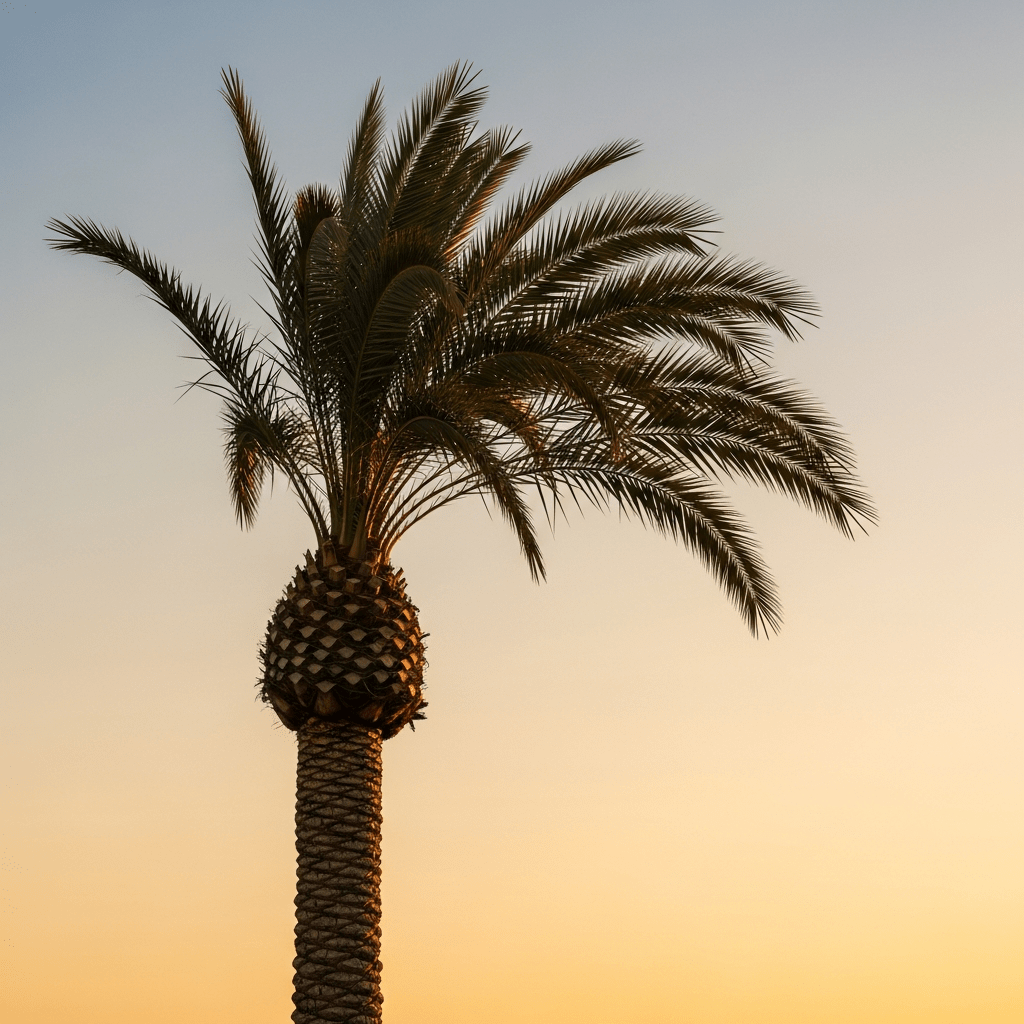
Date Palm
The Date Palm (Phoenix dactylifera) is a tall, drought-tolerant palm renowned for its sweet, edible fruit and its vital role in desert agriculture and culture across the Middle East and North Africa.
The Date Palm (Phoenix dactylifera) is a tall, drought-tolerant palm renowned for its sweet, edible fruit and its vital role in desert agriculture and culture across the Middle East and North Africa.
Native to arid regions spanning from Iraq and Iran through the Arabian Peninsula to Egypt and Morocco, the Date Palm's origins trace back over 5,000 years. Archaeological evidence points to ancient Mesopotamia and Egypt as early centers of domestication, where communities began cultivating this species for its fruit and resilience. Its spread and adaptation were driven by oasis farmers, with propagation largely through vegetative cloning of prized female trees. The precise wild ancestor remains debated, but the Date Palm's legacy is deeply entwined with the rise of desert civilizations.
The Date Palm belongs to the botanical family Arecaceae, which encompasses all true palms. Its accepted scientific name is Phoenix dactylifera L., placing it within the genus Phoenix—a group of feather-leaved palms. As a monocotyledonous flowering plant, it shares key traits with other members of the palm family, including unbranched stems and large, compound leaves. While sometimes confused with related species like Phoenix sylvestris, the Date Palm is taxonomically distinct and universally recognized within scientific and agricultural circles.
The Date Palm is an imposing, single-stemmed tree reaching heights of 15–25 meters, with a sturdy trunk up to 50 cm in diameter. Its crown is adorned with long, arching pinnate leaves, each stretching 4–6 meters and bearing up to 150 slender leaflets. The tree is dioecious, meaning male and female flowers grow on separate plants. Inflorescences emerge as large, branched panicles, giving way to clusters of oblong, yellow-to-brown drupes—dates—each 3–7 cm long, with a glossy skin and a single hard seed inside. The overall effect is both stately and lush, especially when laden with fruit.
Date Palms thrive in hot, dry climates and are exceptionally tolerant of drought and saline soils. Their slow to moderate growth culminates in fruit production after 4–8 years. The trees are cultivated for their sweet dates, which are harvested and consumed fresh or dried, and processed into syrups, pastes, and confections. Beyond fruit, the palm's leaves are woven into baskets and mats, its trunk wood used in construction, and seeds fed to livestock or pressed for oil. In oasis agriculture, Date Palms provide shade and microclimate, enabling the cultivation of other crops beneath their canopy.
Bring this kind into your world illustrated posters, mugs, and shirts.

Archival print, museum-grade paper
Buy Poster
Stoneware mug, dishwasher safe
Buy Mug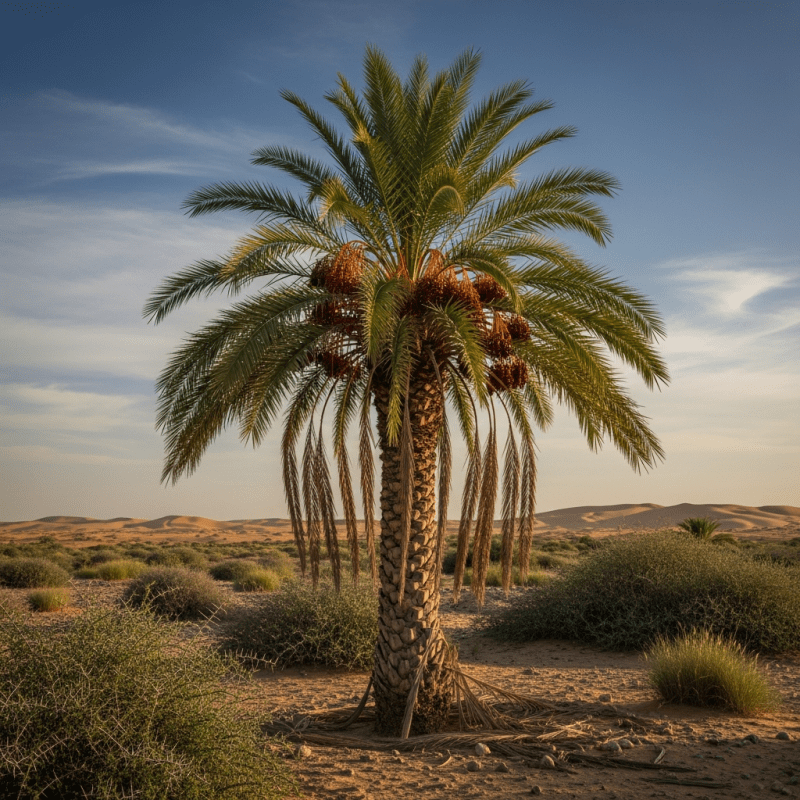
Soft cotton tee, unisex sizes
Buy ShirtThroughout history, the Date Palm has been a symbol of sustenance, prosperity, and endurance in desert societies. It features prominently in religious texts, including the Quran and the Bible, and is integral to festivals such as Ramadan, where dates are traditionally used to break the fast. In art and architecture, its graceful form and fruit are celebrated motifs. The palm is also a marker of hospitality and abundance, woven into the fabric of Middle Eastern, North African, and South Asian cultures as both staple food and emblem of life in arid lands.
The genus Phoenix includes several species, but Phoenix dactylifera is the primary cultivated date-producing palm. Within this species, hundreds of named cultivars exist, such as 'Medjool', 'Deglet Noor', 'Barhi', 'Zahidi', and 'Khalas', each adapted to specific regions and tastes. While the palm family (Arecaceae) boasts over 2,600 species globally, the Date Palm stands out for its agricultural and cultural prominence in arid landscapes.

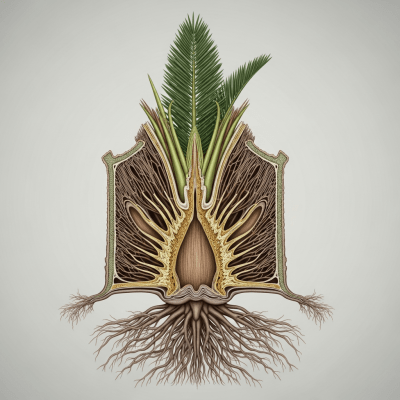
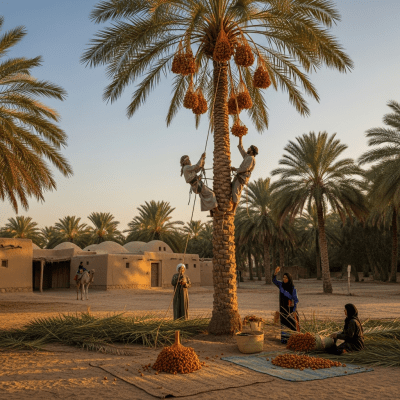
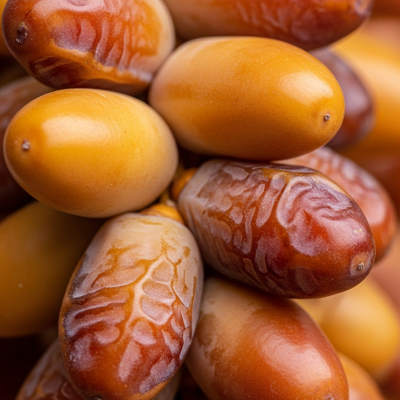

Date Palms are native to the Middle East and North Africa, thriving in hot, dry environments from Iraq and Iran to Egypt and Morocco. Today, their cultivation spans much of the world’s arid and semi-arid zones, including parts of South Asia, the Mediterranean, and even the southwestern United States. They are a defining feature of oasis ecosystems, where their deep roots access groundwater and their canopy provides shade for understory crops.
Successful Date Palm cultivation requires full sun, well-drained soil, and minimal rainfall. The species is highly tolerant of drought and salinity, making it ideal for desert farming. Propagation is most reliable via offshoots from mature trees, ensuring true-to-type fruit. Regular irrigation, especially during fruit development, enhances yield and quality. Pruning of old leaves and careful management of pests and diseases are essential for healthy growth. While slow to mature, a well-cared-for Date Palm can remain productive for decades.
Date Palms underpin major agricultural economies in countries such as Egypt, Iran, Saudi Arabia, Iraq, Algeria, and Pakistan. The fruit is a staple food, traded fresh and dried, and forms the basis for a range of processed products including syrups and confections. The palm also supplies materials for weaving, building, and animal feed, supporting rural livelihoods and industries. Global date production is measured in millions of tons annually, reflecting the species’ enduring commercial value.
Date Palms play a crucial ecological role in oasis environments, providing shade, stabilizing soils, and supporting biodiversity. Their cultivation enables sustainable agriculture in otherwise inhospitable regions. However, large-scale monoculture can increase vulnerability to pests and diseases, and intensive irrigation may impact local water resources. Overall, the Date Palm is a model of adaptation to arid climates, balancing agricultural productivity with environmental stewardship when managed wisely.
The Date Palm is not currently considered threatened, owing to its extensive cultivation and economic value. However, genetic diversity is at risk from reliance on a limited number of commercial clones, and local varieties may decline due to disease pressures, especially Bayoud disease. Conservation efforts focus on preserving traditional cultivars, maintaining healthy groves, and managing pests and diseases. The species is recognized and monitored by global authorities such as Kew Gardens and the FAO.