Coconut Palm
The Coconut Palm (Cocos nucifera) is a towering tropical palm renowned for its iconic fruit, versatile uses, and vital role in coastal societies worldwide.
The Coconut Palm (Cocos nucifera) is a towering tropical palm renowned for its iconic fruit, versatile uses, and vital role in coastal societies worldwide.
The wild origins of the coconut palm are rooted in the coastal regions of Southeast Asia, Melanesia, and possibly the Indian subcontinent. Archaeological and genetic evidence suggests that humans began cultivating and spreading this palm thousands of years ago, resulting in its pantropical presence today. Over time, the coconut palm has diversified into numerous landraces and cultivars, shaped by local selection and adaptation to coastal environments.
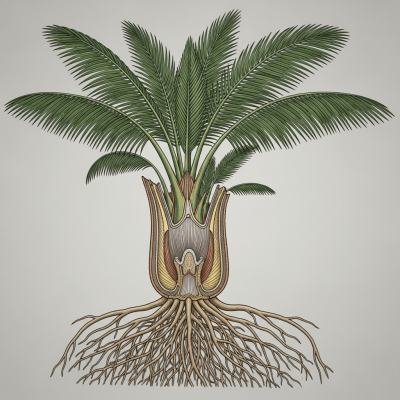
The coconut palm belongs to the family Arecaceae, which encompasses all true palms. Its scientific name is Cocos nucifera L., and it is classified as a monocotyledonous flowering plant. Within the palm family, it is distinguished by its single, unbranched trunk, pinnate leaves, and large, edible drupes. Genetic studies reveal two major populations: Indo-Atlantic and Pacific types, reflecting ancient dispersal and domestication patterns.
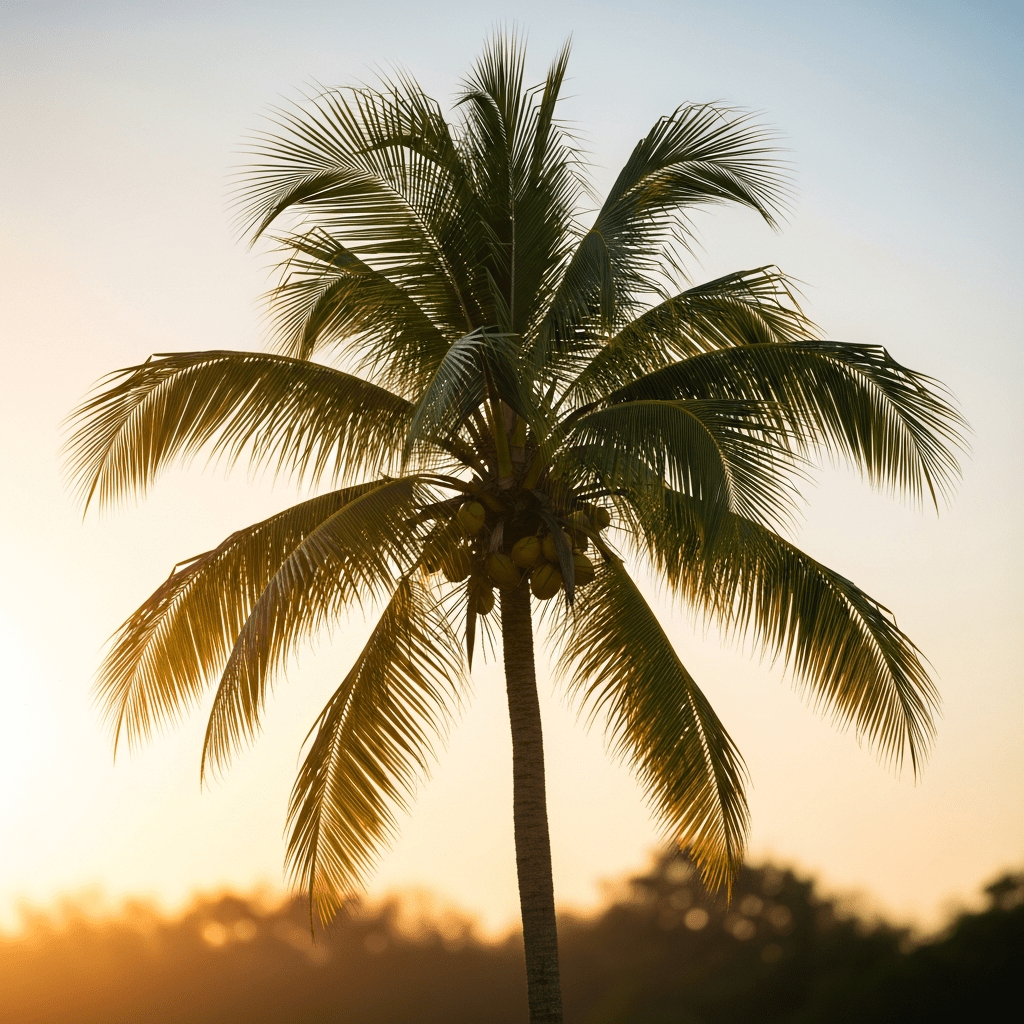
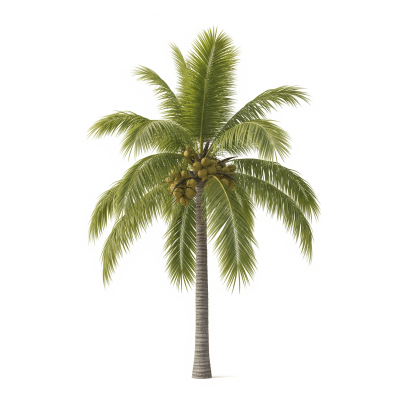
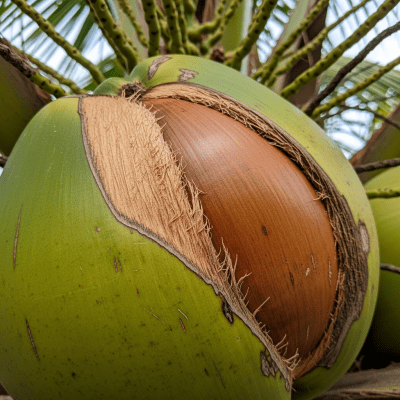
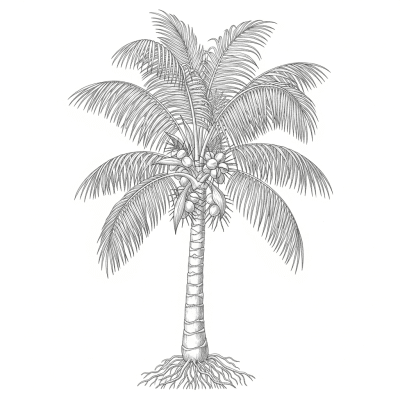
The coconut palm is instantly recognizable by its slender, upright trunk—often reaching 20 to 30 meters—and its crown of gracefully arching, feather-like pinnate leaves that can span 4 to 6 meters in length. Each leaf bears hundreds of narrow leaflets, creating a lush, airy canopy. Its fruit, the coconut, is a large, oval drupe with a fibrous husk, hard shell, and edible white flesh and clear water inside. The palm’s trunk is marked by distinct leaf scars, and mature trees sway elegantly in tropical breezes.
Coconut palms thrive in sandy, saline soils and withstand coastal winds, making them ideal for tropical shorelines. They are cultivated for their fruit, which provides coconut water, meat, milk, and oil. The palm’s coir fiber is used for ropes and mats, while the leaves serve as thatch and weaving material. Its wood is employed in construction and furniture, and nearly every part of the tree finds a use in daily life, from fuel to crafts. Propagation is typically by seed, using the whole coconut.
Bring this kind into your world illustrated posters, mugs, and shirts.
Archival print, museum-grade paper
Buy Poster
Stoneware mug, dishwasher safe
Buy Mug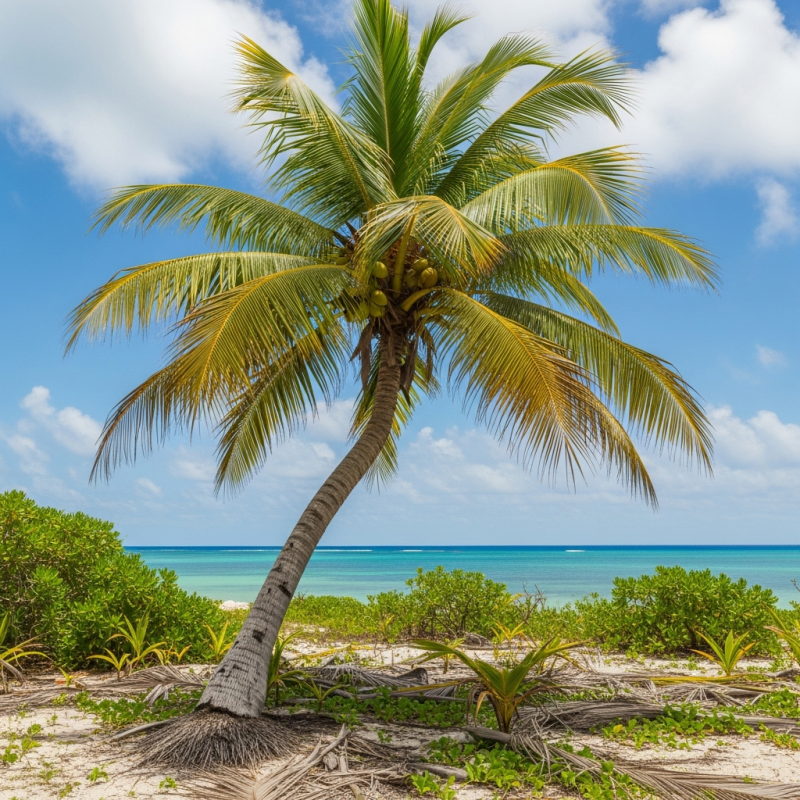
Soft cotton tee, unisex sizes
Buy ShirtThe coconut palm is deeply woven into the cultural fabric of societies across South Asia, Southeast Asia, the Pacific Islands, Africa, and the Americas. It features prominently in rituals, traditional cuisines, folklore, and religious ceremonies. In many cultures, the coconut symbolizes prosperity, fertility, and sustenance, and its presence is celebrated in festivals and art. Its economic and nutritional importance has made it a symbol of tropical abundance and resilience.
The coconut palm (Cocos nucifera) is a single species within its genus, but the palm family (Arecaceae) boasts over 2,600 species across 180+ genera. Within coconut palms, numerous regional landraces and cultivars exist, such as Tall and Dwarf types, each adapted to local conditions and valued for distinct fruit traits.
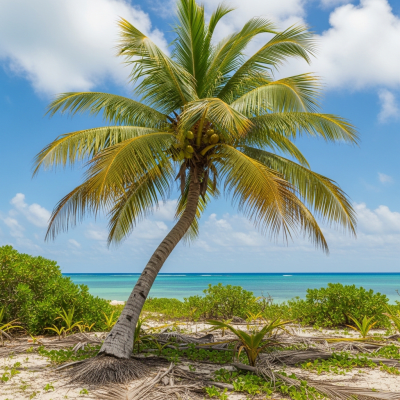
Coconut palms are native to coastal Southeast Asia, Melanesia, and possibly the Indian subcontinent, but now flourish throughout the tropics. They thrive in sandy, well-drained soils, tolerate salt, and are commonly found along beaches, riverbanks, and lowland tropical areas. Human cultivation has spread them across Asia, Africa, the Pacific, the Caribbean, and the Americas, making them one of the most widely distributed palms globally.
To cultivate coconut palms, plant fresh coconuts in sandy, well-drained soil with full sun exposure. They require warm, humid climates and regular watering, especially during establishment. Palms begin fruiting after 6–10 years and reach peak productivity at 15–20 years. Regular removal of old fronds and monitoring for pests and diseases helps maintain tree health. Fertilization and mulching can support growth, especially in nutrient-poor soils.
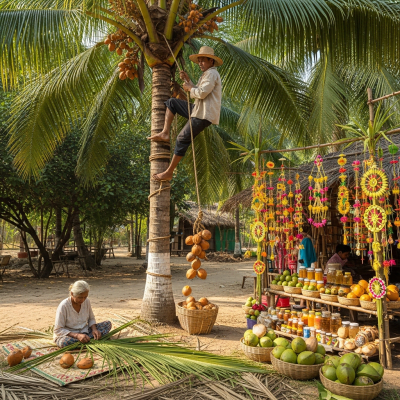
The coconut palm is a cornerstone of tropical agriculture and industry. Its fruit yields coconut water, meat, milk, cream, and copra for oil extraction, all vital to global food and cosmetic industries. Coir fiber from the husk is used in ropes, mats, and brushes, while shells provide charcoal and crafts. Palm wood is valued for construction and furniture, and leaves are used for thatching and weaving. The palm supports millions of livelihoods and is integral to economies in Asia, Africa, and the Americas.
Coconut palms play a crucial ecological role in stabilizing coastal soils, providing habitat for wildlife, and supporting biodiversity. Their ability to thrive in saline, sandy environments helps prevent erosion along shorelines. However, large-scale monoculture plantations may reduce local biodiversity and increase vulnerability to pests and diseases. Sustainable cultivation practices are essential to balance economic benefits with environmental stewardship.
The coconut palm is not considered threatened and is widely cultivated. However, certain regional landraces and wild populations may face genetic erosion due to disease, habitat loss, and replacement by commercial varieties. Conservation efforts focus on preserving genetic diversity, combating lethal yellowing disease, and promoting sustainable farming practices. The species is listed as Least Concern by the IUCN.