
Caranday Palm
The Caranday Palm (Copernicia alba) is a resilient South American palm renowned for its fan-shaped leaves and its role as a natural source of carnauba-type wax.
The Caranday Palm (Copernicia alba) is a resilient South American palm renowned for its fan-shaped leaves and its role as a natural source of carnauba-type wax.
First described by botanist Thomas Morong in 1893, the Caranday Palm is indigenous to the Gran Chaco region, stretching across Paraguay, Bolivia, Brazil (Mato Grosso do Sul), and northern Argentina. It thrives in wild, seasonally flooded savannas and has no known horticultural cultivars or bred variants, remaining a naturally occurring species in its native landscape.
Belonging to the family Arecaceae, the Caranday Palm is part of a vast group of monocotyledonous flowering plants collectively known as palms. Its scientific name is Copernicia alba Morong, and it shares its genus with other wax-producing palms. The family Arecaceae is defined by unbranched trunks and large, often fan-shaped leaves, with the Caranday Palm exemplifying these traits.
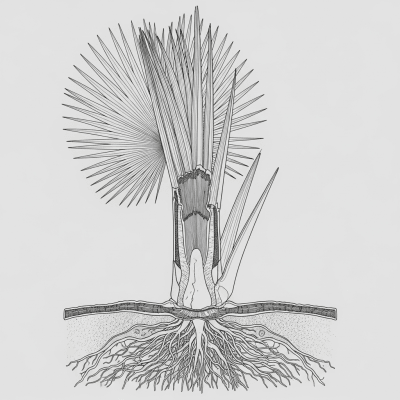
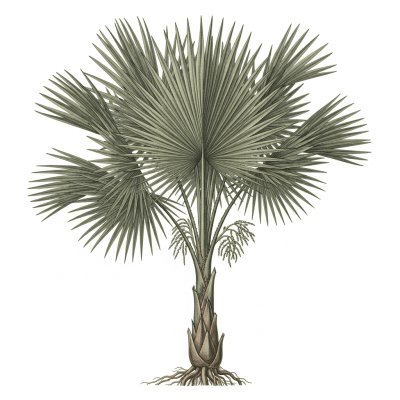
The Caranday Palm stands out with a solitary, upright trunk that can reach 10–20 meters in height, occasionally up to 25 meters, and is marked by grayish, ringed leaf scars. Its crown is composed of rigid, glaucous green leaves, each up to 1 meter wide and divided into 40–60 segments, giving a distinctive fan-like appearance. The palm produces branched inflorescences with small, creamy-white bisexual flowers, and its fruit is a glossy black globe about 1.5–2 cm in diameter.
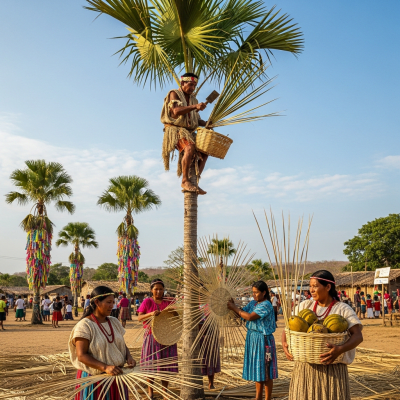
Adapted to the extremes of its environment, the Caranday Palm tolerates both seasonal flooding and drought, making it a keystone species in savanna ecosystems. Its leaves are harvested for wax, while the sturdy wood serves local communities for construction, fencing, and fuel. The palm is also planted for landscaping and ecological restoration, and its fruits, though not widely consumed by humans, support wildlife.
Bring this kind into your world illustrated posters, mugs, and shirts.
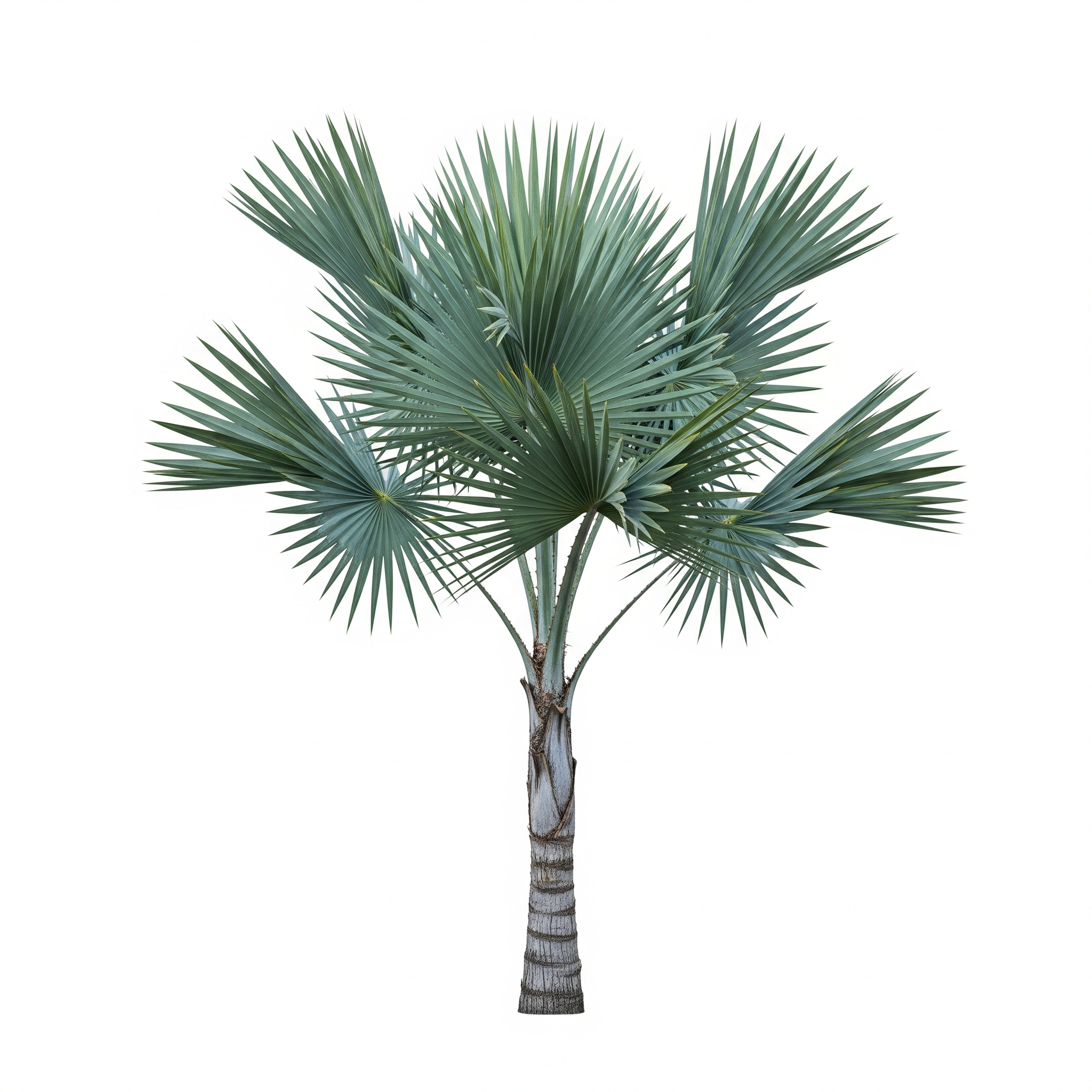
Archival print, museum-grade paper
Buy Poster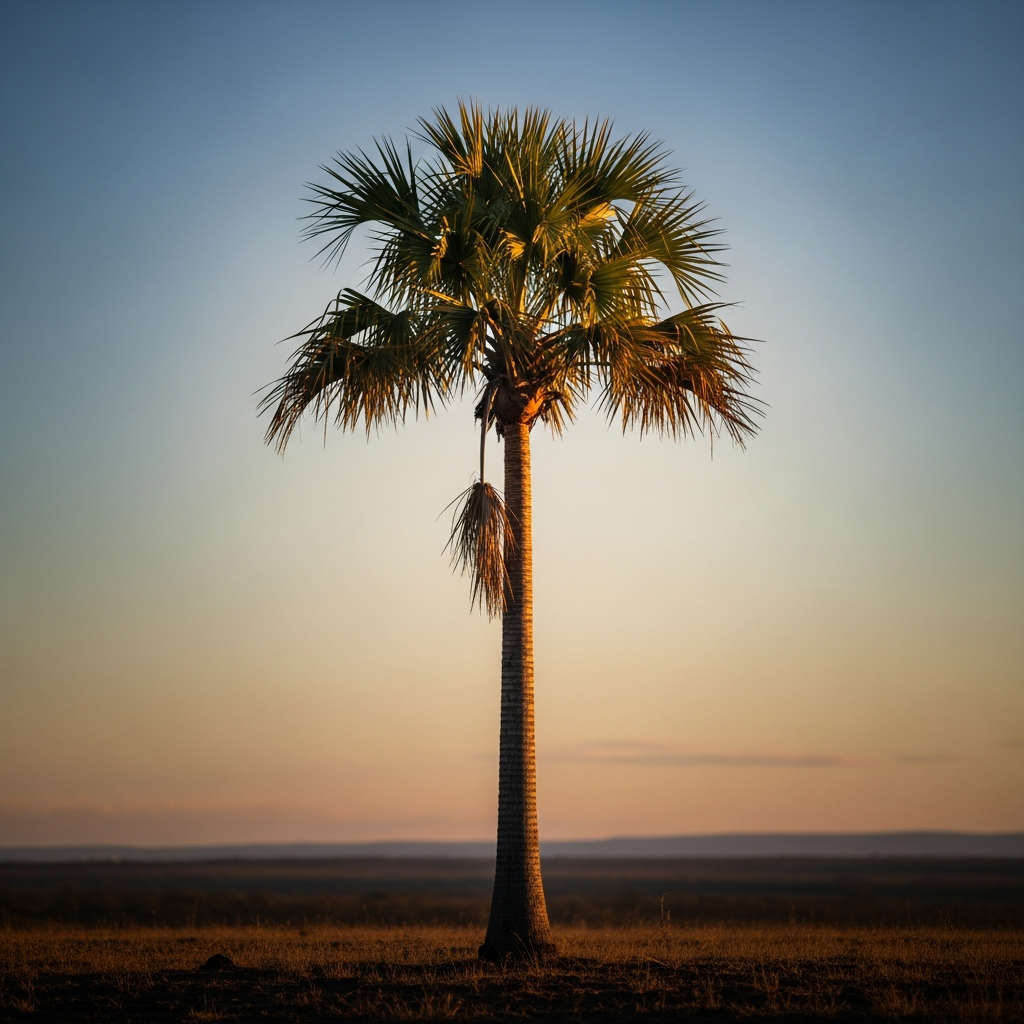
Stoneware mug, dishwasher safe
Buy Mug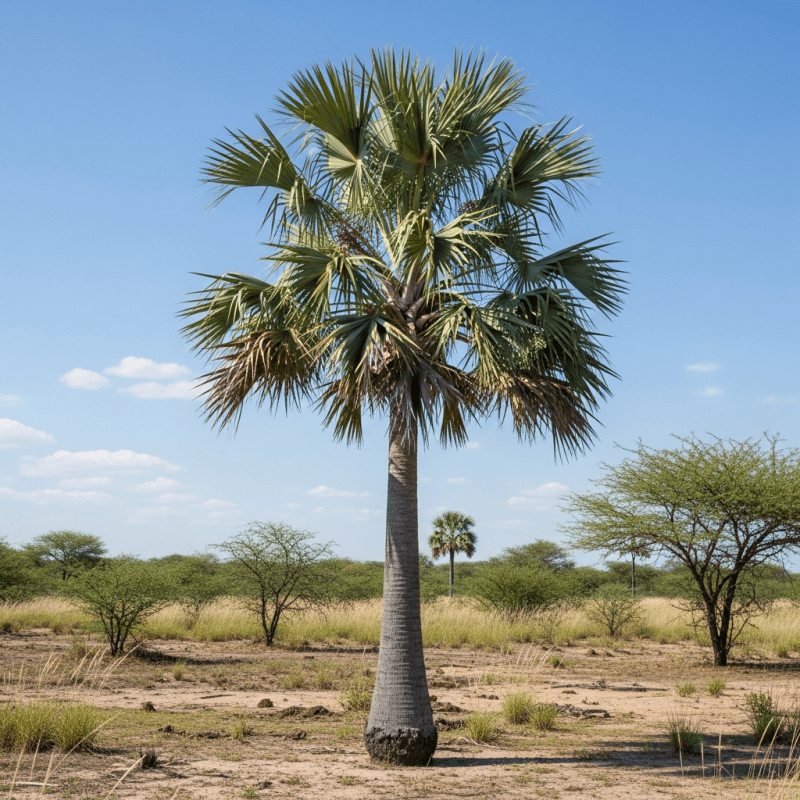
Soft cotton tee, unisex sizes
Buy ShirtEconomically, the Caranday Palm is valued as a source of carnauba-type wax, integral to industries producing polishes and cosmetics. Locally, its wood is indispensable for building and fencing, and the species is increasingly recognized for its role in ecological restoration and reforestation projects. In regional culture, it is known by names such as Palma Blanca and Carandá, reflecting its presence in daily life and language.
Within the genus Copernicia, several species are recognized for their wax production, with Copernicia alba being one of the most widespread in South America. The palm family Arecaceae includes over 180 genera and approximately 2,600 species globally, ranging from towering coconut palms to compact ornamental varieties. The Caranday Palm is notable among its relatives for its ecological adaptability and commercial wax yield.
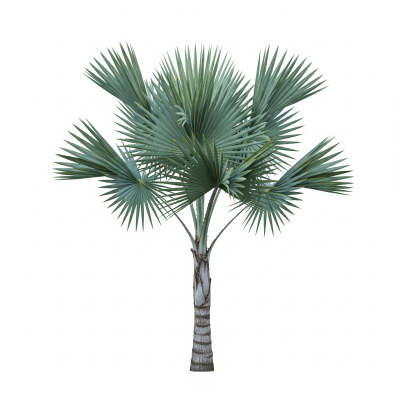
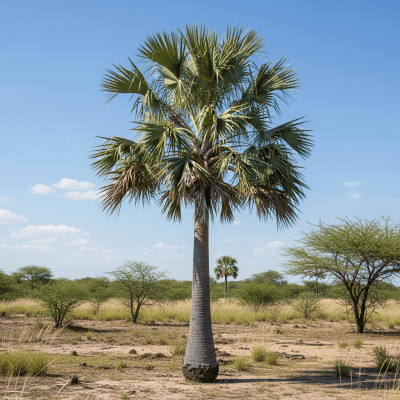

The Caranday Palm is native to the seasonally flooded savannas and wetlands of the Gran Chaco, a vast region spanning Paraguay, Bolivia, Brazil, and northern Argentina. It thrives in soils that experience periodic inundation and is well-adapted to both drought and high temperatures, making it a common sight in open woodlands and wetland margins across its range.
Caranday Palms are best grown in regions that mimic their native habitat: areas with seasonal flooding, high temperatures, and drought tolerance. Seedlings establish slowly, requiring patience and consistent moisture. Mature palms are resilient and require minimal care, tolerating poor soils and occasional fires. For landscaping, ensure adequate space for their tall trunk and broad leaf crown, and avoid prolonged cold or frost.
The Caranday Palm is a significant source of natural wax, used in the manufacture of polishes, cosmetics, and various industrial products. Its wood is locally harvested for construction, fence posts, and fuel. The species also contributes to reforestation and land restoration efforts, enhancing both economic and ecological value in its native regions.
Ecologically, the Caranday Palm supports biodiversity by providing habitat and food for wildlife, especially in seasonally flooded landscapes. Its resilience to fire and flooding helps stabilize ecosystems and promote recovery after natural disturbances. The palm is also used in reforestation, aiding in the restoration of degraded lands and the conservation of native flora.
The Caranday Palm is notably resistant to most pests and diseases. No major threats have been documented, and its natural resilience to environmental stresses such as fire and waterlogging further protects it from common palm afflictions. Routine care and monitoring are generally sufficient to maintain healthy specimens.
The leaves of the Caranday Palm are prized for their wax, which is extracted and used in polishes, cosmetics, and industrial applications. Its wood is a valuable local resource for construction and fuel. While the palm’s fruits are edible, they are primarily consumed by wildlife rather than humans, and the species is not a major source of food.
The Caranday Palm is not currently listed as threatened, thanks to its wide distribution and adaptability. However, habitat loss due to agricultural expansion and land conversion in the Gran Chaco region poses potential risks. Conservation efforts focus on sustainable harvesting and the use of the species in reforestation and restoration projects to preserve its ecological and economic roles.