Canary Island Date Palm
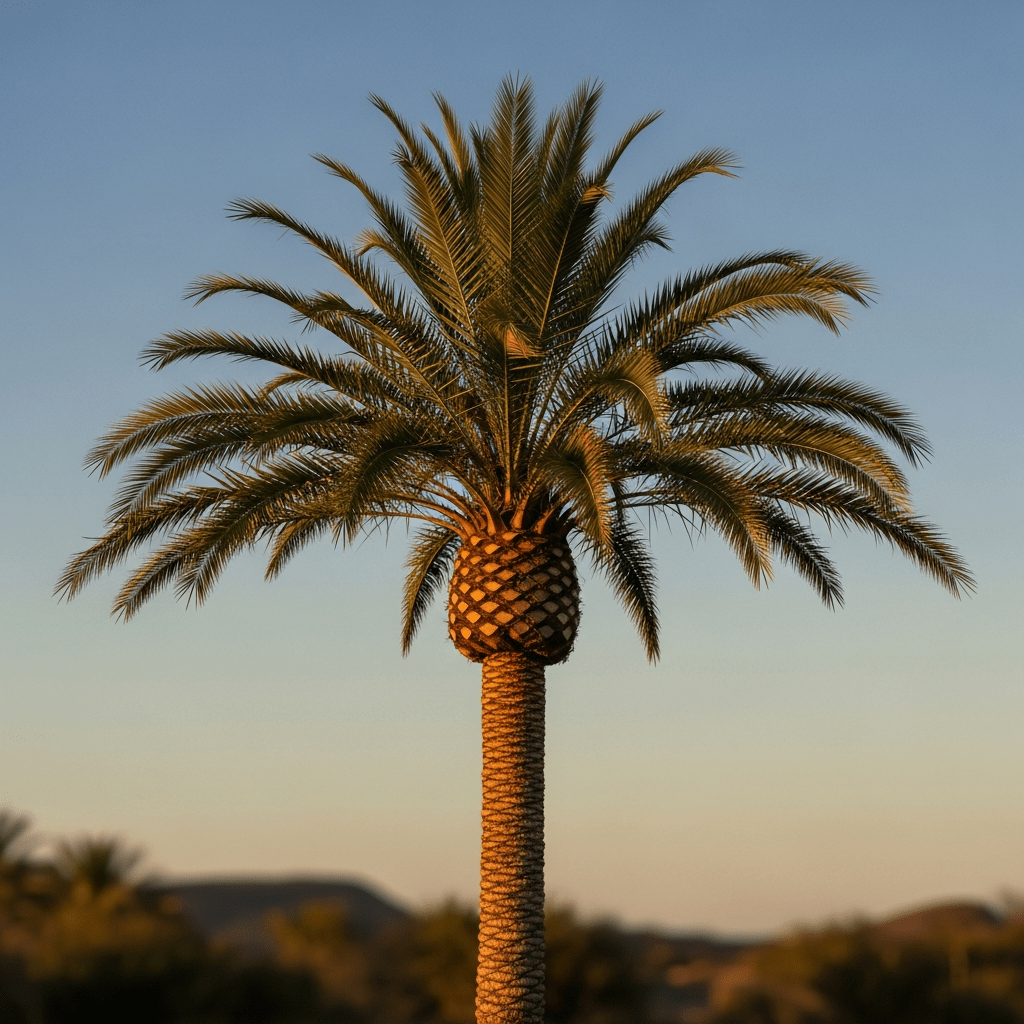
The Canary Island Date Palm (Phoenix canariensis) is a majestic, robust palm native to the Canary Islands, celebrated worldwide for its striking appearance and prominent use in ornamental landscaping.
The Canary Island Date Palm (Phoenix canariensis) is a majestic, robust palm native to the Canary Islands, celebrated worldwide for its striking appearance and prominent use in ornamental landscaping.
First formally described by Chabaud in 1882, the Canary Island Date Palm originates exclusively from the Canary Islands, Spain. It is a naturally occurring species found both wild and cultivated across the archipelago, with no known breeder or institution linked to its discovery. Its lineage places it within the genus Phoenix, closely related to the true date palm (Phoenix dactylifera).
This palm belongs to the family Arecaceae, a diverse group of monocotyledonous flowering plants known as palms. Within the genus Phoenix, it stands apart from other species by its distinctive morphology and restricted native range. The accepted scientific name is Phoenix canariensis Chabaud, with no major synonyms documented.
The Canary Island Date Palm is a solitary, towering tree reaching 10–20 meters in height, occasionally up to 25 meters. Its stout trunk, up to 1 meter in diameter, is adorned with persistent leaf bases forming a diamond pattern. The crown features long, arching pinnate leaves—each 4–6 meters in length—with hundreds of bright green, stiff leaflets arranged in a graceful V-shape. Large, branched inflorescences emerge among the leaves, bearing small yellowish flowers. When ripe, the oblong orange-yellow fruits add vibrant color to the canopy.
Primarily valued for its dramatic visual impact, the Canary Island Date Palm is a staple in parks, avenues, and gardens across subtropical and Mediterranean regions. Its tolerance to drought, salt spray, and urban conditions makes it a preferred choice for landscaping. While the fruit is edible, it is considered inferior to the true date and is mostly consumed locally or used as animal feed. Mature specimens grow slowly, often taking decades to reach their full grandeur.
Bring this kind into your world illustrated posters, mugs, and shirts.
Archival print, museum-grade paper
Buy Poster
Stoneware mug, dishwasher safe
Buy Mug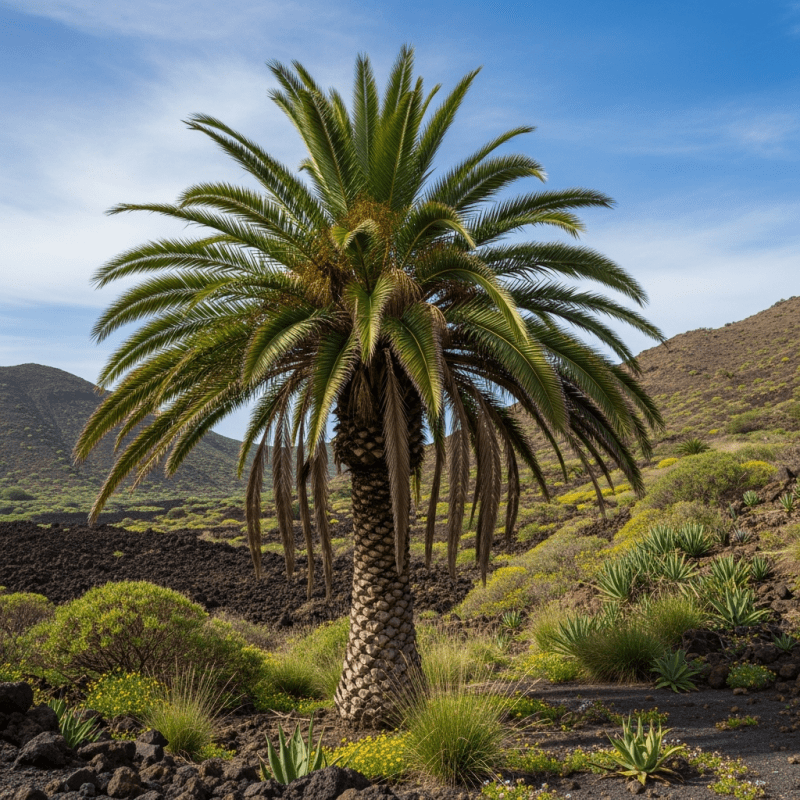
Soft cotton tee, unisex sizes
Buy ShirtThis palm is deeply symbolic of the Canary Islands, featuring prominently in local heraldry and tradition. Its stately form and resilience have made it an emblem of regional identity, and it is often celebrated in art and public spaces throughout the islands.
The genus Phoenix encompasses several palm species, including the true date palm (Phoenix dactylifera) and the wild date palm (Phoenix sylvestris). The family Arecaceae is vast, with over 180 genera and approximately 2,600 species worldwide, ranging from towering trees to slender understory palms. The Canary Island Date Palm is unique in its native range and morphology, with no formally recognized cultivars or varieties.
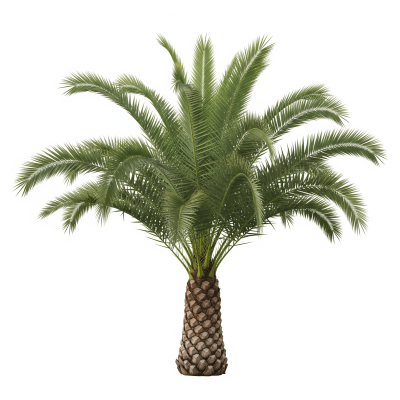
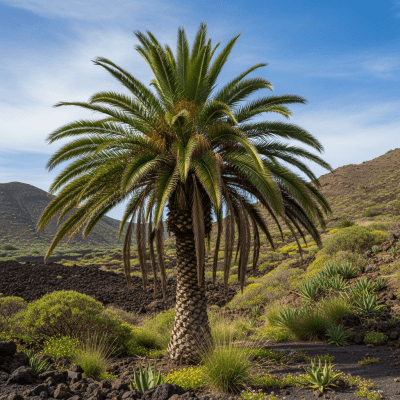
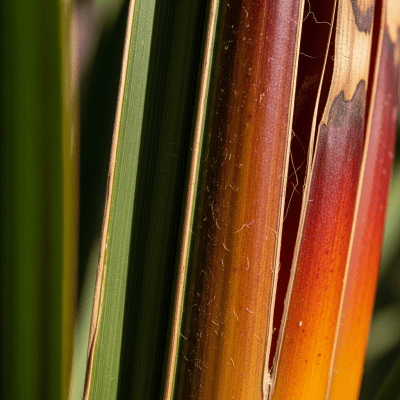
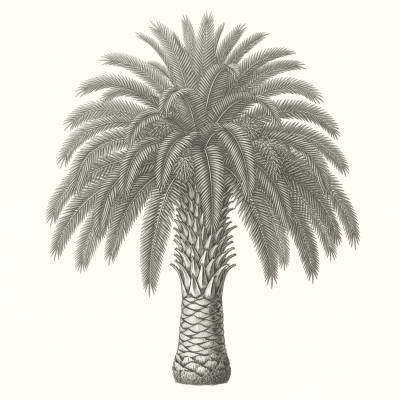
Native exclusively to the Canary Islands, the Canary Island Date Palm thrives in subtropical climates with well-drained, fertile soils. It has been widely introduced and cultivated in Mediterranean regions, southern Europe, North America, and Australia, where it adapts well to urban and coastal environments. In its natural habitat, it grows both wild and in managed landscapes, often forming iconic avenues and groves.
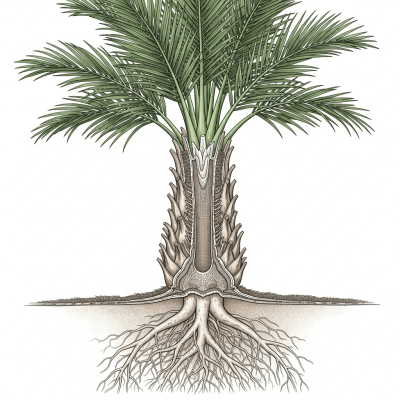
To cultivate the Canary Island Date Palm, select a sunny location with well-drained soil. It tolerates drought, salt spray, and a range of soil types but prefers fertile conditions. Growth is slow to moderate, with mature specimens taking decades to reach full size. Regular watering during establishment and occasional fertilization promote healthy growth. Large palms are challenging to transplant due to their extensive root systems. Watch for pests and diseases, and prune dead fronds to maintain appearance.
The primary economic value of the Canary Island Date Palm lies in ornamental landscaping. Its imposing stature and resilience make it a favorite in parks, gardens, and urban spaces worldwide. While the fruit is edible, it holds little commercial significance, and there is no notable industry for its harvest. Occasionally, fruits are used locally or for animal feed, but the palm's main contribution is its enhancement of public and private landscapes.
As an introduced species in many regions, the Canary Island Date Palm adds visual appeal and shade to urban environments. Its tolerance to drought and salt makes it suitable for coastal restoration and erosion control. However, in some areas, it may compete with native vegetation if not managed properly. Overall, its environmental impact is largely positive in cultivated settings, though care should be taken to prevent unwanted spread beyond intended landscapes.
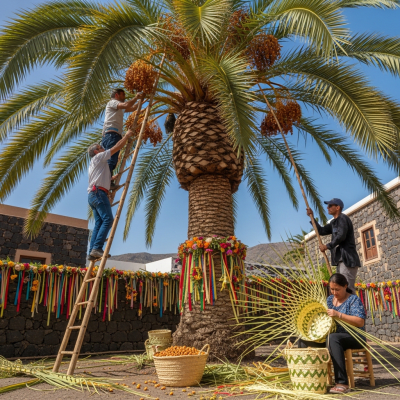
The fruit of the Canary Island Date Palm is an oblong drupe, orange-yellow when ripe. While edible, it is not prized for flavor and is mostly consumed locally or used as animal feed. The palm does not produce significant oil or fiber for commercial use, and its primary utilitarian value is ornamental. Seeds can be used for propagation, and the tree provides shade and aesthetic enhancement in landscapes.
The Canary Island Date Palm has not been formally assessed by the IUCN Red List and faces no immediate global threats. In its native Canary Islands, populations are stable, though habitat changes and disease could pose future risks. Conservation efforts focus on maintaining healthy specimens in both wild and cultivated settings, with particular attention to pest and disease management.