Bottle Palm
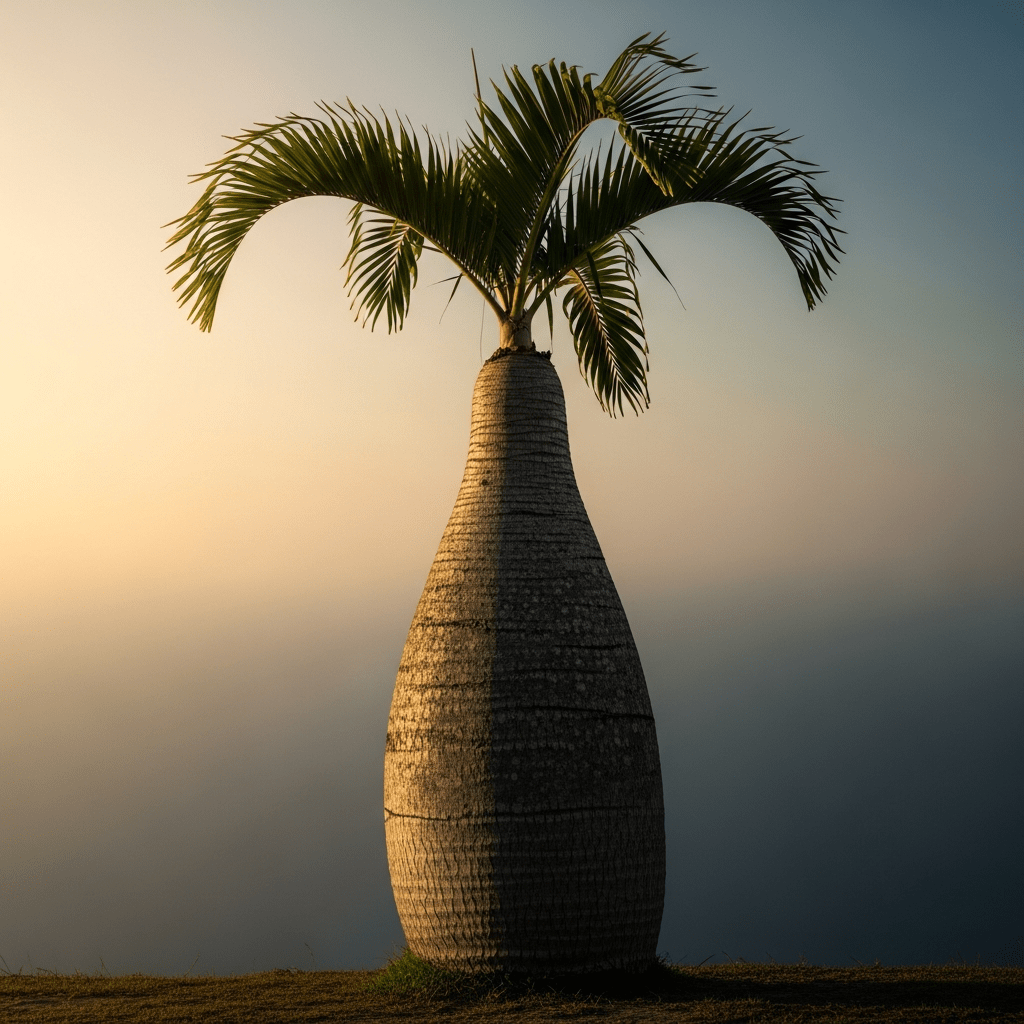
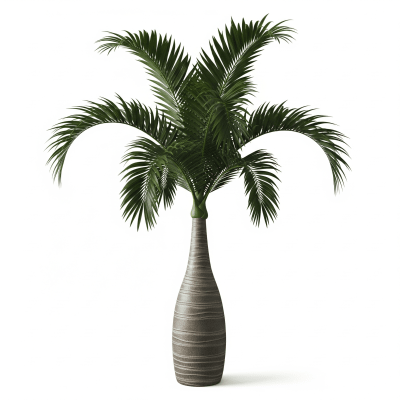
The Bottle Palm (Hyophorbe lagenicaulis) is a striking ornamental palm species instantly recognizable by its swollen, bottle-shaped trunk and sparse crown of arching leaves.
The Bottle Palm (Hyophorbe lagenicaulis) is a striking ornamental palm species instantly recognizable by its swollen, bottle-shaped trunk and sparse crown of arching leaves.
Native to Round Island in the Mascarene Islands near Mauritius, the Bottle Palm is endemic to this isolated region. First described by L.H.Bailey and later reclassified by H.E.Moore, it evolved naturally in the unique volcanic soils and climate of its island home, without human intervention or selective breeding. Its limited native range makes it a rare species in the wild, though it is now widely cultivated in tropical and subtropical gardens around the world.
The Bottle Palm belongs to the family Arecaceae, the true palm family, within the genus Hyophorbe, subfamily Arecoideae, and tribe Chamaedoreeae. Its accepted scientific name is Hyophorbe lagenicaulis (L.H.Bailey) H.E.Moore. While commonly called "Bottle Palm," it should not be confused with other swollen-trunked palms or unrelated plants sometimes given similar names.
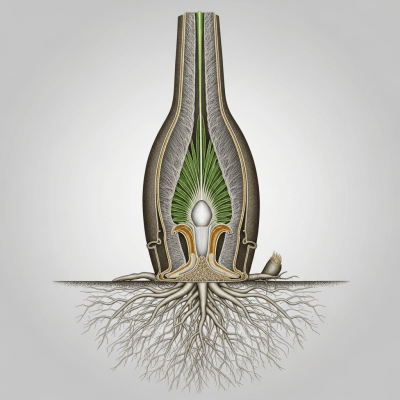
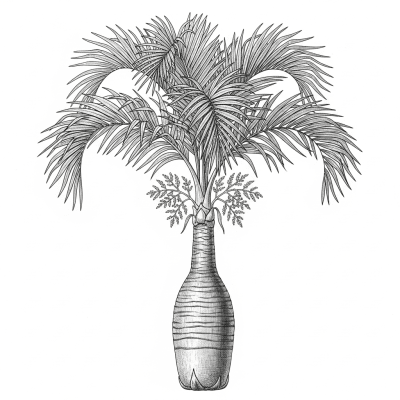
This palm is celebrated for its dramatic, swollen trunk, which resembles a bottle—broadest at the base (30–60 cm diameter) and narrowing toward the top, reaching up to 2 meters in height. The trunk is smooth and grayish, often with ringed scars from fallen leaves. Atop the trunk sits a sparse crown of 4–7 arching, pinnate leaves, each up to 2 meters long, with dark green, linear leaflets. Small, white to cream flowers emerge on inflorescences below the crownshaft, followed by oblong, black fruits about 2–3 cm long.
Bottle Palm is prized for its ornamental value, frequently used in landscaping, public gardens, and as a striking container specimen. Its slow growth and compact stature make it suitable for smaller spaces and decorative focal points. While adaptable to drought once established, it is sensitive to cold and frost, thriving best in warm, well-drained environments. The species is not cultivated for food, fiber, or oil, and its primary interaction with humans is through aesthetic appreciation and horticultural display.
Bring this kind into your world illustrated posters, mugs, and shirts.
Archival print, museum-grade paper
Buy Poster
Stoneware mug, dishwasher safe
Buy Mug
Soft cotton tee, unisex sizes
Buy ShirtRenowned for its unique silhouette, the Bottle Palm holds a special place in tropical and subtropical landscaping, symbolizing exotic beauty and resilience. In Mauritius, it is known as "Palmiste bouteille" and is a cherished feature in local gardens and parks. Its unusual form has made it a favorite among collectors and garden designers seeking dramatic, sculptural plants.
The genus Hyophorbe includes several species, but the Bottle Palm (Hyophorbe lagenicaulis) is the most iconic for its trunk shape. The palm family (Arecaceae) itself is highly diverse, with over 180 genera and approximately 2,600 species worldwide, ranging from towering coconut palms to compact ornamentals like the Bottle Palm.
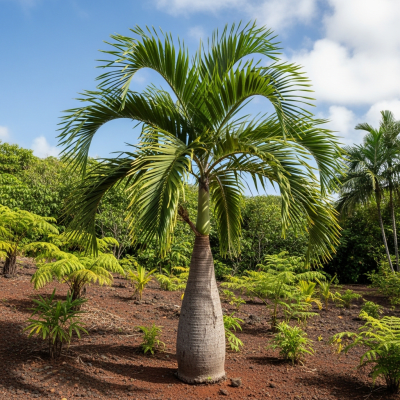
In the wild, Bottle Palm is restricted to Round Island, off the coast of Mauritius in the Indian Ocean. Its natural habitat consists of rocky, well-drained volcanic soils with warm, humid conditions. Today, it is cultivated in tropical and subtropical regions globally, from Florida and the Caribbean to Southeast Asia and Australia, wherever climates are frost-free and soils are well drained.
To thrive, Bottle Palm requires full sun, warm temperatures (USDA zones 10–11), and well-drained soil. It is slow-growing and drought-tolerant once established but highly sensitive to cold and frost. Overwatering or poor drainage can lead to root rot. Regular watering, occasional fertilization, and protection from freezing temperatures are key for healthy growth. Container specimens should be moved indoors during cold snaps in marginal climates.
The Bottle Palm’s economic value is centered on the nursery and landscaping industry, where its unique appearance commands premium prices for gardens, parks, and resorts. It is not a source of edible fruit, oil, or fiber, and its commercial role is limited to ornamental horticulture.
As an ornamental species, Bottle Palm contributes to biodiversity in cultivated landscapes and provides aesthetic value. In its native habitat, its adaptation for water storage aids survival in dry conditions. However, it does not play a major ecological role outside its limited wild range, and widespread cultivation poses minimal environmental risk.
The most significant threat to Bottle Palm health is lethal yellowing disease, a phytoplasma infection that can cause rapid decline. The species is also susceptible to root rot in poorly drained soils. Good cultural practices—such as ensuring proper drainage, avoiding overwatering, and monitoring for disease—are essential for maintaining healthy plants.
Bottle Palm does not produce edible fruits or oils, nor is it a source of useful fibers or wood. Its value is almost entirely ornamental, with no known utilitarian parts used in food, industry, or crafts.
In the wild, Bottle Palm is naturally rare due to its restricted distribution on Round Island, Mauritius. Habitat loss and invasive species have threatened its survival, but conservation efforts—including cultivation in botanical gardens and reintroduction programs—have helped preserve the species. While not currently listed as critically endangered, its wild populations remain vulnerable and require ongoing protection.