Bismarck Palm
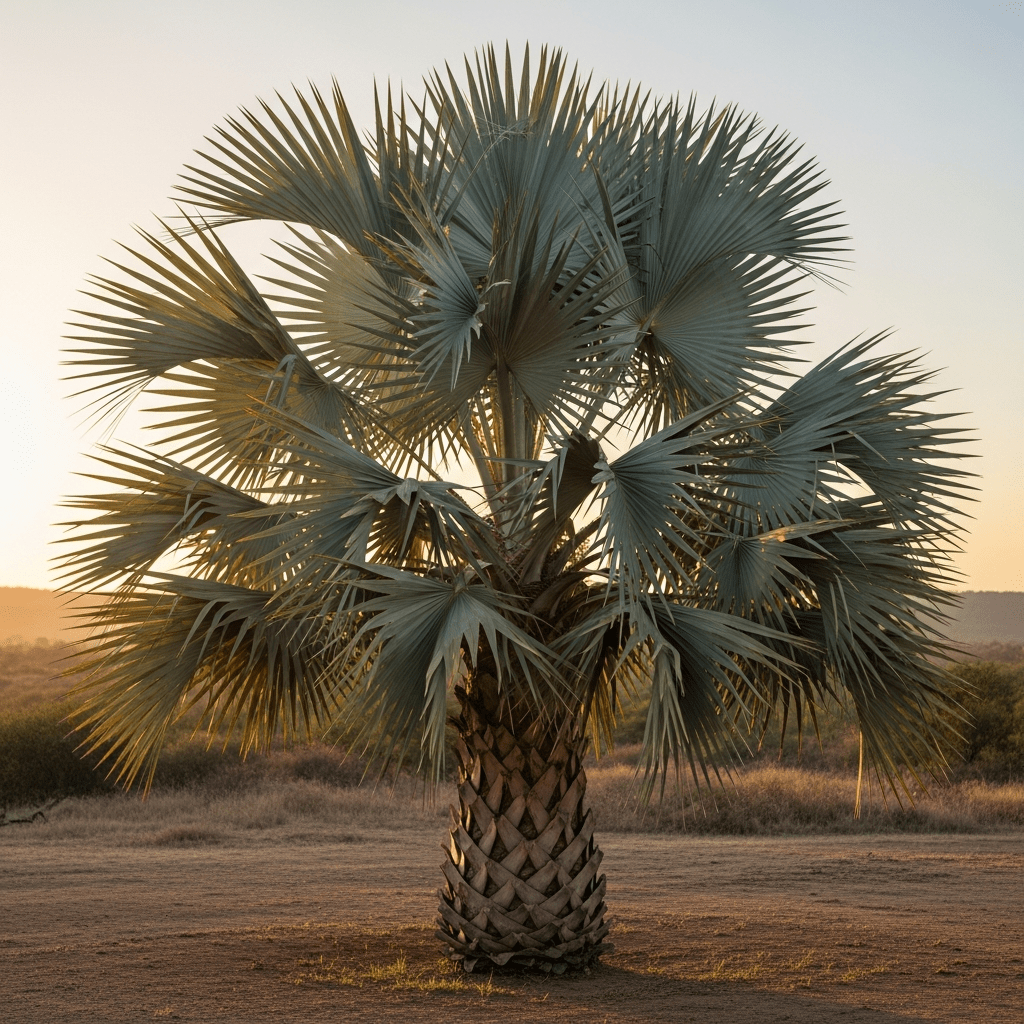
The Bismarck Palm (Bismarckia nobilis) is a majestic, silver-blue fan palm native to Madagascar, celebrated worldwide for its dramatic ornamental presence and architectural foliage.
The Bismarck Palm (Bismarckia nobilis) is a majestic, silver-blue fan palm native to Madagascar, celebrated worldwide for its dramatic ornamental presence and architectural foliage.
First described in 1881 by botanists Johann Maria Hildebrandt and Hermann Wendland, the Bismarck Palm is indigenous to the open grasslands and savannas of western and northern Madagascar. All cultivated specimens trace their lineage to wild populations from this region, with no known cultivars or hybrid varieties. Its introduction to horticulture stems from seed collections brought abroad, making it a direct ambassador of Madagascar’s unique flora.
The Bismarck Palm belongs to the family Arecaceae (palms), within the genus Bismarckia, which is monotypic—containing only Bismarckia nobilis. This places it among the true palms, distinct from palm-like plants outside the family. Its classification underscores its evolutionary uniqueness within the palm family, and its scientific name is universally accepted without major synonyms.
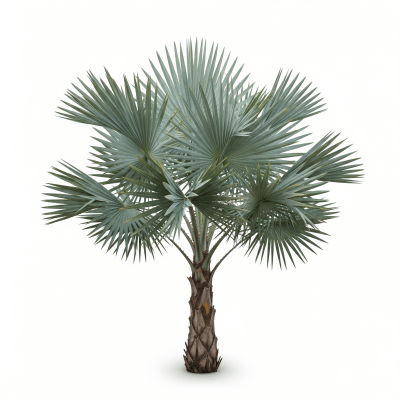
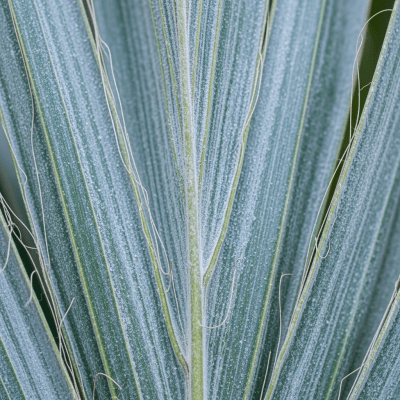
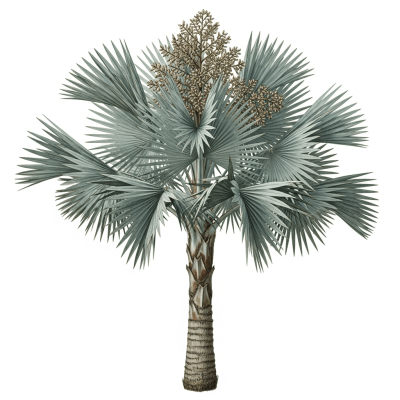
Bismarckia nobilis is renowned for its imposing stature, with solitary, columnar trunks reaching 12–18 meters tall and up to 45 cm in diameter. Its crown features 20–30 massive, costapalmate (fan-shaped) leaves, each up to 3 meters wide, shimmering in silvery-blue or blue-gray hues thanks to a waxy coating. The trunk is gray and ringed with leaf scars, while leaf petioles bear small teeth. Flowers are small and unisexual, appearing on interfoliar inflorescences, and the fruit is a spherical drupe, maturing to brown or black.
The Bismarck Palm thrives in full sun and well-drained soils, displaying moderate to fast growth once established. Its drought tolerance and resistance to most pests make it a favorite for landscaping in tropical and subtropical climates. While its fruit is not edible, the palm’s primary role is ornamental—serving as a dramatic focal point in parks, gardens, and public spaces. In Madagascar, leaves may be used locally for thatching or shelter, but such utilitarian uses are minor compared to its horticultural prominence.
Bring this kind into your world illustrated posters, mugs, and shirts.
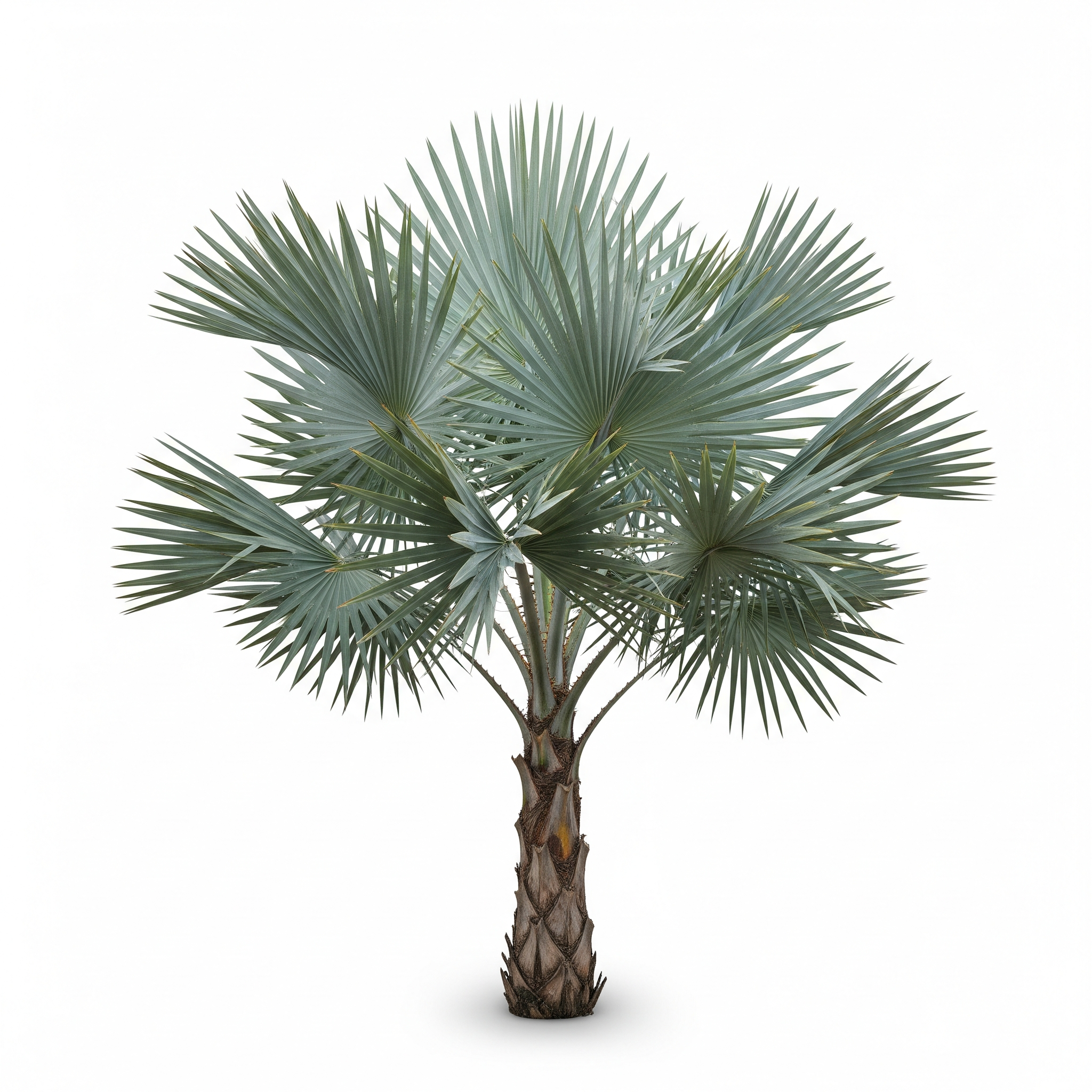
Archival print, museum-grade paper
Buy Poster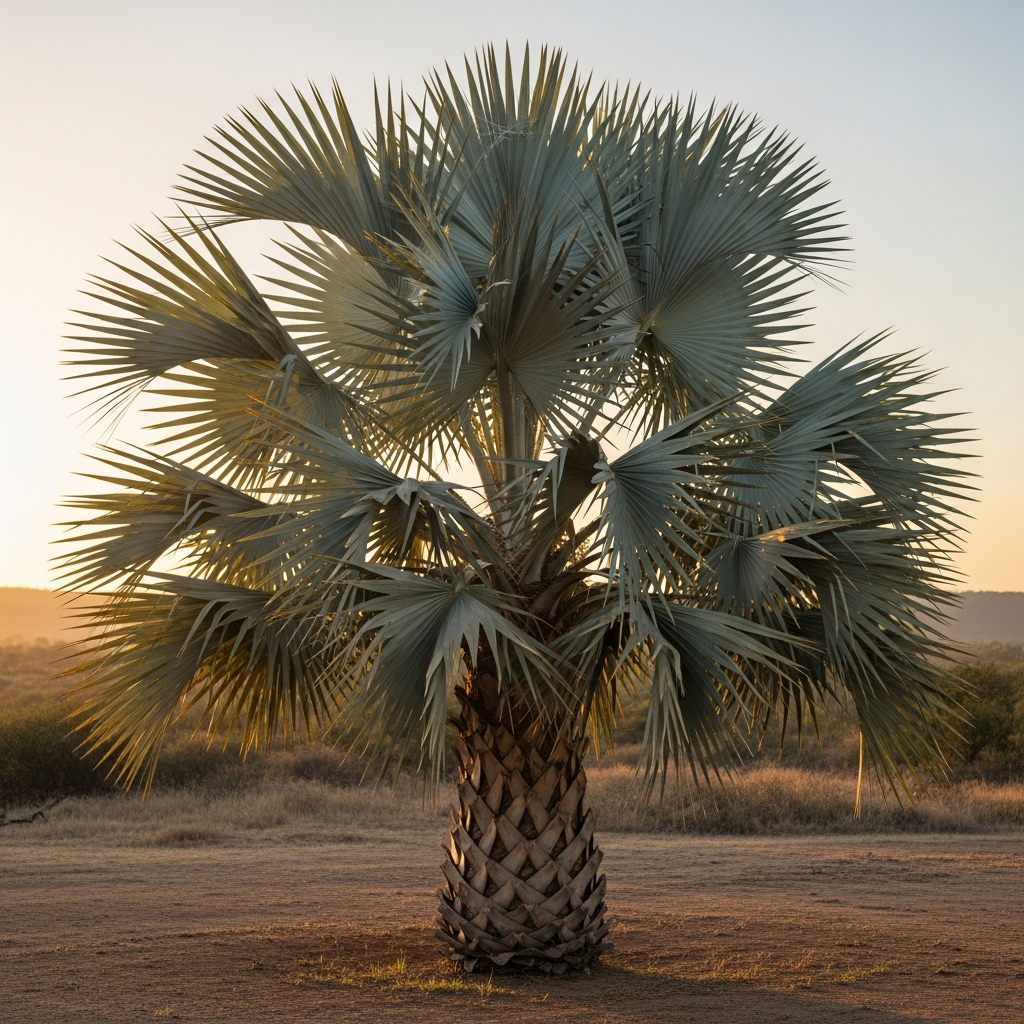
Stoneware mug, dishwasher safe
Buy Mug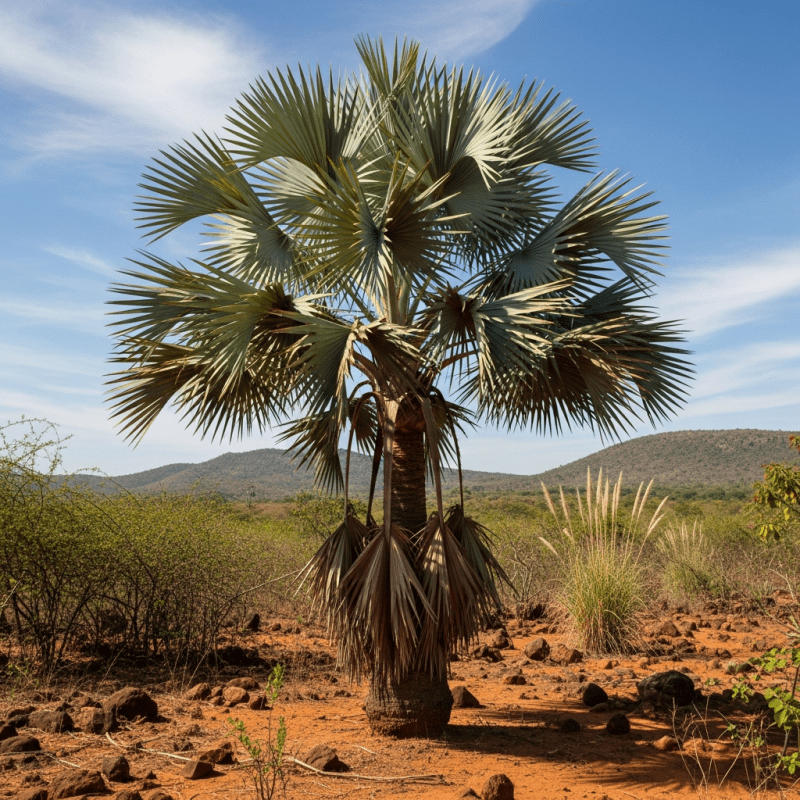
Soft cotton tee, unisex sizes
Buy ShirtIn its native Madagascar, the Bismarck Palm holds modest cultural value, with occasional use of leaves for shelter or thatching. Globally, its striking appearance has elevated it to iconic status in landscape architecture, symbolizing tropical grandeur and resilience. Its silvery foliage is often featured in garden design and public installations, though it does not play a major role in traditional art, myth, or ritual.
Within the genus Bismarckia, only one species exists: Bismarckia nobilis. In contrast, the palm family (Arecaceae) encompasses over 180 genera and approximately 2,600 species worldwide, ranging from towering coconut palms to compact rattan and date palms. The Bismarck Palm stands out for its singularity and distinctive appearance among this diverse group.
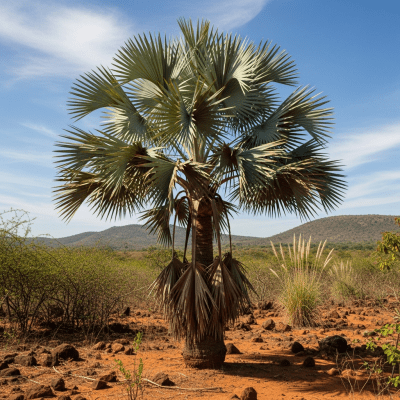

The Bismarck Palm is endemic to Madagascar, thriving in open grasslands and savannas of the island’s western and northern regions. In the wild, it prefers sunny, well-drained sites and is adapted to seasonal drought. Through horticultural cultivation, it has spread to tropical and subtropical regions worldwide, especially in areas with warm climates and minimal frost.
For successful cultivation, plant Bismarck Palms in full sun and well-drained soils. Seedlings establish slowly but mature plants grow robustly, requiring minimal irrigation once settled. Avoid waterlogged conditions to prevent root rot, and protect young palms from cold snaps. Routine care involves removing dead leaves and monitoring for pests, though the species is generally resilient. Space generously to accommodate its massive crown and trunk.
The Bismarck Palm’s economic value lies primarily in the ornamental nursery trade and landscaping industry. Its dramatic form and drought tolerance make it a premium choice for parks, gardens, and large-scale public plantings in suitable climates. There are no significant agricultural, industrial, or food uses associated with this species.
In its native habitat, the Bismarck Palm contributes to the savanna ecosystem, offering shade and shelter for local wildlife. When introduced to new regions, it is not known to be invasive or ecologically disruptive. Its drought tolerance makes it suitable for xeriscaping and sustainable landscaping, though care should be taken to prevent overwatering and root diseases.
Bismarck Palms are resistant to most common palm pests and diseases. The primary threats include root rot, especially in poorly drained soils, and cold damage in temperate climates. Preventive care focuses on proper site selection, avoiding overwatering, and protecting from frost. Routine monitoring ensures early detection of any issues.
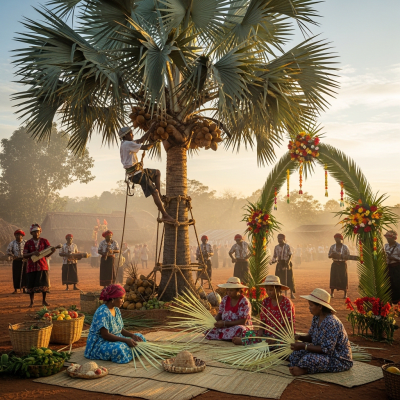
No edible parts are known for the Bismarck Palm, and its fruit is not consumed. Utilitarian uses are limited; in Madagascar, leaves may be used locally for thatching or simple shelter, but such practices are minor and not widespread. The palm’s primary value remains ornamental.
Bismarckia nobilis is not currently listed as threatened on major conservation indices, but its wild populations are restricted to Madagascar. Habitat loss and land conversion pose potential risks, though the species is widely cultivated in gardens and landscapes globally. Conservation efforts focus on habitat preservation and sustainable seed collection to maintain genetic diversity.