
Areca Palm
The Areca Palm (Areca catechu) is a slender, tropical palm species renowned as the source of the betel nut, a culturally and economically significant seed widely used across South and Southeast Asia.
The Areca Palm (Areca catechu) is a slender, tropical palm species renowned as the source of the betel nut, a culturally and economically significant seed widely used across South and Southeast Asia.
Native to the Philippines, Malaysia, and Indonesia, the Areca Palm was first formally described by Carl Linnaeus in 1753. Though its exact wild origins remain debated due to centuries of cultivation, it has become naturalized throughout tropical Asia and the Pacific, thriving in humid climates.
Belonging to the family Arecaceae, the Areca Palm is classified within the genus Areca and is the type species Areca catechu. It is a member of the subfamily Arecoideae and tribe Areceae, fitting firmly within the diverse monocot palms known for their pinnate leaves and unbranched trunks.
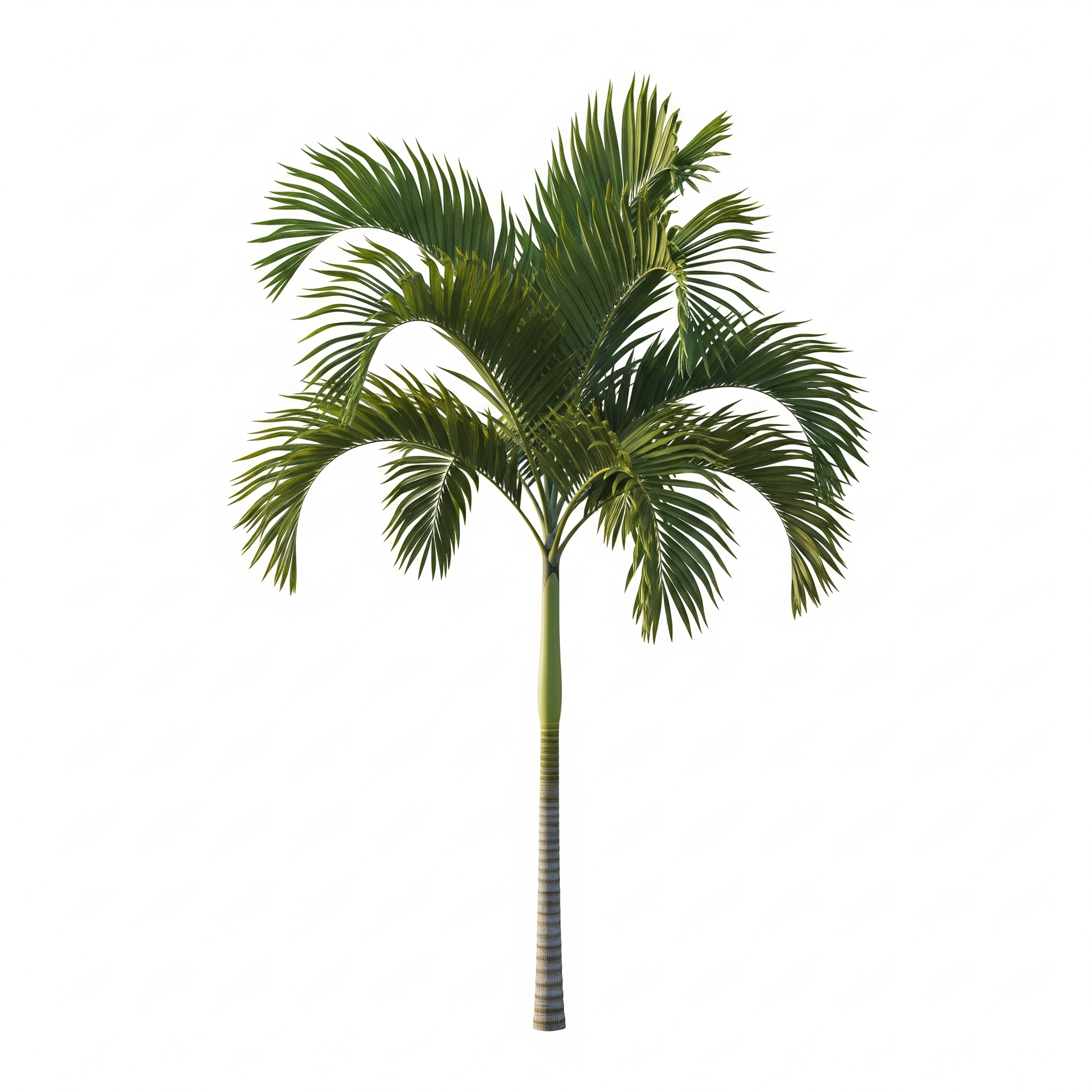
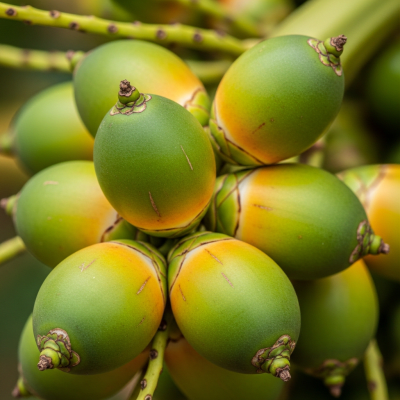
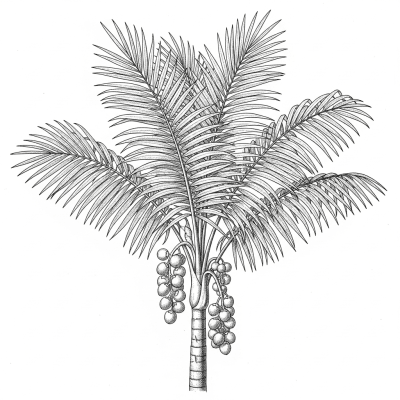
The Areca Palm is a medium-sized, erect palm typically reaching around 10 meters in height with a slender trunk about 10 centimeters in diameter. Its pinnate leaves can extend up to two meters long, composed of numerous narrow leaflets that create a feathery crown. The palm produces axillary, branched inflorescences bearing both male and female flowers, followed by oval drupes measuring 3 to 5 centimeters, which ripen to orange or red hues.
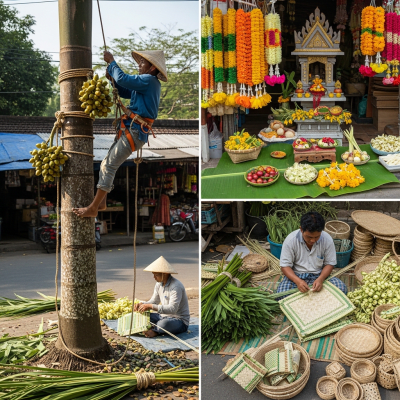
Functionally, the Areca Palm is cultivated primarily for its seeds—the betel nuts—which are chewed alone or wrapped in betel leaves with lime as a stimulant and social tradition. It also plays roles in traditional medicine and religious rituals. Beyond its economic uses, it is occasionally planted ornamentally in tropical gardens, valued for its graceful form and cultural symbolism.
Bring this kind into your world illustrated posters, mugs, and shirts.
Archival print, museum-grade paper
Buy Poster
Stoneware mug, dishwasher safe
Buy Mug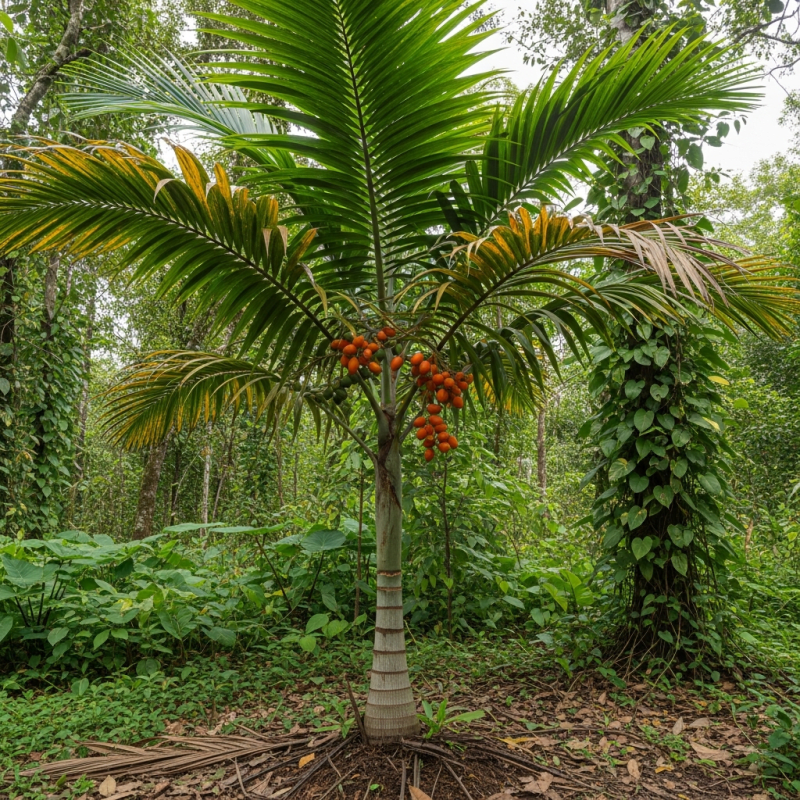
Soft cotton tee, unisex sizes
Buy ShirtBetel nut chewing, derived from the Areca Palm, is deeply embedded in the social and spiritual fabric of South Asia, Southeast Asia, and Pacific island cultures. It features prominently in ceremonies, folk medicine, and daily social interaction, symbolizing hospitality and tradition across many communities.
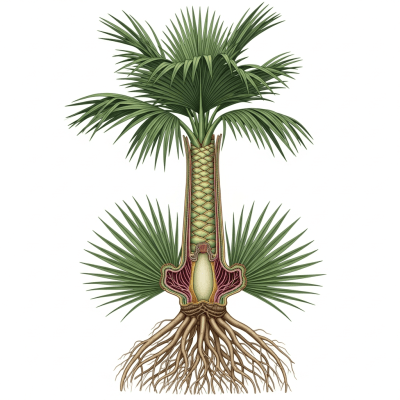
Palms encompass over 2,600 species across more than 180 genera, exhibiting remarkable diversity in form and habitat. The Areca genus, to which the Areca Palm belongs, is one among many genera that highlight this diversity, with species adapted to various tropical environments worldwide.

The Areca Palm thrives in humid, tropical climates favoring well-drained soils and can tolerate partial shade. Its natural range includes the Philippines, Malaysia, and Indonesia, but it has been widely cultivated and naturalized throughout tropical Asia and Pacific islands, often found in agroforestry systems and coastal areas.
Areca Palms grow at a moderate rate, beginning to bear fruit between five and seven years of age. They prefer well-drained soils and humid tropical climates, tolerating some shade and moderate wind or salt spray. Regular watering and protection from severe pests enhance longevity, with productive palms yielding fruit for up to six decades.
The Areca Palm's primary economic value lies in its betel nuts, which support local consumption and export markets across South and Southeast Asia. The nuts are integral to cultural practices and traditional medicine, creating a steady demand. Additionally, the palm is occasionally cultivated for ornamental purposes in tropical landscaping.
Ecologically, Areca Palms contribute to tropical agroforestry by providing shade and habitat within mixed cropping systems. Their cultivation supports biodiversity when integrated thoughtfully but can pose challenges if monocultured extensively, potentially impacting soil health and local ecosystems.
Major threats to Areca Palms include the red palm weevil (Rhynchophorus ferrugineus), a destructive pest, and various leaf spot diseases. Effective management involves monitoring, timely removal of infested material, and maintaining plant health through proper cultural practices.
The most valued part of the Areca Palm is its seed, the betel nut, chewed widely as a stimulant. Beyond this, the palm’s leaves and fibers have limited utilitarian use, while the trunk and other parts are less commonly exploited compared to other palms.
Currently, the Areca Palm is not considered threatened due to its wide cultivation and naturalization. However, habitat loss and pest pressures require ongoing monitoring to ensure sustainable populations, especially in native ranges.