Snapdragon
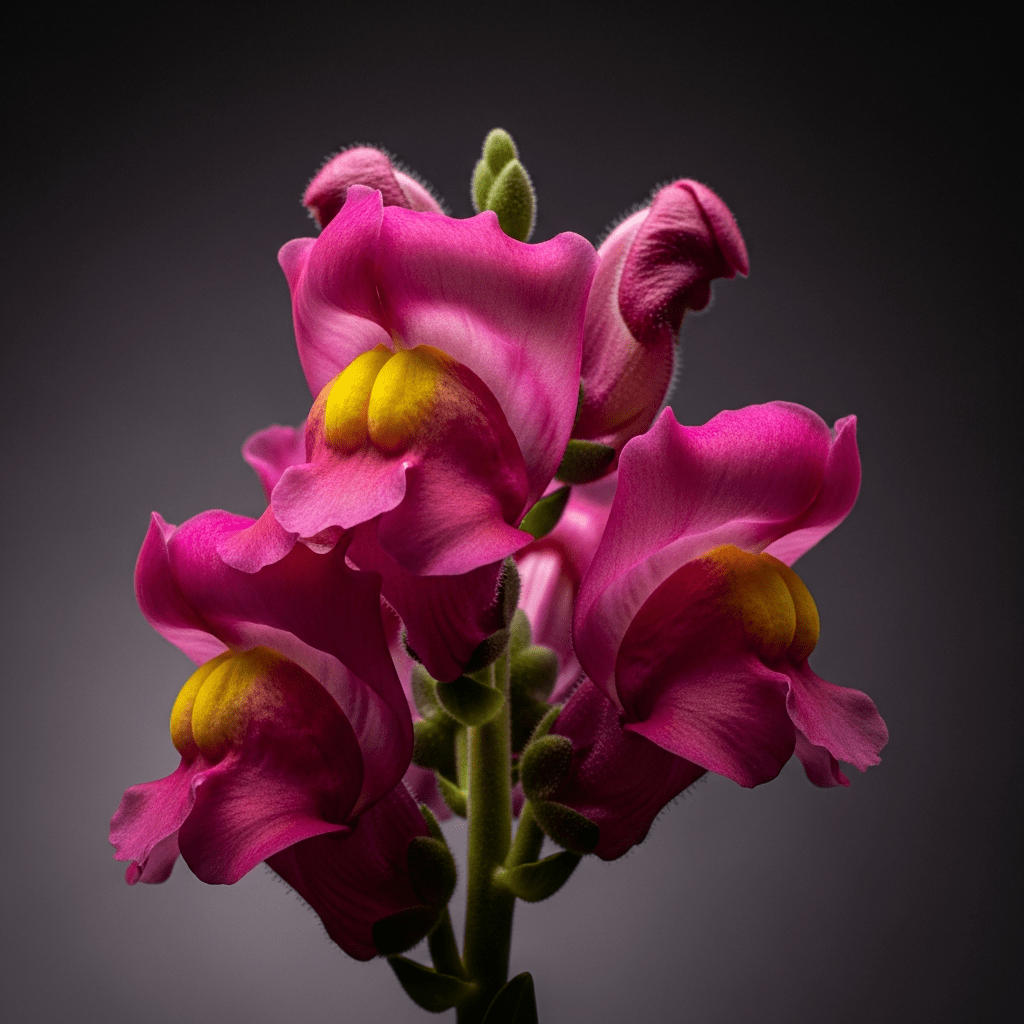
The snapdragon (Antirrhinum majus) is a vibrant flowering plant celebrated for its dragon-shaped blooms that open and close when gently squeezed, making it a favorite in gardens and floral arrangements worldwide.
The snapdragon (Antirrhinum majus) is a vibrant flowering plant celebrated for its dragon-shaped blooms that open and close when gently squeezed, making it a favorite in gardens and floral arrangements worldwide.
Snapdragons trace their origins to the Mediterranean basin, particularly southern Europe and North Africa. First formally described by Carl Linnaeus in 1753, the wild species were cultivated and bred extensively from the early 19th century onward. Modern snapdragons are the result of centuries of selection and hybridization, with major breeding efforts in Europe and North America. Institutions like the Royal Horticultural Society have played a significant role in developing the diverse cultivars seen today.
Snapdragons belong to the genus Antirrhinum within the family Plantaginaceae (formerly Scrophulariaceae). The canonical scientific name is Antirrhinum majus. This group is part of the angiosperms—flowering plants characterized by their reproductive blooms. Taxonomic placement has evolved with advances in plant phylogeny, reflecting their complex lineage and horticultural importance.
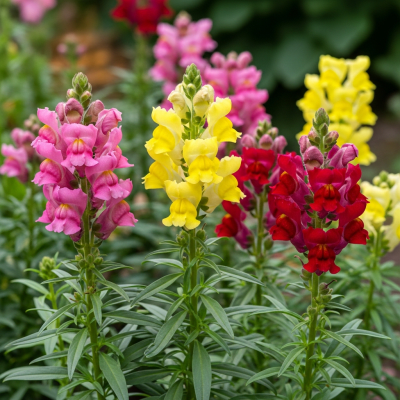
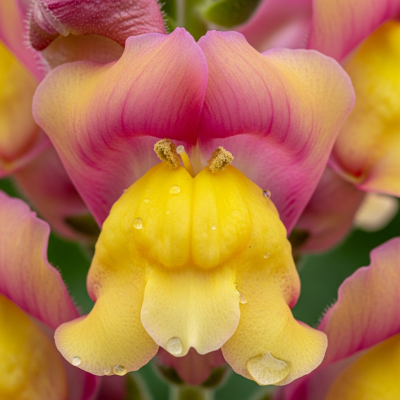
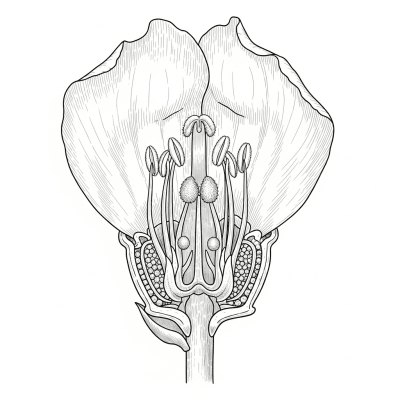
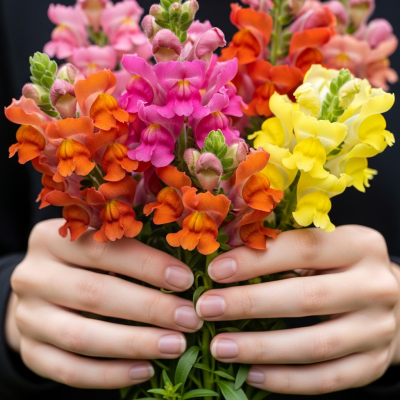
Snapdragons are herbaceous annuals or short-lived perennials, ranging in height from compact 15 cm varieties to towering 120 cm cultivars. Their leaves are lanceolate to ovate, arranged alternately or oppositely, and typically smooth. The flowers form dense spikes, each blossom tubular and bilaterally symmetrical, with fused petals creating a 'mouth' that opens when squeezed—resembling a dragon’s jaw. The color palette spans white, yellow, pink, red, orange, purple, and striking bicolors, though blue is notably absent. Some cultivars offer a gentle fragrance, adding sensory appeal to their visual vibrancy.
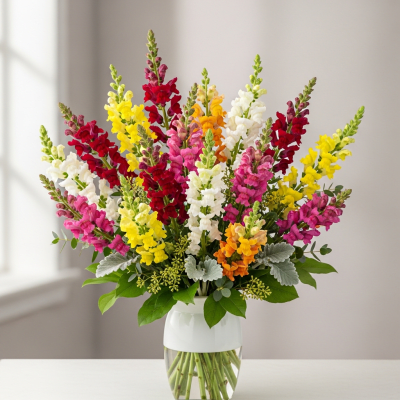
Snapdragons are primarily grown for ornamental purposes in gardens, borders, and containers. Their long, sturdy stems and vivid blooms make them highly sought after for cut flower arrangements. While technically edible, snapdragon flowers are rarely used in cuisine due to their bitter taste and mild toxicity. Their interactive blooms are popular in children’s games, and deadheading spent flowers encourages continuous blooming throughout the season.
Bring this kind into your world illustrated posters, mugs, and shirts.
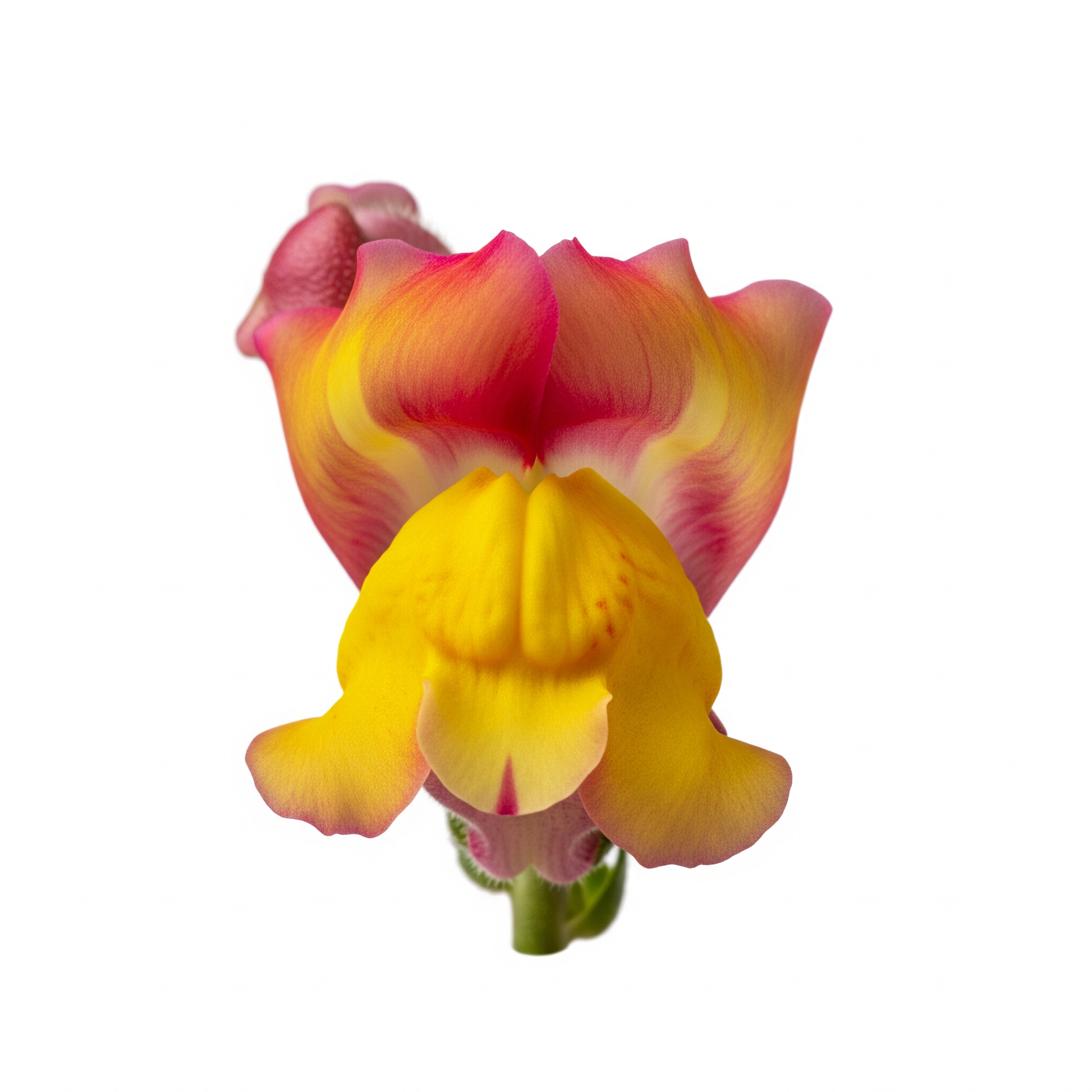
Archival print, museum-grade paper
Buy Poster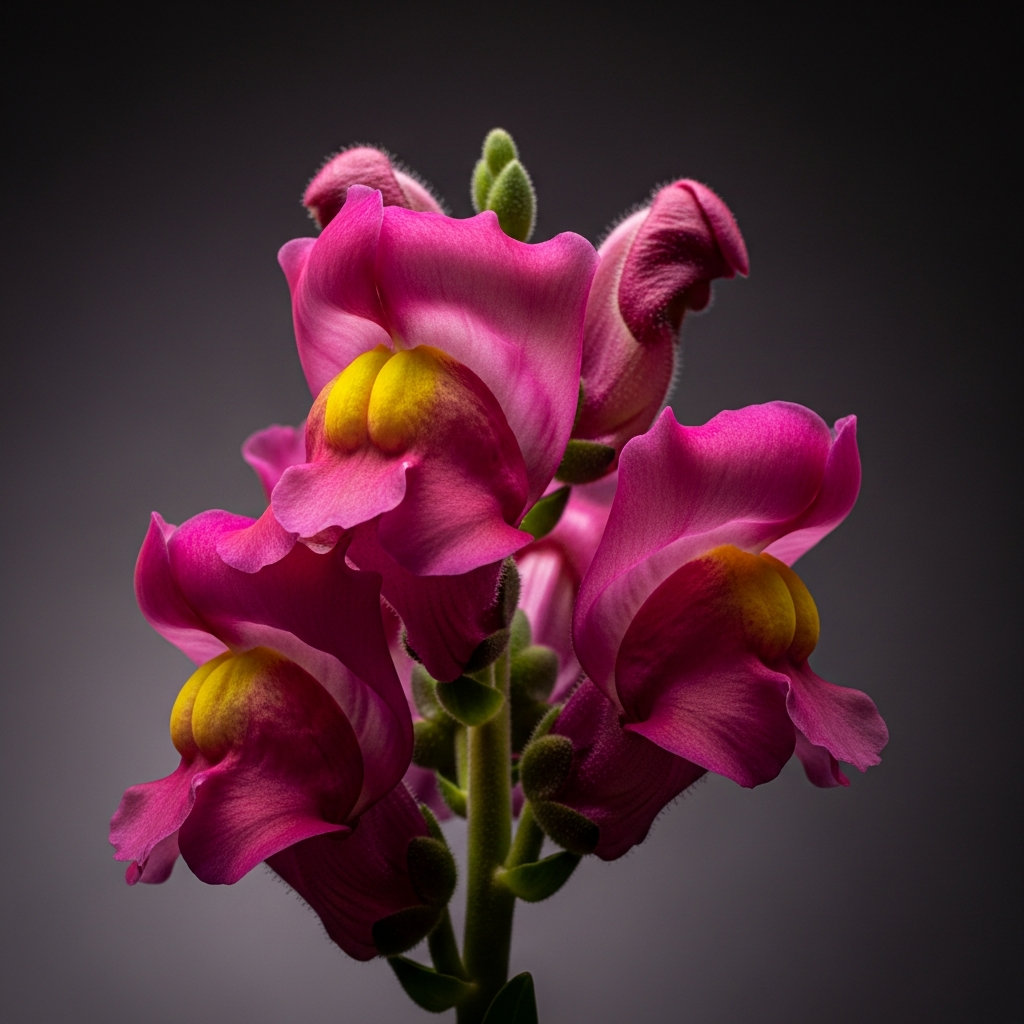
Stoneware mug, dishwasher safe
Buy Mug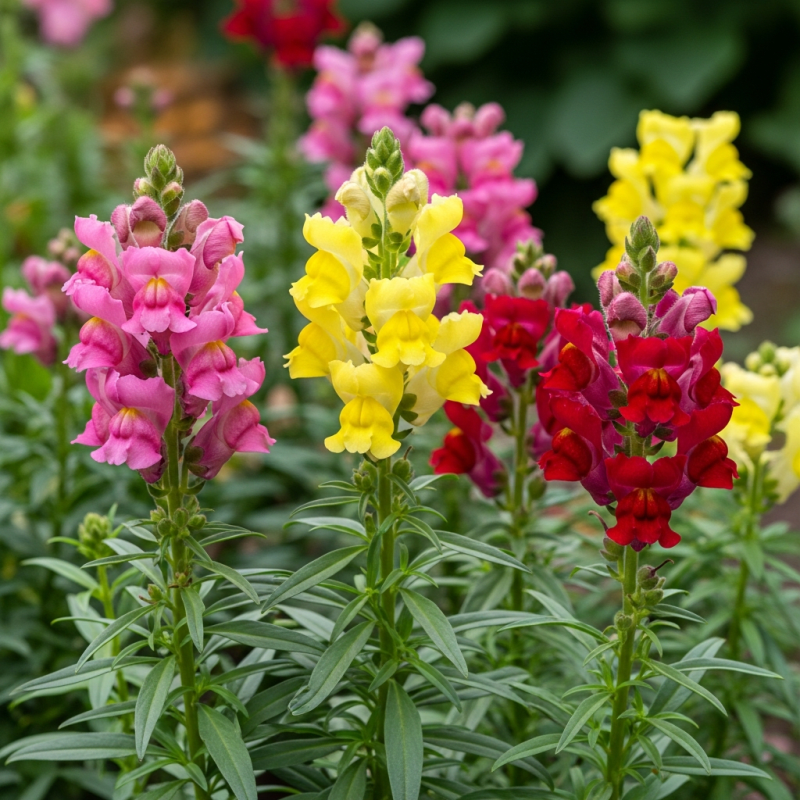
Soft cotton tee, unisex sizes
Buy ShirtSnapdragons hold a special place in cultural symbolism, often representing grace, strength, and deception—echoing the flower’s dragon-like mouth that opens and closes. In various European languages, their common names evoke mythical creatures: 'gueule-de-loup' (wolf’s mouth) in French, 'Löwenmaul' (lion’s mouth) in German, and 'boca de dragón' (dragon’s mouth) in Spanish. Snapdragons have appeared in folklore, children’s games, and as motifs in art, reflecting their whimsical and interactive nature.
Snapdragons offer a dazzling spectrum of colors, including white, yellow, pink, red, orange, purple, and bicolors. Blue is not found in snapdragon cultivars. Fragrance varies by variety; some are delicately scented, while others are scentless, making them versatile for both indoor and outdoor displays.

For optimal growth, snapdragons prefer full sun and well-drained, moderately fertile soils with a neutral to slightly alkaline pH. They thrive in cool seasons and are typically planted in spring or autumn. Regular deadheading encourages continuous flowering, while watering should be moderate to prevent root rot. Snapdragons are propagated by seed and may require protection from frost in colder climates. Watch for common pests and diseases, and select disease-resistant cultivars when possible.
Snapdragons symbolize grace, strength, and sometimes deception, inspired by their dragon-like blooms that open and close. Their playful nature and striking appearance have made them emblems of both resilience and whimsy in various cultures.
Modern snapdragons are the result of extensive breeding from wild Mediterranean populations, with significant cultivar development since the 19th century. Breeders such as the Royal Horticultural Society and commercial seed companies have produced numerous proprietary lines, focusing on traits like height, flower form, color, and disease resistance. Hybridization has led to a wide range of snapdragon types, from dwarf bedding plants to tall spikes for floral arrangements.
Snapdragons are typically in bloom during the cool seasons—spring and autumn—depending on local climate. In mild regions, they may flower continuously until frost, providing vibrant color when many other plants are dormant.
Snapdragons are prized for their ornamental value in gardens, borders, and containers, and are a staple of the cut flower market thanks to their long-lasting, colorful spikes. While the flowers are technically edible, they are rarely used in cuisine due to bitterness and mild toxicity. Symbolically, snapdragons convey messages of grace and strength, and their interactive blooms are popular in children’s activities and playful displays.