
Protea
Protea is a genus of striking, evergreen flowering plants native to southern Africa, celebrated for their large, sculptural blooms and remarkable diversity.
Protea is a genus of striking, evergreen flowering plants native to southern Africa, celebrated for their large, sculptural blooms and remarkable diversity.
Protea originated in the nutrient-poor soils and fire-prone landscapes of South Africa's Cape Floristic Region, with some species extending into tropical Africa. First formally described by Carl Linnaeus in 1753, the genus draws its name from the Greek god Proteus—a nod to its extraordinary range of forms. Indigenous peoples have known and valued proteas for centuries, long before their introduction to global horticulture. Today, proteas are cultivated worldwide, but their roots remain deeply entwined with the fynbos biome of southern Africa.
Protea belongs to the family Proteaceae, a group renowned for its ancient lineage and ecological importance in southern hemisphere floras. Within the genus Protea, there are over 100 species, ranging from low shrubs to small trees. The genus is closely related to other notable members of Proteaceae, such as Leucospermum (pincushion protea) and Leucadendron (cone bush), which share similar habitats and floral structures.
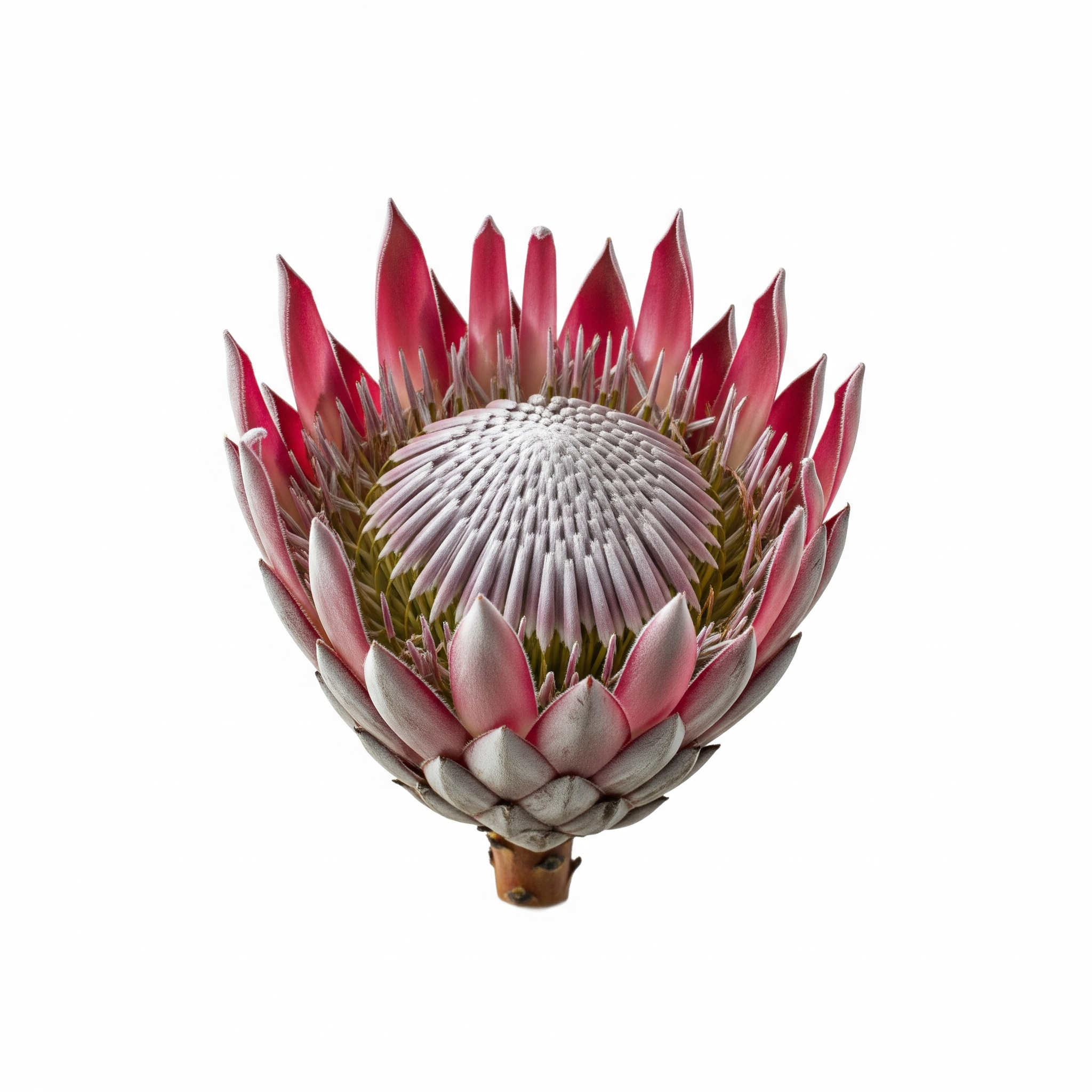
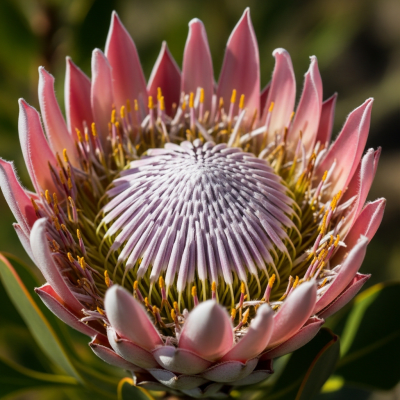
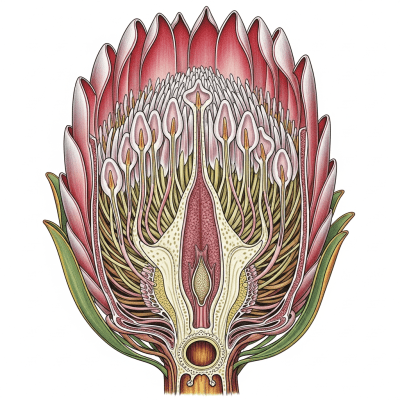
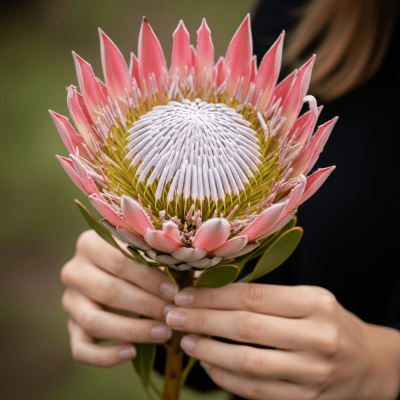
Proteas are visually arresting, with dense, cone-shaped or dome-shaped flower heads surrounded by large, vividly colored bracts in shades of pink, red, white, yellow, or green. The flower heads can reach up to 30 cm in diameter, especially in species like the king protea (Protea cynaroides). Their leathery leaves are often lanceolate or elliptic, and the plants themselves range from compact shrubs to stately small trees, typically evergreen and robust in form.
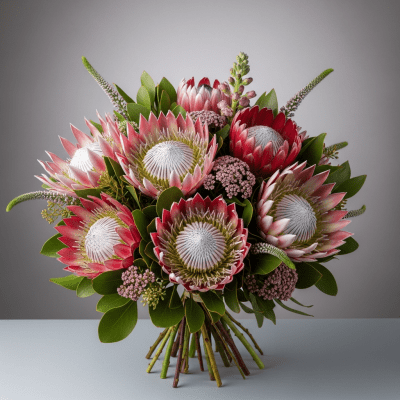
In the wild, proteas play a vital role in the fynbos ecosystem, supporting biodiversity and adapting to periodic wildfires by resprouting or regenerating from seed. For humans, proteas are prized as ornamental plants and as dramatic cut flowers, valued for their long vase life and unique presence in floral arrangements. Their cultivation has spread globally, with commercial production thriving in South Africa, Australia, New Zealand, and Israel.
Bring this kind into your world illustrated posters, mugs, and shirts.
Archival print, museum-grade paper
Buy Poster
Stoneware mug, dishwasher safe
Buy Mug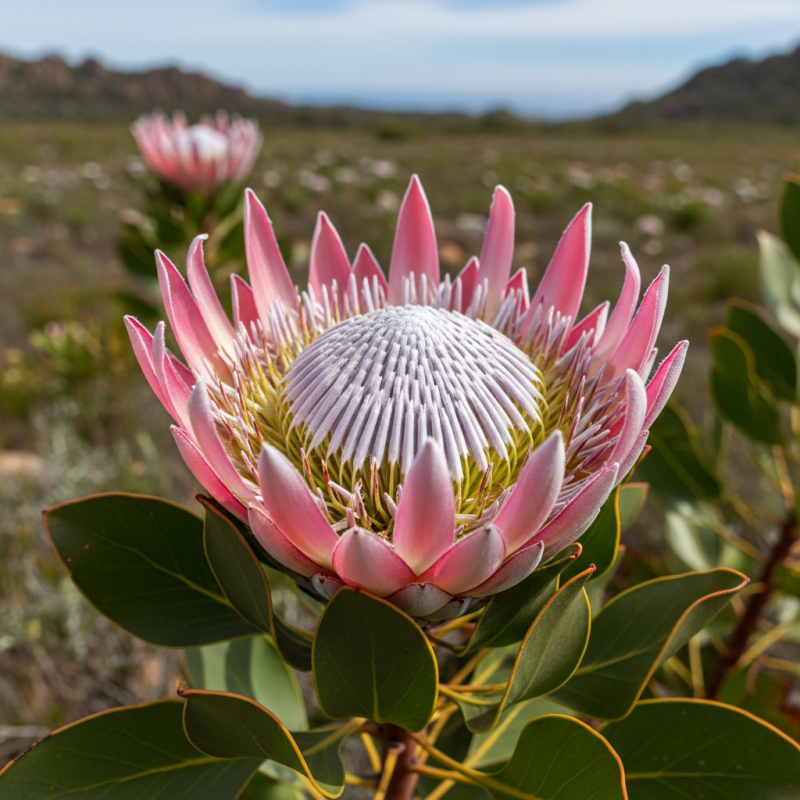
Soft cotton tee, unisex sizes
Buy ShirtProtea holds deep cultural resonance in South Africa, where the king protea is the national flower and features prominently on the country's coat of arms. The genus symbolizes diversity and resilience, reflecting the varied landscapes and peoples of southern Africa. Proteas are celebrated in art, literature, and national identity, and their distinctive forms have become icons in contemporary floral design.
Protea flowers are celebrated for their bold color palette, featuring shades of pink, red, white, yellow, and green. While visually dramatic, most protea species are not notably fragrant; their appeal lies in the sculptural beauty and vivid hues of their bracts and inflorescences.
To cultivate proteas successfully, plant them in nutrient-poor, acidic, and well-drained soils in a location with full sun. Avoid disturbing their roots, as proteas are sensitive to root damage and excess moisture, which can lead to root rot. Propagation is typically by seed or semi-hardwood cuttings, with tissue culture used for select commercial varieties. Regular pruning helps maintain shape and encourages flowering, while cut flowers should be stored in clean water to maximize vase life.
Protea flowers symbolize diversity, transformation, and resilience—attributes inspired by their wide range of forms and their ability to thrive in challenging environments. In South Africa, the king protea is a national emblem, representing unity and strength across cultures.
Modern protea breeding focuses on enhancing flower size, color, and vase life, with cultivars and hybrids developed by horticultural institutions in South Africa, Australia, and New Zealand. While the original species have been known for centuries, contemporary breeding uses seed selection, cuttings, and tissue culture to produce new varieties for the ornamental and cut flower markets. Specific pedigree information is often proprietary or unavailable.
Protea species bloom at different times depending on variety and region, but commercial availability of cut flowers is generally year-round, with peak blooming seasons in late winter through spring in their native habitat.
Proteas are primarily valued as ornamental plants in gardens and landscapes, and as dramatic cut flowers in floral arrangements. Their long-lasting blooms make them a favorite in the global cut flower market. While not widely used for culinary, medicinal, or perfumery purposes, proteas hold significant symbolic and cultural value, especially in South Africa.