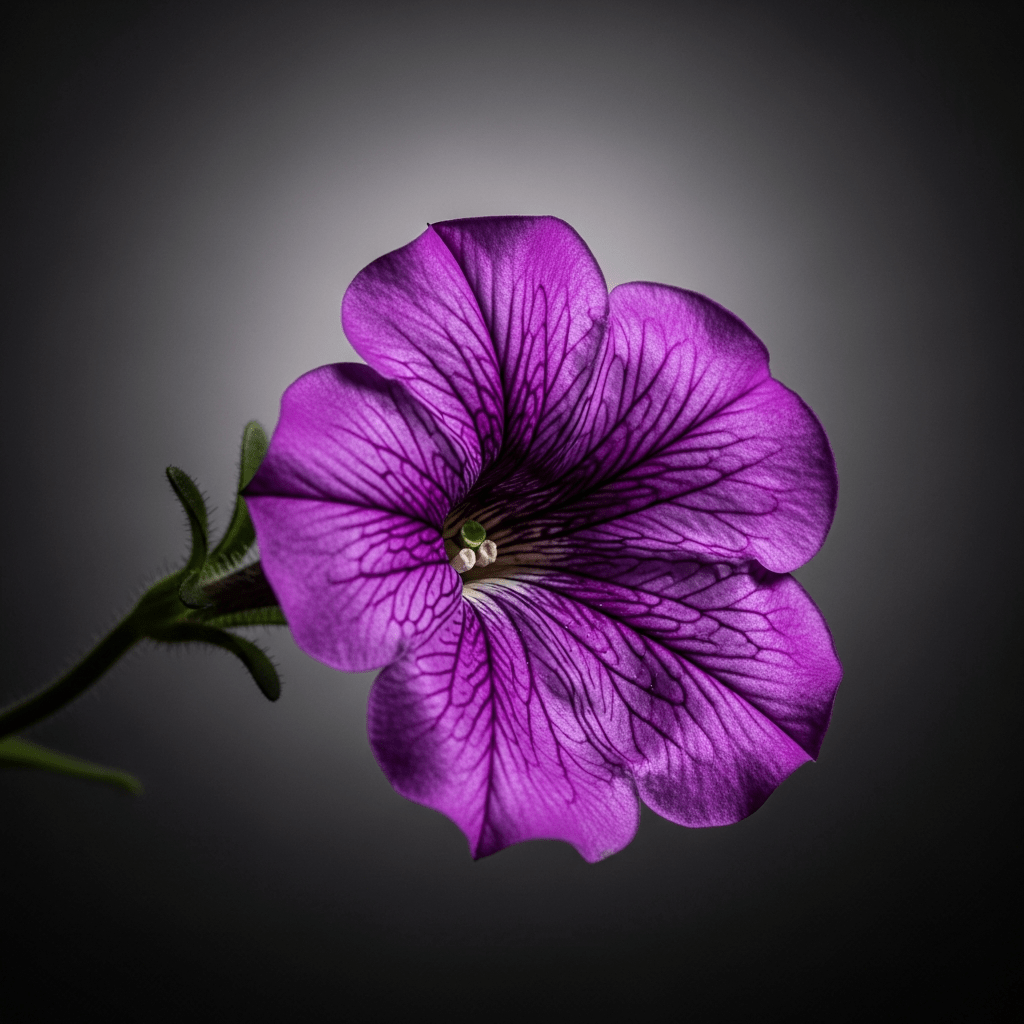
Petunia
Petunia is a popular flowering plant known for its vibrant, trumpet-shaped blooms and exceptional versatility in gardens and landscapes.
Petunia is a popular flowering plant known for its vibrant, trumpet-shaped blooms and exceptional versatility in gardens and landscapes.
Petunias originated in South America, with the modern garden petunia (Petunia × atkinsiana) emerging from hybridization between Petunia axillaris and Petunia integrifolia. Early 19th-century European horticulturists and botanical gardens, especially in France, England, and Germany, played key roles in crossing these species, leading to the diverse cultivars seen today. The first hybrids appeared between 1834 and 1839, marking the start of petunia's global horticultural journey.
Petunia belongs to the family Solanaceae, which includes notable plants such as tomatoes and potatoes. The genus Petunia comprises about 20 species, but most cultivated petunias are complex hybrids, formally known as Petunia × atkinsiana or Petunia hybrida. Horticulturally, petunias are further classified into groups based on flower size and growth habit, including Grandiflora, Multiflora, Milliflora, and Spreading/Trailing types.
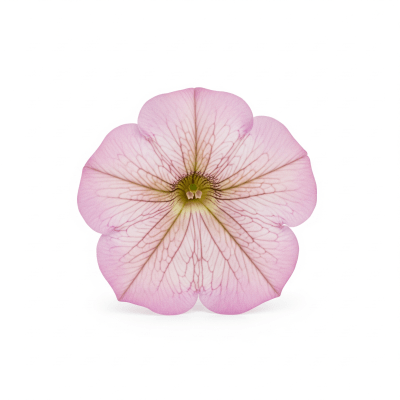
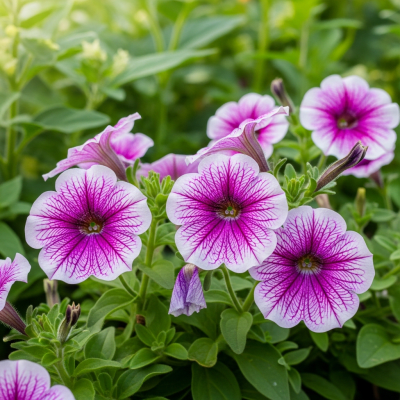
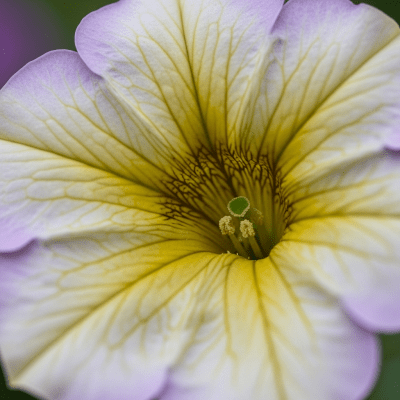
Petunias feature soft, slightly sticky leaves and a sprawling, herbaceous growth habit. Their flowers are funnel- or trumpet-shaped, measuring 5–10 cm across, and bloom singly or in clusters. The color palette is remarkably broad, ranging from pure white and pastel pinks to deep reds, purples, blues, yellows, and striking bicolored or patterned forms. Plants typically reach 15–45 cm in height and spread 30–90 cm, depending on variety.
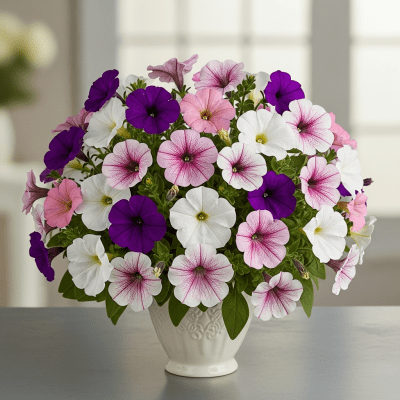
Petunias are prized for their long blooming season and adaptability, making them favorites for bedding, containers, hanging baskets, and window boxes. They thrive in full sun and well-drained soil, blooming prolifically from late spring to autumn. While not edible or medicinal, petunias are valued almost exclusively for their ornamental appeal and ability to create vibrant, cheerful displays in public and private landscapes.
Bring this kind into your world illustrated posters, mugs, and shirts.
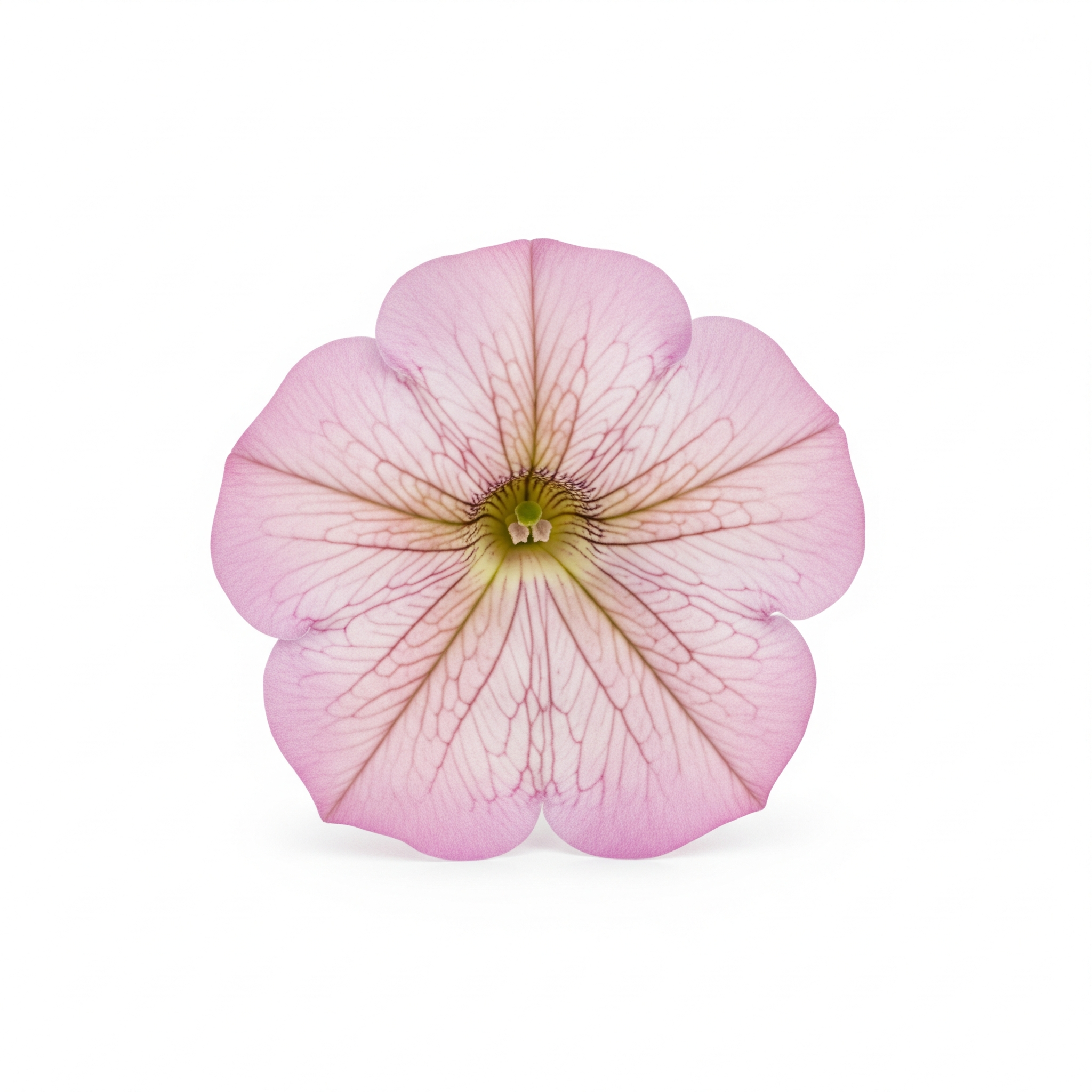
Archival print, museum-grade paper
Buy Poster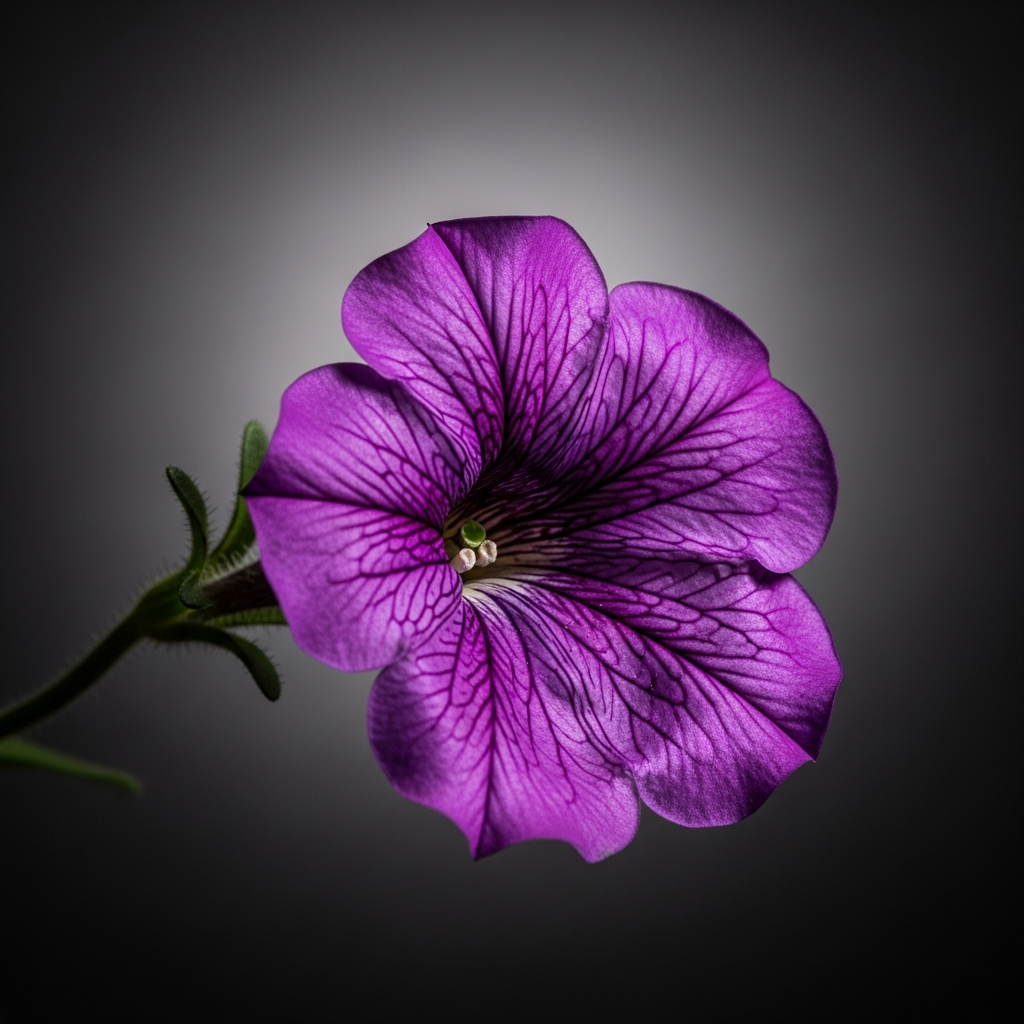
Stoneware mug, dishwasher safe
Buy Mug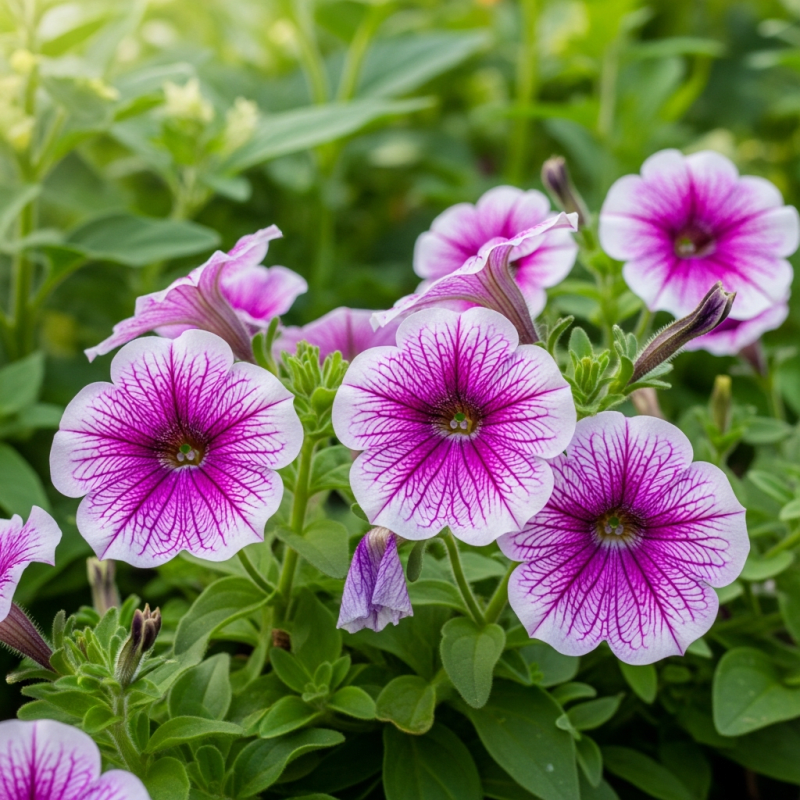
Soft cotton tee, unisex sizes
Buy ShirtPetunias have become emblematic of cheerful garden displays and urban beautification. Their presence in public parks, city planters, and home gardens speaks to their role in modern horticulture. Symbolically, petunias can represent comfort, anger, or resentment, but are most commonly associated with vibrancy and positive energy. In art and floral design, their diverse colors and forms make them a staple for creative expression.
Petunias offer an extraordinary spectrum of colors, including white, pink, red, purple, blue, yellow, and a variety of bicolored or patterned forms. While some species, such as Petunia axillaris, are noted for a light, sweet fragrance, most modern hybrids are grown for their visual appeal rather than scent.

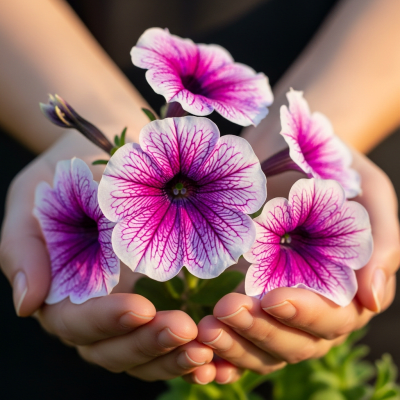
Grow petunias in full sun and well-drained soil for best results. Plant after the last frost, and water moderately, avoiding soggy conditions. Regular deadheading encourages continuous blooms. Petunias can be started from seed (which requires light for germination) or cuttings. They are sensitive to frost and thrive in temperatures between 16–24°C. Watch for fungal diseases and insect pests, and select disease-resistant cultivars when possible.
Petunias are most often associated with cheerfulness and vibrant display, making them symbols of comfort and positivity. In some cultures, they may also represent anger or resentment, but their widespread use in joyful settings has cemented their reputation as flowers of celebration and warmth.
Modern petunias are the result of extensive hybridization, primarily between Petunia axillaris and Petunia integrifolia. Breeding began in Europe in the 19th century, with ongoing selection yielding hundreds of cultivars in various colors, shapes, and growth habits. Notable breeding efforts have come from botanical gardens and horticulturists in France, England, and Germany, leading to improved disease resistance and weather tolerance in recent varieties.
Petunias typically bloom from late spring through autumn, offering continuous color until the first frost. They are widely available in nurseries and garden centers during spring planting season.
Petunias are valued almost exclusively for ornamental purposes, gracing gardens, containers, hanging baskets, window boxes, and public landscapes. They are not used in culinary, medicinal, or perfumery applications and are considered mildly toxic. Their prolific blooms and broad color range make them a staple in both amateur and professional horticulture, with symbolic associations of comfort and cheerfulness.