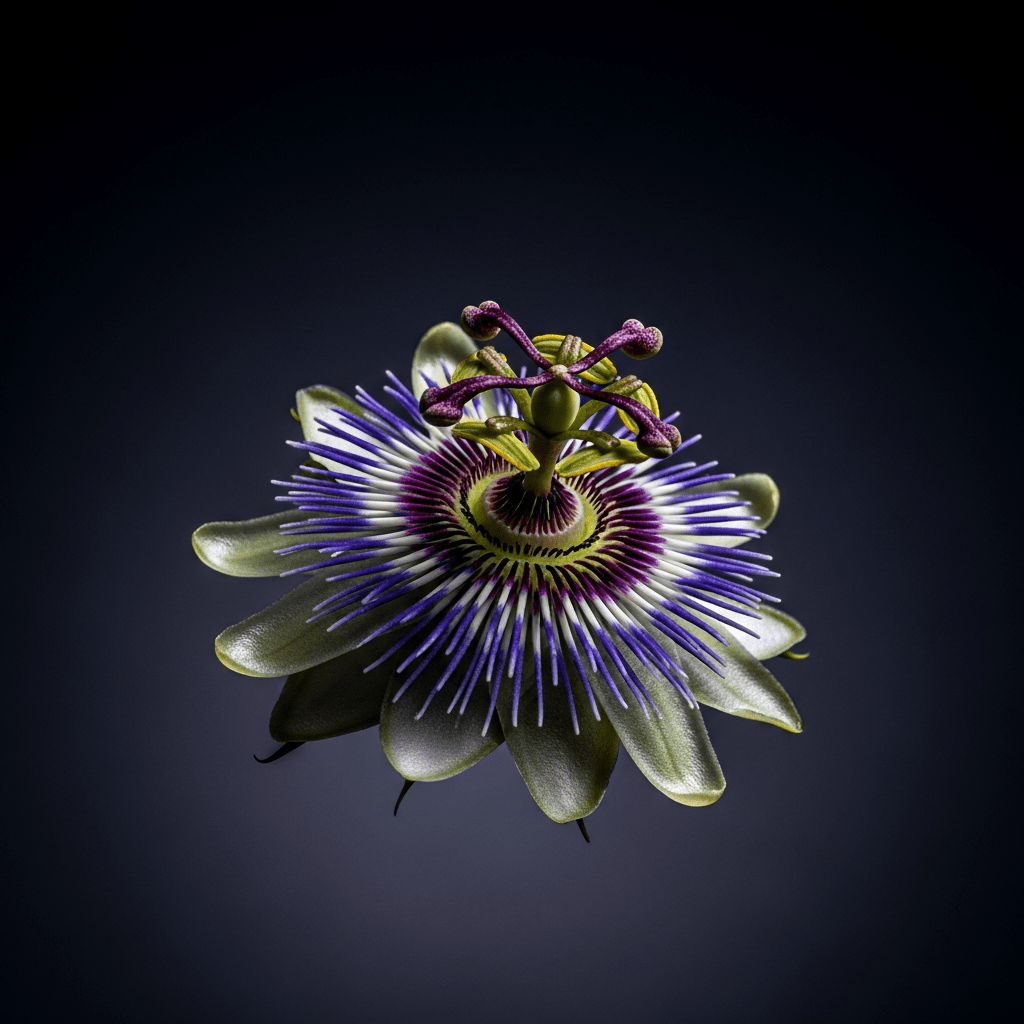
Passion Flower
The passion flower is a visually stunning, intricately structured bloom from the genus Passiflora, celebrated for its ornamental beauty, edible fruit, and rich cultural symbolism.
The passion flower is a visually stunning, intricately structured bloom from the genus Passiflora, celebrated for its ornamental beauty, edible fruit, and rich cultural symbolism.
Native to the Americas—especially southern Brazil, Paraguay, and northern Argentina—the passion flower has a long history entwined with indigenous cultures. First formally described by Carl Linnaeus in 1753, its captivating presence was recognized well before European documentation. Over centuries, horticulturists worldwide have cultivated and hybridized various species, focusing on fruit quality and ornamental traits, with notable breeding programs in Brazil, Australia, and the United States.
Passion flowers belong to the genus Passiflora within the family Passifloraceae, part of the angiosperms (flowering plants). With over 500 recognized species, this genus is distinguished by its unique floral morphology and ecological diversity, fitting squarely within the broader taxonomy of ornamental and fruit-bearing blooms.
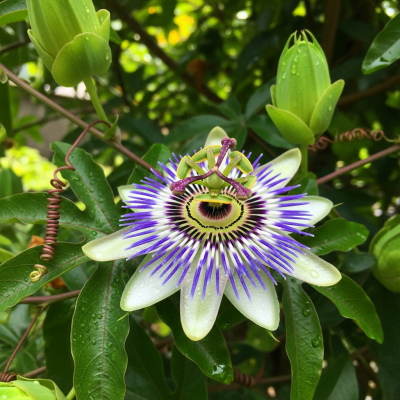
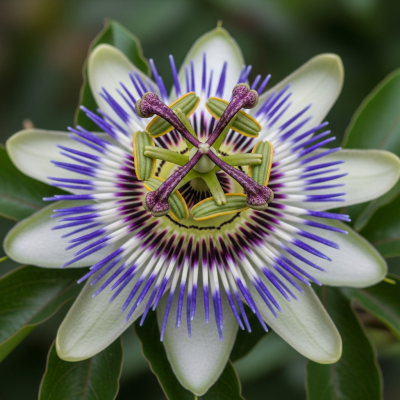
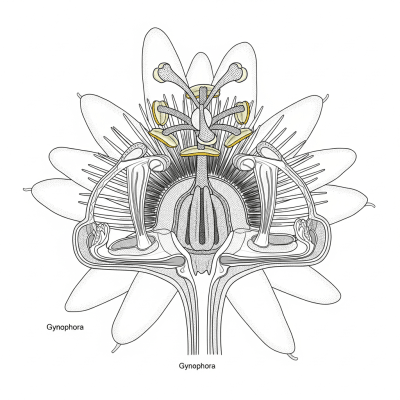
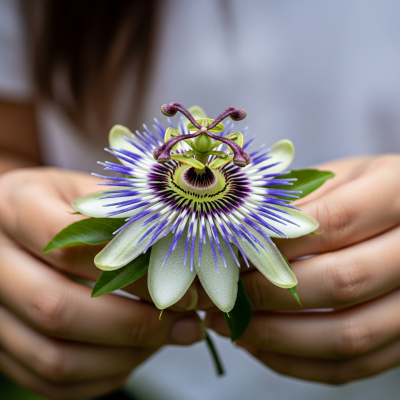
Passion flowers are renowned for their dramatic, showy blooms, typically measuring 5–10 cm across. Each flower features five sepals, five petals, a striking corona of filaments, and prominent reproductive structures. Colors span white, purple, blue, red, and yellow, often in vivid combinations. Most species are vigorous climbing vines with alternate, palmately lobed leaves, though some are shrubs or herbaceous. The fruit is a round or oval berry, with a tough rind and aromatic, juicy pulp.
Passion flowers serve multiple roles: they are cultivated for their edible fruit (notably passionfruit), grown ornamentally for their spectacular blossoms, and used in traditional herbal medicine. In the wild, they act as larval host plants for butterflies and rely on intricate pollination mechanisms, often requiring cross-pollination for fruit set. Their vigorous growth habit makes them ideal for covering trellises and garden structures.
Bring this kind into your world illustrated posters, mugs, and shirts.
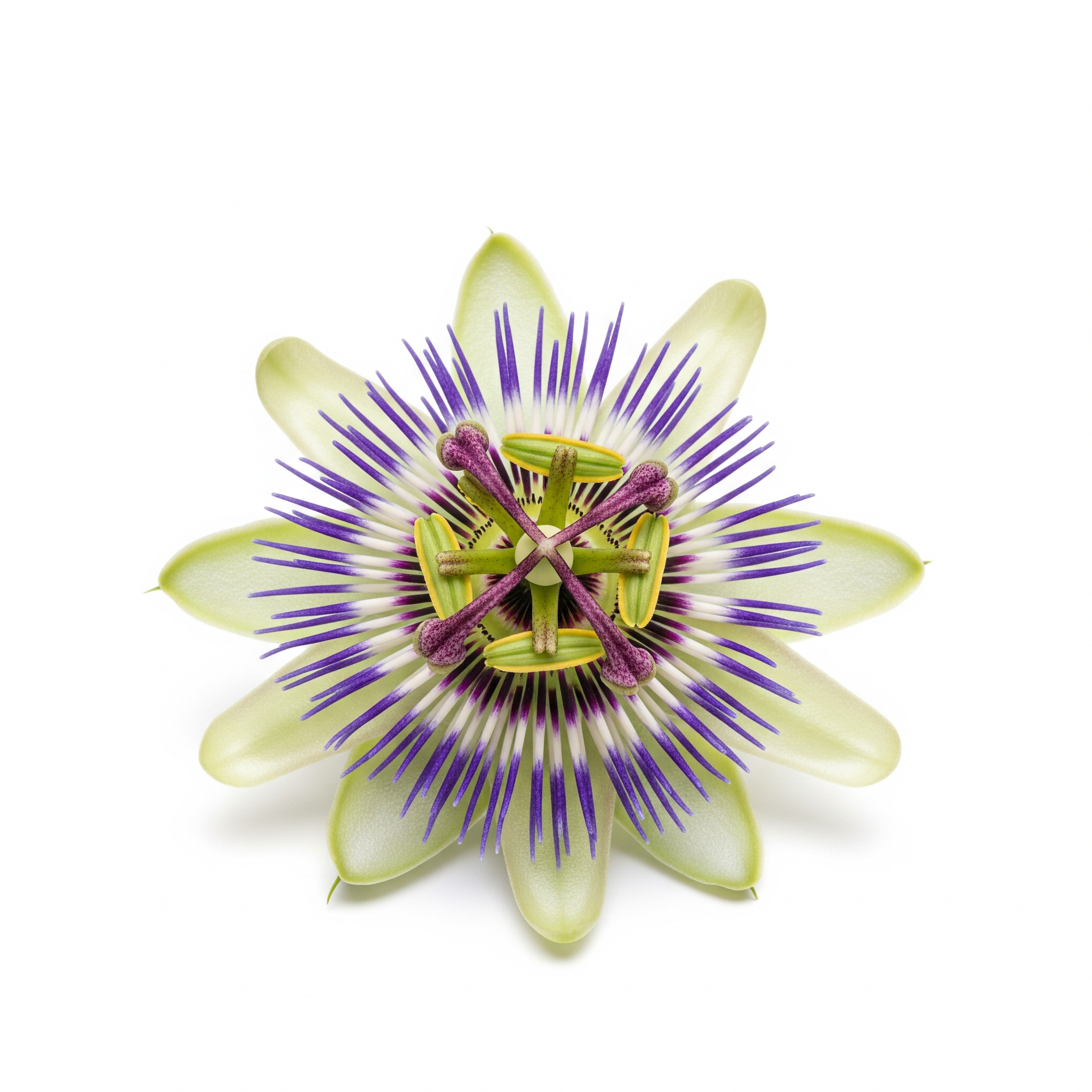
Archival print, museum-grade paper
Buy Poster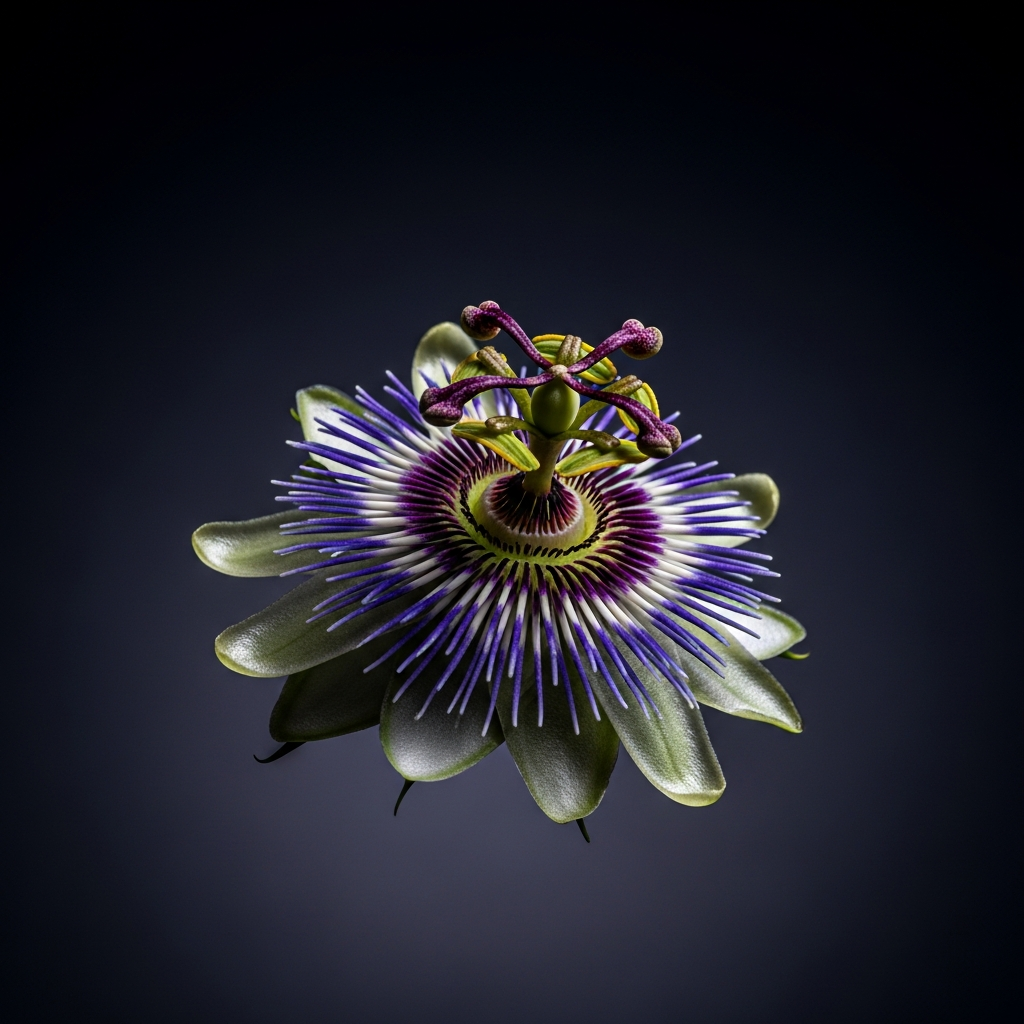
Stoneware mug, dishwasher safe
Buy Mug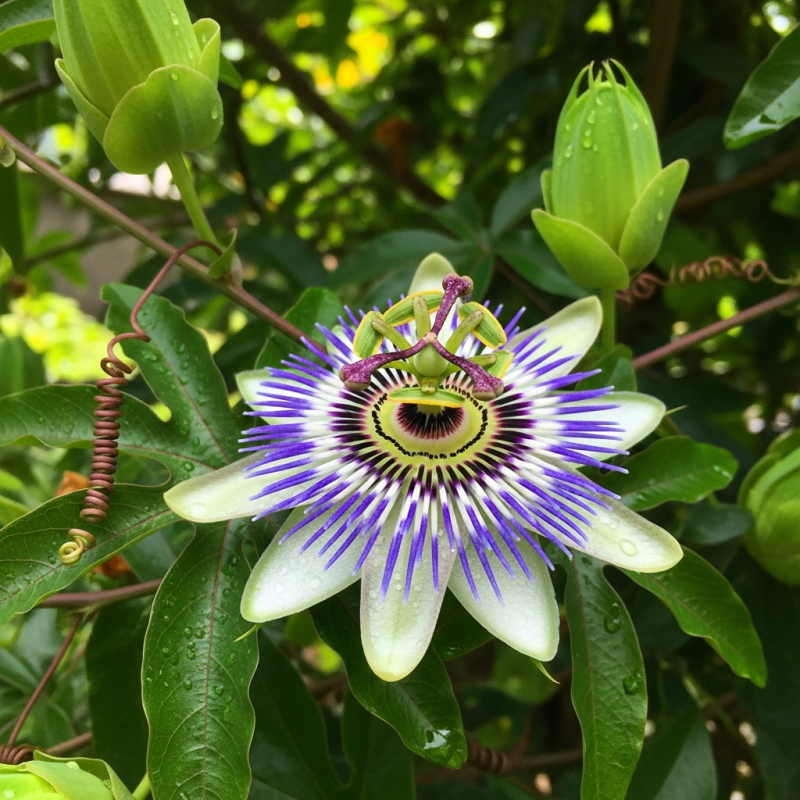
Soft cotton tee, unisex sizes
Buy ShirtThe passion flower holds deep cultural resonance, especially in Christian symbolism, where its floral structures were interpreted by missionaries as representing the Passion of Christ. Its name and form appear in art, literature, and folklore across the Americas and Europe. In herbal traditions, certain species are valued for their calming properties, while the fruit features in culinary celebrations worldwide.
Passion flowers dazzle with a palette of white, purple, blue, red, and yellow. While some varieties emit a light, sweet fragrance, most are admired primarily for their visual impact rather than scent.

To cultivate passion flowers, provide well-drained soil and a sunny to partially shaded location. These frost-sensitive vines flourish in subtropical to tropical climates with moderate to high humidity. Propagation is commonly done by seed or cuttings. Regular watering, support for climbing, and protection from root-knot nematodes and fungal diseases are key for healthy growth. Ripe fruits can be stored for up to 2–3 weeks under refrigeration.
Symbolically, the passion flower is most famous for its association with the Passion of Christ, with each floral part interpreted as a religious emblem. Beyond Christian iconography, it represents faith, spiritual connection, and, in some cultures, peace and tranquility. Its use in herbal medicine also lends it connotations of calm and healing.
Among the most popular species are Passiflora edulis (purple and yellow passionfruit), P. incarnata (maypop), and P. caerulea (blue passion flower). Each offers distinct floral forms, fruit characteristics, and regional appeal. The diversity within the genus ensures a variety suitable for ornamental, culinary, or medicinal use.
Breeding of passion flowers centers on enhancing fruit quality, ornamental traits, and disease resistance. Horticulturists have developed numerous cultivars and hybrids, especially in Brazil, Australia, and the United States. Many hybrids combine vibrant colors and improved hardiness, though some lack formal botanical status due to ongoing taxonomic revisions.
Passion flowers are vulnerable to root-knot nematodes, fusarium wilt, and various viral diseases. Effective management includes selecting resistant cultivars, maintaining healthy soil, and monitoring for early signs of infestation. Breeding for disease resistance remains a priority in commercial and ornamental cultivation.
Passion flowers typically bloom and fruit during the warmer months in subtropical and tropical regions. Flowering and harvest times vary by species and climate, but peak availability is generally spring through late summer.
Passion flowers are cherished for their ornamental value in gardens and landscapes, their edible fruit in culinary traditions, and their medicinal properties in herbal remedies. The fruit is enjoyed fresh, juiced, or as a flavoring, while leaves and flowers are used for their calming effects. Ecologically, they support butterfly populations as larval host plants and play a role in habitat restoration.