Nigella
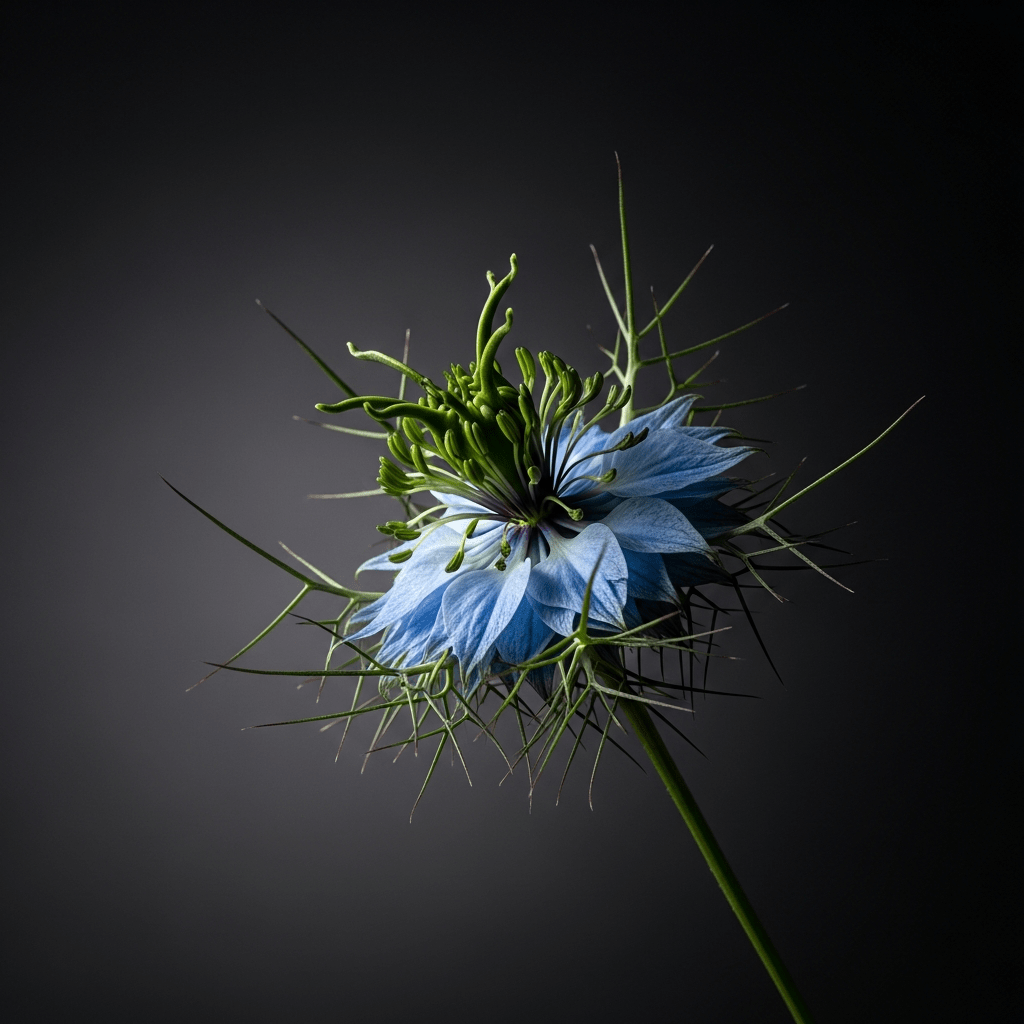
Nigella is a charming genus of annual flowering plants in the buttercup family, celebrated for its feathery foliage, delicate blooms, and ornamental seed pods.
Nigella is a charming genus of annual flowering plants in the buttercup family, celebrated for its feathery foliage, delicate blooms, and ornamental seed pods.
Nigella was first formally described by Carl Linnaeus in 1753. Its most beloved species, Nigella damascena, traces its roots to southern Europe, North Africa, and southwest Asia, where it has flourished in cottage gardens for centuries. The cultivated forms found today are largely selected from wild populations, with subtle horticultural refinement for color and form over generations.
Nigella belongs to the family Ranunculaceae, a group known for its diverse and often showy flowers. Within this genus, there are approximately 18 recognized species. The most famous is Nigella damascena, commonly called "Love-in-a-mist," which exemplifies the genus’s distinctive floral structure and ornamental appeal.
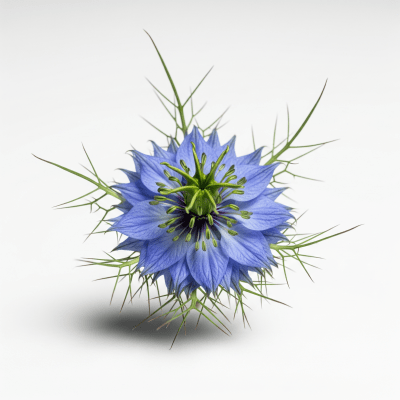
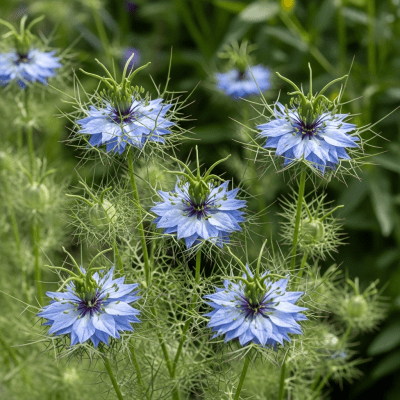
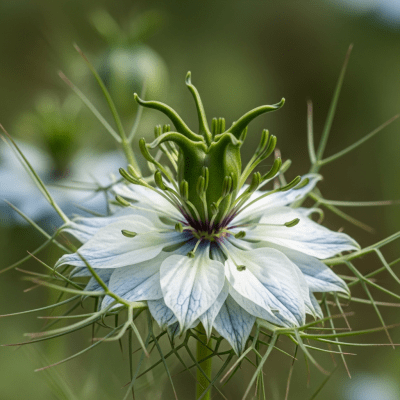
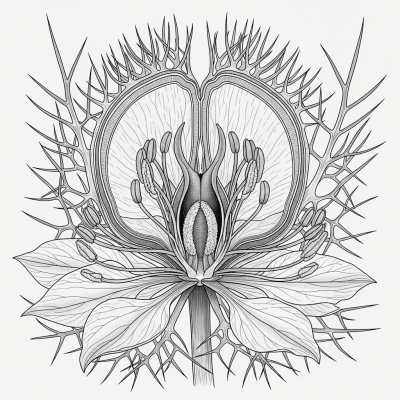
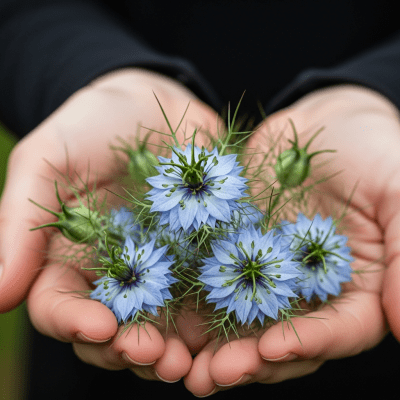
Nigella plants stand 30–60 cm tall, with finely dissected, feathery leaves that create a misty aura around each bloom. The flowers are radially symmetrical, typically 2–4 cm across, and display five to ten petal-like sepals in soft shades of blue, white, pink, or purple. After flowering, Nigella produces unique, inflated seed capsules adorned with horns, which add further visual interest and are often used in dried arrangements.
Nigella is primarily cultivated for its ornamental value, gracing gardens, borders, and wildflower meadows with its airy foliage and pastel blooms. It is self-seeding and can naturalize in temperate climates, requiring minimal intervention once established. The dried seed pods are especially prized in floristry for their sculptural quality, while the living plants attract pollinators and add texture to garden compositions.
Bring this kind into your world illustrated posters, mugs, and shirts.
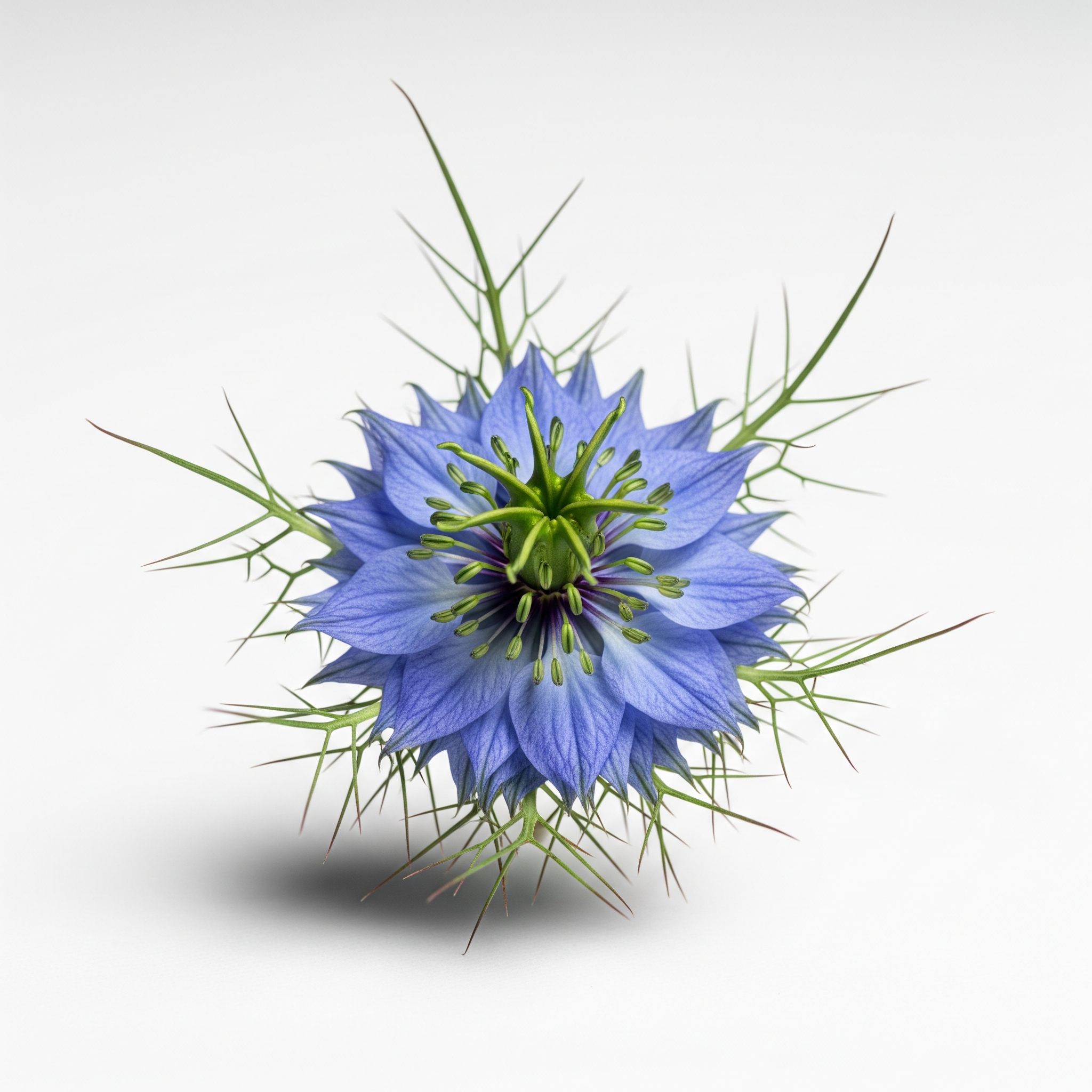
Archival print, museum-grade paper
Buy Poster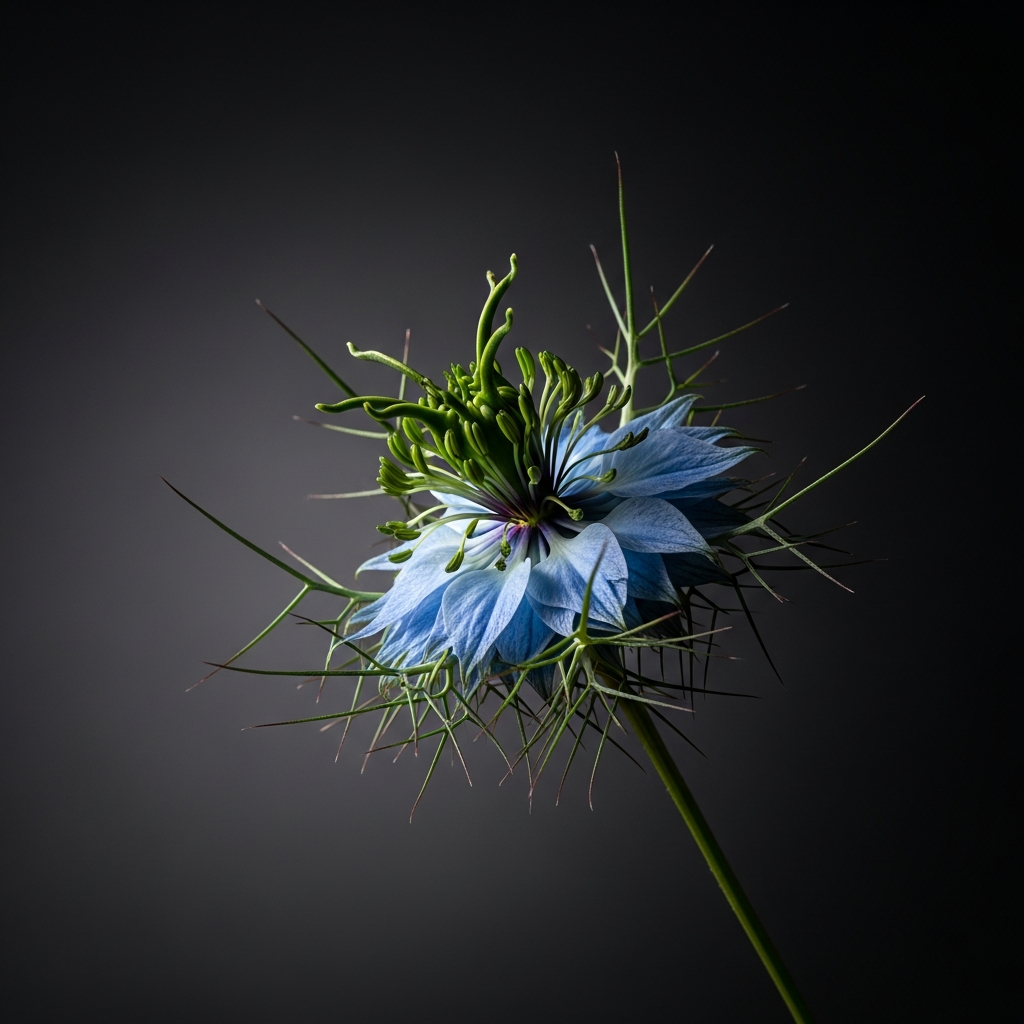
Stoneware mug, dishwasher safe
Buy Mug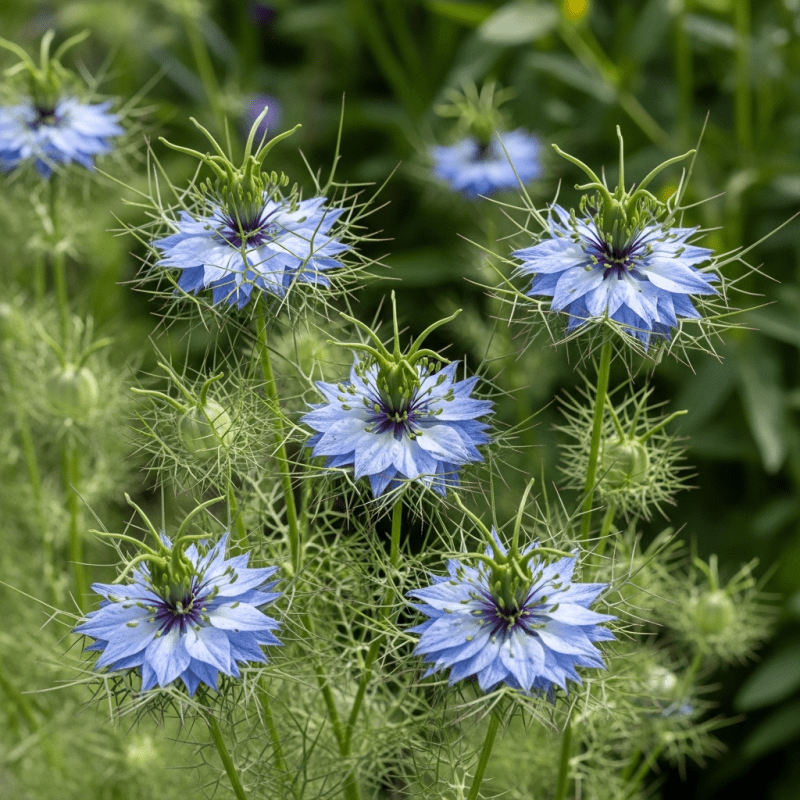
Soft cotton tee, unisex sizes
Buy ShirtKnown as "Love-in-a-mist," Nigella damascena has long been a symbol of romantic intrigue and mystery in European gardens. Its ethereal appearance and evocative common names, such as "Devil-in-the-bush" and "Ragged Lady," have inspired poets and artists. While not central to major rituals or folklore, its presence in cottage gardens and Victorian floral arrangements reflects a quiet cultural affection for its whimsical beauty.
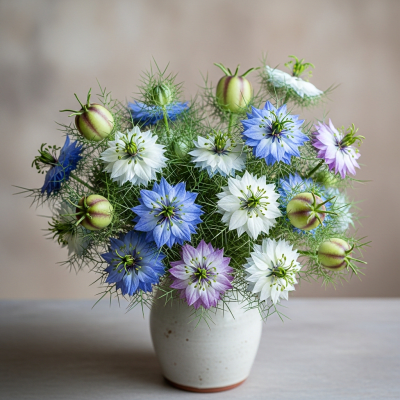
Nigella flowers are celebrated for their soft palette—most commonly sky blue, white, pink, and purple. While their fragrance is subtle or absent, the visual effect of their misty foliage and pastel blooms is striking, especially when planted en masse.
Nigella thrives in well-drained, moderately fertile soils and prefers full sun. Sow seeds directly where they are to grow in spring or autumn, as the plants dislike transplanting due to their taproot. Once established, Nigella is drought-tolerant, low-maintenance, and largely free of serious pests or diseases. Allow spent flowers to set seed for natural self-sowing and easy propagation.
With its evocative name "Love-in-a-mist," Nigella damascena often symbolizes romantic mystery, delicacy, and the fleeting nature of beauty. Its airy foliage and hidden blooms have made it a gentle emblem of secrecy and enchantment in garden lore.
Nigella’s cultivated forms stem mainly from wild populations, with selective breeding focused on flower color and form. There are no notable hybridization programs or famous breeders associated with the genus, but garden selections like 'Miss Jekyll' and 'Persian Jewels' reflect ongoing horticultural refinement.
Nigella is remarkably resilient, suffering from few serious pests or diseases. Its low-maintenance nature means gardeners rarely need to intervene, though good air circulation and well-drained soil help prevent occasional fungal issues. Routine garden hygiene and crop rotation further minimize risk.
Nigella typically blooms from late spring through midsummer, depending on sowing time and climate. Seed capsules mature in late summer, offering ornamental value well beyond the flowering season.
Nigella is prized as an ornamental garden flower and for its use in cut and dried floral arrangements. While Nigella damascena is not used for culinary or medicinal purposes, its cousin Nigella sativa is valued as a spice. The distinctive seed pods of Nigella damascena add sculptural interest to bouquets and crafts, making it a favorite among florists and home gardeners alike.