
Gazania
Gazania is a vibrant genus of daisy-like flowering plants, celebrated for their dazzling colors and remarkable drought tolerance, making them a favorite for ornamental gardens in warm climates.
Gazania is a vibrant genus of daisy-like flowering plants, celebrated for their dazzling colors and remarkable drought tolerance, making them a favorite for ornamental gardens in warm climates.
Gazania traces its roots to southern Africa, with wild species native to South Africa, Mozambique, and Angola. First described in 1791 by Joseph Gaertner, the genus was named to honor Theodorus Gaza, a noted Greek-Italian scholar. Over time, gazanias have been cultivated worldwide, with many modern varieties resulting from hybridization, especially between Gazania rigens and related species. Their journey from African wildflower to global garden staple reflects both botanical curiosity and the pursuit of resilient, colorful bedding plants.
Gazania belongs to the family Asteraceae, which includes daisies and sunflowers. Within this family, Gazania is recognized as a distinct genus, characterized by its radiate flower heads and ground-hugging growth habit. Taxonomic confusion sometimes arises between species such as Gazania rigens, Gazania linearis, and Gazania splendens, with authorities occasionally treating them as subspecies or varieties. Most garden forms are complex hybrids, collectively referred to as Gazania × hybrida.
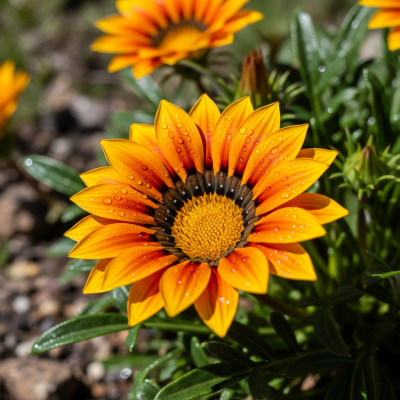
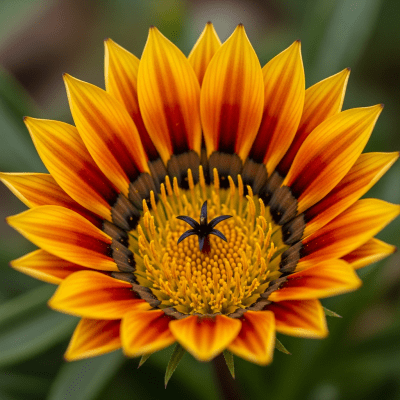
Gazania plants form low, spreading rosettes, typically 15–30 cm tall and up to 60 cm wide. Their leaves are linear to lanceolate, often silvery or woolly on the underside, giving a soft texture. The flower heads, 5–8 cm in diameter, rise on slender stems and burst with vivid colors—yellow, orange, red, pink, white, and striking bi- or tricolored patterns, often accented by dark basal blotches. Flowers open only in bright sunlight and close at night or on cloudy days, creating a dynamic display that tracks the sun.
Gazanias are prized for their ability to thrive in harsh, dry conditions and poor soils, making them ideal for mass bedding, borders, containers, and erosion control. Their flowers open in full sun and close at night, a behavior known as nyctinasty. In regions with mild winters, they may persist as perennials, while in cooler climates, they are grown as annuals. Their low maintenance and continuous bloom make them a staple in Mediterranean and arid landscapes, though in some areas they have naturalized and become invasive.
Bring this kind into your world illustrated posters, mugs, and shirts.

Archival print, museum-grade paper
Buy Poster
Stoneware mug, dishwasher safe
Buy Mug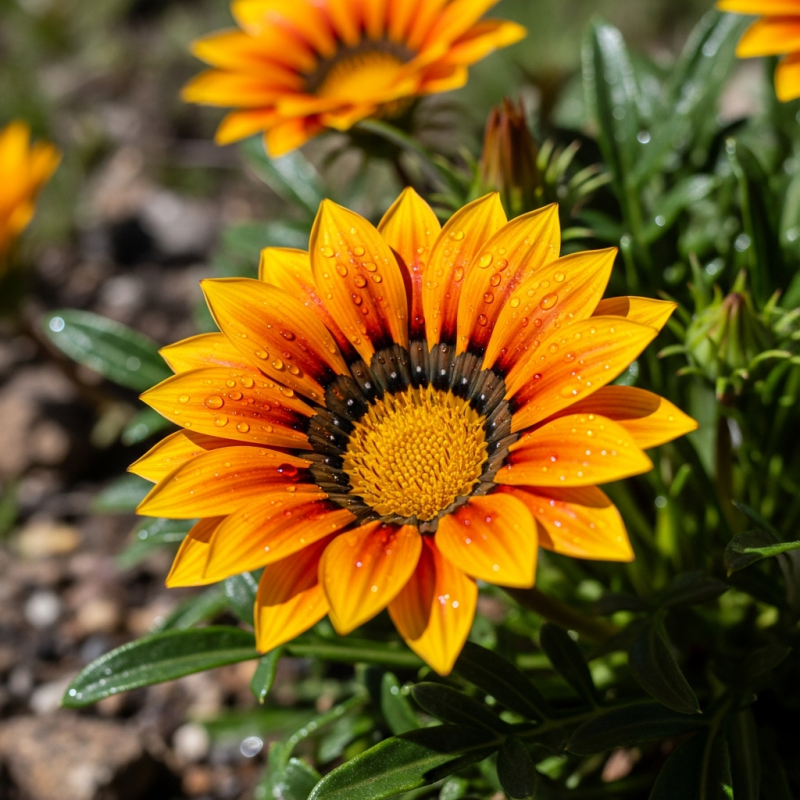
Soft cotton tee, unisex sizes
Buy ShirtWhile gazanias do not have deep roots in folklore or traditional symbolism, their radiant blooms have earned them the nickname "treasure flower" and inspired names like "Mittagsgold" (midday gold) in German, reflecting their sun-loving nature. Their bold colors and resilience have made them popular in public spaces and home gardens, serving as a living emblem of warmth and vitality in regions where other flowers may struggle.
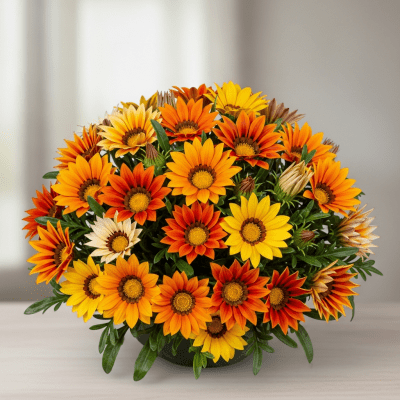
Gazania flowers are renowned for their vivid palette, featuring shades of yellow, orange, red, pink, white, and eye-catching bi- or tricolored patterns. While visually striking, gazanias are not noted for fragrance; their appeal lies in bold color rather than scent.



To cultivate gazania successfully, plant in full sun and sandy, well-drained soil. Avoid overwatering, as the plants are susceptible to root rot in soggy conditions. Gazanias can be grown from seed or propagated by vegetative cuttings, with the latter preferred for maintaining specific cultivars. In temperate zones, treat as annuals or provide winter protection. Deadheading spent blooms encourages continuous flowering, and minimal fertilization is needed. Their resilience makes them ideal for low-maintenance gardens and challenging sites.
Gazania does not have widespread traditional symbolism, but its radiant, sun-tracking blooms are often associated with cheerfulness, vitality, and resilience. The nickname "treasure flower" hints at its ability to bring color and life to otherwise barren landscapes, embodying the spirit of optimism and endurance.
Modern garden gazanias are largely the result of extensive hybridization, primarily involving Gazania rigens and related species. Breeding efforts have focused on expanding flower size, color diversity, and environmental resilience. Most cultivars are proprietary or undocumented, marketed under group names like Gazania × hybrida. The lack of formal pedigrees reflects the commercial nature of gazania breeding, with innovation driven by horticultural demand for ever more striking and adaptable plants.
Gazania is generally tolerant of drought, heat, and salt spray, but regular monitoring helps prevent pest outbreaks and disease.
Gazania typically blooms from late spring through autumn, providing continuous color throughout the warm months. In frost-free climates, flowering may persist year-round, while in cooler regions, gazanias are grown as summer annuals.
Gazania is valued almost exclusively for ornamental use, brightening gardens, borders, containers, and slopes with its vivid flowers and ground-covering habit. It plays a role in erosion control and low-water landscaping, especially in Mediterranean and arid zones. Gazania is not used in culinary, medicinal, or industrial contexts, and its short-lived cut flowers are rarely seen in floral arrangements. In some regions, its robust growth has led to naturalization and invasive status.