Fuchsia
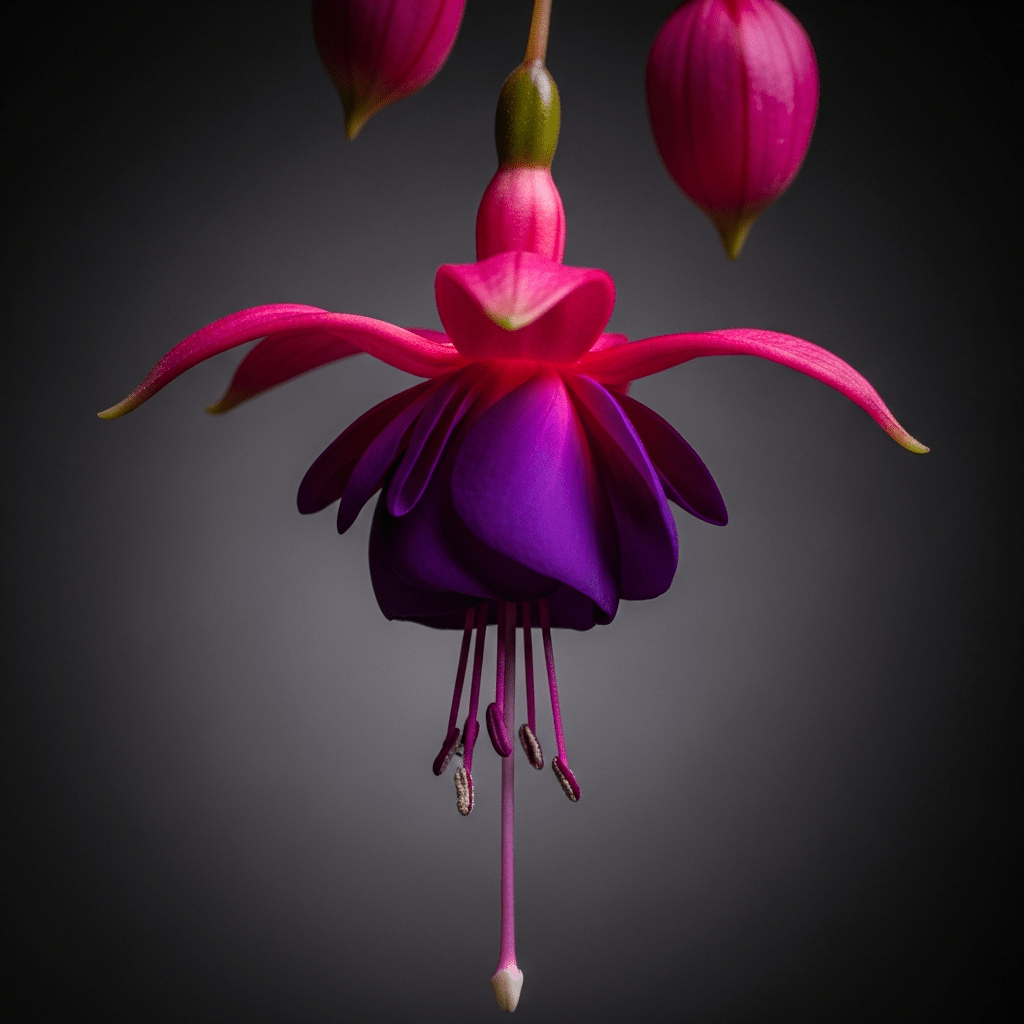
Fuchsia is a vibrant genus of flowering plants famed for its elegant, pendulous blossoms in vivid hues, cherished worldwide as ornamental garden favorites.
Fuchsia is a vibrant genus of flowering plants famed for its elegant, pendulous blossoms in vivid hues, cherished worldwide as ornamental garden favorites.
Fuchsias were first described in 1703 by Charles Plumier, who named the genus after German botanist Leonhart Fuchs. Native primarily to Central and South America, with a few species in New Zealand and Tahiti, fuchsias have a rich history of cultivation and hybridization, especially in Europe and North America since the 19th century. Their journey from wild species to beloved garden plants reflects centuries of botanical exploration and horticultural innovation.
Fuchsia belongs to the family Onagraceae and comprises over 100 species. Within the broader taxonomy of flowers, it is organized as a genus under angiosperms—plants defined by their showy reproductive blooms. The genus includes both wild species and a vast array of horticultural hybrids, with names standardized by authorities such as the Royal Horticultural Society and Kew Gardens.
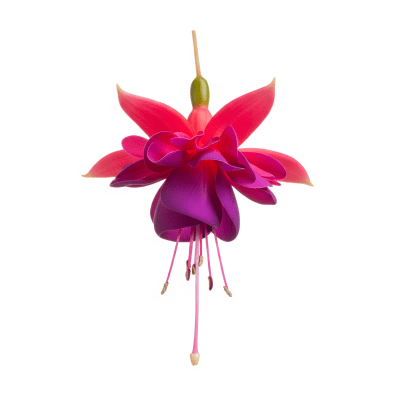
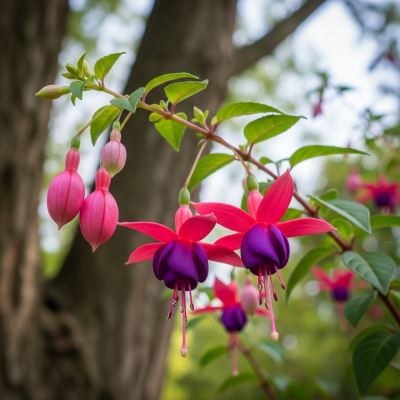
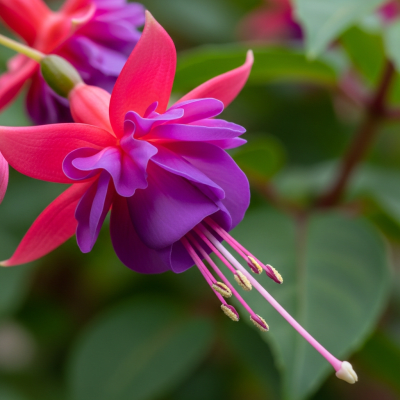
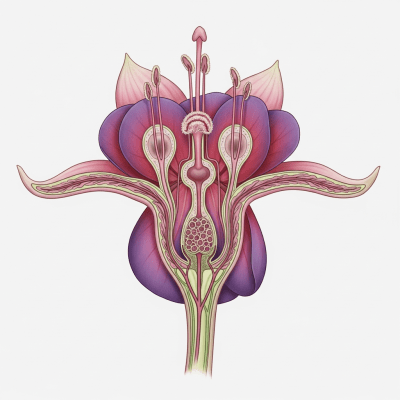
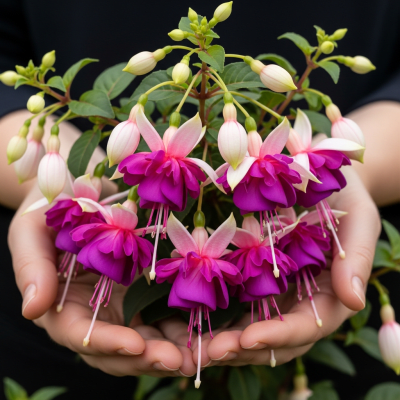
Fuchsias are noted for their graceful, drooping flowers, which feature a tubular calyx and four spreading sepals, often contrasting with the shorter petals. The blossoms come in striking combinations of pink, purple, red, white, and occasionally orange. Plants may be upright, trailing, or bushy, ranging from compact 20 cm forms to small trees up to 4 meters tall. Their leaves are typically opposite or whorled, ovate to lanceolate, and edged with fine serrations, adding to their ornamental appeal.
Fuchsias are primarily cultivated for their ornamental value, thriving in gardens, containers, and hanging baskets. Their long flowering season and attractive foliage make them favorites for decorative landscaping. Some species produce edible berries and flowers, occasionally used as garnishes or in jams, though fruit is not a commercial focus. Fuchsias interact with their environment by attracting pollinators such as hummingbirds and bees, and their trailing forms are especially suited for cascading displays.
Bring this kind into your world illustrated posters, mugs, and shirts.
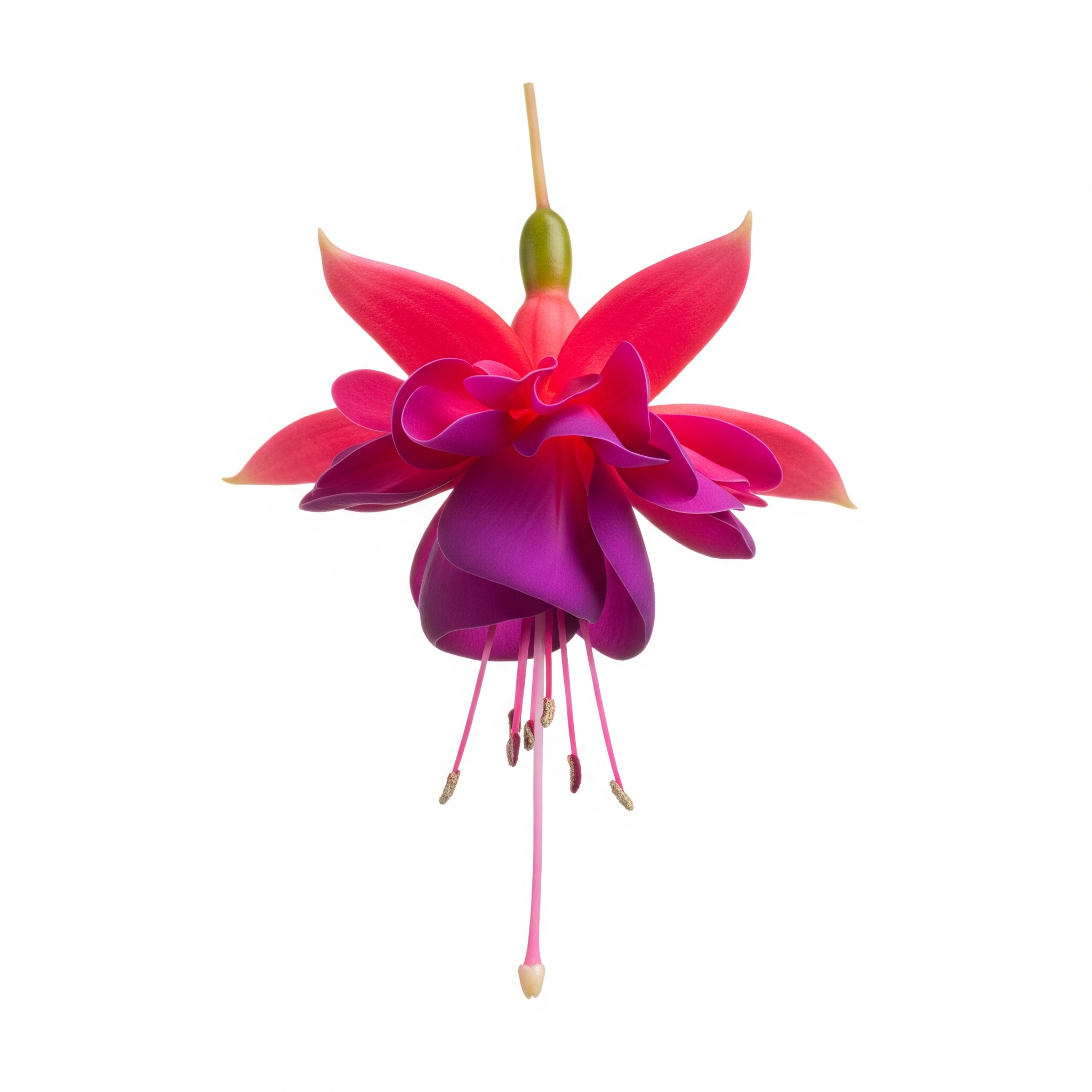
Archival print, museum-grade paper
Buy Poster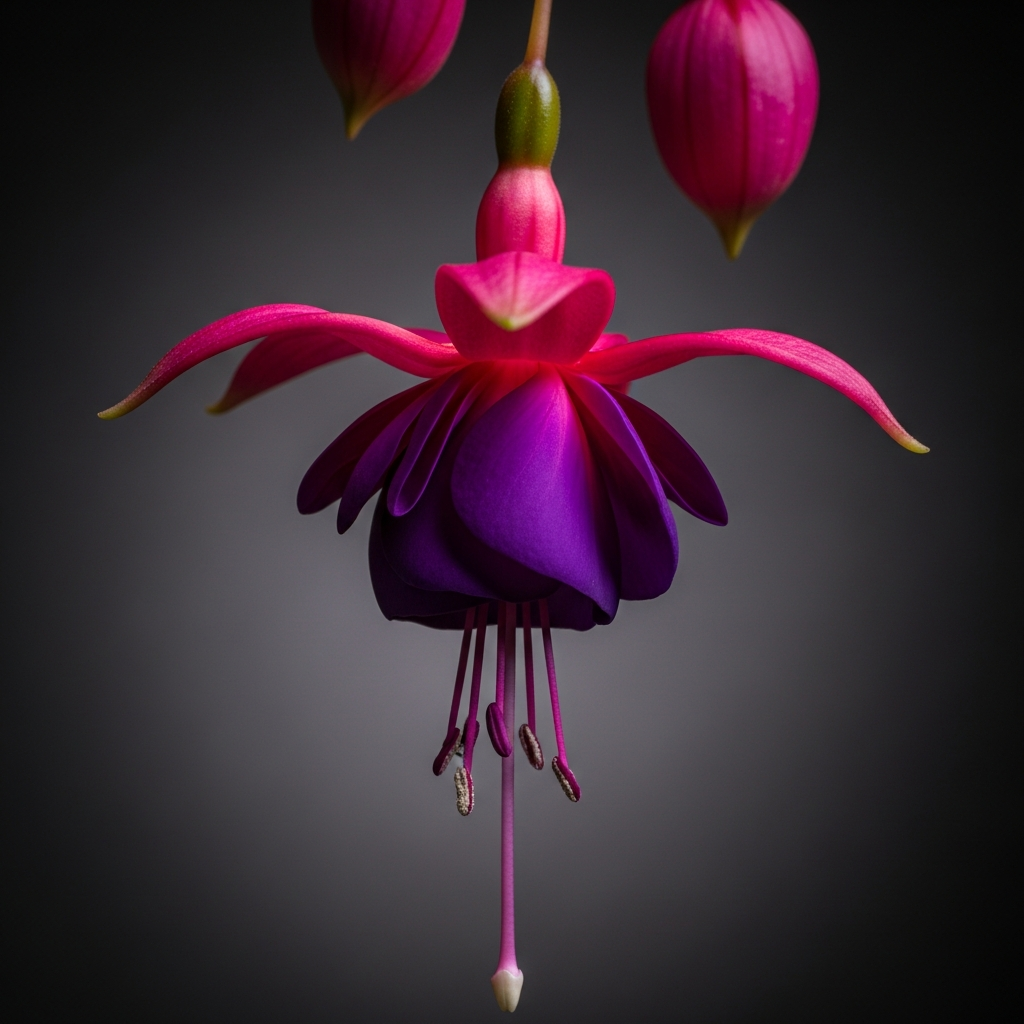
Stoneware mug, dishwasher safe
Buy Mug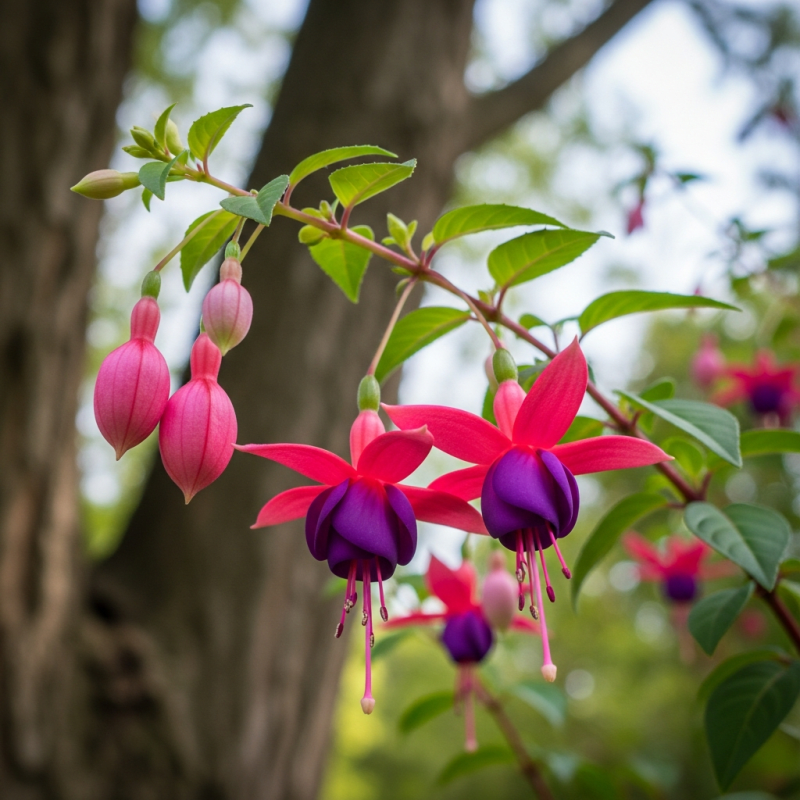
Soft cotton tee, unisex sizes
Buy ShirtFuchsias hold symbolic meaning in the Victorian language of flowers, representing confiding love and amiability. In New Zealand, Fuchsia excorticata (kōtukutuku) has cultural importance for Māori people. Their vivid colors and elegant forms have inspired artists and gardeners alike, and numerous societies, such as the American Fuchsia Society, celebrate their diversity and beauty.
Fuchsia flowers are celebrated for their vivid palette, featuring shades of pink, purple, red, white, and orange, often in striking bicolor combinations. While most fuchsias are not notably fragrant, their visual impact is unmistakable, lending dramatic color to gardens and containers throughout the growing season.
Fuchsias flourish in moist, well-drained soils rich in organic matter and prefer partial shade, though some varieties tolerate full sun. Regular watering and protection from extreme heat or frost are essential. Propagation is commonly achieved by cuttings or seed, and plants benefit from periodic pruning to encourage bushy growth. In colder regions, fuchsias may be overwintered indoors to protect them from hard freezes. Vigilance against pests such as whitefly, aphids, and fuchsia gall mite, as well as diseases like rust and botrytis, will help maintain healthy plants.
In the Victorian language of flowers, fuchsias symbolize confiding love and amiability. Their vibrant, pendulous blooms are often associated with grace and delicate beauty. In New Zealand, the native kōtukutuku carries additional cultural significance for Māori communities, representing heritage and connection to the land.
Fuchsias have a rich history of hybridization, especially since the 19th century in Europe and North America. Most cultivated varieties are hybrids, often derived from Fuchsia magellanica, Fuchsia fulgens, and Fuchsia triphylla. Early breeding efforts in the United Kingdom and Netherlands led to a vast array of cultivars with diverse forms and colors. Today, societies such as the American Fuchsia Society and the Royal Horticultural Society register and promote new cultivars, ensuring continual innovation in the genus.
Fuchsias typically bloom from late spring through autumn in temperate climates, offering a long season of vibrant color. In mild regions, some species may flower nearly year-round, while in colder areas, plants are often overwintered indoors to ensure continued growth and flowering in the next season.
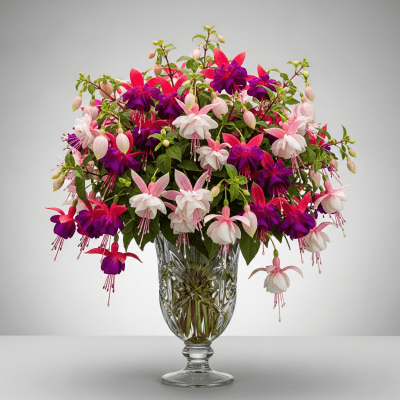
Fuchsias are primarily valued as ornamental plants, gracing gardens, containers, and hanging baskets with their striking blooms. Some species produce edible berries and flowers, occasionally used in jams, desserts, or as garnishes. While not significant in the cut flower market due to limited vase life, fuchsias hold symbolic meaning and cultural importance in various regions, notably among Māori communities in New Zealand.