Freesia
Freesia is a genus of highly fragrant, funnel-shaped flowering plants native to southern Africa, celebrated worldwide for their vibrant colors and enduring popularity in ornamental horticulture and floristry.
Freesia is a genus of highly fragrant, funnel-shaped flowering plants native to southern Africa, celebrated worldwide for their vibrant colors and enduring popularity in ornamental horticulture and floristry.
Freesia traces its botanical roots to the Cape Provinces of South Africa, where wild species flourish in sandy soils and mild climates. The genus was first described in 1830 by Christian Friedrich Ecklon, who named it in honor of German physician Friedrich Heinrich Theodor Freese. Modern freesias found in gardens and flower shops are primarily hybrids of several South African species, with extensive breeding and selection taking place in Europe and Japan throughout the 19th and 20th centuries. Today, freesias are cultivated globally, but their lineage remains deeply tied to the unique flora of southern Africa.
Freesia belongs to the family Iridaceae, a group renowned for ornamental species such as irises and crocuses. Within this family, Freesia is recognized for its herbaceous perennial growth and distinctive corm-based propagation. The genus encompasses multiple species, though most cultivated varieties are hybrids. Taxonomically, Freesia is grouped under the order Asparagales, class Monocots, and division Angiosperms, aligning it with other flowering plants that produce showy, reproductive blooms.
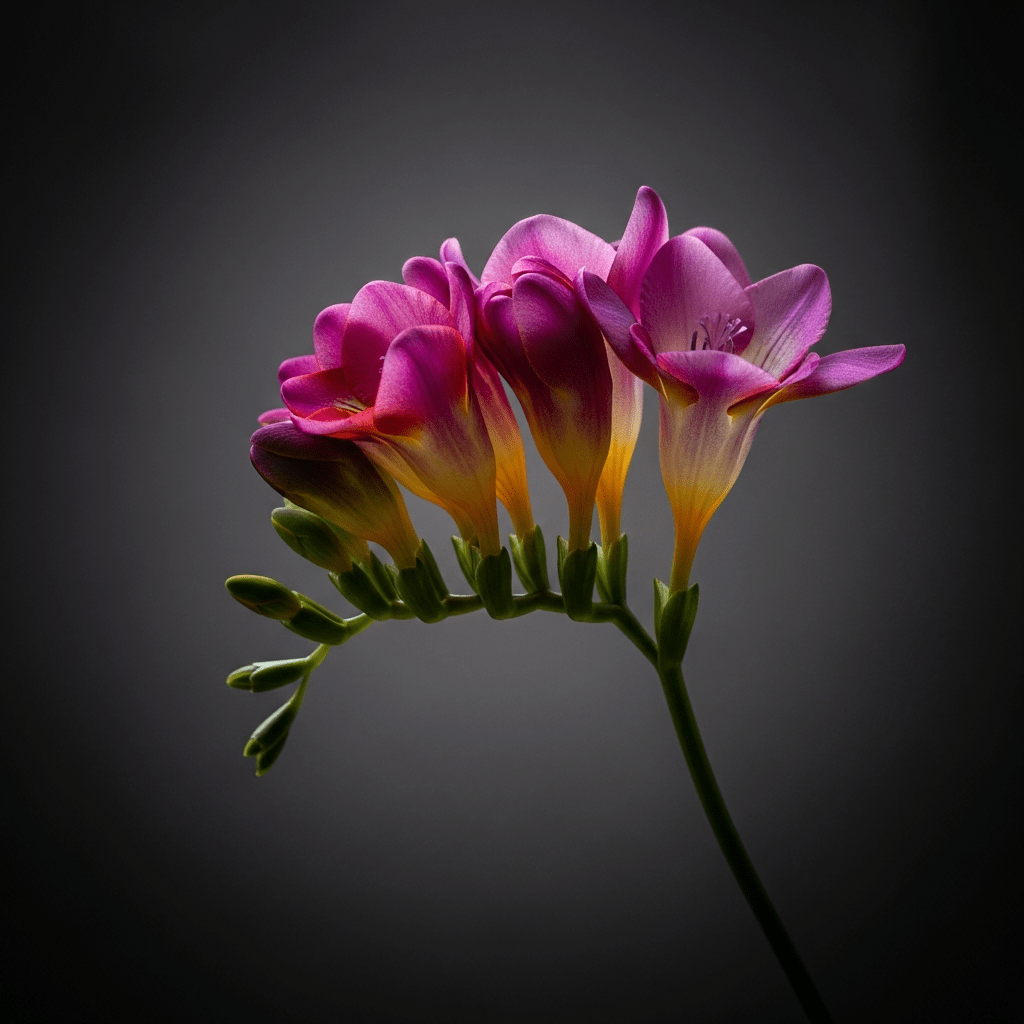
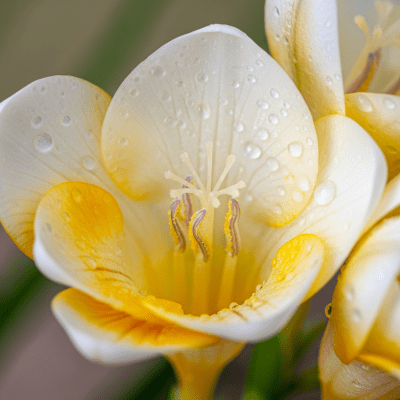
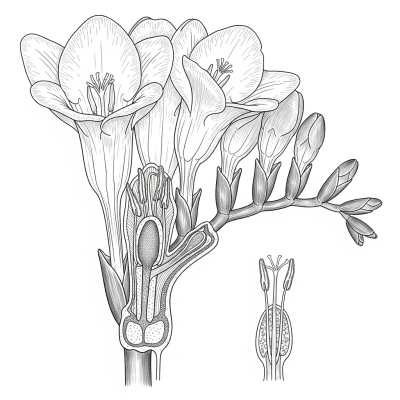
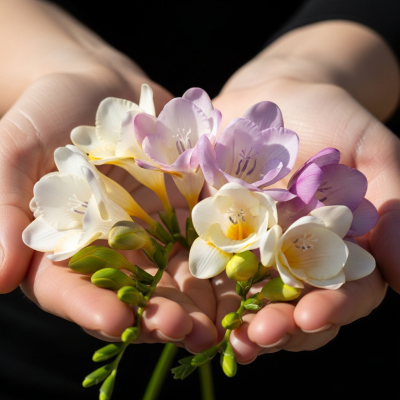
Freesias present a delicate and graceful form. Their slender, arching stems rise 20–45 cm above narrow, lance-shaped leaves, culminating in one-sided racemes of 5–12 funnel-shaped flowers. Each bloom showcases a palette ranging from pure white and sunny yellow to vivid orange, pink, red, lavender, and purple, often accented by contrasting throats or subtle markings. The flowers' silky petals and elegant curvature evoke a sense of freshness and refinement, making freesias a visual highlight in any bouquet or garden border.
Freesias are primarily cultivated for their ornamental value, thriving in gardens, containers, and commercial greenhouses. Their strong, sweet fragrance and vibrant colors make them a favorite in the cut flower industry, where they are prized for their vase life and ability to brighten arrangements. In the landscape, freesias add seasonal interest, while their compact growth and manageable care requirements suit both amateur and professional gardeners. They are not edible and are grown exclusively for visual and aromatic enjoyment.
Bring this kind into your world illustrated posters, mugs, and shirts.

Archival print, museum-grade paper
Buy Poster
Stoneware mug, dishwasher safe
Buy Mug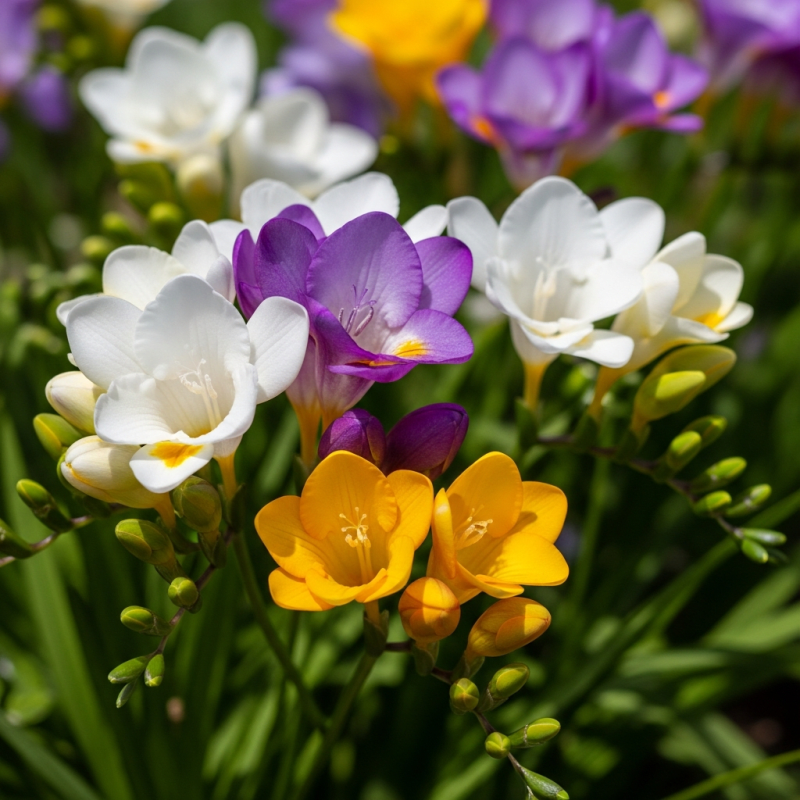
Soft cotton tee, unisex sizes
Buy ShirtFreesias hold a cherished place in cultural traditions and modern celebrations. Their association with innocence, friendship, and trust makes them a popular choice for wedding bouquets and anniversary gifts, particularly the seventh wedding anniversary. In art and literature, freesias often symbolize purity and heartfelt connection. Their widespread use in perfumery and scented products further cements their status as an emblem of elegance and gentle beauty across cultures.
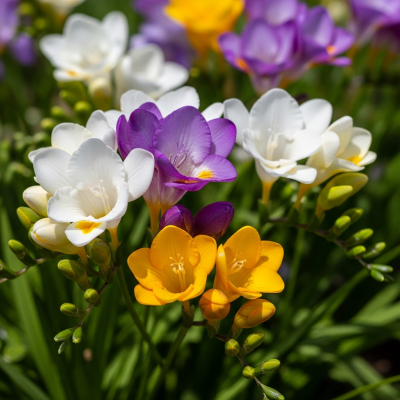
Freesias are celebrated for their strong, sweet fragrance, which is both refreshing and lingering. Their color palette spans white, yellow, orange, pink, red, lavender, and purple, often with striking contrasts or delicate markings. This aromatic and visual diversity makes freesias highly desirable for bouquets, arrangements, and perfumed products.


To cultivate freesias successfully, plant corms in well-drained, sandy soil and position them in full sun to partial shade. Water moderately, avoiding soggy conditions that can lead to fungal diseases. Freesias are moderately frost-tender, so in cooler climates, they are often grown as annuals or in containers that can be protected. Propagation is typically by corm division, and corms can be stored in cool, dry conditions for several months between growing cycles. Regular monitoring for pests and diseases such as aphids, thrips, Fusarium wilt, and Botrytis is recommended.
Freesias symbolize innocence, friendship, and trust. Their gentle beauty and sweet fragrance have made them a favored flower for expressing sincere emotions, especially in weddings and anniversaries. The freesia’s association with the seventh wedding anniversary highlights its role as a token of enduring bonds and heartfelt appreciation.
Most freesias found in commerce are hybrids, with cultivars selected for color, fragrance, and stem length. While specific variety names are often proprietary or regionally marketed, popular forms include those derived from Freesia refracta, Freesia leichtlinii, and Freesia corymbosa. These hybrids offer a wide spectrum of hues and are widely grown in Europe, Japan, and the Netherlands for both garden and cut flower use.
Freesia breeding has focused on combining traits from several South African species, notably Freesia refracta, Freesia leichtlinii, and Freesia corymbosa. Over the 19th and 20th centuries, breeders in Europe and Japan developed cultivars with enhanced fragrance, color diversity, and longer stems for the cut flower market. Today’s commercial freesias are the result of international hybridization, with ongoing selection for disease resistance and improved vase life.
Freesias are susceptible to several pests and diseases, including aphids, thrips, Fusarium wilt, and Botrytis. Preventive care involves planting in well-drained soil, avoiding overwatering, and promptly removing affected plant material. Regular inspection and integrated pest management strategies, such as biological controls and targeted treatments, help maintain healthy plants and vibrant blooms.
In the Northern Hemisphere, freesias typically bloom from late winter to early spring (January–April). However, greenhouse forcing and global cultivation allow freesias to be available year-round, ensuring a steady supply for florists and gardeners regardless of season.
Freesias are valued almost exclusively for their ornamental and aromatic qualities. They are a mainstay in the cut flower industry, cherished for their fragrance, vibrant colors, and vase longevity. Freesias are also grown as potted plants and garden accents. Their scent is widely used in perfumery and scented products. Unlike some flowers, freesias have no culinary or medicinal applications and are considered inedible.