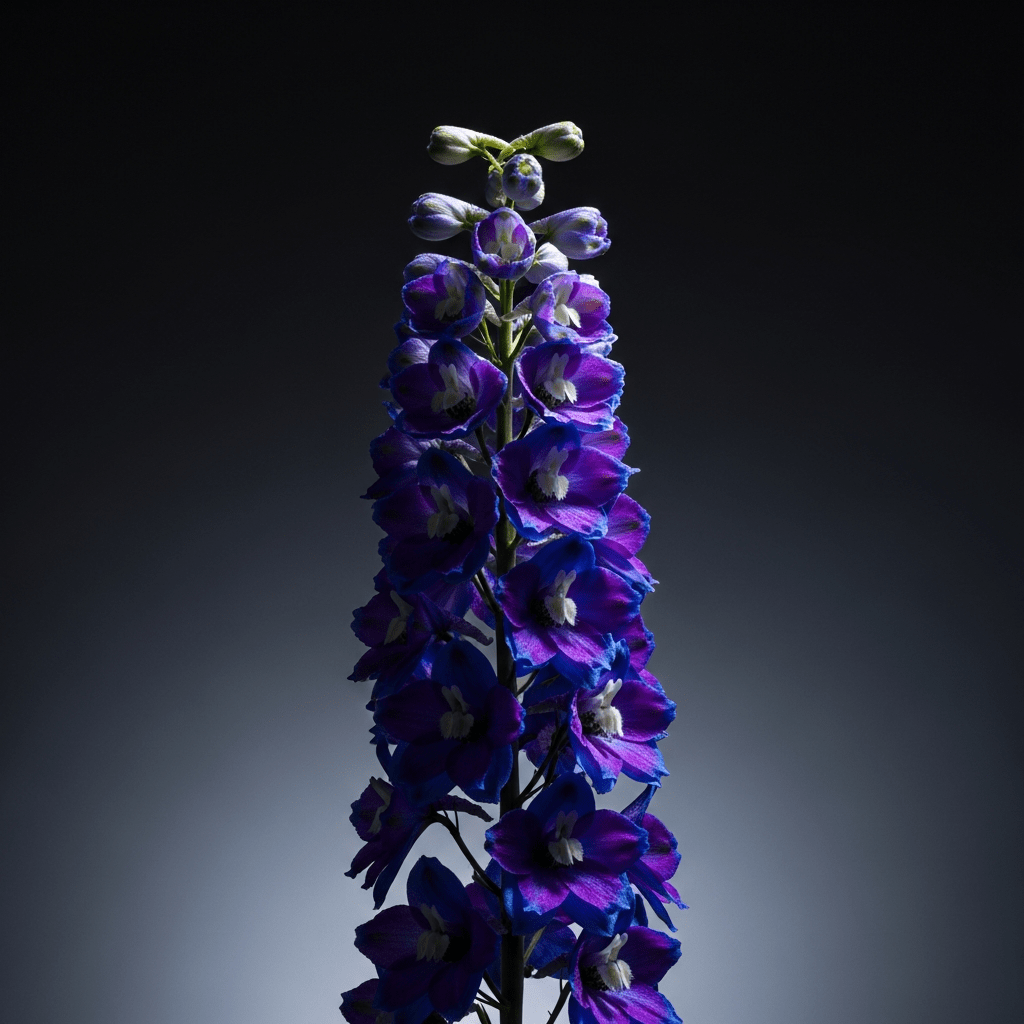
Delphinium
Delphinium is a genus of striking, tall-flowered plants celebrated for their vibrant spikes of blue, purple, pink, or white blooms, making them a classic choice for ornamental gardens worldwide.
Delphinium is a genus of striking, tall-flowered plants celebrated for their vibrant spikes of blue, purple, pink, or white blooms, making them a classic choice for ornamental gardens worldwide.
First described by Carl Linnaeus in 1753, Delphinium's name is rooted in the Greek word for dolphin, inspired by the bud's shape. Native to the Northern Hemisphere and the high mountains of tropical Africa, delphiniums have a rich history of cultivation and hybridization. Modern garden varieties often trace their lineage to species such as Delphinium elatum, D. grandiflorum, and D. cardinale, with extensive breeding in the United Kingdom, United States, and New Zealand from the 19th century onward. Notable contributions include Frank Reinelt's 'Pacific Giant' series and the work of the New Zealand Delphinium Society.
Delphinium belongs to the family Ranunculaceae, a diverse group that includes buttercups and other well-known ornamentals. Within the biological taxonomy, it is classified as a genus comprising numerous species and cultivated hybrids. The genus is closely related to Consolida, with some species historically shifting between these groups, contributing to naming ambiguities such as "larkspur." Delphinium's classification is based on its distinctive floral morphology and reproductive traits.
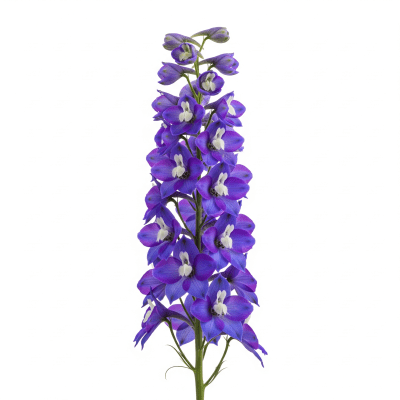
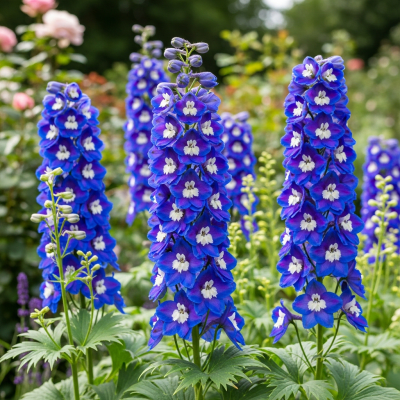
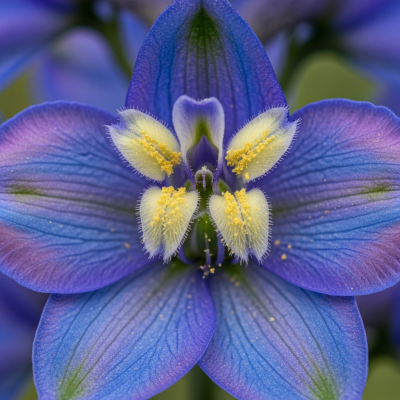
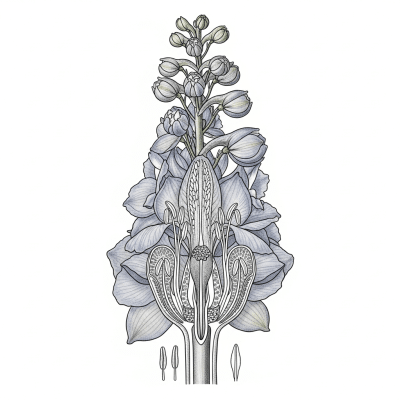
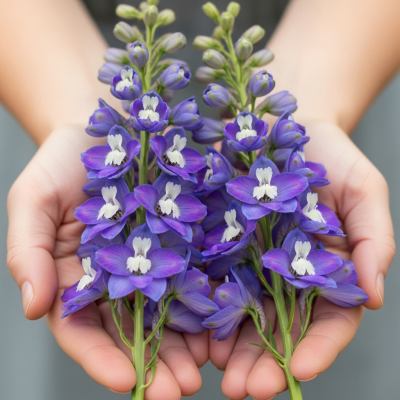
Delphiniums are renowned for their tall, stately spikes—often reaching 1 to 2.5 meters—adorned with densely packed, zygomorphic flowers. Blooms display a palette from deep blue and violet to pink, white, and occasionally yellow. Each flower features five petal-like sepals, with the uppermost forming a distinctive spur, and four true petals (two often small and hidden). The foliage is deeply lobed and palmate, and the overall growth form is upright and herbaceous, lending a dramatic vertical accent to garden borders.
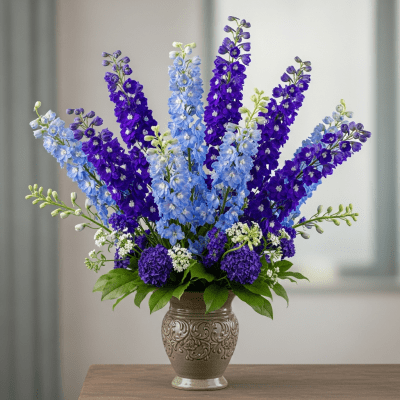
Primarily cultivated as ornamental plants, delphiniums are valued for their showy spikes in garden borders, cottage gardens, and floral arrangements. Their vertical growth habit makes them ideal for adding height and structure to planting schemes. In the floral industry, they are sought after as cut flowers for their vivid hues and elegant form. While some species were used externally in traditional medicine, all parts of the plant are toxic if ingested, limiting their use to decorative and symbolic roles.
Bring this kind into your world illustrated posters, mugs, and shirts.
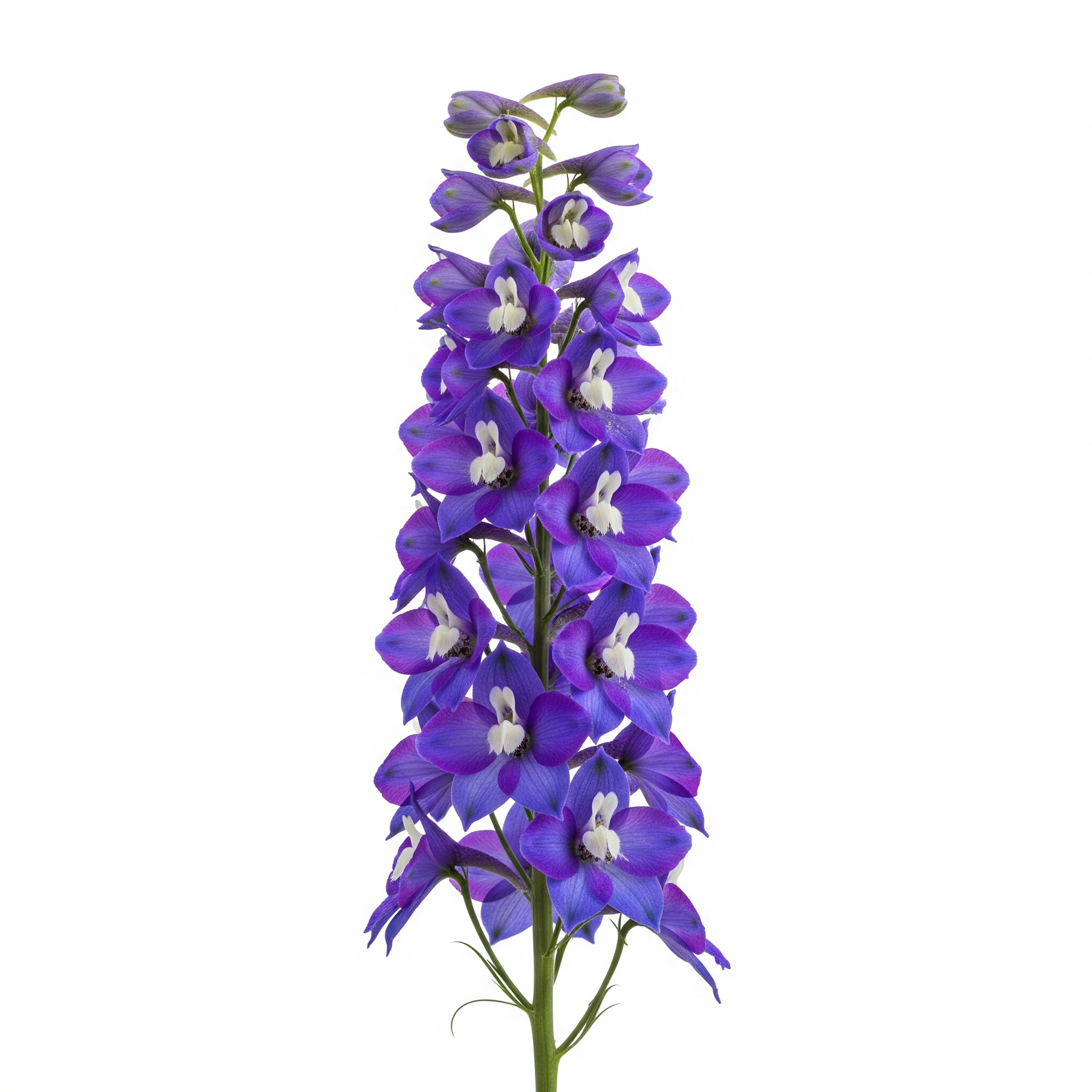
Archival print, museum-grade paper
Buy Poster
Stoneware mug, dishwasher safe
Buy Mug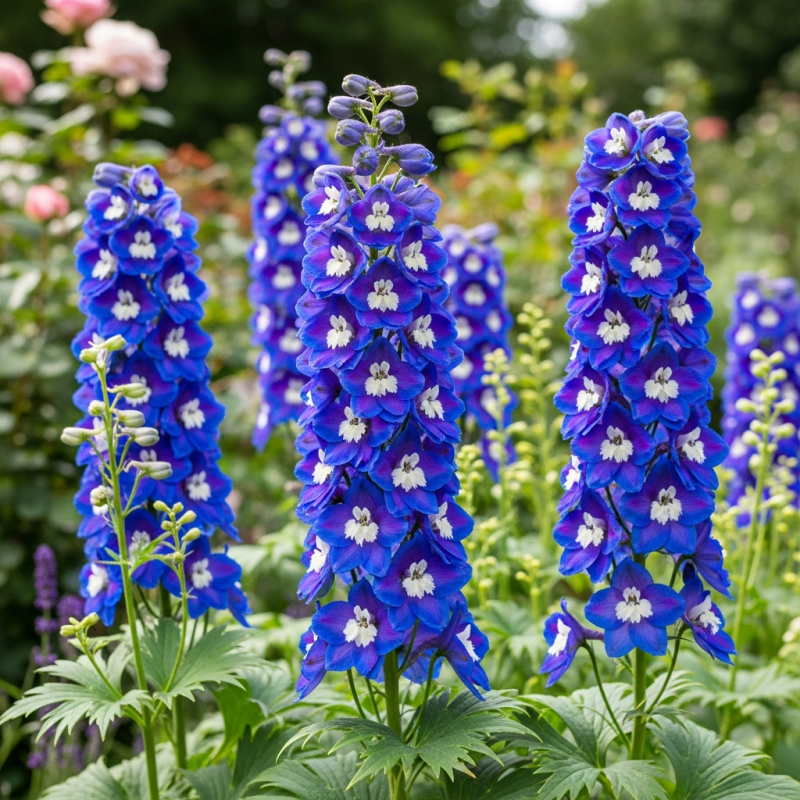
Soft cotton tee, unisex sizes
Buy ShirtDelphiniums hold a special place in garden design, especially in English cottage gardens and classic perennial borders. Their dramatic form and intense colors have inspired artists and gardeners alike. Symbolically, they represent positivity, dignity, and renewal, and are recognized as the birth flower for July in certain traditions. The ambiguity between "delphinium" and "larkspur" in common usage reflects their deep-rooted presence in folklore and horticultural history.
Delphinium flowers are celebrated for their brilliant color spectrum, most famously in shades of deep blue and violet, but also appearing in pink, white, and rare yellow varieties. While their visual impact is striking, most delphinium cultivars are not notably fragrant; their appeal lies primarily in their bold color and architectural form.
Delphiniums thrive in well-drained, fertile soil and require full sun with shelter from strong winds due to their height. Regular staking is essential to support their tall flower spikes. They are sensitive to waterlogged conditions and benefit from consistent moisture without sogginess. Division and seed propagation are common methods for renewing plantings. Vigilance against fungal diseases (such as powdery mildew and crown rot) and pests like slugs and aphids is important for healthy growth.
In the language of flowers, delphiniums symbolize positivity, dignity, and renewal. Their association with July as a birth flower further connects them to themes of summer vitality and celebration. The upright, elegant spikes evoke aspiration and grace, making delphiniums a popular choice for commemorative and festive occasions.
Delphinium breeding has a storied history, with extensive hybridization involving key species such as D. elatum, D. grandiflorum, and D. cardinale. The development of garden hybrids accelerated in the 19th and 20th centuries, notably with Frank Reinelt's 'Pacific Giant' series and ongoing work by the New Zealand Delphinium Society. Modern hybrids emphasize improved flower color, spike length, and disease resistance, resulting in diverse cultivars suited to various climates and garden styles.
Delphiniums typically bloom in late spring through early summer, with many varieties offering a second flush if deadheaded promptly. Their peak display coincides with the height of the summer garden, making them a highlight in seasonal borders and floral arrangements.
Delphiniums are grown almost exclusively for ornamental purposes, gracing garden borders, cottage gardens, and floral arrangements with their dramatic spikes and vivid colors. They are a staple in the cut flower market but have no culinary uses due to their toxicity. Some species were used externally in traditional medicine for treating lice and scabies, though internal use is hazardous. Their symbolic value and visual impact make them a favorite for celebratory bouquets and summer festivities.