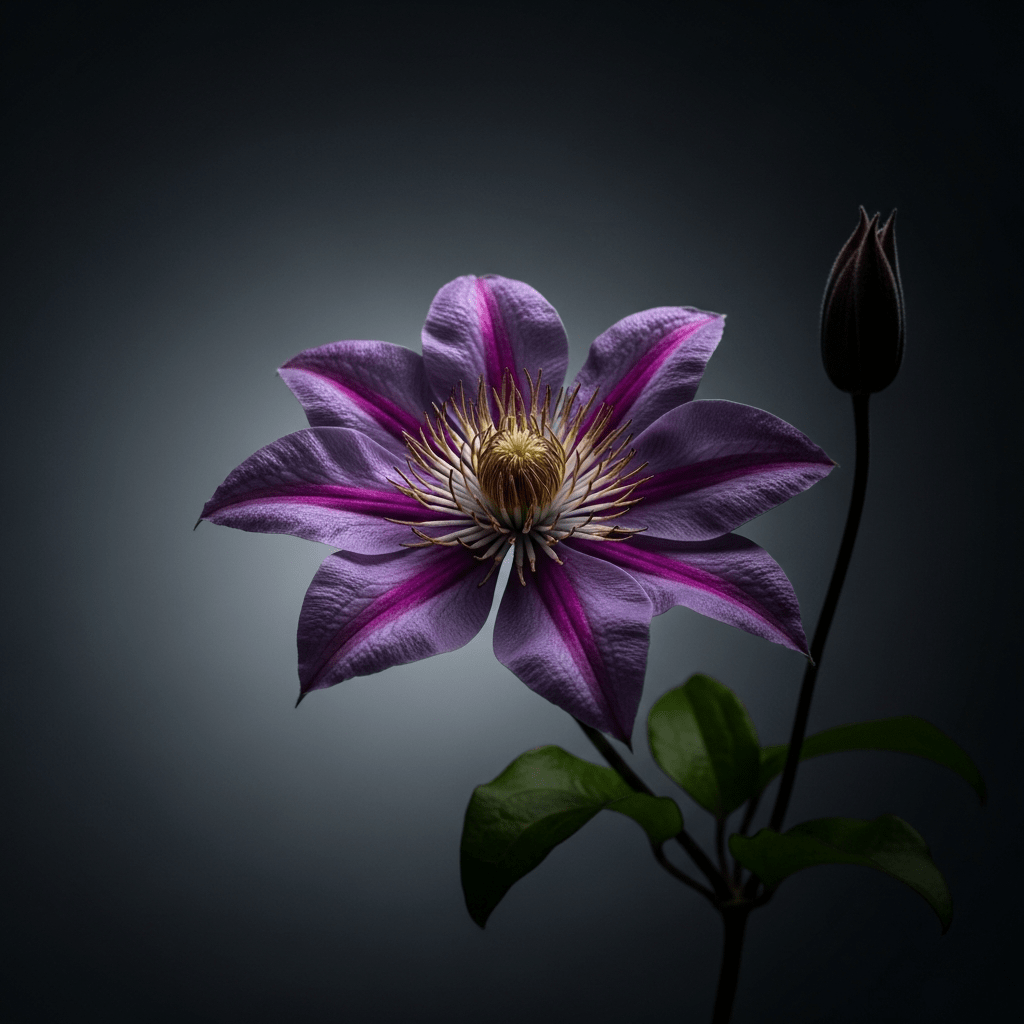
Clematis
Clematis is a celebrated genus of climbing flowering plants, renowned for its vibrant, showy blooms and versatility in gardens across the world.
Clematis is a celebrated genus of climbing flowering plants, renowned for its vibrant, showy blooms and versatility in gardens across the world.
Clematis traces its botanical roots to temperate regions of the Northern Hemisphere, flourishing natively in China, Japan, Europe, and North America. First described by Carl Linnaeus in 1753, the genus has since inspired centuries of horticultural innovation. The 19th century marked a turning point, with breeders in Europe, Japan, and North America developing countless cultivars—most notably, Clematis 'Jackmanii', bred in the UK in 1858. Today, the lineage of Clematis reflects a blend of wild species and cultivated artistry, with institutions like the Royal Horticultural Society and Japanese breeders shaping its modern diversity.
Clematis belongs to the buttercup family, Ranunculaceae, and is one of its most diverse genera, comprising over 300 species. Within the broader taxonomy of flowers, Clematis is classified as an angiosperm, sharing its family with other ornamental favorites such as anemones and ranunculus. Its scientific organization follows the hierarchy: Kingdom Plantae, Division Angiosperms, Family Ranunculaceae, Genus Clematis, with species and cultivars branching from this lineage.
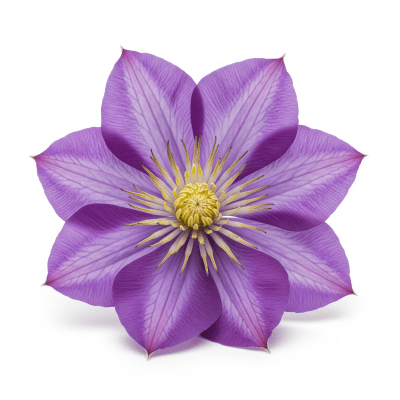
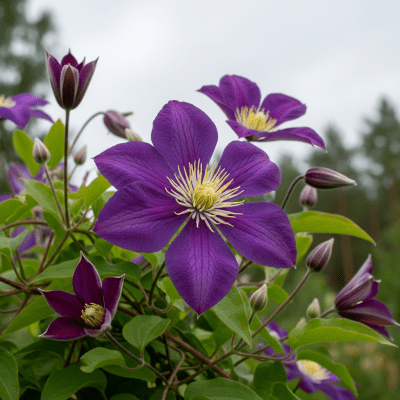
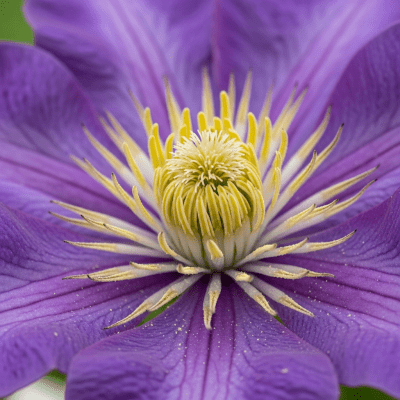
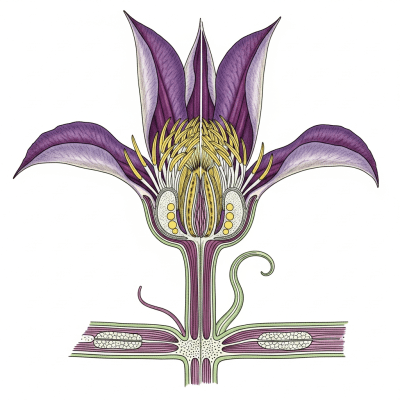
Clematis plants are most often recognized as woody or herbaceous perennial climbers, though some species grow as shrubs or subshrubs. Their twining leaf petioles enable them to scale trellises and fences, reaching heights from 1 to 12 meters. Leaves are typically opposite, simple or compound, and mostly deciduous. The flowers are the true spectacle: solitary or in clusters, they feature 4–8 petal-like sepals in colors ranging from white, pink, blue, purple, red, yellow, to striking bi-colored forms. Some cultivars display double or semi-double blooms, with flower sizes spanning from a delicate 1 cm to dramatic 20 cm diameters. The central mass of stamens adds texture, and post-bloom, feathery seed heads catch the wind and the eye.
Clematis is prized for its ornamental prowess, transforming vertical spaces with cascades of color. Gardeners use it to adorn trellises, pergolas, walls, and fences, while its climbing habit provides living architecture and privacy screens. Though primarily grown for visual impact, certain species are used in traditional Chinese medicine, and a few varieties occasionally appear in floral arrangements. However, Clematis is not suitable for culinary use, as many species are toxic if ingested. Its adaptability and diversity make it a favorite for both novice and expert gardeners, with bloom times and pruning needs varying by group.
Bring this kind into your world illustrated posters, mugs, and shirts.
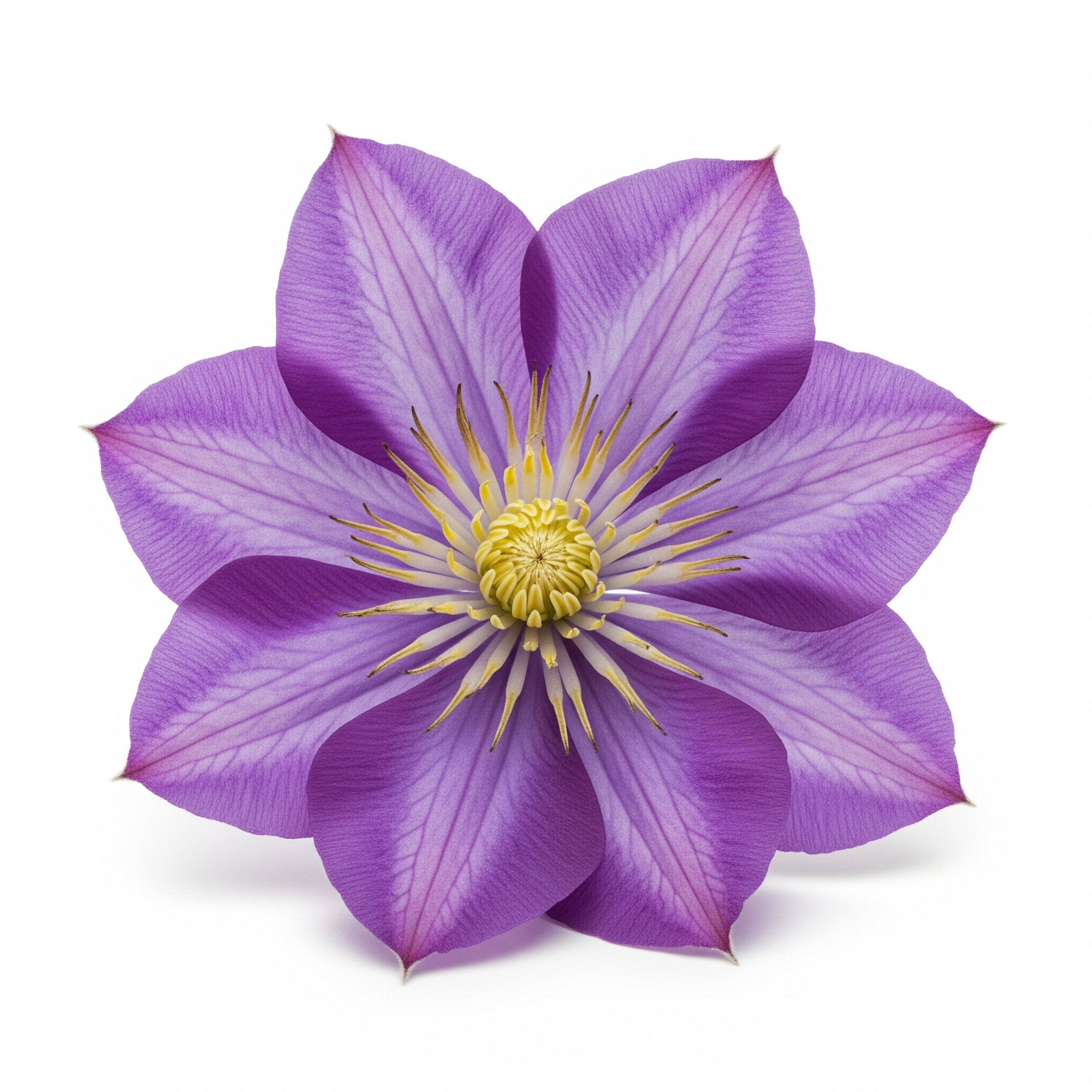
Archival print, museum-grade paper
Buy Poster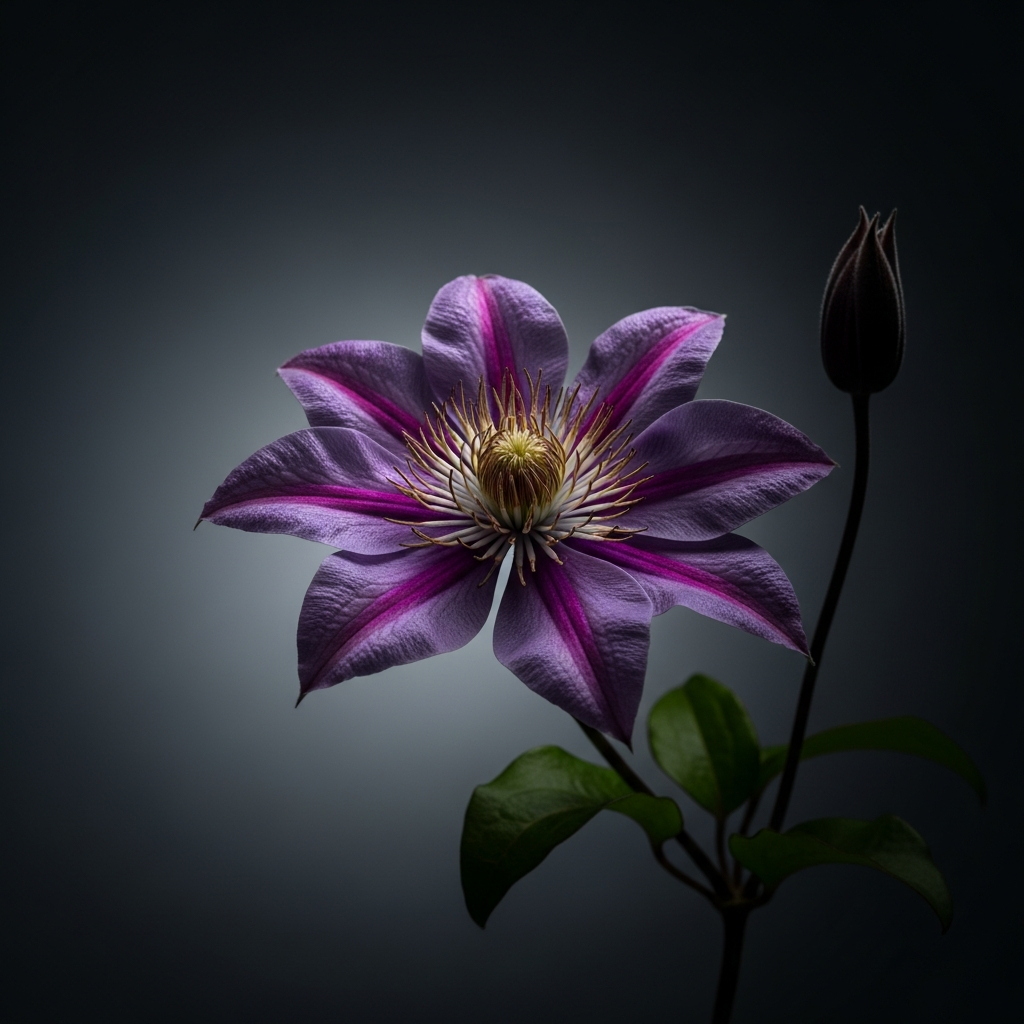
Stoneware mug, dishwasher safe
Buy Mug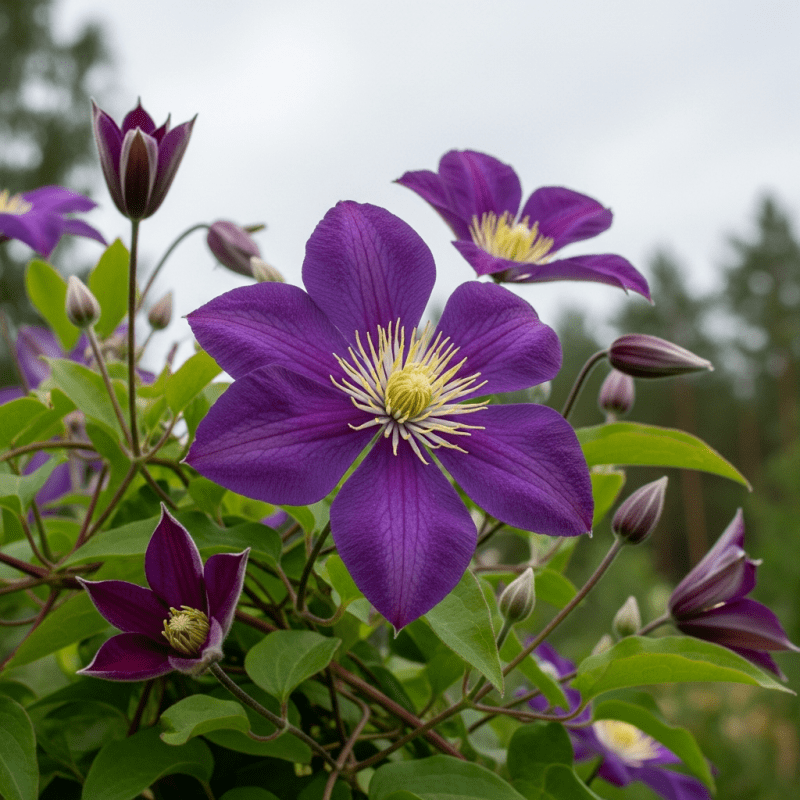
Soft cotton tee, unisex sizes
Buy ShirtClematis has long held a place in garden culture and symbolism. In various traditions, it represents ingenuity, mental beauty, and artifice. Its spectacular blooms have inspired artists and poets, while its vigorous growth and adaptability have made it a symbol of perseverance. In Japan, Clematis is known as "Tessen" and features in local horticultural lore. Some species, such as Clematis vitalba ("Old Man’s Beard"), are woven into regional folklore and landscape history, sometimes even regarded as invasive in certain areas.
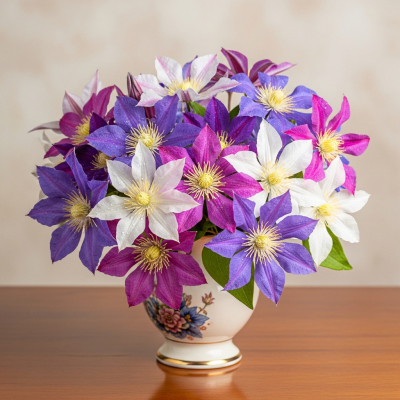
Clematis offers a dazzling palette, with blooms in white, pink, blue, purple, red, yellow, and striking bi-colored combinations. Fragrance is variable: certain species and cultivars emit a sweet, subtle scent, while others are virtually scentless. The diversity in color and occasional fragrance makes Clematis a versatile choice for garden design.

To thrive, Clematis prefers well-drained, fertile soils with roots kept cool and shaded, and vine tops exposed to sun or partial shade. Most varieties need a support structure for climbing. Pruning requirements differ: early-flowering types bloom on old wood, large-flowered hybrids bloom on both old and new wood, and late-flowering types bloom on new wood. Propagation is commonly done by seed, softwood cuttings, or layering. Regular watering, mulching to keep roots cool, and attention to disease management (especially wilt and powdery mildew) are essential for healthy growth.
Clematis carries symbolic meanings of ingenuity, mental beauty, and artifice. Its ability to climb and flourish in diverse environments reflects creativity and adaptability. In cultural contexts, Clematis is sometimes associated with artistic inspiration and the pursuit of beauty.
Modern Clematis breeding began in earnest in the 19th century, with horticulturists in Europe, Japan, and North America developing hybrids for larger, more colorful, and longer-lasting blooms. The Royal Horticultural Society and Japanese breeders are especially notable for their contributions. Clematis 'Jackmanii', bred in 1858, set the standard for large-flowered hybrids. Today, breeding focuses on disease resistance, novel flower forms, and extended blooming periods, resulting in thousands of cultivars tailored to diverse garden needs.
Regular inspection, proper pruning, and maintaining healthy growing conditions help minimize pest and disease issues.
Clematis blooming periods vary by species and cultivar. Early-flowering types (e.g., Clematis montana) bloom in spring, while large-flowered hybrids and late-flowering species (e.g., Clematis viticella, Clematis terniflora) flower in summer or autumn. With careful selection, gardens can enjoy Clematis blooms from early spring to late fall.
Clematis is primarily grown for ornamental purposes, adding vertical interest and vibrant color to gardens, landscapes, and containers. It is used to cover trellises, fences, and pergolas, and occasionally features in floral arrangements, though its vase life is brief. Some species, such as Clematis chinensis and Clematis armandii, are used in traditional Chinese medicine for their purported anti-inflammatory properties. However, Clematis is not recommended for culinary use due to toxicity. Symbolically, it is valued for representing ingenuity and artistic beauty.