Bird Of Paradise
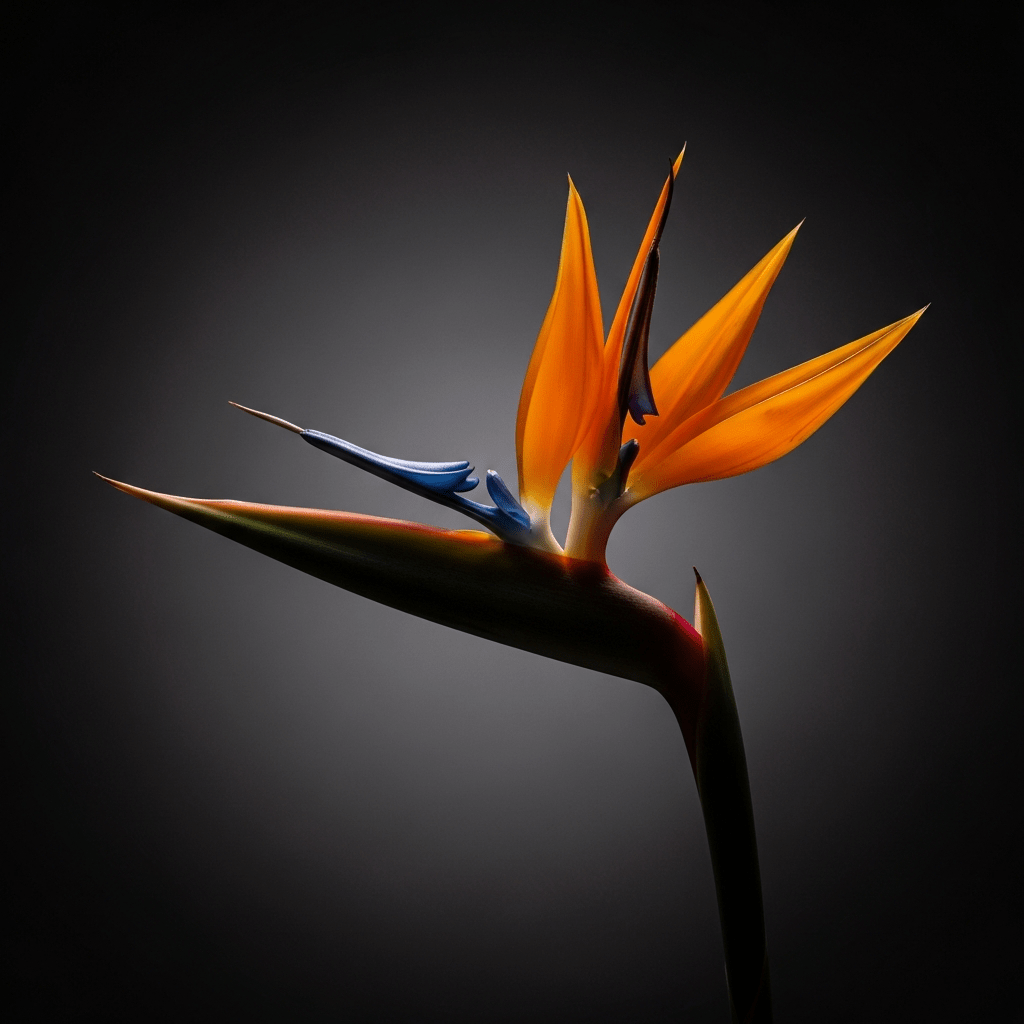
The Bird of Paradise (Strelitzia reginae) is a dazzling tropical flower renowned for its vivid, bird-like blooms and dramatic foliage, making it a showpiece in gardens and floral arrangements worldwide.
The Bird of Paradise (Strelitzia reginae) is a dazzling tropical flower renowned for its vivid, bird-like blooms and dramatic foliage, making it a showpiece in gardens and floral arrangements worldwide.
Native to the subtropical coastal regions of South Africa—particularly the Eastern Cape and KwaZulu-Natal—the Bird of Paradise was first described in 1788 by Joseph Banks. Its scientific name honors Queen Charlotte of Mecklenburg-Strelitz, wife of King George III. Though wild in its homeland, it has become a global ornamental favorite since its introduction to horticulture, with its name and allure rooted in both botanical history and royal tribute.
The Bird of Paradise belongs to the genus Strelitzia within the broader taxonomy of flowering plants (angiosperms). It is a member of the family Strelitziaceae, distinct for its architectural form and unique inflorescence. While commonly called "Bird of Paradise," it is also known as the Crane Flower and shares its genus with related species such as Strelitzia nicolai.
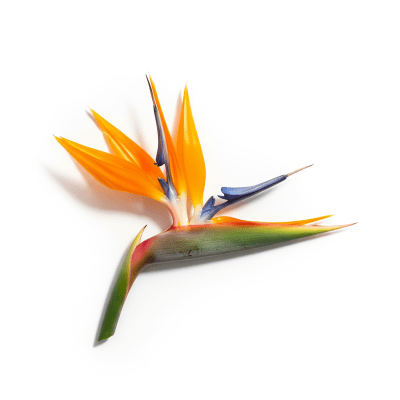
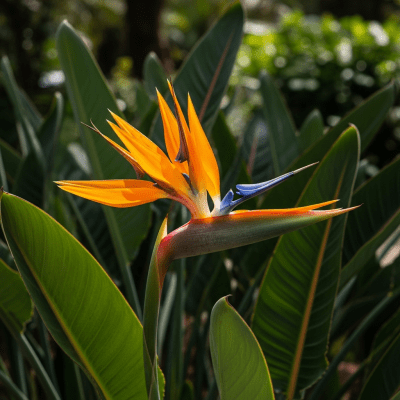
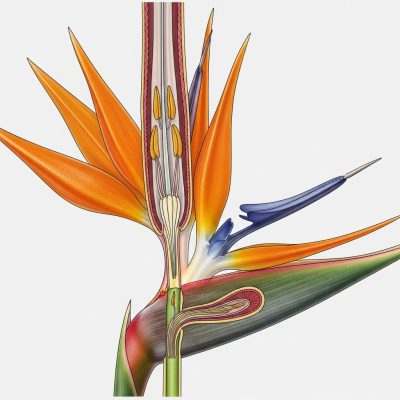
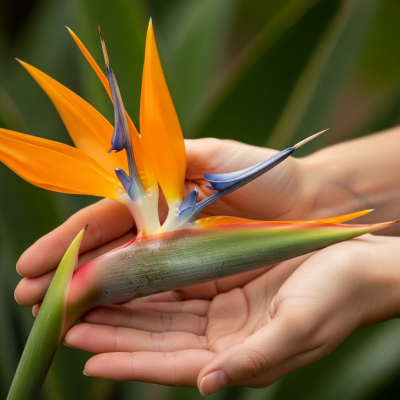
This perennial herbaceous plant grows in clumps, reaching heights of 1–1.5 meters. Its large, leathery, paddle-shaped leaves form a lush basal rosette, providing a striking backdrop for the flowers. The inflorescence features a horizontal, boat-shaped bract (spathe) from which emerge vivid orange sepals and bright blue petals, perfectly mimicking the plumage and head of an exotic bird. Each flower is bold and sculptural, lasting up to two weeks and often appearing in multiples throughout the season.
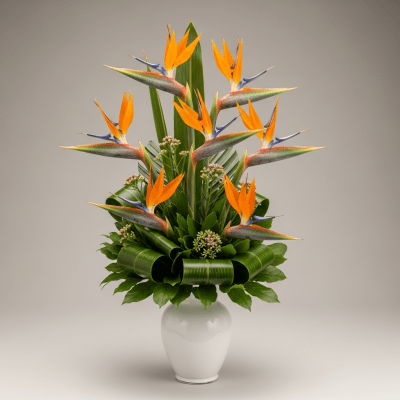
Primarily cultivated for its ornamental value, the Bird of Paradise is a centerpiece in tropical-themed gardens, public landscapes, and interior décor. Its dramatic flowers are highly sought after in the cut flower trade, prized for their longevity and visual impact. The plant thrives in well-drained soils and full sun to partial shade, and once established, demonstrates moderate drought tolerance and resilience to urban conditions. It is not edible and does not have documented medicinal uses.
Bring this kind into your world illustrated posters, mugs, and shirts.
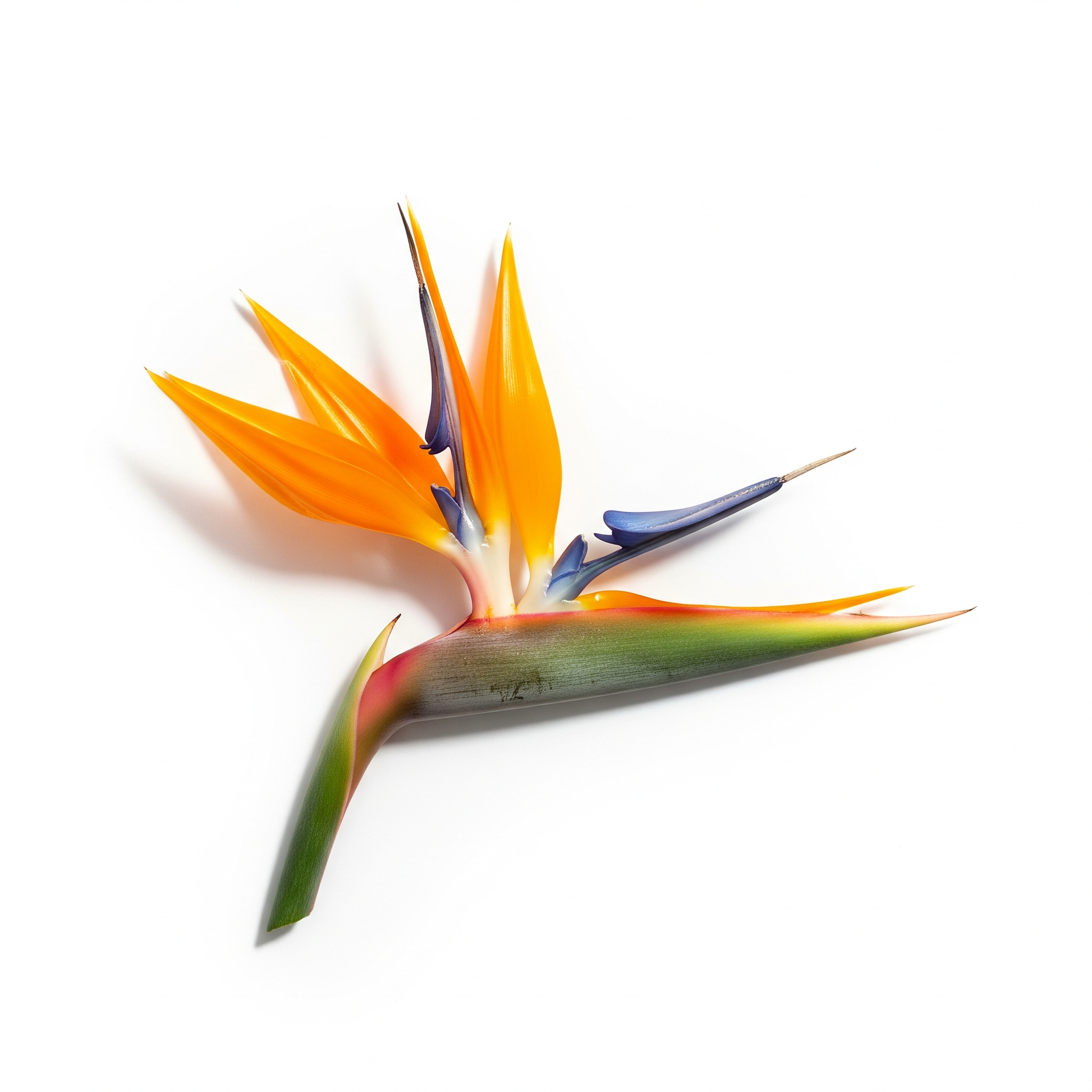
Archival print, museum-grade paper
Buy Poster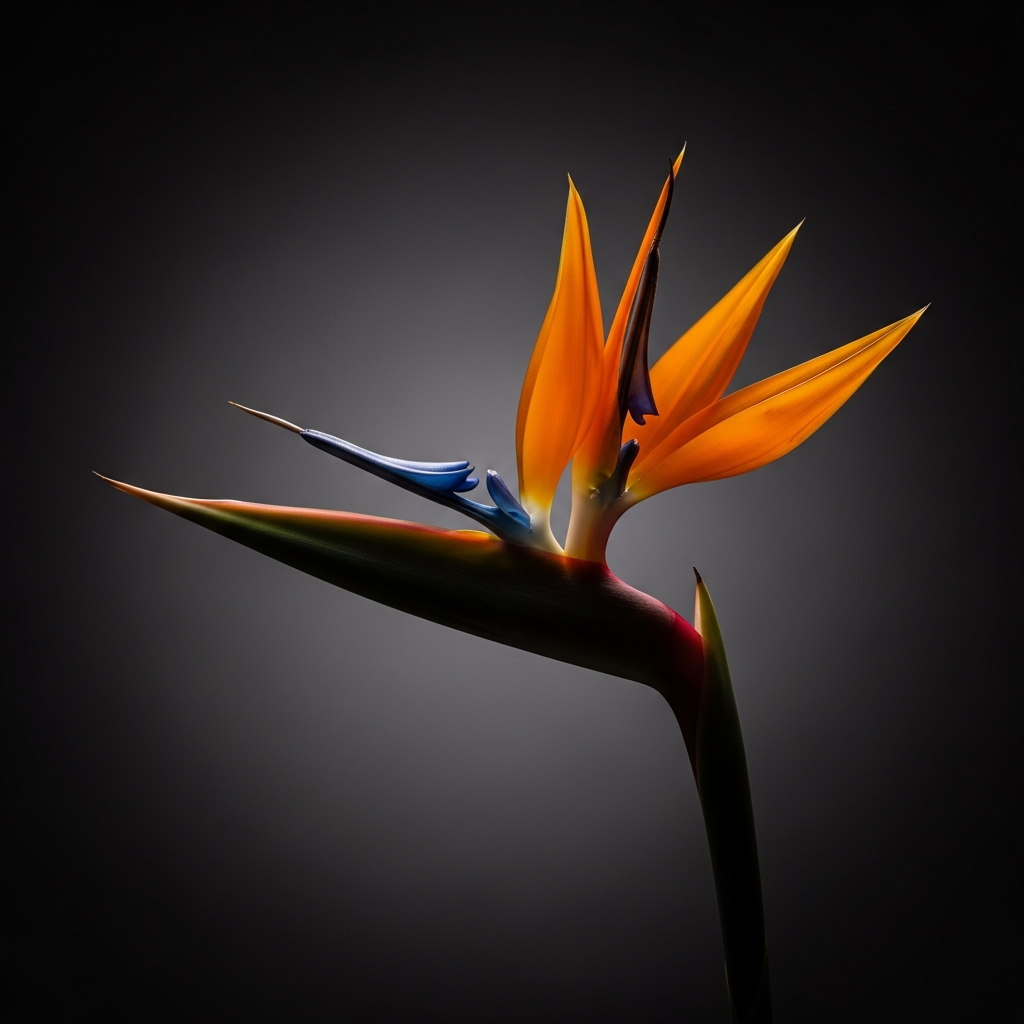
Stoneware mug, dishwasher safe
Buy Mug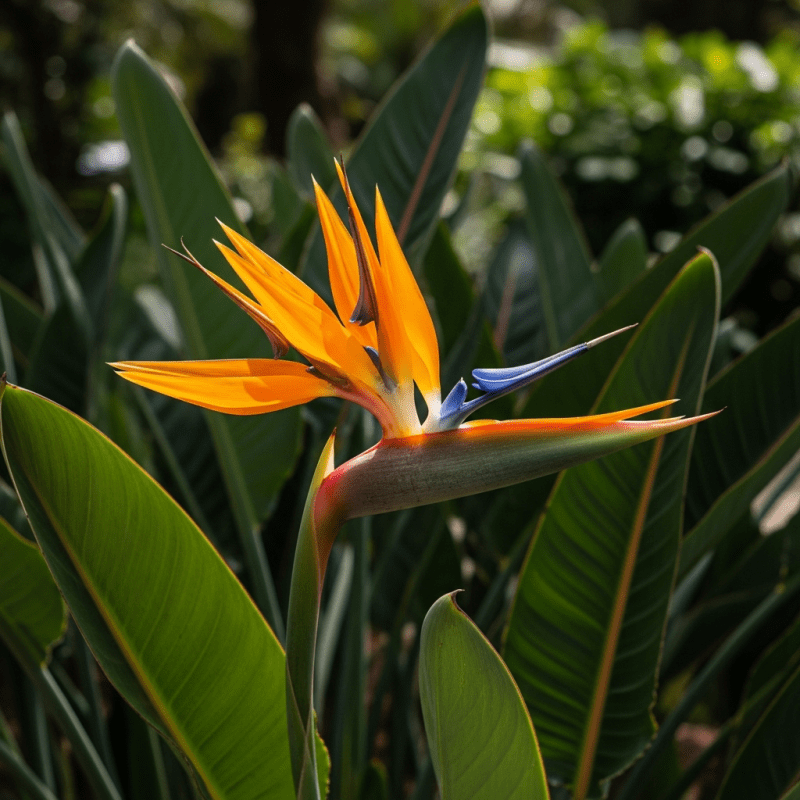
Soft cotton tee, unisex sizes
Buy ShirtThe Bird of Paradise has become an emblem of paradise, magnificence, and freedom in various cultures. Its striking form and vibrant colors have inspired artists, designers, and florists, often appearing in ceremonial arrangements and tropical motifs. The flower’s name and symbolism evoke notions of exotic beauty and aspiration, making it a popular choice for celebratory events and decorative displays.
Bird of Paradise flowers are celebrated for their vivid color palette—fiery orange sepals paired with intense blue petals. While visually dramatic, the blooms are not known for a distinct fragrance, relying instead on their bold coloration and sculptural form to attract attention and pollinators.

For successful cultivation, plant Bird of Paradise in well-drained soil and provide full sun to partial shade. Protect from frost, as the species is sensitive to cold. Water moderately, allowing the soil to dry between waterings, and avoid waterlogged conditions to prevent root rot. Propagation is typically done by seed or division of mature clumps. Regular removal of spent flowers and leaves encourages healthy growth and sustained blooming.
The Bird of Paradise flower symbolizes freedom, magnificence, and paradise itself. Its exotic appearance and vibrant colors evoke a sense of aspiration and celebration, making it a popular choice for festive and ceremonial arrangements. In gifting and décor, it often conveys messages of joy, success, and the extraordinary.
The most widely recognized species is Strelitzia reginae, known for its classic orange and blue flowers. A notable relative is Strelitzia nicolai, or Giant White Bird of Paradise, which features larger stature and white-and-blue blooms. While cultivars exist, Strelitzia reginae remains the iconic variety in gardens and floral design.
No formal breeding or hybridization lineage is associated with the canonical Bird of Paradise species, though horticulturists have developed several cultivars to enhance garden performance and flower production. Most propagation is achieved through seed or division, with hybrids and selections occasionally appearing in specialist collections.
Bird of Paradise is generally resilient but can be affected by root rot if grown in poorly drained soils. Occasional pest problems include scale insects and mealybugs. To manage these issues, ensure proper drainage, avoid overwatering, and monitor for pests, treating infestations promptly with horticultural oils or insecticidal soaps.
Bird of Paradise typically blooms from late winter through spring and into early summer, depending on climate and growing conditions. In frost-free regions, flowering may occur sporadically year-round, with peak display during the warmer months.
The Bird of Paradise is prized for its ornamental value in gardens, parks, and as a dramatic cut flower in floral arrangements. It is not used for culinary, medicinal, or perfumery purposes. Its symbolic presence in ceremonial and decorative contexts underscores its reputation as a flower of magnificence and paradise.