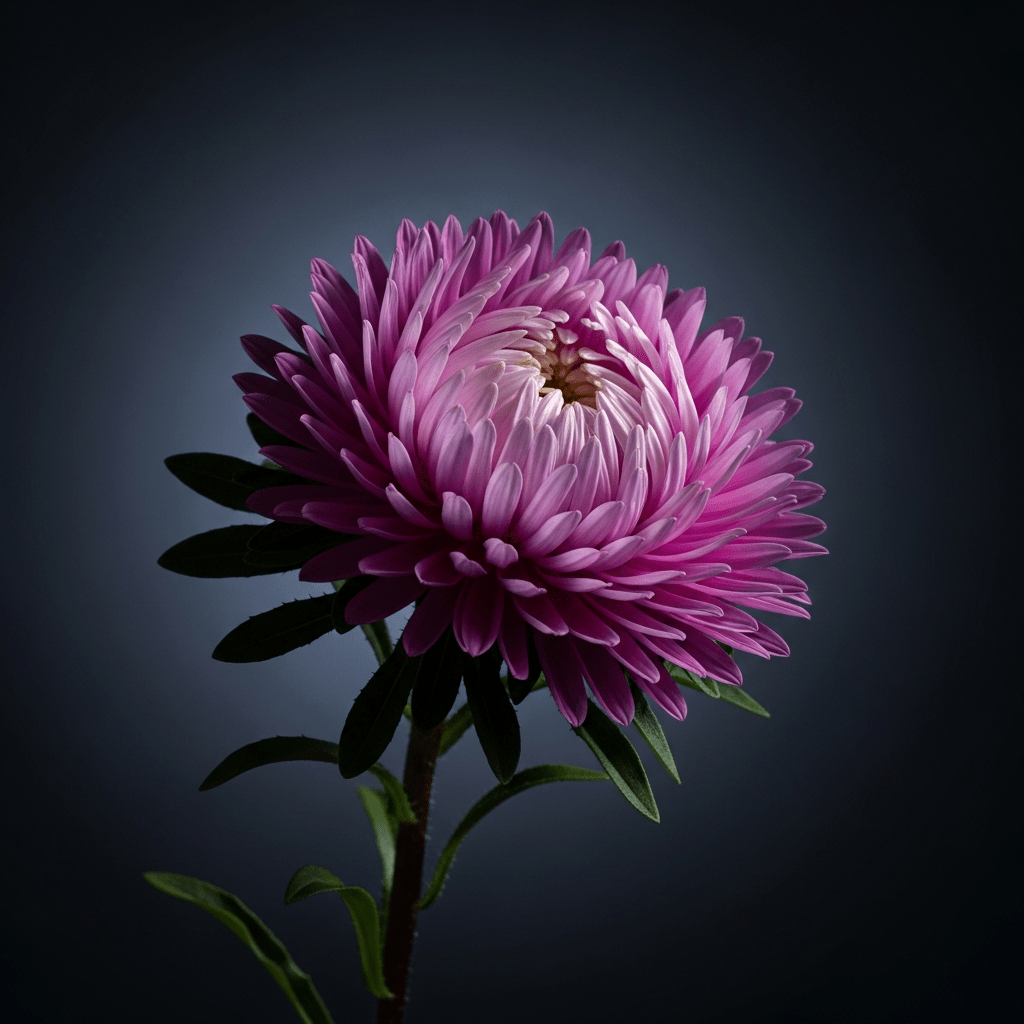
Aster
Aster is a vibrant, star-shaped flowering plant cherished for its late-season blooms and essential role in gardens and wild landscapes.
Aster is a vibrant, star-shaped flowering plant cherished for its late-season blooms and essential role in gardens and wild landscapes.
The genus Aster was first described by Carl Linnaeus in 1753 and is native to Eurasia. Historically, 'Aster' encompassed a broad range of species, but modern taxonomy restricts the name to Eurasian plants, with many North American relatives now classified under genera such as Symphyotrichum and Eurybia. The name itself derives from the Greek word for 'star,' reflecting the flower’s radiant shape. Over centuries, European and Asian horticulturists have cultivated asters for their ornamental value, focusing on color, form, and resilience.
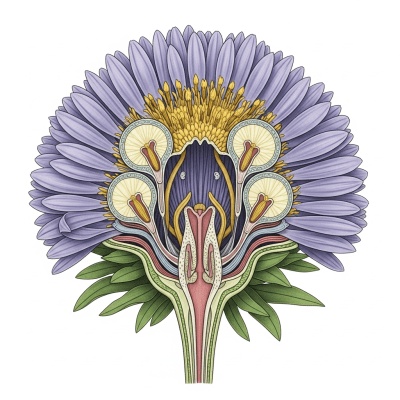
Asters belong to the family Asteraceae, one of the largest families of flowering plants. While the genus Aster is now reserved for Eurasian species, its relatives—once included under the same name—are found worldwide. The composite flower head, a hallmark of the family, features a central disc of tiny florets surrounded by petal-like rays, a structure shared with daisies and sunflowers.
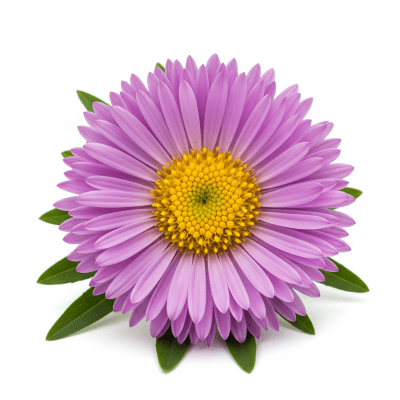
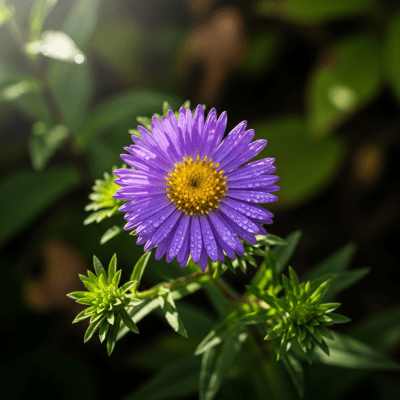
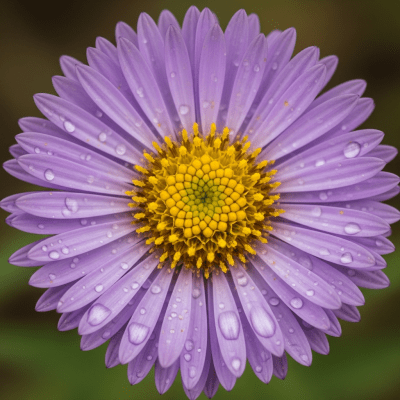
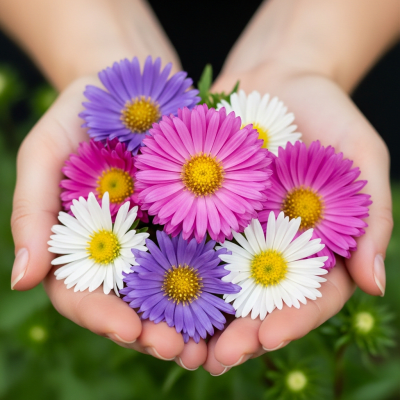
Asters display a striking starburst form, with flower heads composed of a central yellow disc encircled by delicate ray florets in shades of white, blue, purple, pink, or red. Plants range from compact, 20-centimeter varieties to towering specimens over two meters tall. Leaves are typically lance-shaped or ovate, arranged alternately along sturdy stems, and may be smooth or subtly hairy. Their late-summer and autumn blooms create a tapestry of color when many other flowers have faded.
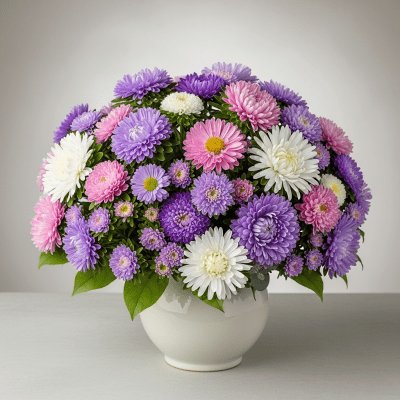
Asters thrive as ornamental plants in gardens and parks, valued for their ability to extend floral displays into autumn. They play a vital ecological role by providing nectar for bees and butterflies during the late season, when few other flowers are available. In addition to their garden use, asters are popular as cut flowers for arrangements and have limited traditional medicinal applications in some Asian cultures.
Bring this kind into your world illustrated posters, mugs, and shirts.
Archival print, museum-grade paper
Buy Poster
Stoneware mug, dishwasher safe
Buy Mug
Soft cotton tee, unisex sizes
Buy ShirtAsters hold a special place in folklore and celebration, particularly as the 'Michaelmas daisy,' symbolizing the arrival of autumn and the feast of St. Michael. Their star-like blooms have inspired poetry and art, representing hope, patience, and elegance. In various cultures, asters are associated with remembrance and are often planted or gifted to mark significant occasions.
Asters are celebrated for their vivid palette, with blooms in white, blue, purple, pink, and occasionally red. While most asters are not noted for strong fragrance, their visual impact is unmistakable, brightening gardens when other flowers have faded.
Asters flourish in full sun and well-drained soils but can tolerate partial shade and various soil types. They are hardy in USDA Zones 3–8. To promote healthy growth and abundant blooms, plant asters where air circulation is good and avoid overly wet conditions to prevent powdery mildew and root rot. Propagation is straightforward by seed or division, and many cultivars are bred for compact growth and disease resistance. Regular deadheading encourages extended flowering.
Asters symbolize love, patience, and remembrance. Their star-shaped flowers evoke hope and renewal, making them popular in autumn celebrations and memorials. As 'Michaelmas daisies,' they mark the changing seasons and are often associated with protection and good fortune.
Since the 18th century, breeders in Europe and Asia have developed numerous aster cultivars, focusing on flower color, form, and disease resistance. Modern taxonomy has led to reclassification, with many hybrids now placed in related genera. Horticultural records highlight cultivars bred for compact growth, extended bloom, and improved resilience, making asters a staple in ornamental breeding programs.
Asters typically bloom from late summer into autumn, with peak flowering between August and October. Their availability in gardens and floral markets coincides with the waning of other summer flowers, making them a favorite for late-season color.
Asters are primarily cultivated for ornamental use in gardens, landscapes, and as cut flowers. Their late-season blooms attract pollinators, supporting ecological health. While not widely used in cuisine, some species have traditional medicinal applications in Asia for anti-inflammatory and fever-reducing purposes. Symbolically, asters are gifted and planted to mark autumnal celebrations and moments of remembrance.