
Cretan Brake
Pteris cretica, commonly known as the Cretan brake, is an evergreen fern prized for its elegant, arching fronds and adaptability as a houseplant and landscape species.
Pteris cretica, commonly known as the Cretan brake, is an evergreen fern prized for its elegant, arching fronds and adaptability as a houseplant and landscape species.
First described by Carl Linnaeus in 1753, Pteris cretica originates from the Mediterranean region, with its type specimen collected on the island of Crete, Greece. This species has since become widely cultivated from wild populations native to shaded, moist habitats across the Mediterranean basin.
Pteris cretica belongs to the family Pteridaceae within the order Polypodiales, class Polypodiopsida, and division Monilophyta. It is part of the genus Pteris, a diverse group of terrestrial ferns known for their distinctive sori and frond forms.
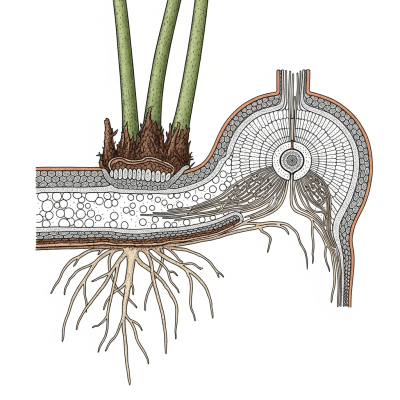
This terrestrial fern features tufted, evergreen fronds that can reach up to 70 cm in length. The bright green fronds often display 2 to 8 linear to lanceolate pinnae per frond, occasionally with a central undivided segment. Some cultivated varieties showcase variegation with white or cream accents. The slender stipes range from green to brown, and the plant grows from a short-creeping to erect rhizome. Its sori are linear and marginal, shielded by false indusia formed by the reflexed leaf margins.
Pteris cretica thrives in shaded, moist environments and tolerates a variety of soil types. It is resistant to moderate drought and urban pollution, making it a favored choice for indoor cultivation and temperate garden groundcover. Propagation is commonly achieved through division and spores, supporting its widespread use as an ornamental plant.
Bring this kind into your world illustrated posters, mugs, and shirts.

Archival print, museum-grade paper
Buy Poster
Stoneware mug, dishwasher safe
Buy Mug
Soft cotton tee, unisex sizes
Buy ShirtWhile Pteris cretica holds no documented culinary or medicinal uses, its cultural value lies primarily in horticulture. Its elegant foliage and ease of care have made it a popular subject among plant enthusiasts and collectors, especially in the form of variegated cultivars cherished for indoor decoration.
Pteris cretica reproduces through spores produced in linear sori located along the margins of its fronds. These sori are protected by false indusia formed by the reflexed leaf edges. The life cycle includes a free-living gametophyte stage, which produces gametes that fertilize to form the sporophyte—the familiar fern plant. Additionally, horticulturists propagate this species vegetatively by dividing the rhizomes, facilitating rapid cultivation.





In its native Mediterranean habitats, Pteris cretica contributes to the understory vegetation of shaded, moist environments. By providing ground cover, it helps reduce soil erosion and supports microhabitats for invertebrates. Its tolerance to moderate drought and pollution also allows it to persist in disturbed urban areas, enhancing local biodiversity.
Pteris cretica currently faces no significant conservation threats and is not listed as endangered. Its wide cultivation and adaptability have ensured stable populations both in the wild and in horticulture. Nonetheless, habitat preservation in its native Mediterranean range remains important for maintaining genetic diversity.
Among the popular cultivars of Pteris cretica are ‘Albolineata’ and ‘Mayi’, both prized for their striking variegated fronds featuring white or cream markings. These varieties are widely grown as houseplants and in gardens, celebrated for their decorative appeal and ease of care.