
Polypody Family
Polypodiaceae is a large and diverse family of primarily epiphytic ferns known for their simple, leathery fronds and distinctive round, naked sori.
Polypodiaceae is a large and diverse family of primarily epiphytic ferns known for their simple, leathery fronds and distinctive round, naked sori.
The Polypodiaceae family was formally described in 1820 by Berchtold and J. Presl, with its type genus Polypodium established by Linnaeus. Molecular evidence traces its ancient lineage back to the Late Cretaceous to early Paleogene, highlighting its long evolutionary history within the order Polypodiales.
Polypodiaceae belongs to the order Polypodiales within the class Polypodiopsida, division Monilophyta of the plant kingdom. It is recognized as a monophyletic clade encompassing over 1,000 species, with notable genera such as Polypodium, Phlebodium, and Microsorum. The family’s circumscription has been refined by modern phylogenetic studies, especially the Pteridophyte Phylogeny Group (PPG I, 2016).
Members of Polypodiaceae typically exhibit simple to pinnatifid fronds that are leathery in texture, often with free or anastomosing veins. Their creeping or erect rhizomes are usually covered in scales. The sori are round and lack protective indusia, scattered across the underside of the fronds, giving these ferns a distinctive appearance well-suited to their mostly epiphytic lifestyle.
Polypodiaceae ferns are mostly perennial and thrive as epiphytes or epipetrics in humid, shaded tropical forests, though some species inhabit temperate zones. They are widely cultivated for their attractive and resilient foliage, making them popular in horticulture and interior landscaping. While some species have traditional medicinal uses and have been employed as flavoring agents, their primary value remains ornamental and ecological.
Bring this kind into your world illustrated posters, mugs, and shirts.

Archival print, museum-grade paper
Buy Poster
Stoneware mug, dishwasher safe
Buy Mug
Soft cotton tee, unisex sizes
Buy ShirtThough Polypodiaceae ferns are not widely noted for symbolic or mythological roles, their striking foliage has made them favored subjects in ornamental horticulture and interior design, contributing to human appreciation of tropical and temperate forest aesthetics.
Like all true ferns, Polypodiaceae reproduce via spores produced in sori on the underside of their fronds. These spores develop into independent gametophyte stages, which produce gametes for fertilization. The resulting sporophyte grows into the familiar leafy fern plant. This alternation of generations allows them to colonize diverse habitats, especially as epiphytes in forest canopies.



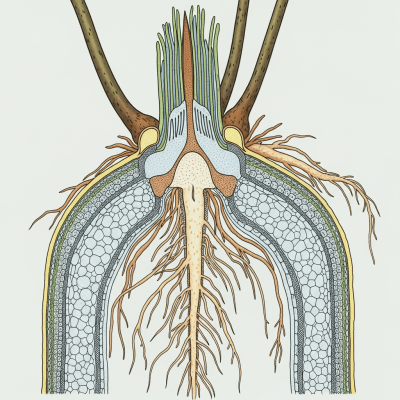


Polypodiaceae ferns play vital roles in forest ecosystems, particularly in tropical canopies where they provide habitat and microenvironments for a variety of epiphytic organisms. Their presence contributes to biodiversity and nutrient cycling, and they act as pioneer species on substrates like tree bark and rocks, aiding ecological succession.
While many Polypodiaceae species are widespread and resilient, habitat loss and deforestation threaten some localized or specialized species. Conservation efforts focus on habitat protection and sustainable cultivation, with ongoing taxonomic research aiding in identifying species at risk within this diverse family.
Among the most popular and widely cultivated members of Polypodiaceae are Phlebodium aureum (commonly known as the Blue Star Fern) and Microsorum musifolium (the Crocodile Fern). These species are prized for their striking foliage and adaptability to indoor environments, making them favorites in horticulture and houseplant collections worldwide.