
Boston Fern
Nephrolepis exaltata, commonly known as the Boston fern, is a tropical fern species celebrated for its elegant, arching fronds and widespread use as a houseplant and ornamental landscape fern.
Nephrolepis exaltata, commonly known as the Boston fern, is a tropical fern species celebrated for its elegant, arching fronds and widespread use as a houseplant and ornamental landscape fern.
First described in 1834 as Polypodium exaltatum by Linnaeus and later reclassified by Schott, Nephrolepis exaltata originates from tropical regions of the Americas. Its introduction into horticulture dates back to the late 19th century, notably with the discovery of the popular ‘Bostoniensis’ cultivar in Boston, Massachusetts, in 1894.
Nephrolepis exaltata belongs to the family Nephrolepidaceae within the order Polypodiales, class Polypodiopsida, division Monilophyta. It is a member of the genus Nephrolepis, a group of true ferns known for their pinnate fronds and tropical distribution.
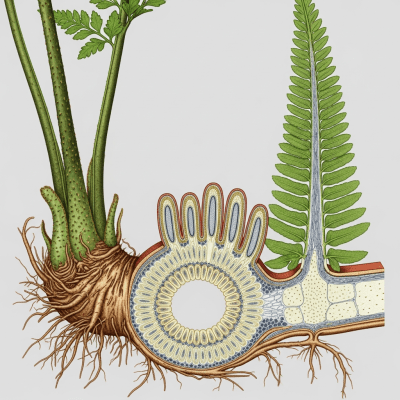
This fern features evergreen, arching fronds that typically range from 100 to 200 centimeters in length. The fronds are bright green, bipinnate to pinnate, with numerous finely serrated pinnae arranged alternately along a central rachis, giving a delicate, feather-like appearance. It grows from short-creeping rhizomes that form dense clumps and produce stolons, contributing to its robust and spreading habit.
Nephrolepis exaltata thrives in moist, well-drained soils under shaded to semi-shaded conditions with high humidity. It is widely cultivated indoors and outdoors for its graceful foliage and air-purifying qualities. Propagation is commonly achieved through division or stolon cuttings, while spore propagation is less frequent in cultivation. The species exhibits vigorous growth, forming dense clumps that make it an effective ground cover in suitable environments.
Bring this kind into your world illustrated posters, mugs, and shirts.

Archival print, museum-grade paper
Buy Poster
Stoneware mug, dishwasher safe
Buy Mug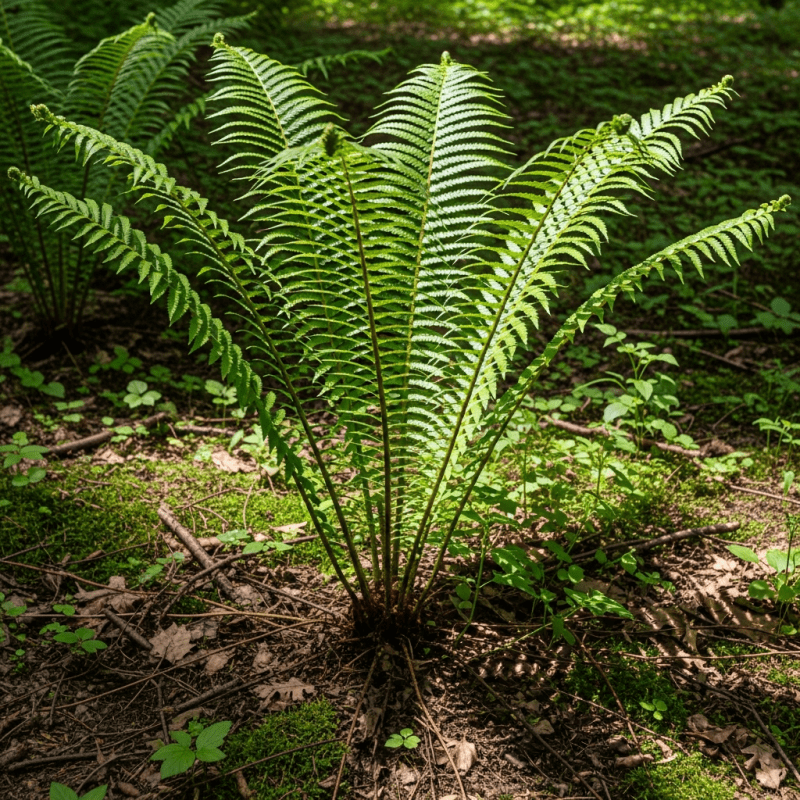
Soft cotton tee, unisex sizes
Buy ShirtWhile Nephrolepis exaltata holds no specific documented cultural or symbolic significance, its popularity as the Boston fern has made it a staple in interior decoration and horticulture worldwide, symbolizing lush greenery and natural elegance in homes and public spaces.
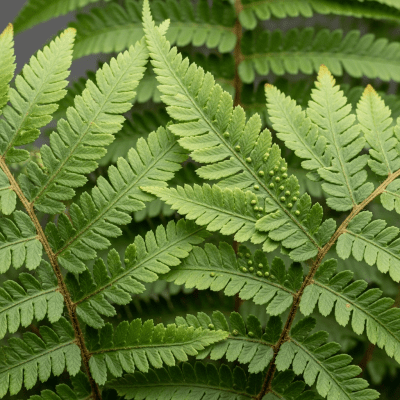
Like all true ferns, Nephrolepis exaltata reproduces via spores produced in clusters called sori, typically located on the undersides of its pinnae. The life cycle alternates between a dominant sporophyte stage—the leafy fern plant—and a smaller, independent gametophyte stage that produces gametes. In cultivation, propagation is more often vegetative through division or stolons, allowing rapid spread and maintenance of desirable traits.

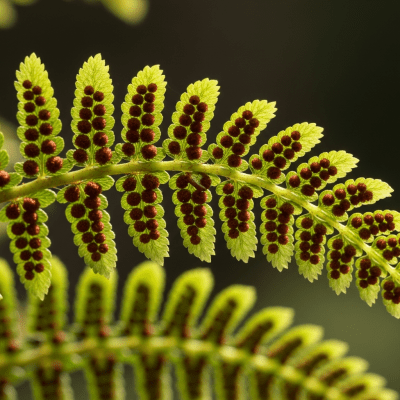

In its native tropical habitats, Nephrolepis exaltata contributes to ecosystem diversity by providing ground cover that helps prevent soil erosion and retains moisture. Its dense foliage offers shelter for small fauna and supports microhabitats within shaded forest understories. Additionally, it plays a role in nutrient cycling within humid, shaded environments.
Currently, Nephrolepis exaltata is not considered threatened and enjoys a stable conservation status due to its wide distribution and adaptability. However, habitat loss in tropical regions could impact wild populations. Its extensive cultivation worldwide reduces immediate conservation concerns.
The most renowned cultivar of Nephrolepis exaltata is ‘Bostoniensis’, prized for its broader, more arching fronds and vigorous growth. This cultivar dominates the ornamental fern market and is a favorite for indoor and outdoor decoration. Other horticultural forms exist but are less widespread.