
Holly Fern
Cyrtomium falcatum, commonly known as the holly fern, is an evergreen fern species prized for its glossy, holly-like fronds and remarkable adaptability to both indoor and outdoor environments.
Cyrtomium falcatum, commonly known as the holly fern, is an evergreen fern species prized for its glossy, holly-like fronds and remarkable adaptability to both indoor and outdoor environments.
First described by Carl Peter Thunberg in 1784 from specimens collected in Japan, Cyrtomium falcatum was originally named Polypodium falcatum. It was later reassigned to the genus Cyrtomium by C. Presl in 1836, establishing its place within the rich fern flora of East Asia.
Cyrtomium falcatum belongs to the family Dryopteridaceae within the order Polypodiales, class Polypodiopsida, and division Monilophyta. This classification places it firmly among the true ferns, a diverse group of vascular, spore-bearing plants characterized by fronds and sori.
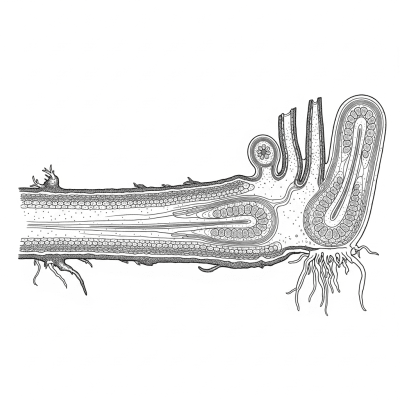
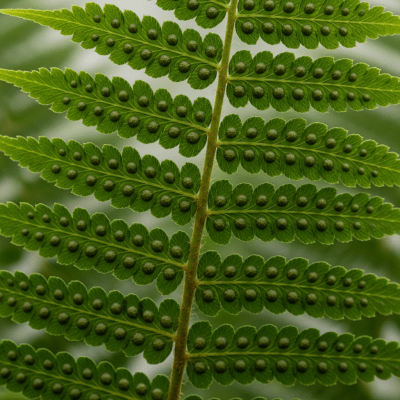
This terrestrial fern features arching, pinnate fronds ranging from 30 to 90 cm long. Its pinnae are oblong to falcate (sickle-shaped), glossy, and leathery with serrate margins that closely resemble holly leaves. The stipe is dark with a scaly base, while round sori appear near the midrib on the underside of the pinnae, shielded by distinctive peltate indusia. Its evergreen nature and holly-like foliage make it visually striking year-round.
Cyrtomium falcatum is widely cultivated for ornamental purposes, valued for its resilience and attractive foliage. It thrives in shaded, moist, well-drained soils but tolerates drought once established and adapts well to container culture and urban environments. While primarily decorative, it is occasionally employed in ecological restoration projects for shaded or disturbed sites. Propagation is typically achieved through division or spores in horticulture.
Bring this kind into your world illustrated posters, mugs, and shirts.

Archival print, museum-grade paper
Buy Poster
Stoneware mug, dishwasher safe
Buy Mug
Soft cotton tee, unisex sizes
Buy ShirtThough Cyrtomium falcatum holds no widely documented traditional cultural or symbolic roles, its aesthetic resemblance to holly leaves has made it a popular choice in gardens and indoor plant collections, especially in temperate regions where its evergreen foliage provides year-round greenery.
Cyrtomium falcatum reproduces through a typical fern life cycle involving spores. Round sori on the underside of its pinnae release spores that germinate into a gametophyte stage, which produces gametes. Fertilization leads to the development of a new sporophyte fern. This alternation of generations allows it to propagate naturally and maintain populations without seeds.




In its native habitats, Cyrtomium falcatum contributes to understory biodiversity in shaded, moist forest environments. Its evergreen fronds provide ground cover that helps prevent soil erosion, and it offers habitat for small invertebrates. Its tolerance to urban and disturbed sites makes it a useful species for ecological restoration and green infrastructure projects.
Currently, Cyrtomium falcatum faces no major conservation threats and is not listed as endangered. Its wide cultivation and adaptability have helped maintain stable populations. However, taxonomic uncertainties and regional variations suggest ongoing monitoring to clarify its status in native ranges.
The species is widely grown in horticulture under the common names holly fern and Japanese holly fern. While no officially registered cultivars are noted, some regional varieties such as Cyrtomium falcatum var. littorale have been proposed, though their taxonomic status remains disputed. It is sometimes confused with Cyrtomium fortunei, a closely related species also popular in cultivation.