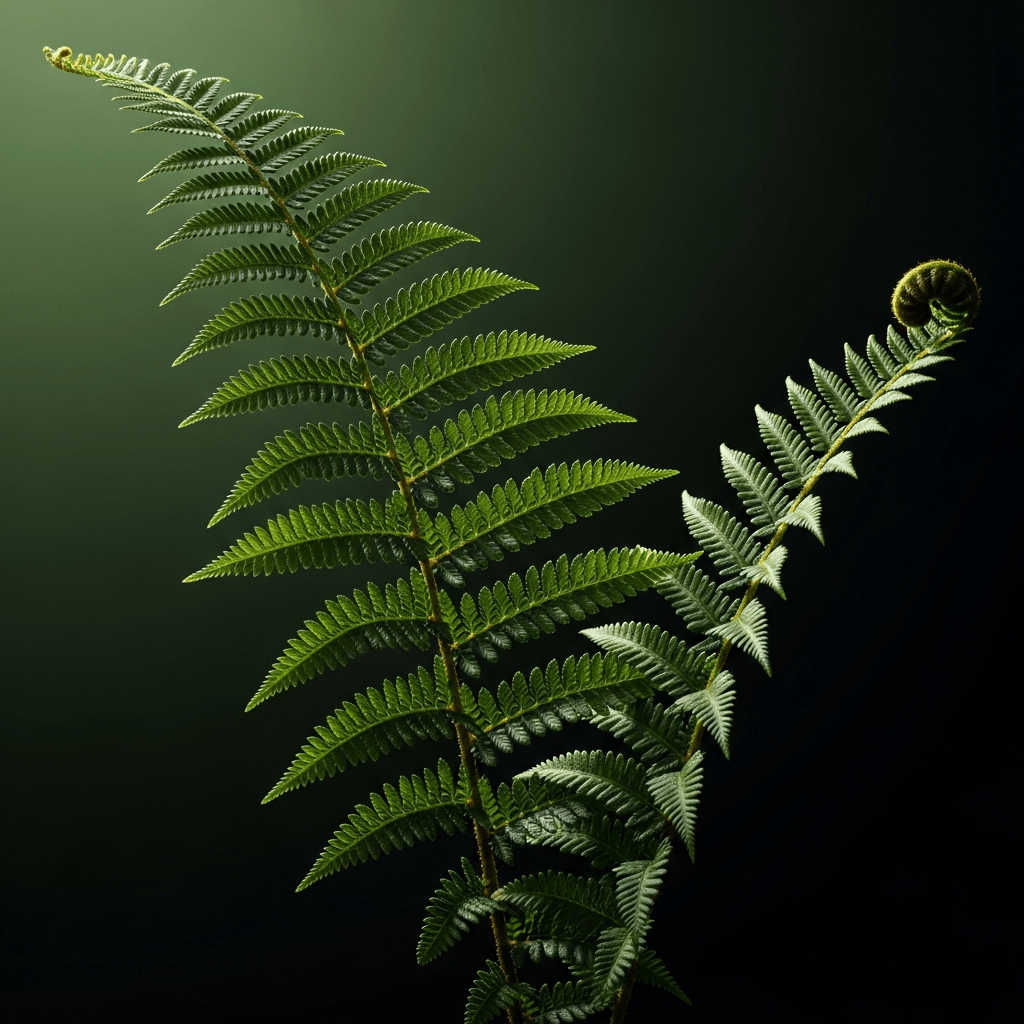
Deer Fern
Blechnum spicant, commonly known as the deer fern, is a perennial woodland fern native to temperate regions of Europe, North America, and Asia, notable for its distinctive dimorphic fronds that separate sterile and fertile functions.
Blechnum spicant, commonly known as the deer fern, is a perennial woodland fern native to temperate regions of Europe, North America, and Asia, notable for its distinctive dimorphic fronds that separate sterile and fertile functions.
First described by Carl Linnaeus in 1753 as Osmunda spicant, this species was later reassigned to the genus Blechnum by Carl Ludwig Willdenow in 1802. Its type specimen is preserved in the LINN herbarium, originating from Europe. Over centuries, it has been a familiar component of temperate woodland flora and has recently been subject to molecular reclassification efforts that propose its placement under the genus Struthiopteris.
Blechnum spicant belongs to the family Blechnaceae within the order Polypodiales, class Polypodiopsida, and division Monilophyta. It is part of the vascular, spore-bearing fern group known as true ferns, characterized by fronds and sporangia arranged in sori. Taxonomic debate continues regarding its genus placement, with some authorities recognizing it as Struthiopteris spicant.
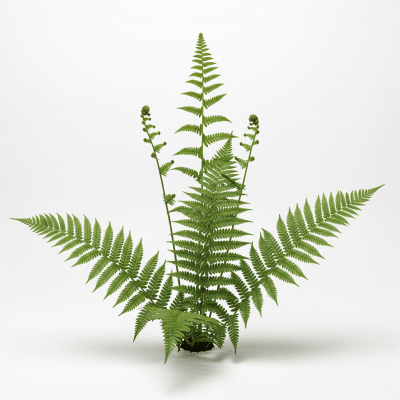
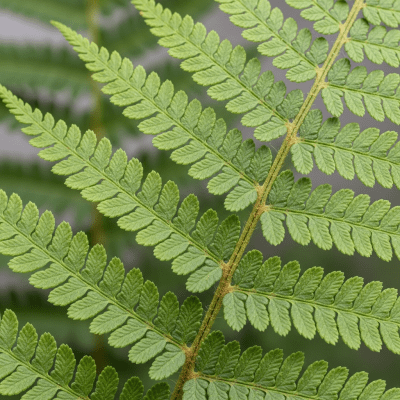
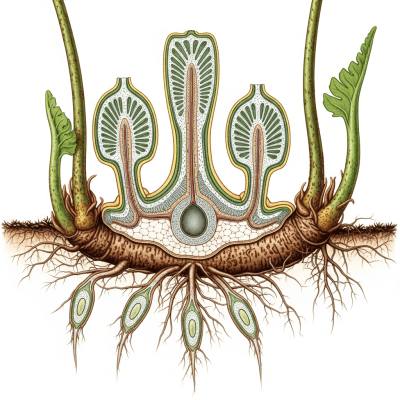
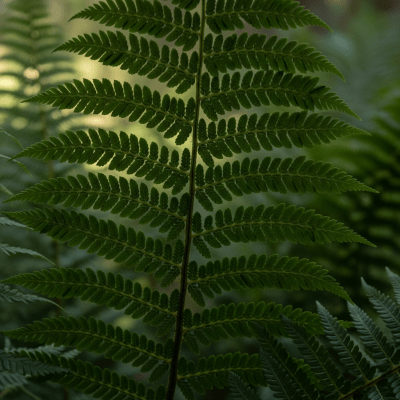
This terrestrial fern features dimorphic fronds: sterile fronds form a spreading basal rosette measuring 15 to 40 centimeters long, with dark green, leathery texture, while fertile fronds rise erect and are narrower, bearing sporangia on their undersides. It grows from a short-creeping to ascending rhizome, and its sori are positioned beneath the fertile fronds, though the presence of indusia is not specified.
Thriving in acidic, moist, and shaded woodland environments, Blechnum spicant tolerates cold and low light conditions. It is widely cultivated as an ornamental ground cover in garden and woodland settings due to its resilient growth habit and resistance to browsing by deer and other herbivores. Propagation is commonly achieved through spores or division, supporting its use in horticulture.
Bring this kind into your world illustrated posters, mugs, and shirts.

Archival print, museum-grade paper
Buy Poster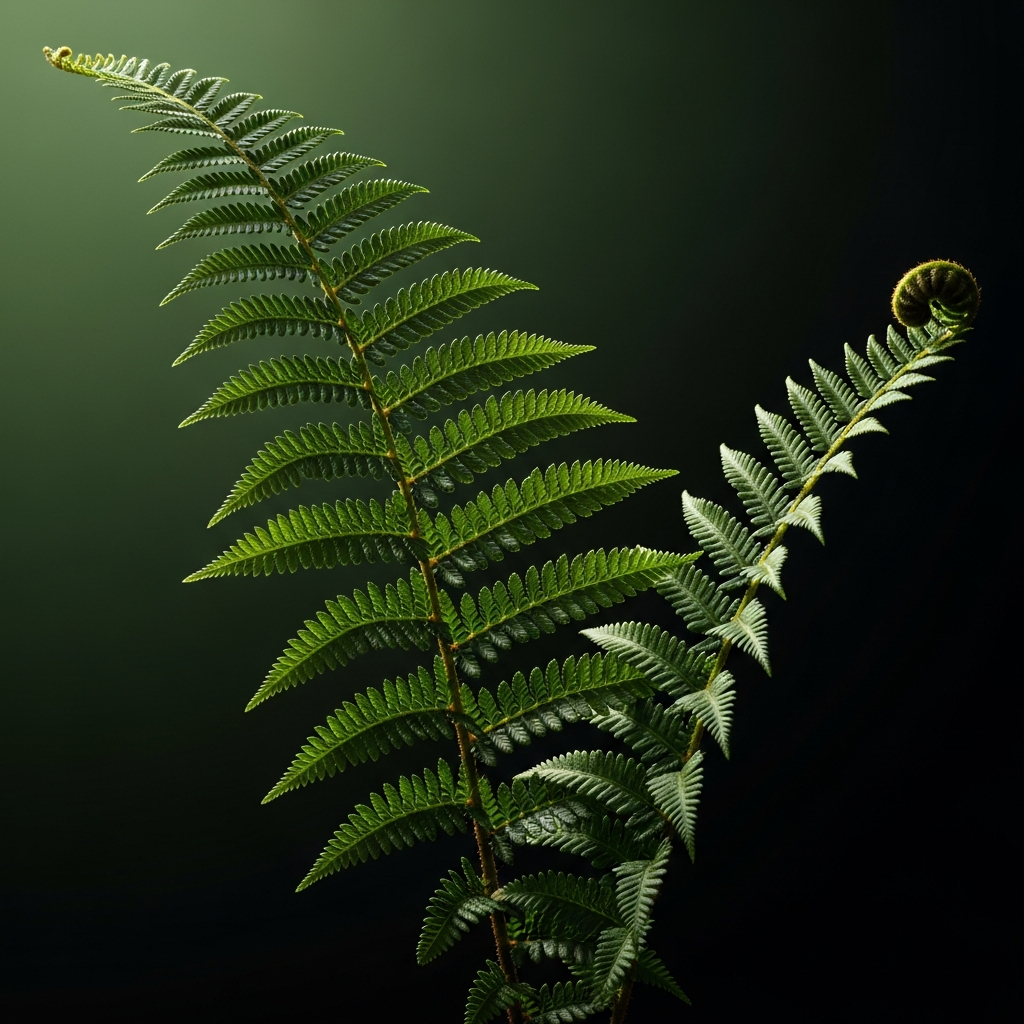
Stoneware mug, dishwasher safe
Buy Mug
Soft cotton tee, unisex sizes
Buy ShirtWhile Blechnum spicant holds no prominent place in culinary traditions, it has occasional mention in traditional medicinal contexts, though such uses are not widely documented or recognized. Its primary cultural value lies in its role as an ornamental plant enhancing temperate garden landscapes.
Like all true ferns, Blechnum spicant reproduces via spores produced in sori on the underside of fertile fronds. These spores disperse to germinate into a free-living gametophyte stage, which produces gametes for fertilization. Following fertilization, a new sporophyte develops, growing into the mature fern with its characteristic dimorphic fronds. This life cycle alternates between independent gametophyte and sporophyte phases, typical of monilophytes.
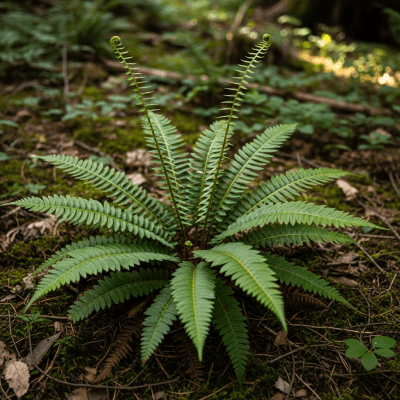

In its native habitats, Blechnum spicant contributes to the understory biodiversity of acidic, moist, shaded woodlands and heathlands. It helps stabilize soil with its rhizomes and provides ground cover that supports microhabitats for invertebrates. Its resistance to herbivory allows it to persist in ecosystems with deer populations, maintaining fern diversity and structural complexity.
Currently, Blechnum spicant is not considered threatened and maintains stable populations across its broad native range. Its tolerance to shade and cold, along with resistance to herbivory, supports its resilience. No major conservation concerns have been identified, and it is widely cultivated without significant risk to wild populations.
The species itself is well-known under the common name deer fern, but no formally recognized cultivars or varieties are widely documented. Synonyms include Blechnum boreale and Blechnum spicant var. acutum. The alternative genus placement as Struthiopteris spicant reflects ongoing taxonomic updates rather than distinct horticultural varieties.