Origin Story

First described scientifically in 1864 by Georg Heinrich Mettenius as Asplenium niponicum, this fern was later reclassified by Henry Fletcher Hance in 1875 under the genus Athyrium. Its type specimen was collected in Japan, reflecting its native roots in the forest understories of Japan, China, Korea, and eastern Russia, typically at elevations between 100 and 1500 meters.

Classification

Athyrium niponicum belongs to the family Athyriaceae within the order Polypodiales, class Polypodiopsida, division Monilophyta, and kingdom Plantae. It is a member of the genus Athyrium, a group known for diverse terrestrial ferns with delicate frond structures.

Appearance or Form

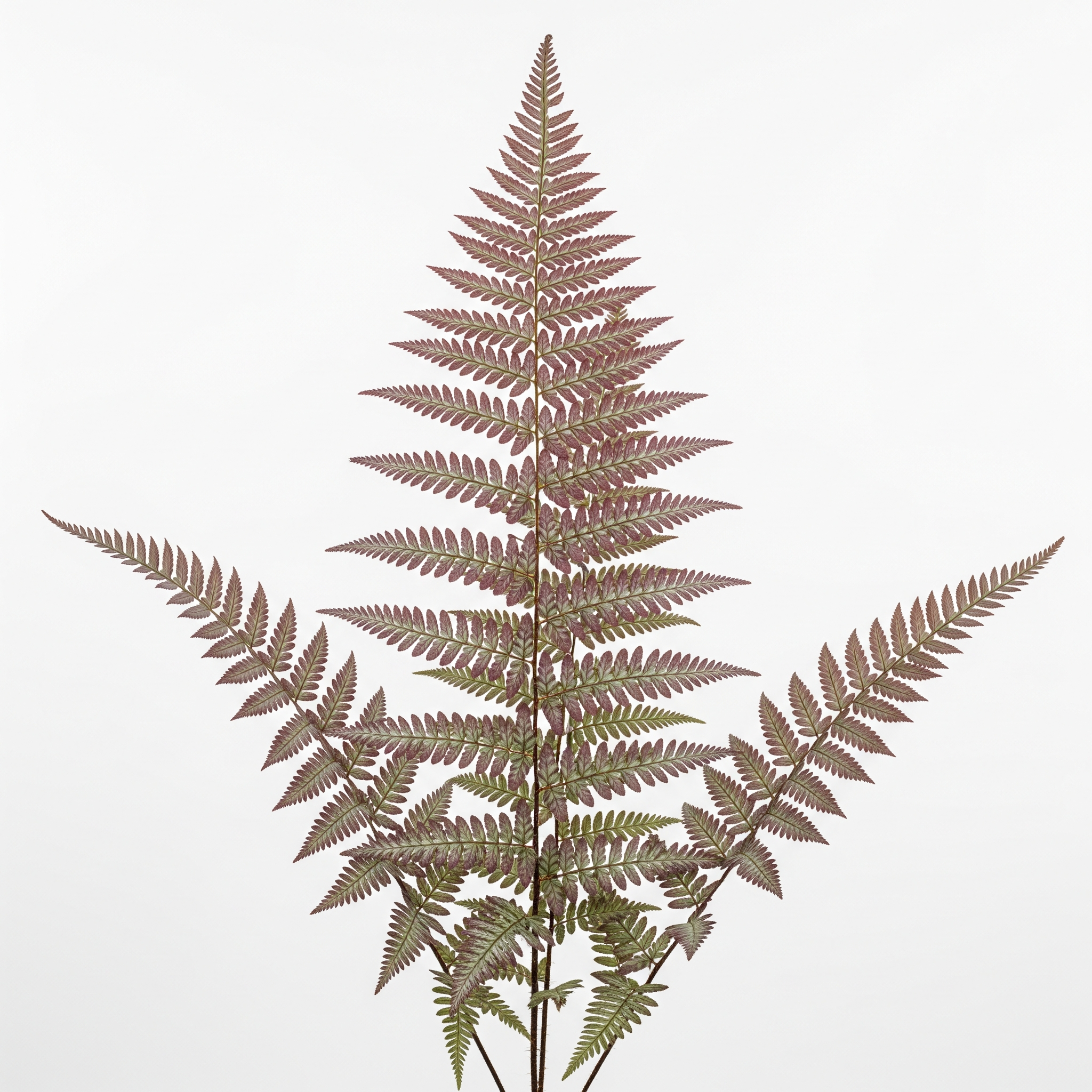
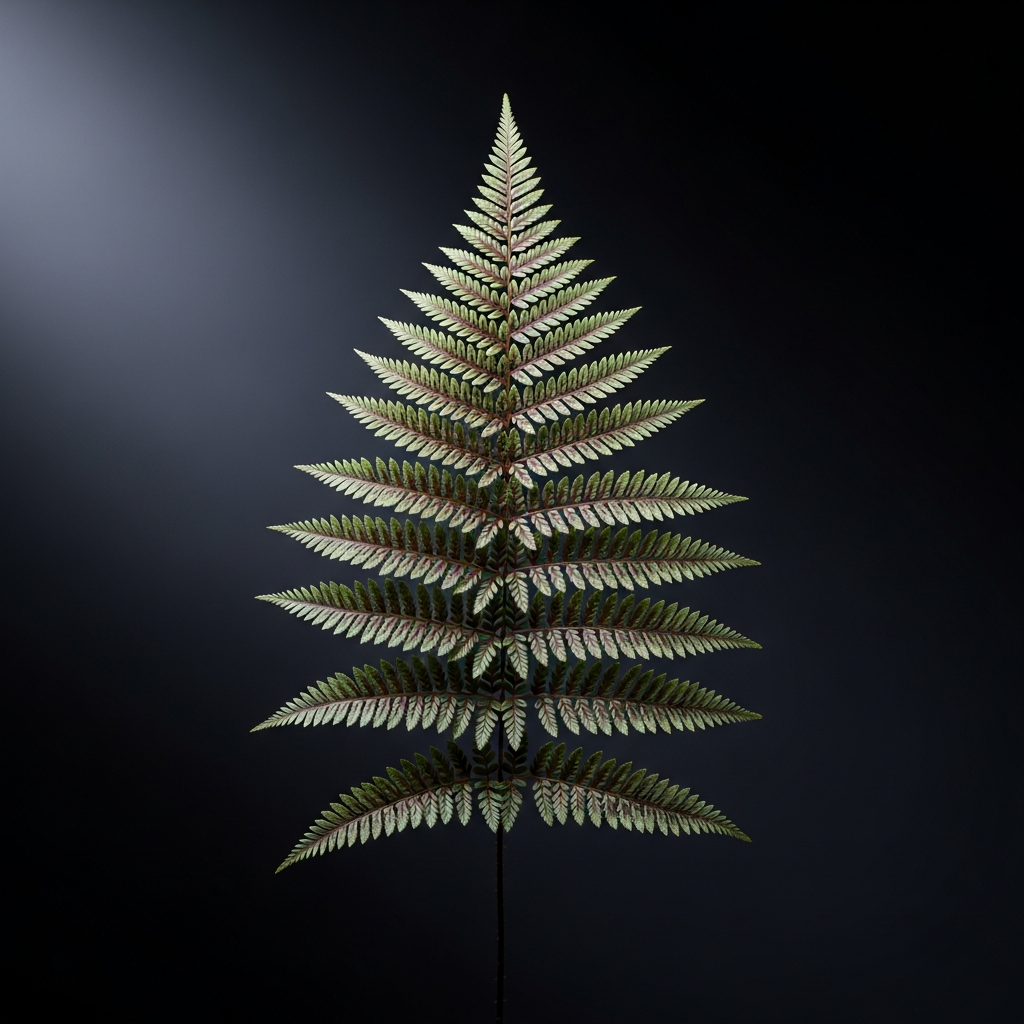
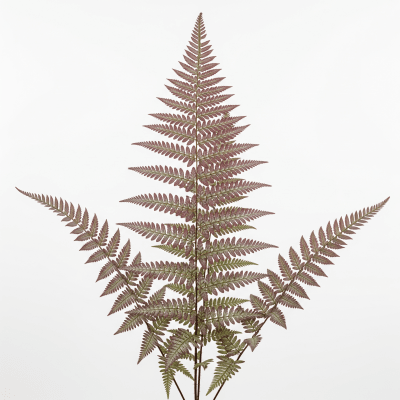
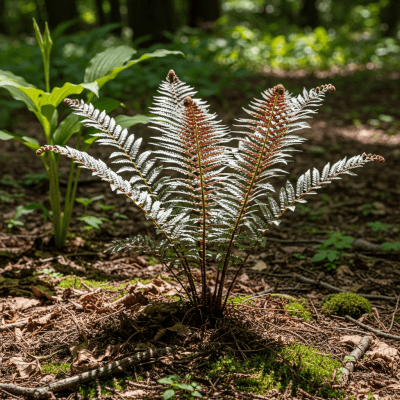
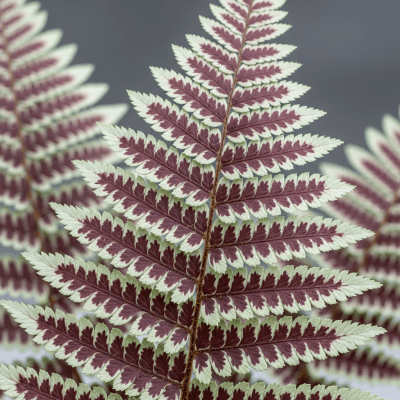
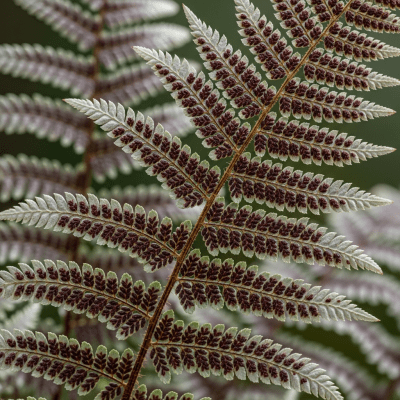
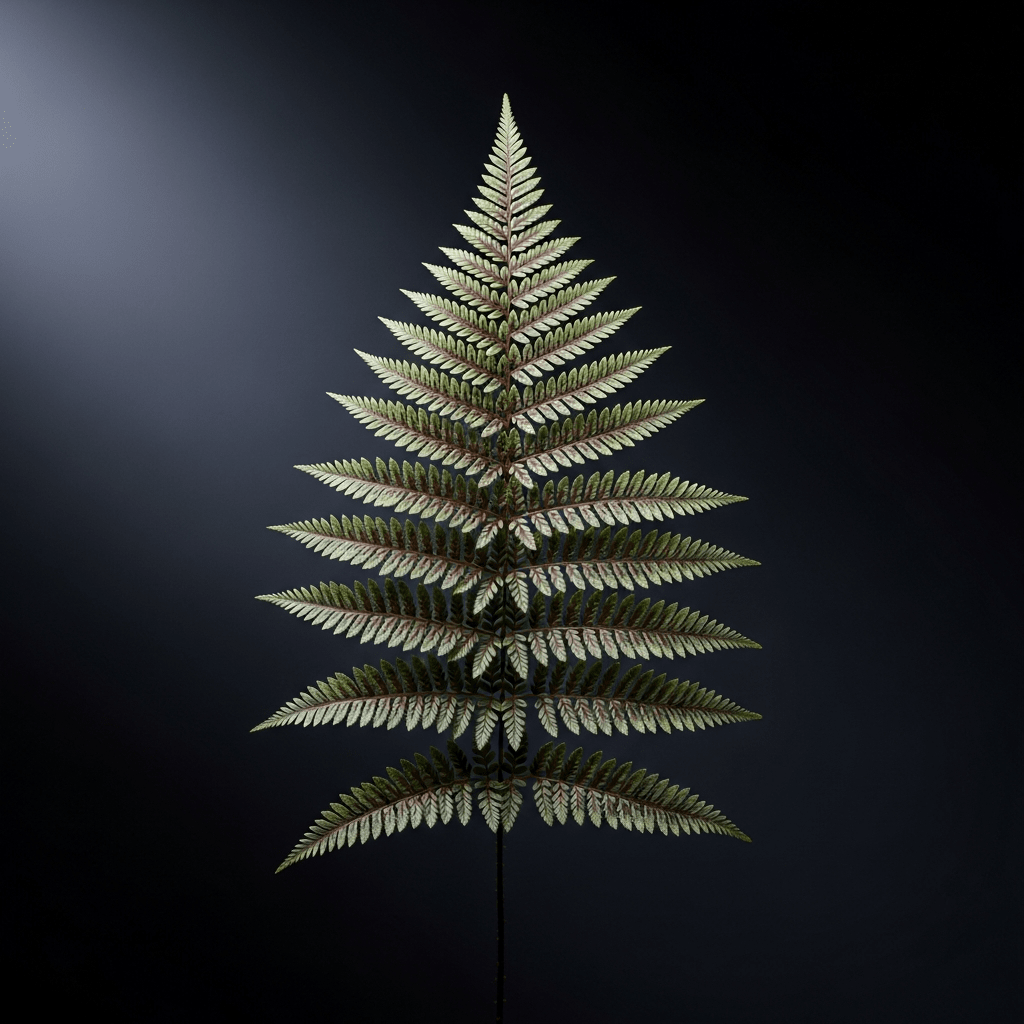
This deciduous fern features fronds ranging from 30 to 60 centimeters in length, which are bipinnate to tripinnate. Its leaflets (pinnae) display a captivating silvery-grey to metallic green hue, accented by burgundy to purple midribs. The slender stipe often carries a reddish tint, and the plant grows from a short-creeping rhizome. Its sori are linear along the veins, protected by curved or J-shaped indusia, contributing to its distinctive and elegant appearance.

Behavior or Usage

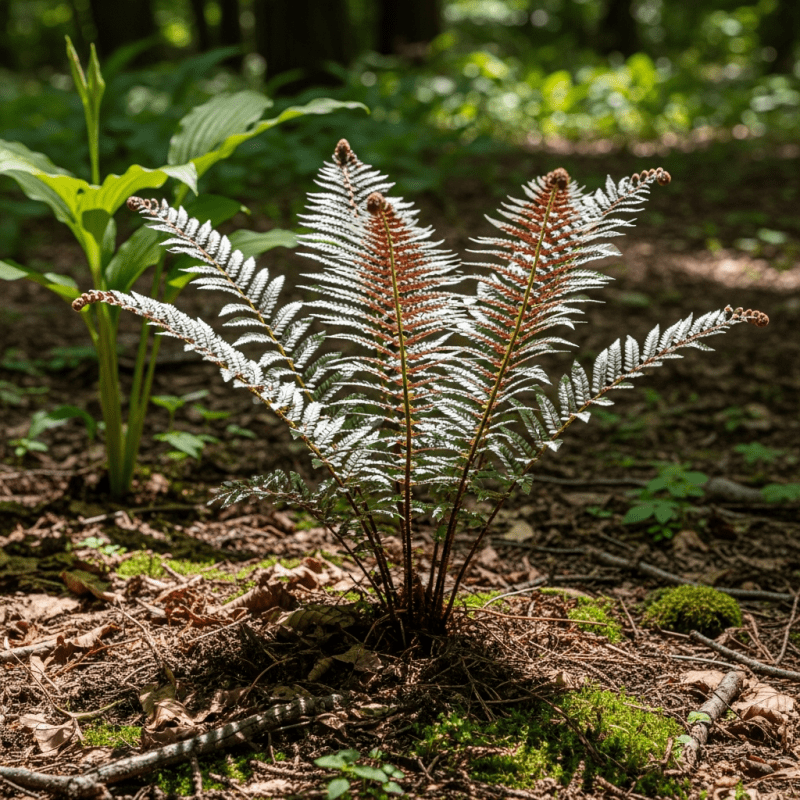
Athyrium niponicum thrives in moist, shaded woodland environments, forming slow-spreading clumps via its rhizomes. It is widely cultivated for ornamental purposes, especially in shade gardens, borders, and containers. The species tolerates a variety of soil types but prefers humus-rich, well-drained soils. Propagation is commonly achieved through division or tissue culture, supporting its popularity in horticulture.

Merchandise & Prints

Bring this kind into your world � illustrated posters, mugs, and shirts.

Japanese Painted Fern Japanese Painted Fern Poster

Japanese Painted Fern Poster

Archival print, museum-grade paper

Japanese Painted Fern Japanese Painted Fern Mug

Japanese Painted Fern Mug

Stoneware mug, dishwasher safe

Japanese Painted Fern Japanese Painted Fern Shirt

Japanese Painted Fern Shirt

Soft cotton tee, unisex sizes

Attributes & Insights

Taxon-Specific Insights

🌍Cultural Significance

While Athyrium niponicum does not have widely documented cultural or symbolic roles, its striking foliage has earned it a place of esteem in garden design and landscape aesthetics. Known as the Japanese painted fern, it reflects a subtle appreciation for natural artistry in East Asian horticultural traditions and has been recognized by the Royal Horticultural Society with an Award of Garden Merit.

📌Notable Facts

  • Its cultivar 'Pictum' is especially prized for enhanced variegation and compact growth.
  • The fern’s fronds exhibit a unique metallic sheen uncommon among ferns.
  • It is generally resistant to pests but vulnerable to drought and excessive sunlight.
  • Originally described under a different genus, it was reclassified to Athyrium in the 19th century.
  • It is native to a broad East Asian range, including Japan, China, Korea, and eastern Russia.

🌱Reproduction And Life Cycle

Like all ferns, Athyrium niponicum reproduces via spores rather than seeds. Its linear sori produce spores on the undersides of fronds, which disperse to germinate into a gametophyte stage. This independent, small, heart-shaped gametophyte eventually produces gametes that fertilize to form a new sporophyte fern. The species’ life cycle includes alternating generations, with the sporophyte being the dominant, visible fern plant.

Visual Variations

High quality, studio-style photograph of a single Athyrium niponicum
Photograph of a Athyrium niponicum, of the taxonomy ferns, shown growing in its natural environment, such as a forest understory or shaded woodland
Detailed macro image of the fronds and leaflets of a Athyrium niponicum, focusing on texture, venation, and sori (spore cases) if visible
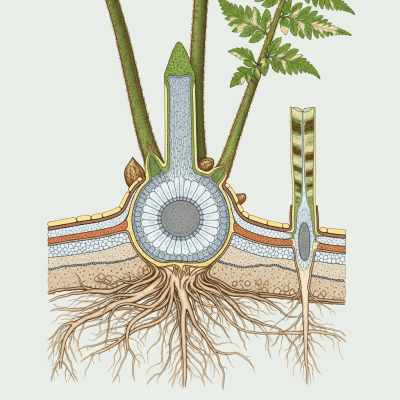
Cross-sectional illustration or photograph of a Athyrium niponicum, showing internal structure such as rhizome, roots, and vascular bundles
Photograph of a mature Athyrium niponicum, with visible sporangia or sori on the underside of its fronds, highlighting its reproductive structures
Image depicting a Athyrium niponicum as traditionally used by humans, such as in ornamental garden settings, floral arrangements, or as part of indigenous cultural practices

Composition & Context

Taxon-Specific Insights

🌿Ecological Roles

In its native forest understories, Athyrium niponicum contributes to biodiversity by providing ground cover that stabilizes soil and retains moisture. Its presence supports microhabitats for invertebrates and helps maintain the shaded, humid conditions essential for many woodland ecosystems. As a shade-tolerant fern, it plays a role in understory plant communities, promoting ecological balance.

🛡️Conservation Status

Currently, Athyrium niponicum is not listed as threatened or endangered. Its wide native distribution and adaptability to cultivation have helped maintain stable populations. However, habitat loss and environmental changes in parts of its range could pose localized risks. Conservation efforts focus on habitat preservation and responsible horticultural propagation.

🌾Popular Species And Varieties

The most renowned cultivar of Athyrium niponicum is 'Pictum', celebrated for its vivid variegated foliage with silvery tones and deep burgundy veins. Other named varieties, such as 'Metallicum', have been noted but sometimes treated as synonyms or horticultural variants rather than distinct botanical varieties. These cultivars are staples in shade gardens worldwide, prized for their ornamental appeal and adaptability.

Faq

Q: What conditions does Athyrium niponicum prefer?
It thrives in moist, shaded woodland habitats with humus-rich, well-drained soil.

Q: How is this fern propagated?
Propagation is typically by division or tissue culture.

Q: Is Athyrium niponicum edible or used medicinally?
There are no known culinary or medicinal uses documented for this species.