Hart’s-Tongue Fern
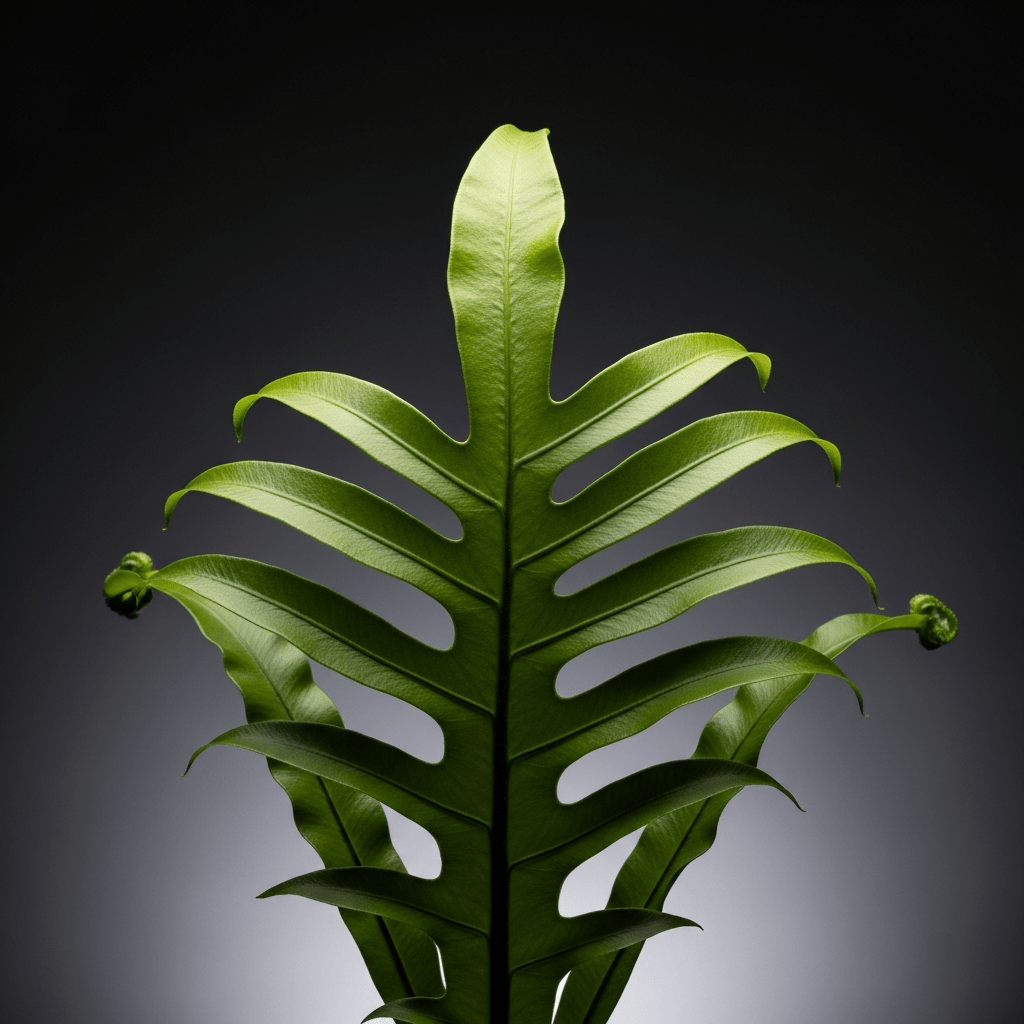
Asplenium scolopendrium, commonly known as Hart’s-tongue fern, is a distinctive evergreen fern notable for its simple, undivided, strap-shaped fronds that set it apart from most other ferns.
Asplenium scolopendrium, commonly known as Hart’s-tongue fern, is a distinctive evergreen fern notable for its simple, undivided, strap-shaped fronds that set it apart from most other ferns.
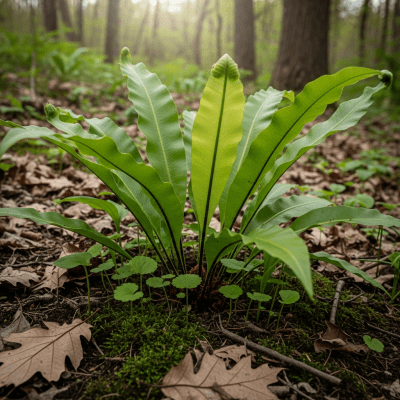
First formally described by Carl Linnaeus in 1753, Asplenium scolopendrium originates from Europe, with its type specimen collected in England. It naturally inhabits woodlands and shaded limestone crevices, establishing itself in moist, calcareous soils at elevations up to 1200 meters.
Asplenium scolopendrium belongs to the family Aspleniaceae within the order Polypodiales, part of the class Polypodiopsida in the division Monilophyta. This placement reflects its status as a true fern within the vascular, spore-bearing plants known as monilophytes.
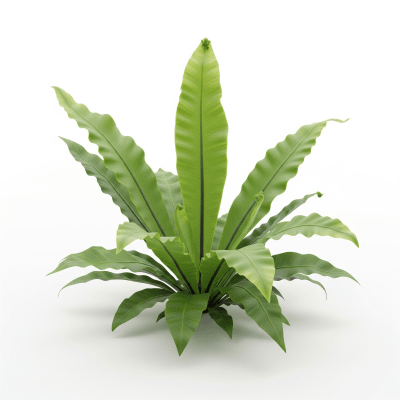
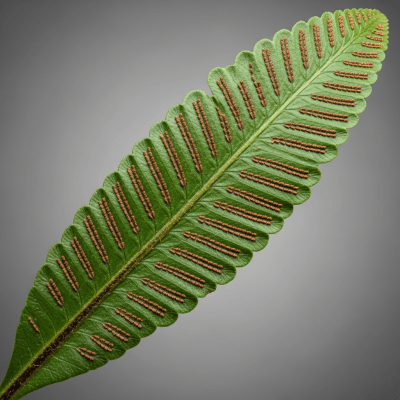
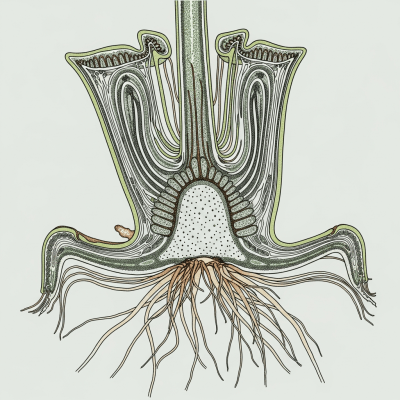
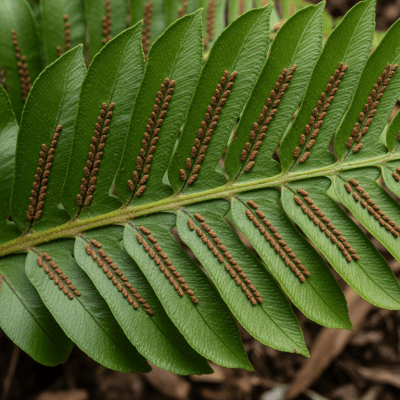
This terrestrial fern features simple, undivided fronds that are strap-shaped and glossy green with gently wavy margins. The fronds typically measure between 20 and 60 centimeters long and 3 to 6 centimeters wide, supported by a short, dark brown to black stipe. Its sori are linear and arranged obliquely on the underside of the fronds, while a short, erect rhizome anchors the plant. The evergreen foliage and distinctive tongue-like shape make it easily recognizable.
Asplenium scolopendrium thrives in shaded, moist environments with calcareous soils, showing resilience to moderate frost and urban pollution. It is widely cultivated for its architectural foliage, serving as an attractive groundcover or specimen plant in shaded gardens. Ecologically, it contributes to woodland restoration and acts as a bioindicator of limestone-rich soils.
Bring this kind into your world illustrated posters, mugs, and shirts.
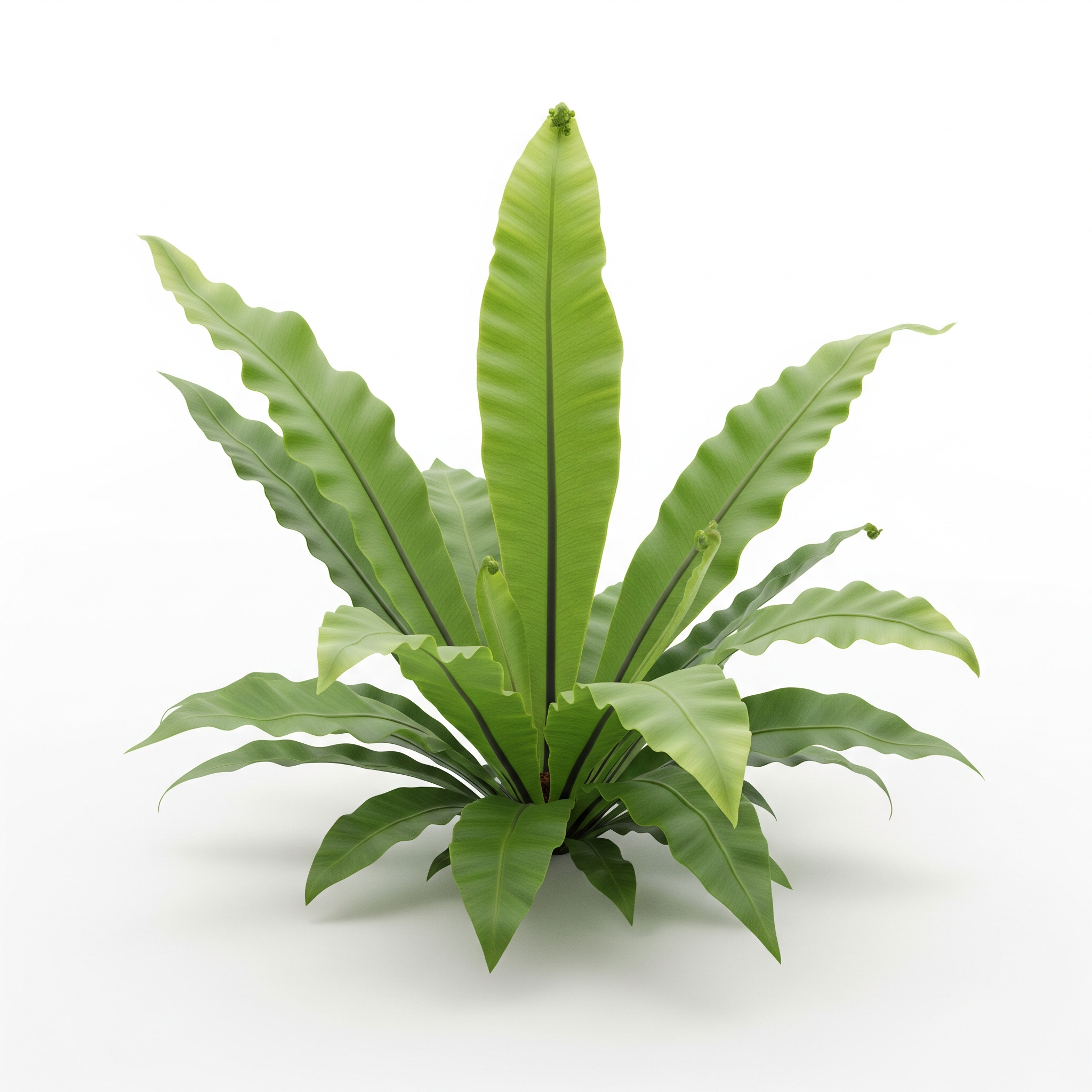
Archival print, museum-grade paper
Buy Poster
Stoneware mug, dishwasher safe
Buy Mug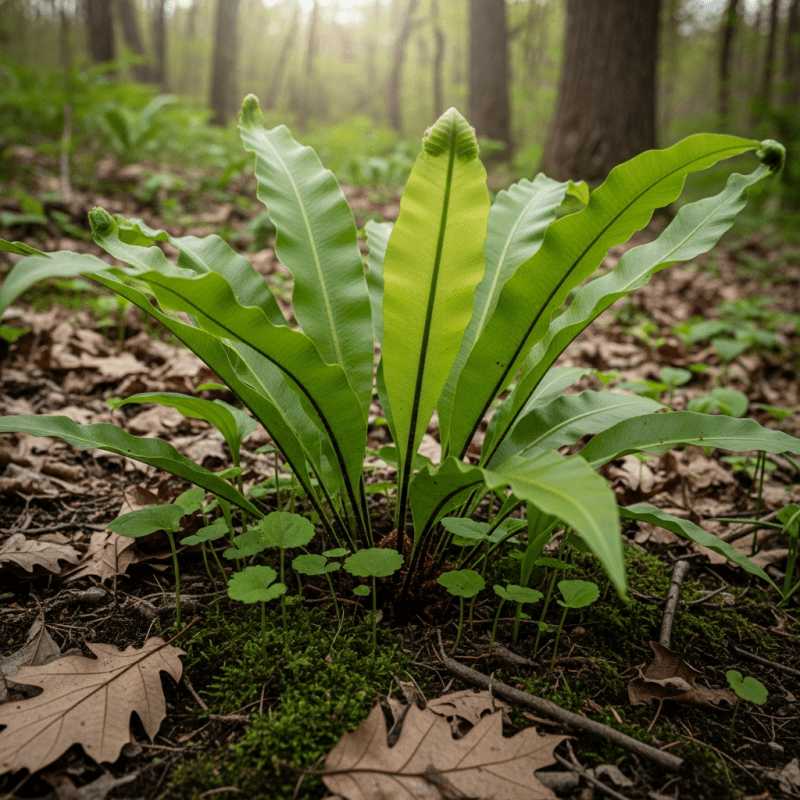
Soft cotton tee, unisex sizes
Buy ShirtWhile Asplenium scolopendrium holds no widely documented culinary or medicinal uses, it is appreciated in horticulture and garden design for its unique form and evergreen nature. Its presence in shaded landscapes and woodland gardens reflects a subtle cultural appreciation for naturalistic and shade-tolerant plants.
Asplenium scolopendrium reproduces via spores produced in linear sori on the underside of its fronds. Like other ferns, it undergoes a life cycle alternating between a diploid sporophyte and a haploid gametophyte stage. Spores disperse to suitable moist habitats where gametophytes develop, eventually giving rise to new sporophyte plants.

This fern plays an important role in woodland ecosystems by contributing to understory biodiversity and stabilizing soil in shaded, calcareous environments. Its presence indicates healthy, moist habitats with limestone influence, and it supports microhabitats for various invertebrates.
Asplenium scolopendrium currently faces no major conservation threats and is considered stable across its native range. Its tolerance to moderate frost and urban pollution aids its persistence, though habitat protection of woodlands and limestone areas remains important for its continued wellbeing.
While no widely registered cultivars are documented, several horticultural selections exist that emphasize variations in frond shape and margin undulation. These cultivars enhance its appeal as an ornamental fern in shaded garden settings.