
Spleenwort Family
Aspleniaceae, commonly known as the spleenwort family, is a globally distributed group of ferns distinguished by their characteristic linear sori and diverse growth forms.
Aspleniaceae, commonly known as the spleenwort family, is a globally distributed group of ferns distinguished by their characteristic linear sori and diverse growth forms.
The family Aspleniaceae was formally described in 1844 by Newman, with its type genus Asplenium established by Linnaeus in 1753. The type specimen, Asplenium scolopendrium, originates from Europe, specifically England. Phylogenetically, Aspleniaceae belongs to the order Polypodiales within the class Polypodiopsida, tracing its lineage deep within the vascular fern clade.
Aspleniaceae is a family within the order Polypodiales, class Polypodiopsida, division Monilophyta, kingdom Plantae. It includes the large and morphologically diverse genus Asplenium and several allied genera. While generally accepted as monophyletic by modern phylogenetic studies such as PPG I (2016), taxonomic debates persist over the inclusion of certain genera like Ceterach and Camptosorus. Historically, the family has been associated with synonyms such as Athyriaceae and treated as a subfamily Asplenioideae in some classifications.
Members of Aspleniaceae typically exhibit simple to pinnate fronds that range from leathery to membranous textures. Morphological diversity is notable, spanning small tufted species to large bird’s-nest types. Their rhizomes are generally short-creeping to erect and may form dense clumps. The family’s hallmark feature is its linear to oblong sori arranged along the veins of the fronds, each protected by a distinctive single-sided indusium, lending a unique appearance to their fertile fronds.
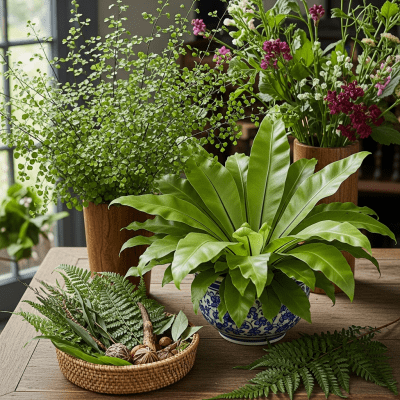
Aspleniaceae ferns occupy a variety of ecological niches, including terrestrial, epiphytic, and lithophytic habitats. They are shade-tolerant and often thrive as understory plants, exhibiting drought resistance in many species. In cultivation, they are valued primarily for their ornamental foliage, with popular species like Asplenium nidus and Asplenium scolopendrium widely grown. Propagation is commonly achieved through spores and division, although susceptibility to root rot requires careful horticultural management.
Bring this kind into your world illustrated posters, mugs, and shirts.

Archival print, museum-grade paper
Buy Poster
Stoneware mug, dishwasher safe
Buy Mug
Soft cotton tee, unisex sizes
Buy ShirtWhile Aspleniaceae species have minor traditional medicinal uses in folk medicine, particularly relating to spleenworts, their cultural significance is largely horticultural. Their elegant foliage has inspired ornamental cultivation worldwide, though they hold limited prominence in mythology or broader cultural symbolism.
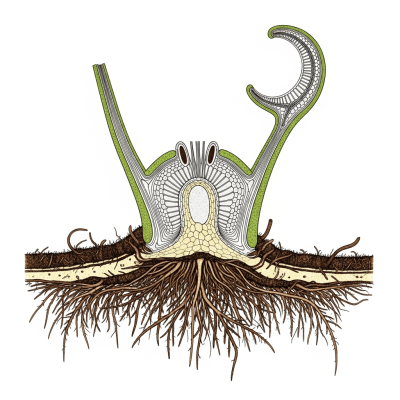
Like all ferns, Aspleniaceae reproduce via spores produced in sori on the undersides of fronds. The life cycle alternates between a dominant sporophyte stage and a free-living gametophyte stage. Spores released from the linear sori germinate into small, heart-shaped gametophytes that produce gametes for fertilization. Following fertilization, a new sporophyte grows, completing the cycle. Some species exhibit adaptations for spore dispersal suited to their varied habitats.

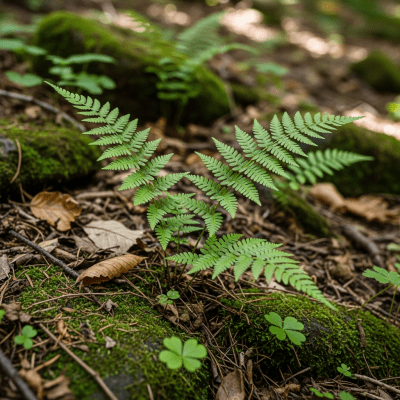


Aspleniaceae ferns contribute significantly to ecosystem biodiversity, often forming part of the understory vegetation in forests and colonizing rocky or epiphytic niches. They aid in soil stabilization and provide microhabitats for invertebrates. Their presence supports ecological complexity by contributing to nutrient cycling and offering shelter in shaded environments.
Aspleniaceae species are generally widespread and not globally threatened, benefiting from broad native distributions. However, localized threats such as habitat loss and overcollection can impact certain species. Conservation efforts focus on habitat preservation and sustainable cultivation practices. No major global conservation concerns are currently recorded for the family as a whole.
Among the family’s many species, Asplenium nidus (bird’s-nest fern) and Asplenium scolopendrium (hart's-tongue fern) are especially popular in horticulture for their striking foliage. These species are widely cultivated indoors and in gardens. The genus Asplenium encompasses a broad diversity, with species adapted to various climates and growing conditions, making them favorites among fern enthusiasts.