Origin Story

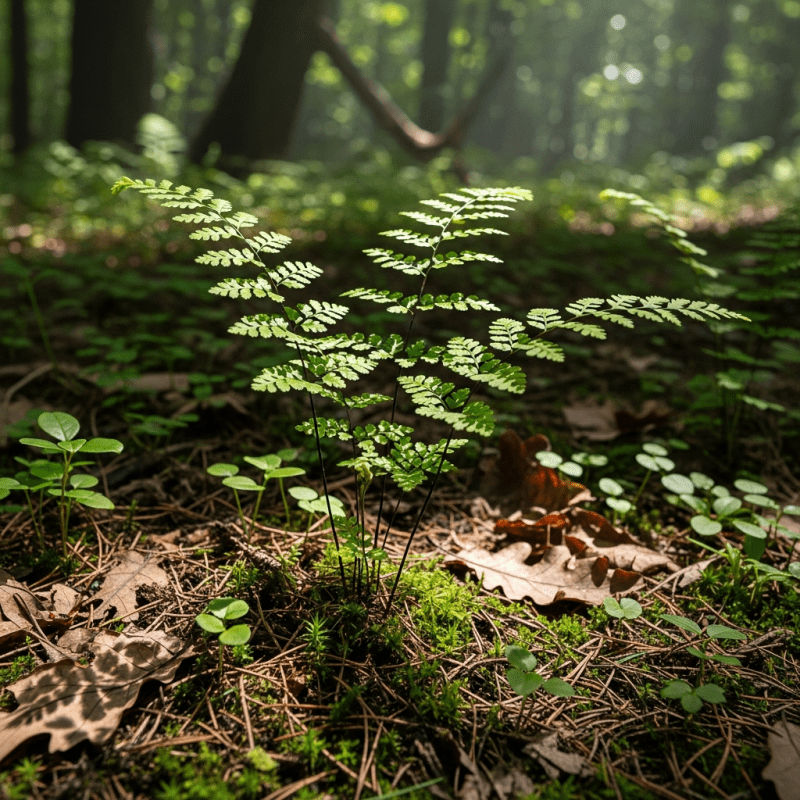
First described by Carl Ludwig Willdenow in 1810, Adiantum raddianum originates from tropical and subtropical regions of South America, primarily Brazil. Its discovery and formal naming took place during early 19th-century botanical explorations, with the type specimen preserved at the Berlin Botanical Museum. It naturally thrives in moist, shaded habitats from sea level up to 1,200 meters elevation.

Classification

Adiantum raddianum belongs to the family Pteridaceae within the order Polypodiales, class Polypodiopsida, and division Monilophyta. It is a member of the genus Adiantum, a group known for their characteristic black stipes and delicate fronds. This species is part of the section Adiantum and is closely related to other maidenhair ferns, a taxonomically complex group with ongoing molecular studies refining their classification.

Appearance or Form

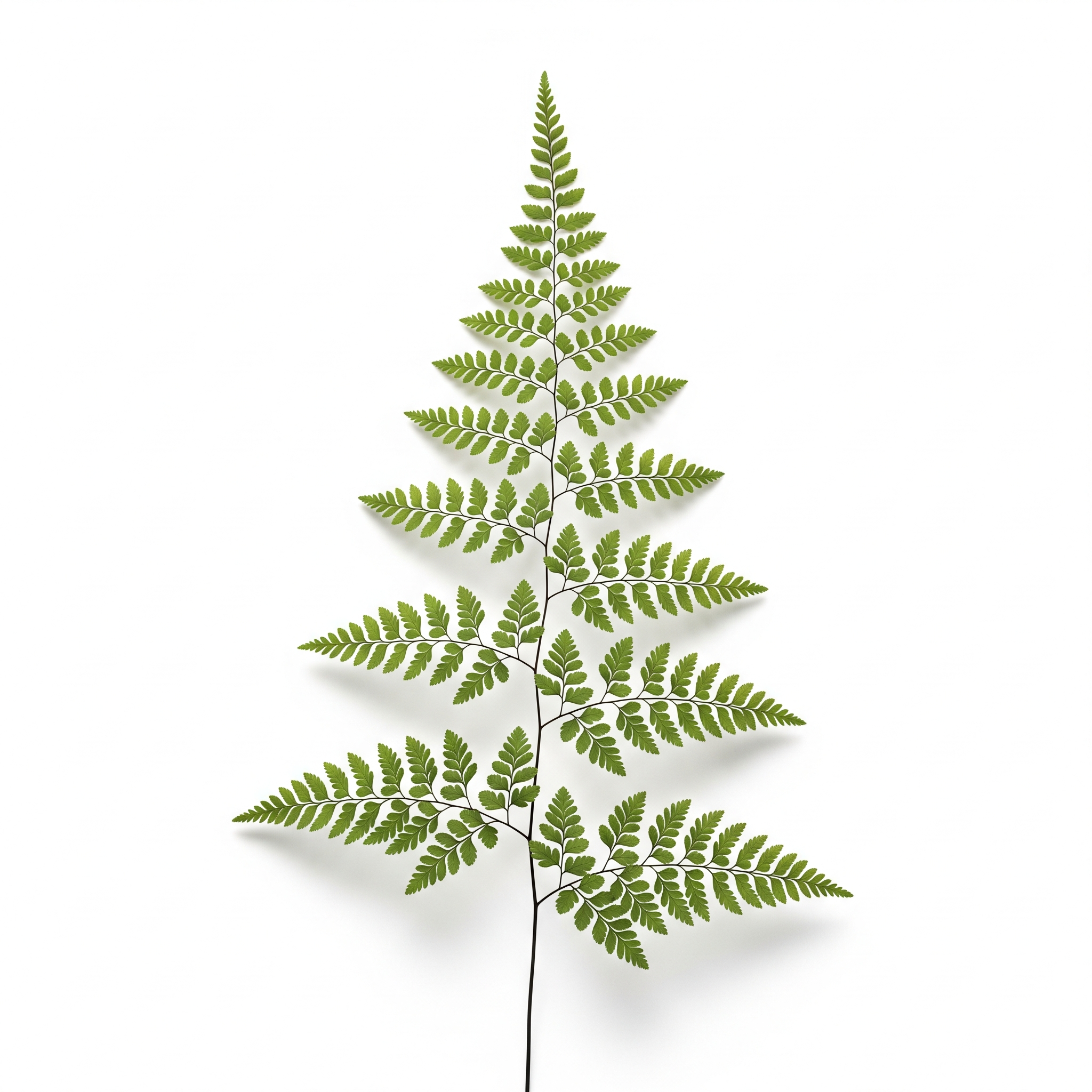
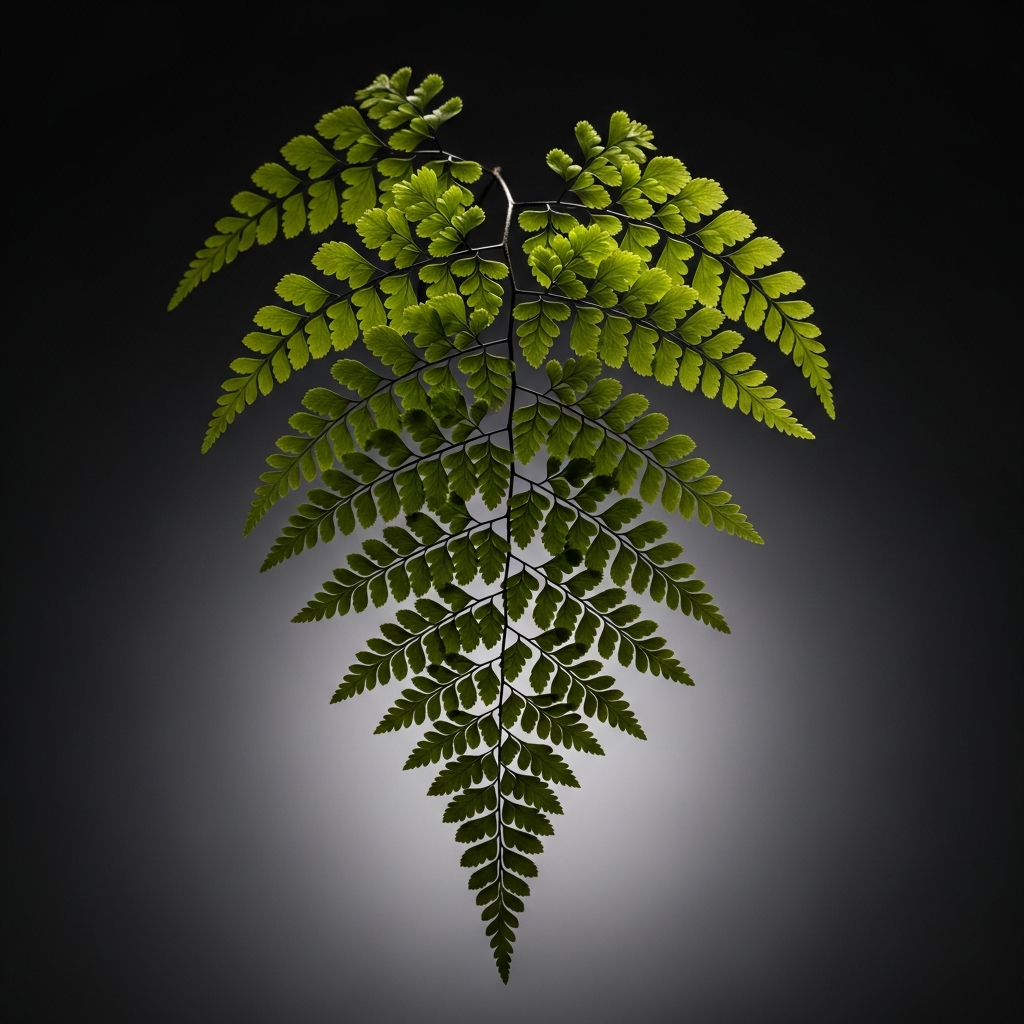
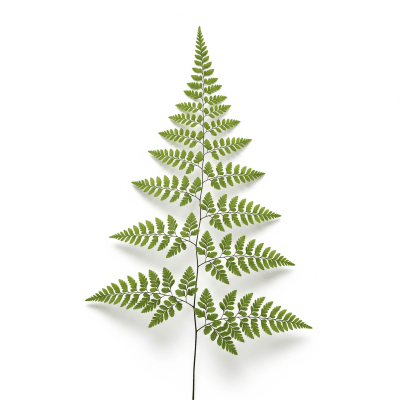
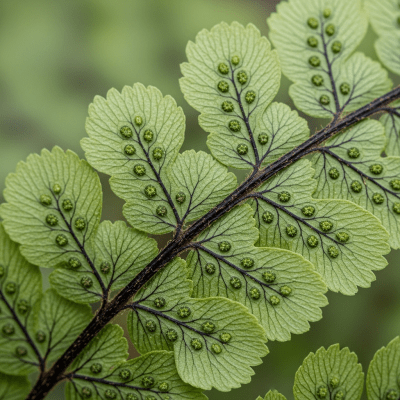
Adiantum raddianum displays delicate, fan-shaped pinnules arranged in triangular, bipinnate to tripinnate fronds that can reach up to 40 cm in length. Its fronds are notable for their graceful, airy appearance, supported by slender, shiny black stipes and rachises that provide a striking contrast. The sori are positioned along the margins of fertile segments and are protected by false indusia formed by the reflexed leaf edges, a distinctive feature of this species.

Behavior or Usage

This fern thrives in moist, shaded environments with high humidity, making it a popular choice for indoor cultivation, greenhouses, and terrariums. It prefers indirect light and is sensitive to drought, low humidity, and direct sunlight, which can cause frond browning. Growth is slow to moderate, and propagation typically occurs through spores or division, common among maidenhair ferns. While it has no culinary or medicinal uses, its primary value lies in its ornamental appeal.

Merchandise & Prints

Bring this kind into your world � illustrated posters, mugs, and shirts.

Delta Maidenhair Fern Delta Maidenhair Fern Poster

Delta Maidenhair Fern Poster

Archival print, museum-grade paper

Delta Maidenhair Fern Delta Maidenhair Fern Mug

Delta Maidenhair Fern Mug

Stoneware mug, dishwasher safe

Delta Maidenhair Fern Delta Maidenhair Fern Shirt

Delta Maidenhair Fern Shirt

Soft cotton tee, unisex sizes

Attributes & Insights

Taxon-Specific Insights

🌍Cultural Significance

While Adiantum raddianum does not have widely documented cultural or symbolic roles, its elegant foliage has made it a favored subject in horticulture and interior decoration worldwide. Known as the Delta maidenhair fern, it is celebrated for bringing a sense of delicate beauty and tranquility to indoor spaces, often featured in botanical art and garden design for its graceful form.

📌Notable Facts

  • The black, wiry stipes and rachises are a hallmark of the genus Adiantum, giving the fern a distinctive and elegant appearance.
  • Despite its delicate look, Adiantum raddianum can tolerate a range of shaded, moist habitats from sea level to 1,200 meters elevation.
  • It is one of the most popular maidenhair ferns in cultivation worldwide, especially valued for indoor and terrarium environments.
  • The species has several synonyms, including Adiantum cuneatum, a name still used in horticulture but considered taxonomically synonymous.
  • Susceptible to scale insects and fungal leaf spots, it requires careful humidity and pest management in cultivation.

🌱Reproduction And Life Cycle

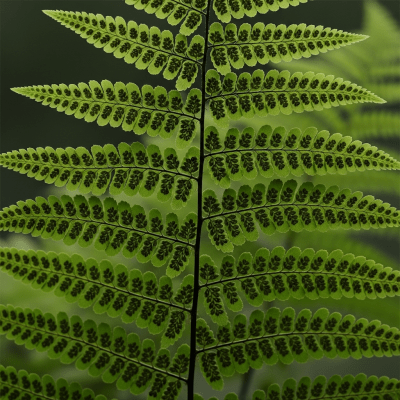
Like all true ferns, Adiantum raddianum reproduces via spores rather than seeds. Its life cycle includes an alternation of generations, with a dominant sporophyte producing sori along the frond margins. These sori release spores that germinate into a small, independent gametophyte stage, which produces gametes for fertilization. Following fertilization, a new sporophyte grows, continuing the cycle. This species’ sori are protected by false indusia formed by the reflexed leaf margins, aiding spore development and dispersal.

Visual Variations

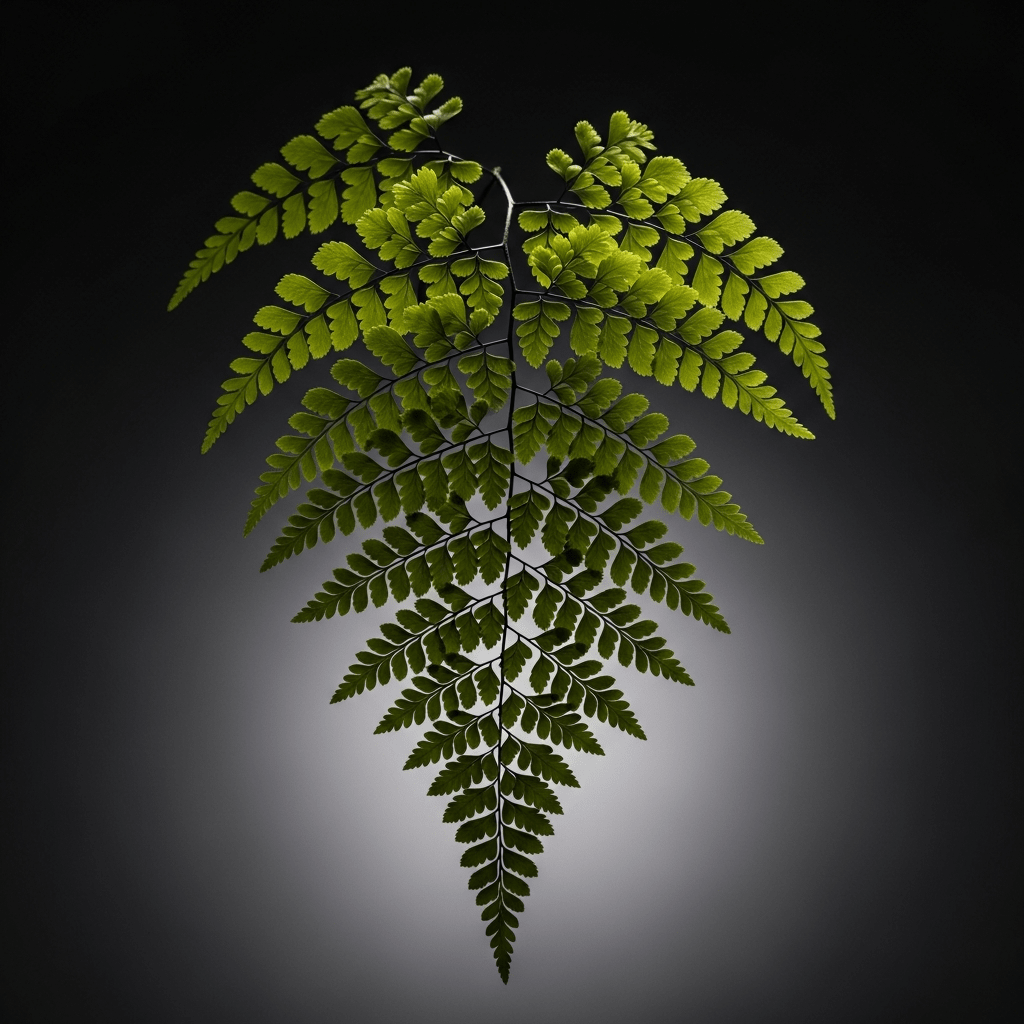
High quality, studio-style photograph of a single Adiantum raddianum
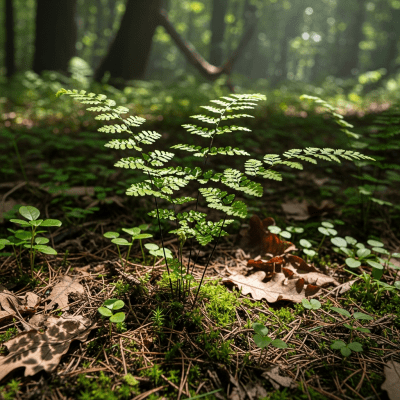
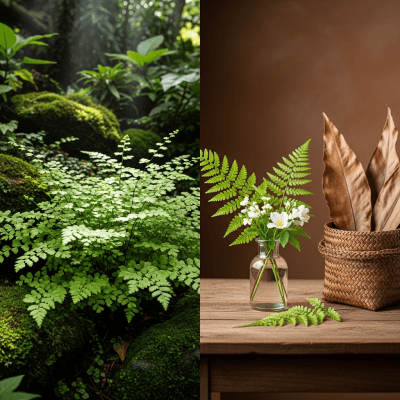
Photograph of a Adiantum raddianum, of the taxonomy ferns, shown growing in its natural environment, such as a forest understory or shaded woodland
Detailed macro image of the fronds and leaflets of a Adiantum raddianum, focusing on texture, venation, and sori (spore cases) if visible
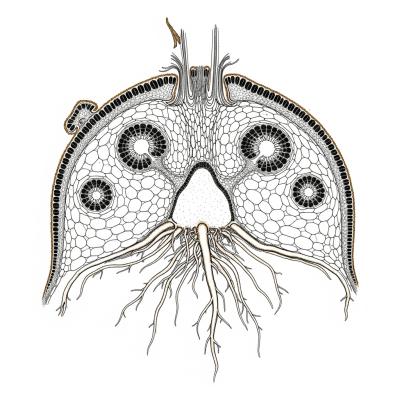
Cross-sectional illustration or photograph of a Adiantum raddianum, showing internal structure such as rhizome, roots, and vascular bundles
Photograph of a mature Adiantum raddianum, with visible sporangia or sori on the underside of its fronds, highlighting its reproductive structures
Image depicting a Adiantum raddianum as traditionally used by humans, such as in ornamental garden settings, floral arrangements, or as part of indigenous cultural practices

Composition & Context

Taxon-Specific Insights

🌿Ecological Roles

In its native habitats, Adiantum raddianum contributes to the biodiversity of moist, shaded forest understories and rocky outcrops. It helps stabilize soil and maintain humidity levels in microhabitats, supporting a range of small invertebrates and microorganisms. Its presence enhances the structural complexity of forest floors, providing shelter and contributing to nutrient cycling within tropical and subtropical ecosystems.

🛡️Conservation Status

Currently, Adiantum raddianum is not listed as threatened or endangered. Its wide native distribution in South America and popularity in cultivation reduce immediate conservation concerns. However, habitat loss due to deforestation and environmental changes could impact wild populations. No specific conservation measures are documented, but maintaining natural habitats and responsible horticultural practices support its long-term sustainability.

🌾Popular Species And Varieties

Adiantum raddianum is itself one of the most popular maidenhair ferns in cultivation, often confused with or sold under the synonym Adiantum cuneatum. While no formally registered cultivars exist, several varieties such as var. cuneatum, var. sinuatum, and var. strictum have been described, though these are rarely used in horticulture. Its graceful form makes it a staple in fern collections and indoor plant displays worldwide.

Faq

  • Q: How do I care for Adiantum raddianum indoors?
    A: Provide moist, well-drained soil, high humidity, and indirect light; avoid drought and direct sunlight to prevent frond damage.
  • Q: Can Adiantum raddianum be propagated easily?
    A: Yes, it can be propagated by spores or by dividing established plants, though spores require patience and controlled conditions.
  • Q: Is Adiantum raddianum safe for pets?
    A: There are no known toxic effects, making it generally safe to keep around pets.