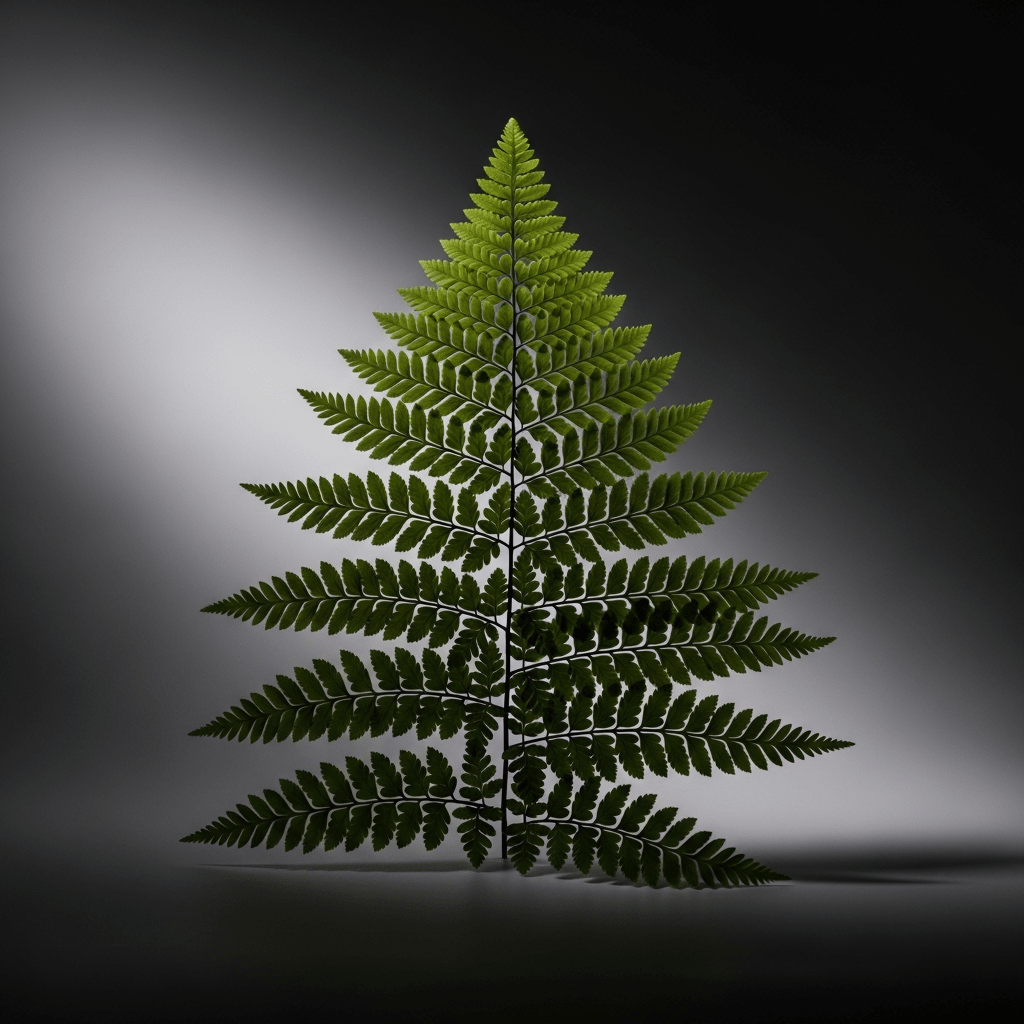
Northern Maidenhair Fern
Adiantum pedatum, commonly known as the Northern maidenhair fern, is a graceful terrestrial fern native to North America's temperate woodlands, recognized for its distinctive fan-shaped fronds and delicate black stems.
Adiantum pedatum, commonly known as the Northern maidenhair fern, is a graceful terrestrial fern native to North America's temperate woodlands, recognized for its distinctive fan-shaped fronds and delicate black stems.
First described by Carl Linnaeus in 1753 in his seminal work Species Plantarum, Adiantum pedatum was identified from specimens collected in eastern North America. Its type specimen is preserved in the LINN herbarium, anchoring its botanical identity to this region's mature deciduous forests.
This species belongs to the genus Adiantum within the family Pteridaceae, order Polypodiales, class Polypodiopsida, and division Monilophyta. It is part of the diverse group of vascular, spore-bearing plants known as true ferns, which are characterized by their fronds and spore-producing sori.
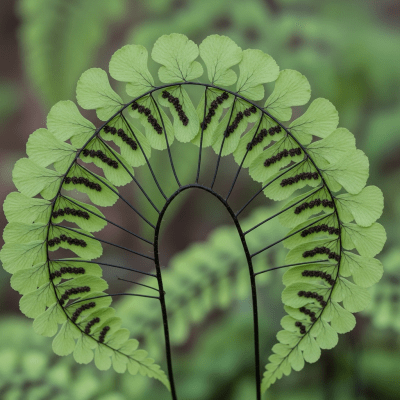
Adiantum pedatum is a perennial fern with creeping horizontal rhizomes. Its fronds are palmately divided, forming a distinctive horseshoe or fan shape. The slender, shiny black rachis and stipes contrast elegantly with light green, obovate to oblong pinnae that have gently lobed margins. Fronds typically reach 30 to 60 centimeters in length, occasionally growing up to 90 centimeters under optimal conditions.
This fern thrives in moist, shaded environments, spreading slowly through clonal expansion of its rhizomes to form loose colonies. It is widely cultivated as an ornamental plant for shade gardens and indoor horticulture due to its delicate appearance and adaptability. Ecologically, it contributes to forest understory structure and is used in native landscaping and restoration projects.
Bring this kind into your world illustrated posters, mugs, and shirts.
Archival print, museum-grade paper
Buy Poster
Stoneware mug, dishwasher safe
Buy Mug
Soft cotton tee, unisex sizes
Buy ShirtWhile Adiantum pedatum holds no prominent place in mainstream cultural symbolism, it is appreciated in horticulture for its elegant form. Some Indigenous peoples have historically noted minor medicinal uses, though these are not widely documented. The fern’s delicate beauty has inspired its use in woodland garden designs and naturalistic landscaping.
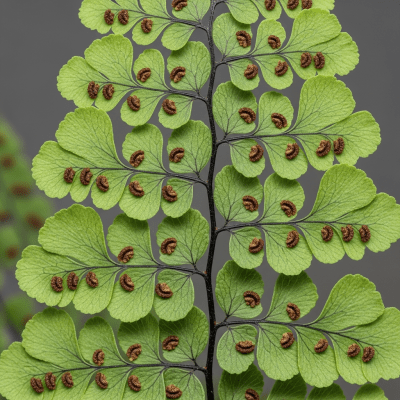
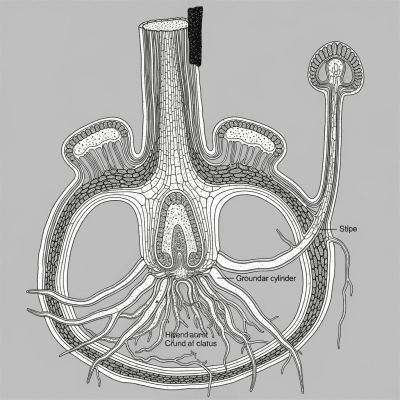
Like all true ferns, Adiantum pedatum has a life cycle alternating between a dominant sporophyte and a smaller gametophyte phase. Spores develop in sori on the underside of the pinnae, protected by reflexed leaf margins acting as a false indusium. When released, spores germinate into heart-shaped gametophytes that produce gametes for fertilization. The resulting sporophyte grows into the familiar fern plant, spreading further through creeping rhizomes to form colonies.
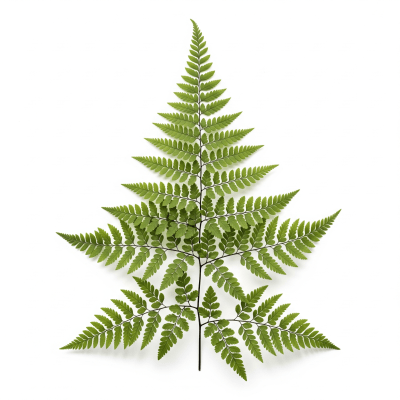
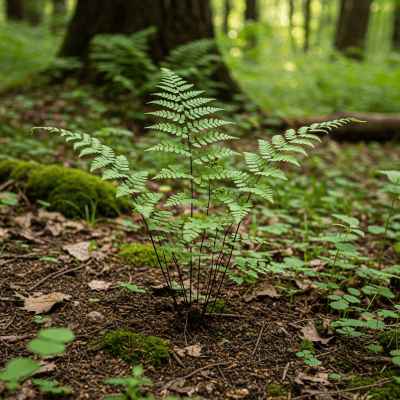
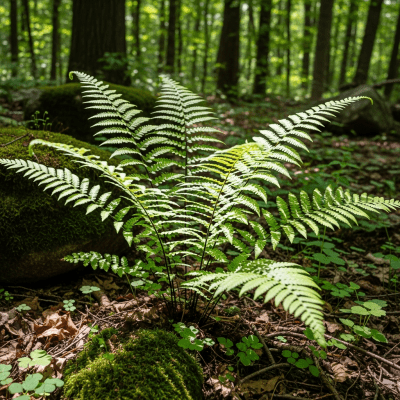
In its native forest understory, Adiantum pedatum plays a vital role in soil stabilization and moisture retention. Its presence indicates mature, undisturbed woodland habitats. By forming loose colonies, it contributes to biodiversity and provides microhabitats for invertebrates and small fauna, supporting ecosystem complexity.
Adiantum pedatum is currently assessed as Least Concern globally, reflecting stable populations across its range. However, localized rarity can occur due to habitat loss from deforestation and land development. Conservation efforts focus on protecting mature forest habitats to maintain healthy populations.
The species includes several varieties, though taxonomic opinions vary. Notably, Adiantum pedatum var. aleuticum is sometimes recognized as a separate species, Adiantum aleuticum, distinguished by subtle morphological and molecular traits. Other varieties like var. calderi and var. subpumilum are less widely accepted. No registered cultivars are prominent, but the species remains a favored choice for shade gardening and indoor plant collections.