Velvet Crab
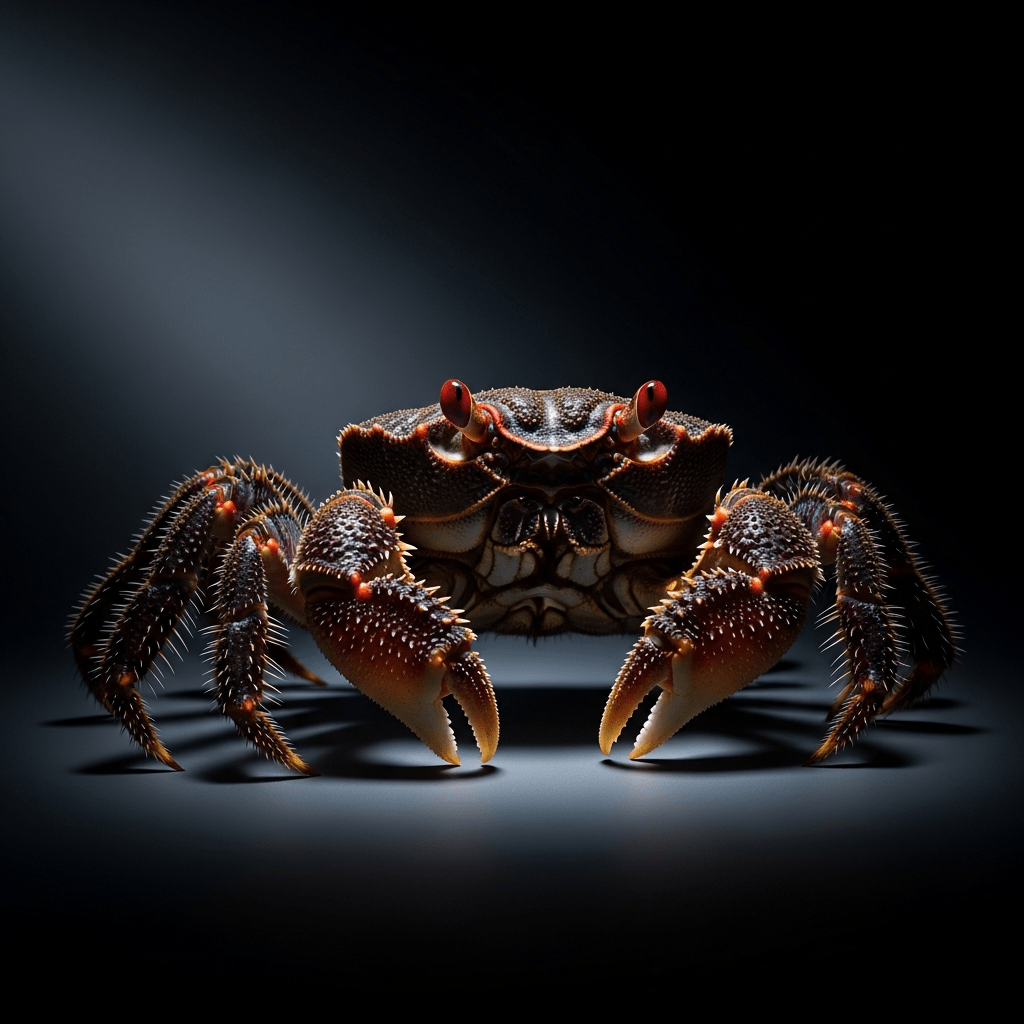
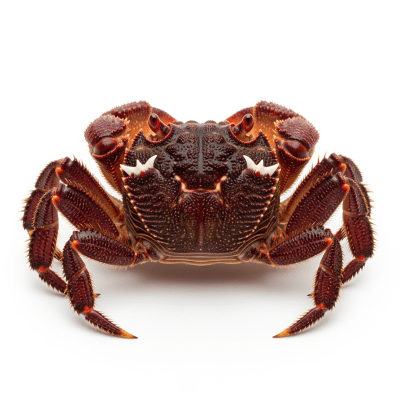
The velvet crab (Necora puber) is a medium-sized true crab native to European coastal waters, recognized for its soft, velvety carapace and striking bright red eyes.
The velvet crab (Necora puber) is a medium-sized true crab native to European coastal waters, recognized for its soft, velvety carapace and striking bright red eyes.
First described by Linnaeus in 1767, the velvet crab belongs to the family Portunidae and is the sole species in the genus Necora. It has a well-established lineage with all individuals wild-caught, inhabiting European shores without any known artificial breeding or hybridization.
The velvet crab is classified within the infraorder Brachyura, commonly known as true crabs. It resides in the family Portunidae, a group characterized by swimming crabs with flattened hind legs, and is uniquely the only species in the genus Necora.
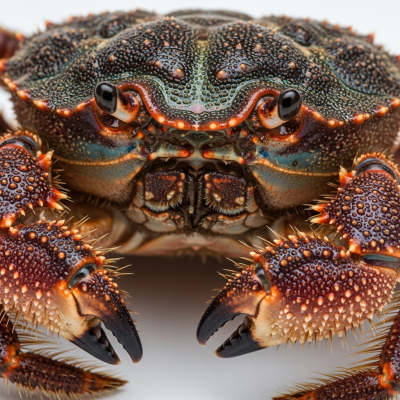
The velvet crab features a flattened, oval-shaped carapace up to 10 cm wide, covered in short, fine hairs that create a distinctive soft, velvety texture. Its dark bluish-grey shell contrasts vividly with bright red eyes. The robust claws, often tipped with blue, and flattened hind legs adapted for swimming complete its agile form.
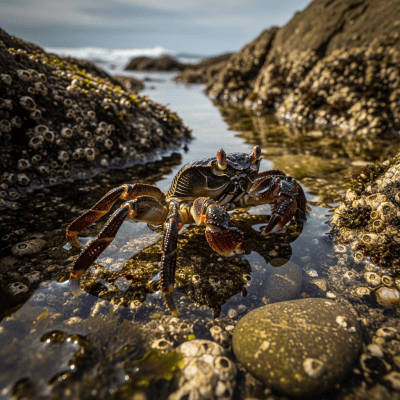
Known for its agility and aggressive nature, the velvet crab moves rapidly across rocky intertidal and subtidal zones. Its flattened hind legs enable efficient swimming, allowing it to navigate diverse marine environments. It is primarily a marine species, tolerating variable salinity and temperature conditions.
Bring this kind into your world illustrated posters, mugs, and shirts.
Archival print, museum-grade paper
Buy Poster
Stoneware mug, dishwasher safe
Buy Mug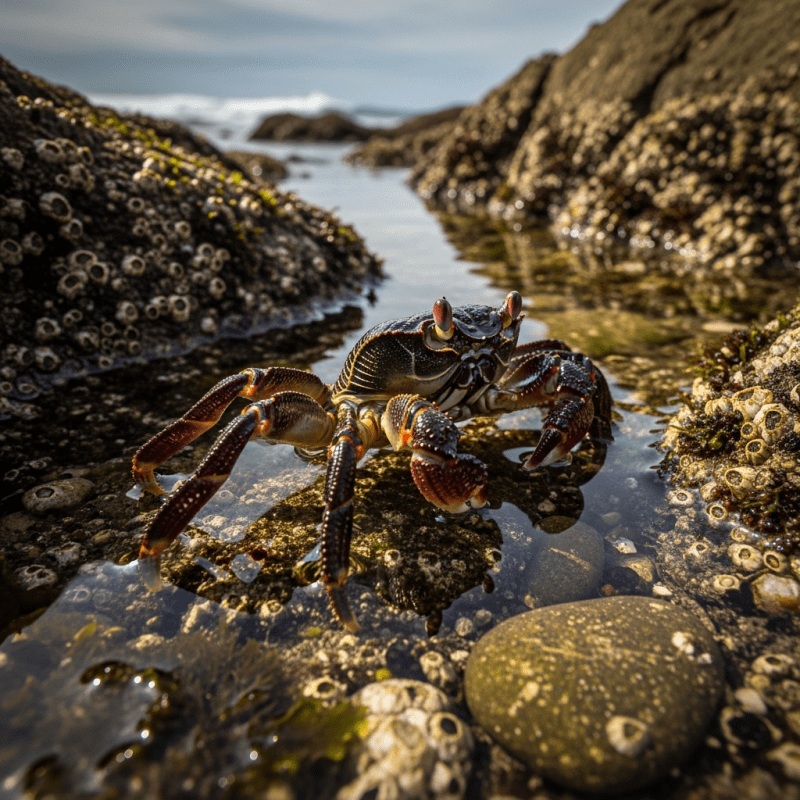
Soft cotton tee, unisex sizes
Buy ShirtIn European coastal cultures, the velvet crab holds culinary prestige, especially in Spain and France where it is celebrated in regional dishes like "nécora a la plancha." Its distinctive appearance and flavor have made it a valued symbol of local seafood heritage.
The velvet crab thrives in marine environments along European coasts, favoring rocky intertidal and subtidal zones down to depths of around 65 meters. Its ecological role includes active predation and scavenging within these habitats. Adapted to tolerate changes in salinity and temperature, it contributes to the biodiversity and balance of coastal ecosystems.

Velvet crabs grow moderately, undergoing several molts during development before reaching maturity. While specific breeding behaviors are not extensively documented, like other true crabs, they reproduce sexually with females carrying fertilized eggs until hatching. Their lifecycle encompasses larval stages in the plankton before settling to the benthic adult form.
Though not currently listed as threatened, the velvet crab faces pressures from overfishing and habitat disturbance. Strict regulations in some European regions aim to manage harvest levels and protect populations, ensuring sustainable fisheries and long-term viability.
Beyond its culinary value, the velvet crab influences local economies through commercial fisheries regulated to prevent overexploitation. It also serves as an indicator species for coastal ecosystem health, with its presence reflecting environmental conditions. Recreational fishing impact is minimal, and no aquaculture practices exist for this species.