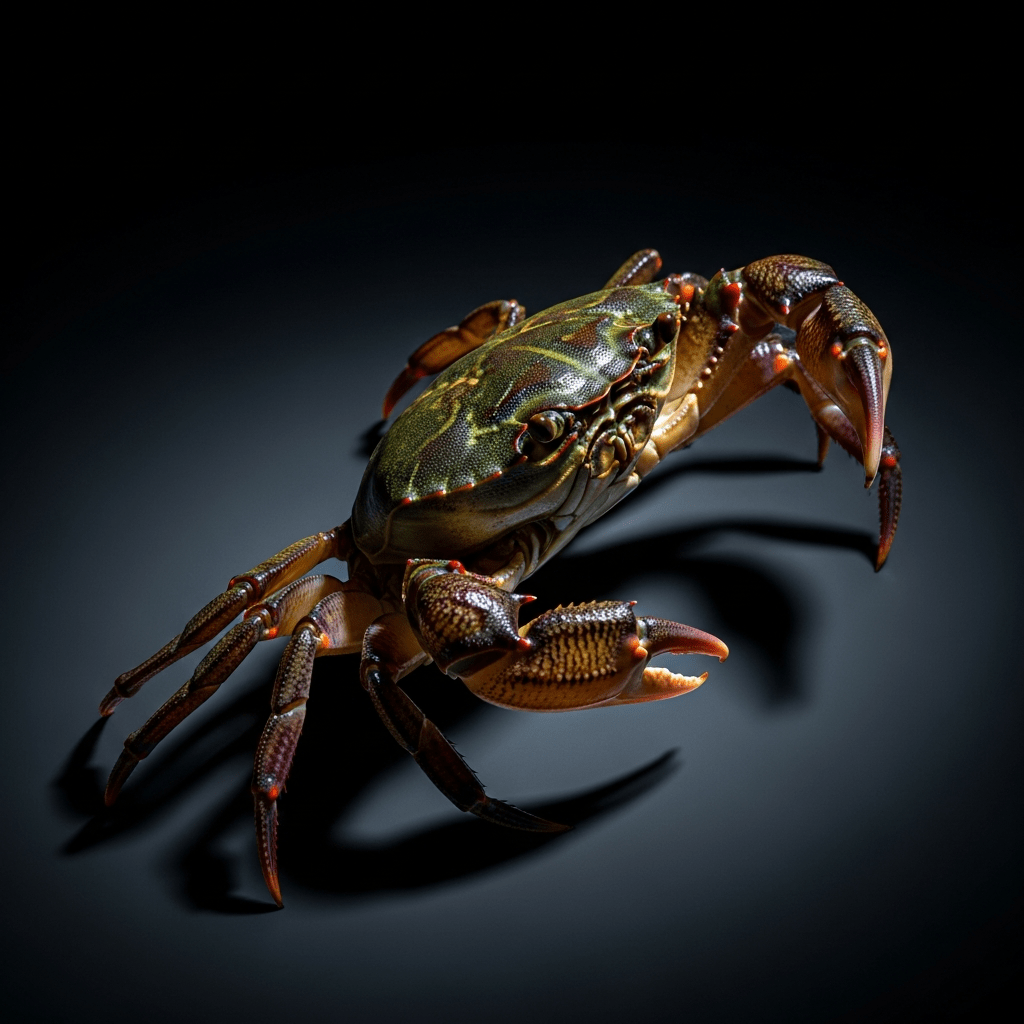
Shore Crab
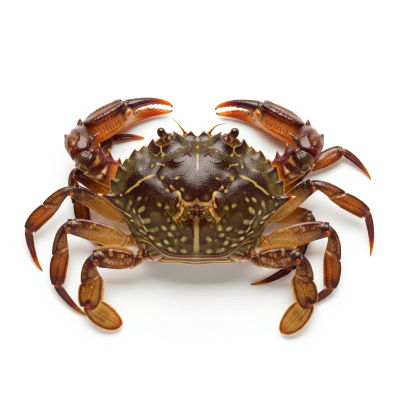
The shore crab (Hemigrapsus sanguineus) is a small, hardy true crab native to the western Pacific, recognized for its square-shaped carapace and distinctive banded legs.
The shore crab (Hemigrapsus sanguineus) is a small, hardy true crab native to the western Pacific, recognized for its square-shaped carapace and distinctive banded legs.
First described by De Haan in 1853, the shore crab originates from the coasts of Japan, China, Korea, and Russia. It was unintentionally introduced to the eastern United States in the late 1980s, likely transported via ballast water from ships, and has since spread across parts of North America and Europe.
The shore crab belongs to the family Grapsidae within the infraorder Brachyura, the true crabs. Its genus is Hemigrapsus, situating it among a group of crabs adapted to intertidal environments. This classification reflects its evolutionary relationships and morphological traits typical of shore-dwelling crabs.
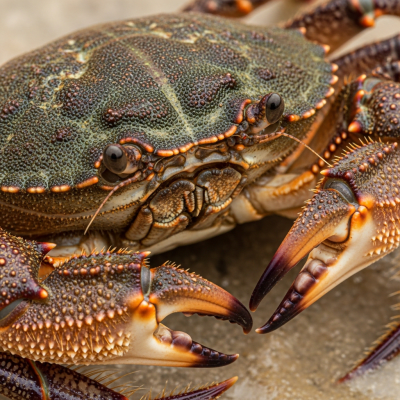
The shore crab features a square-shaped carapace up to 4 cm wide, mottled in shades of brown to green. Each side of the carapace bears three distinct lateral teeth, while its legs display characteristic purple spots and banded patterns. This compact, robust form suits its life among rocky intertidal zones.
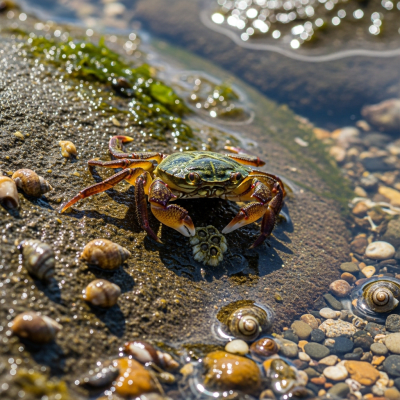
Highly adaptable, the shore crab thrives in intertidal rocky habitats and tolerates a wide range of salinities and temperatures. It is an opportunistic omnivore, feeding on algae, detritus, and small invertebrates. Its resilience and rapid growth contribute to its success as an invasive species in many regions.
Bring this kind into your world illustrated posters, mugs, and shirts.
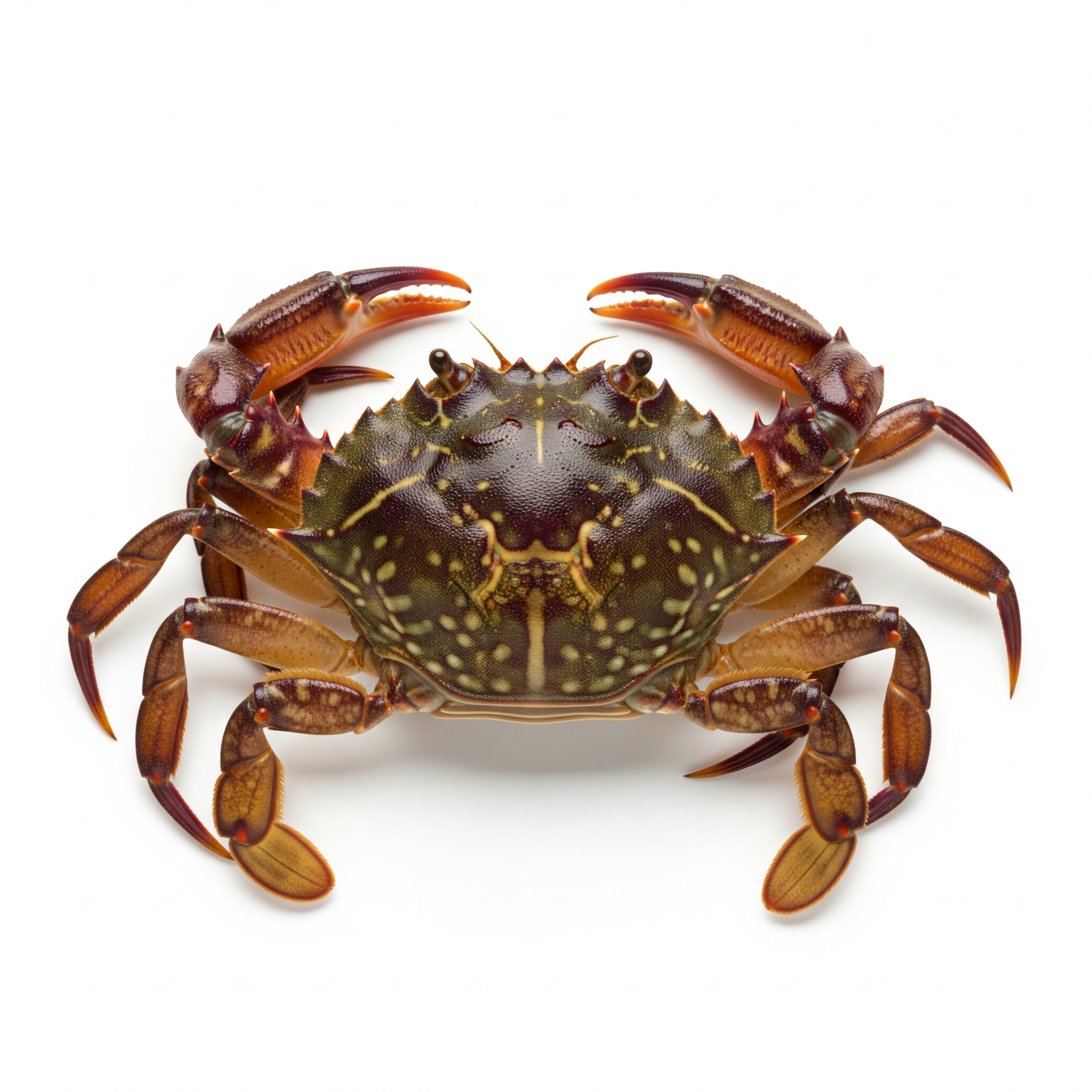
Archival print, museum-grade paper
Buy Poster
Stoneware mug, dishwasher safe
Buy Mug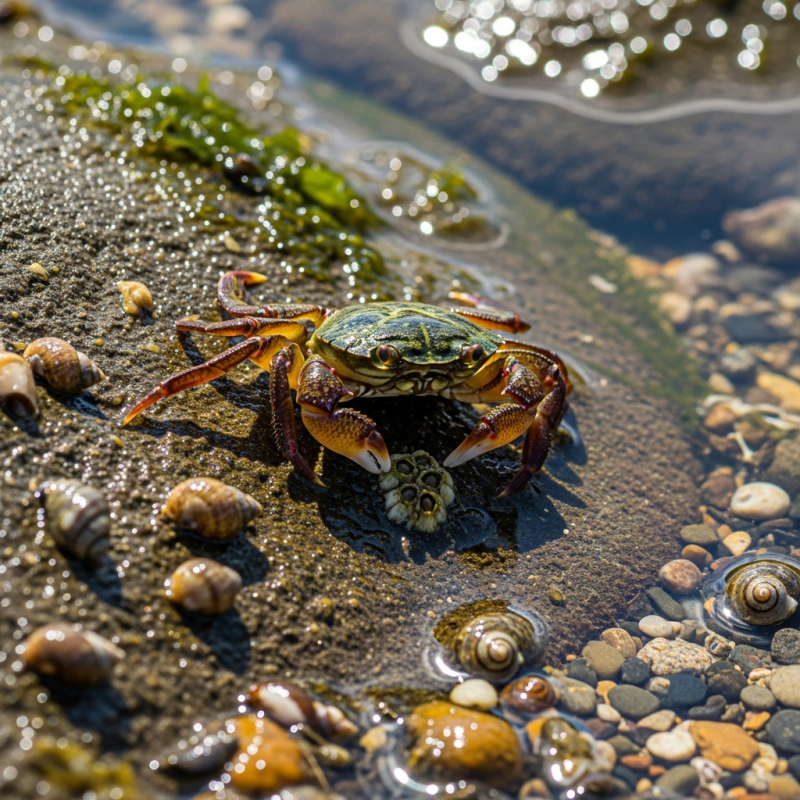
Soft cotton tee, unisex sizes
Buy ShirtWhile the shore crab holds limited cultural prominence, it is occasionally consumed locally within its native range. In invaded regions, it is more commonly noted as an ecological concern rather than a cultural symbol or culinary staple.
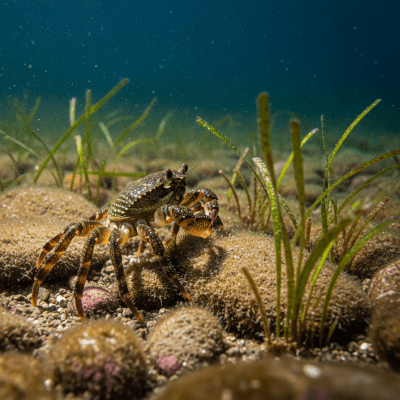
The shore crab inhabits intertidal rocky shores where it can withstand fluctuating salinity and temperature. Its ecological role includes scavenging algae, detritus, and small invertebrates, contributing to nutrient cycling. Its adaptability allows it to compete effectively with native species, sometimes disrupting local ecosystems.
The shore crab grows rapidly and can produce multiple broods annually under favorable conditions. Its lifecycle includes typical crab stages from larvae to juvenile and adult, with molting enabling growth. This reproductive efficiency supports its invasive potential and population resilience.
The shore crab is not currently considered threatened; rather, its populations are expanding in introduced regions. Its invasive nature poses challenges for native species and ecosystems, but no specific conservation measures target this species.
Beyond limited local consumption in its native range, the shore crab’s primary interaction with humans is ecological. Its invasive spread impacts native crab populations and coastal ecosystems, prompting monitoring and management efforts in affected areas. It is not commercially harvested or farmed.