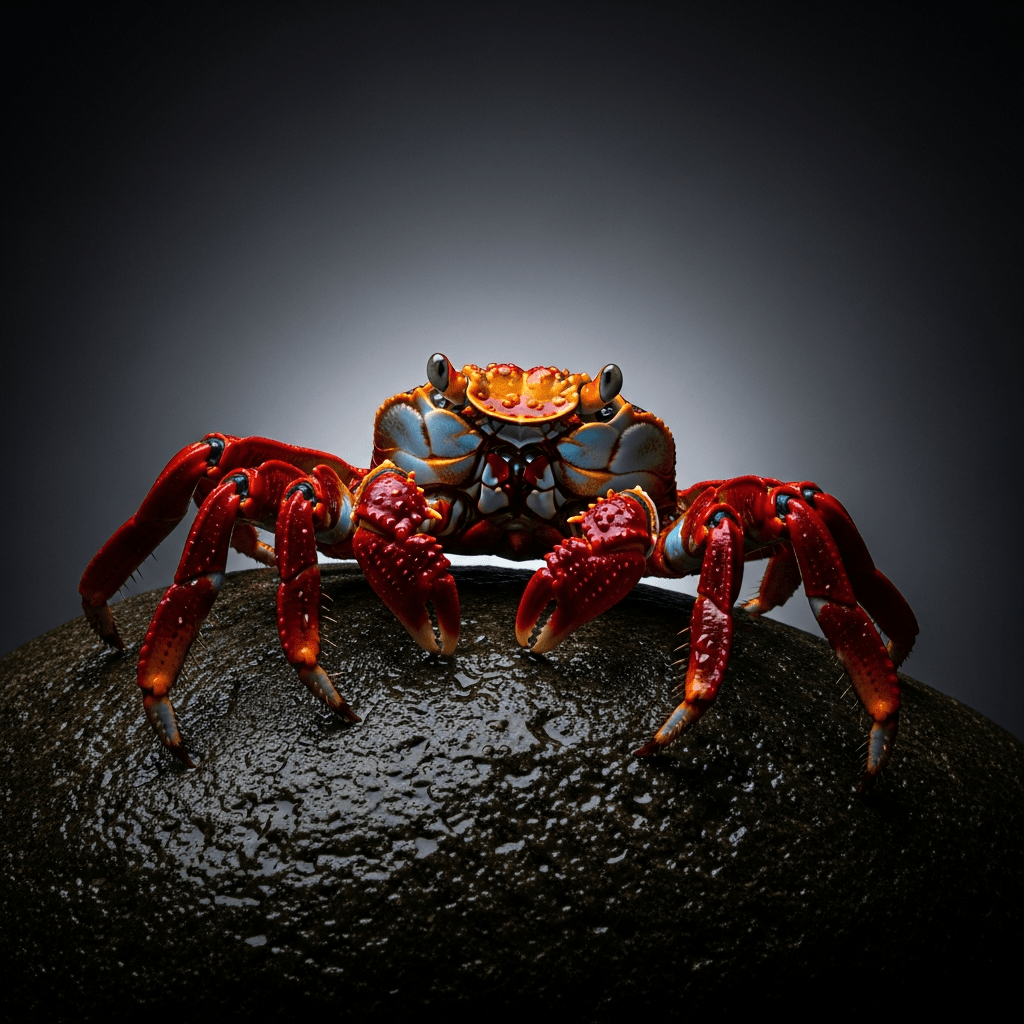
Red Rock Crab
The Red Rock Crab (Grapsus grapsus) is a vibrant, agile true crab native to the rocky shorelines of the eastern Pacific, known for its striking coloration and swift movements.
The Red Rock Crab (Grapsus grapsus) is a vibrant, agile true crab native to the rocky shorelines of the eastern Pacific, known for its striking coloration and swift movements.
First described by Carl Linnaeus in 1758, the Red Rock Crab has long inhabited the eastern Pacific coastline, ranging from Mexico to Peru and including the Galápagos Islands. It is a wild marine species with no history of captive breeding or artificial lineage.
The Red Rock Crab belongs to the family Grapsidae within the infraorder Brachyura, placing it firmly among the true crabs. Its genus is Grapsus, and its scientific name is Grapsus grapsus, reflecting its well-established taxonomic position.
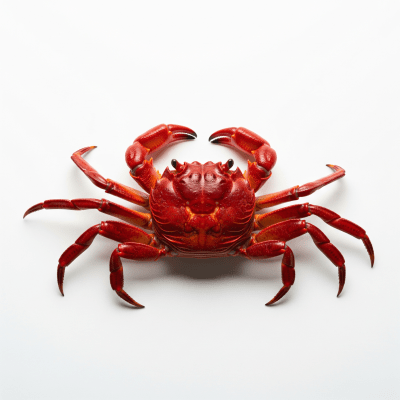
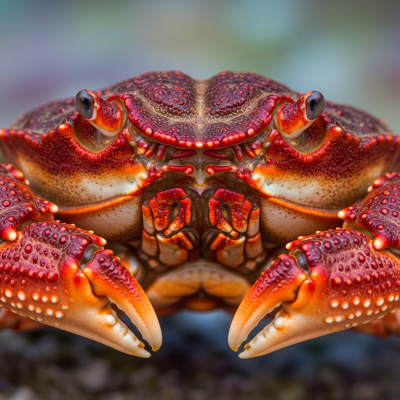
This medium-sized crab features a flattened, rounded carapace typically about 10 cm wide. Adults display vivid red, orange, and yellow hues accented with black markings, while juveniles tend to be darker and more camouflaged. Its long, slender legs are perfectly adapted for rapid movement and leaping across rocky surfaces.
The Red Rock Crab is highly agile, capable of quick scuttling and leaps to evade predators. Primarily herbivorous, it feeds on algae but also consumes detritus and occasional animal matter. Its behavior reflects an adaptation to the dynamic, wave-battered environments it inhabits.
Bring this kind into your world illustrated posters, mugs, and shirts.
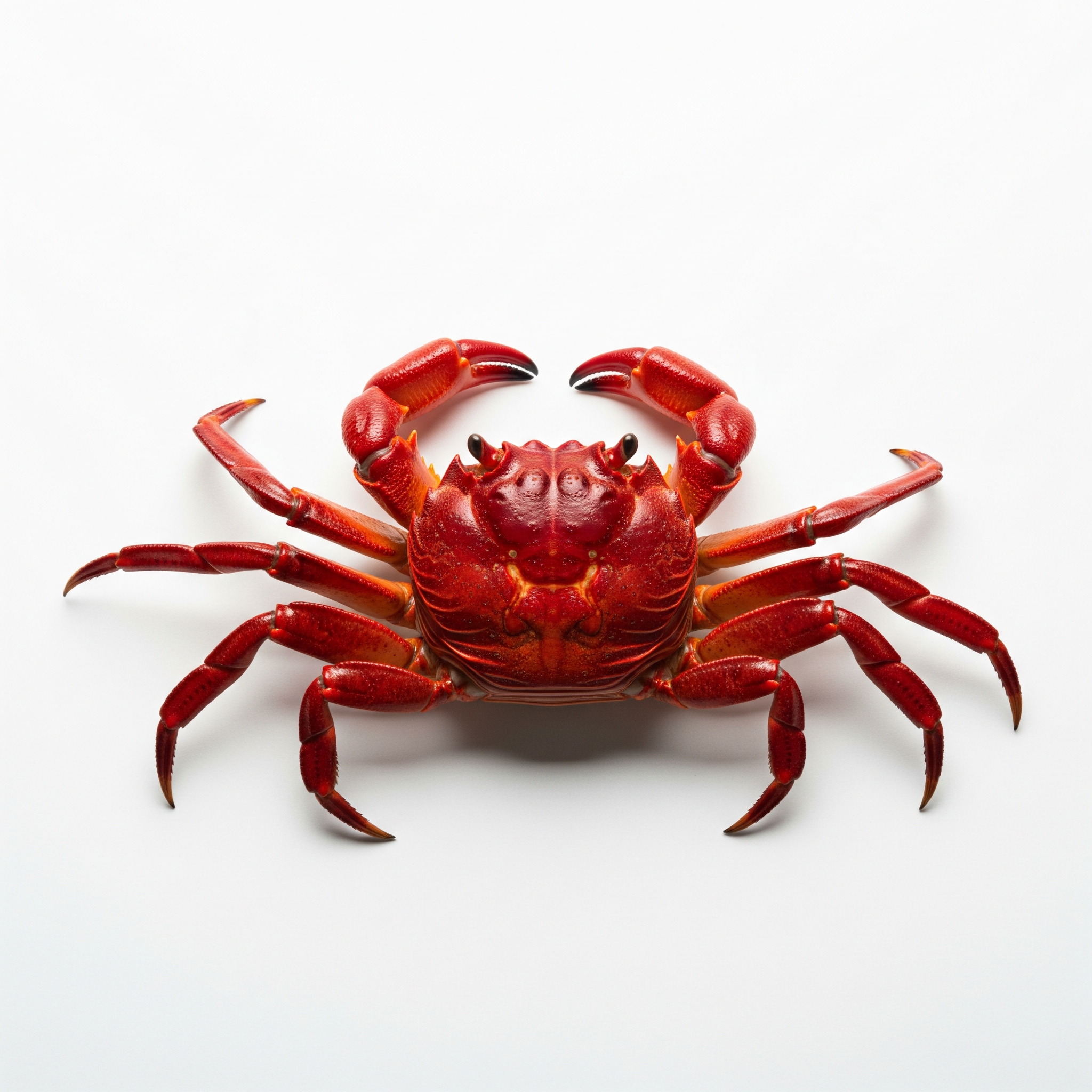
Archival print, museum-grade paper
Buy Poster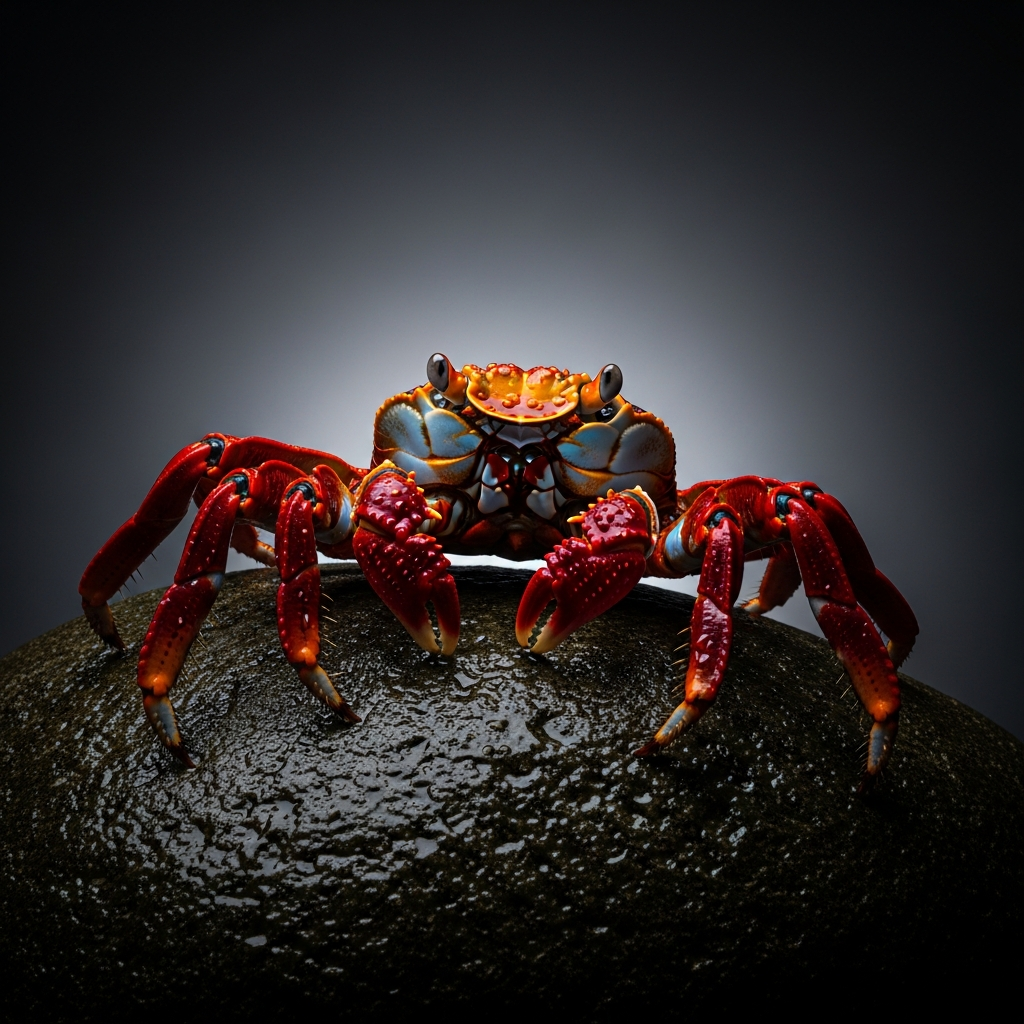
Stoneware mug, dishwasher safe
Buy Mug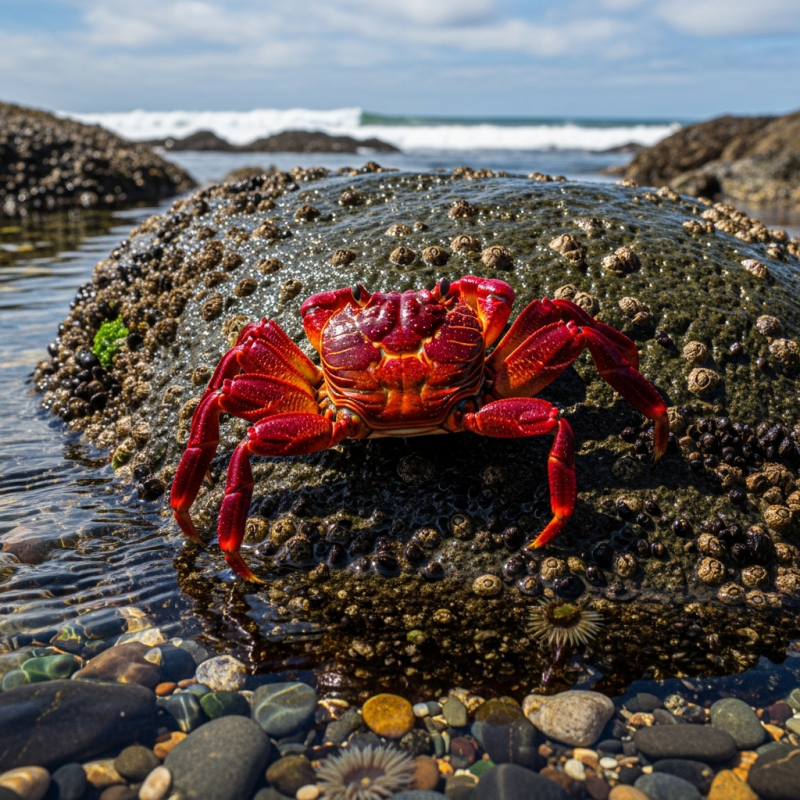
Soft cotton tee, unisex sizes
Buy ShirtWhile not a major commercial species, the Red Rock Crab holds ecological importance and serves as a popular subject for natural history enthusiasts and photographers, especially in the Galápagos Islands where its bright colors and abundance captivate visitors.
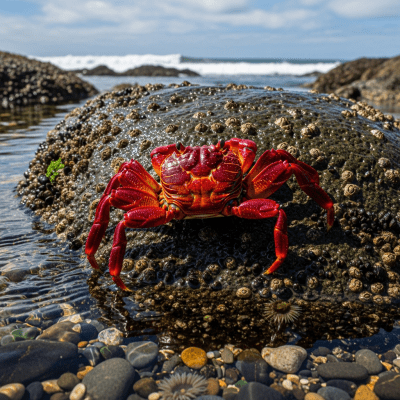
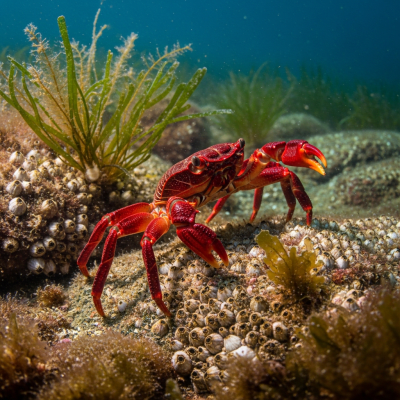
Thriving along rocky shorelines, the Red Rock Crab occupies intertidal zones where it navigates rugged terrain. It plays a key ecological role by grazing on algae, helping maintain the balance of coastal ecosystems. Its tolerance to wave action and desiccation allows it to survive in challenging, exposed habitats.
Breeding typically occurs during warmer months, with growth rates and reproductive cycles varying by region. After mating, females release larvae into the water column, which undergo several planktonic stages before settling and developing into juvenile crabs. The species matures through successive molts over its lifespan.
The Red Rock Crab currently faces no major conservation threats and is not listed as endangered. Its populations remain stable across its native range, benefiting from natural resilience and limited commercial exploitation.
Beyond occasional subsistence consumption, humans primarily interact with the Red Rock Crab through ecotourism and scientific observation. Its striking appearance draws photographers and naturalists, especially in protected areas like the Galápagos, contributing to local economies and environmental awareness.