Red Claw Crab
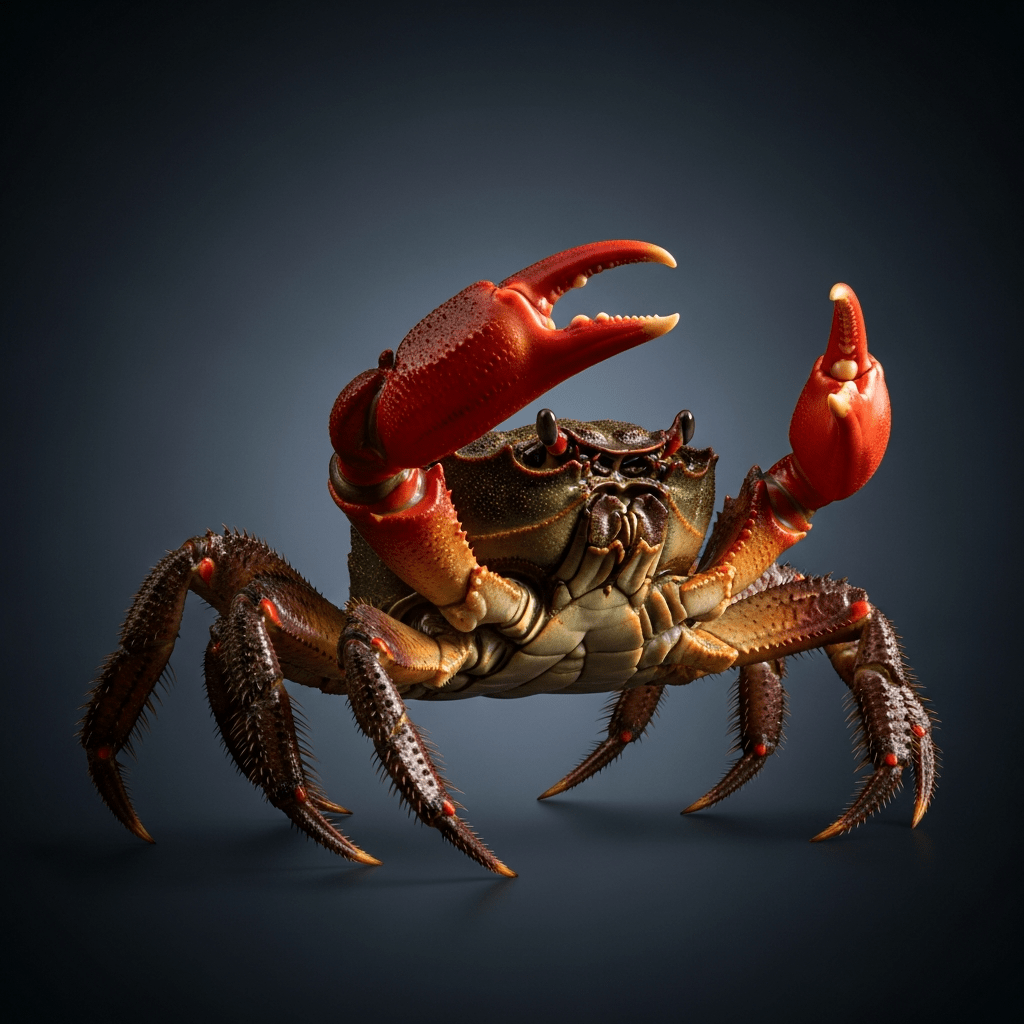
The Red Claw Crab (Perisesarma bidens) is a small, semi-terrestrial crab native to Southeast Asia, distinguished by its vivid red claws and adaptability to brackish environments.
The Red Claw Crab (Perisesarma bidens) is a small, semi-terrestrial crab native to Southeast Asia, distinguished by its vivid red claws and adaptability to brackish environments.
First described by de Haan in 1835, the Red Claw Crab originates from the mangrove and estuarine regions of Southeast Asia, including Malaysia, Thailand, Singapore, and Indonesia. Its lineage traces directly to wild populations without known breeding institutions involved in its discovery.
The Red Claw Crab belongs to the family Sesarmidae within the infraorder Brachyura, the true crabs. Its genus is Perisesarma, placing it among semi-terrestrial crabs adapted to both land and water habitats.
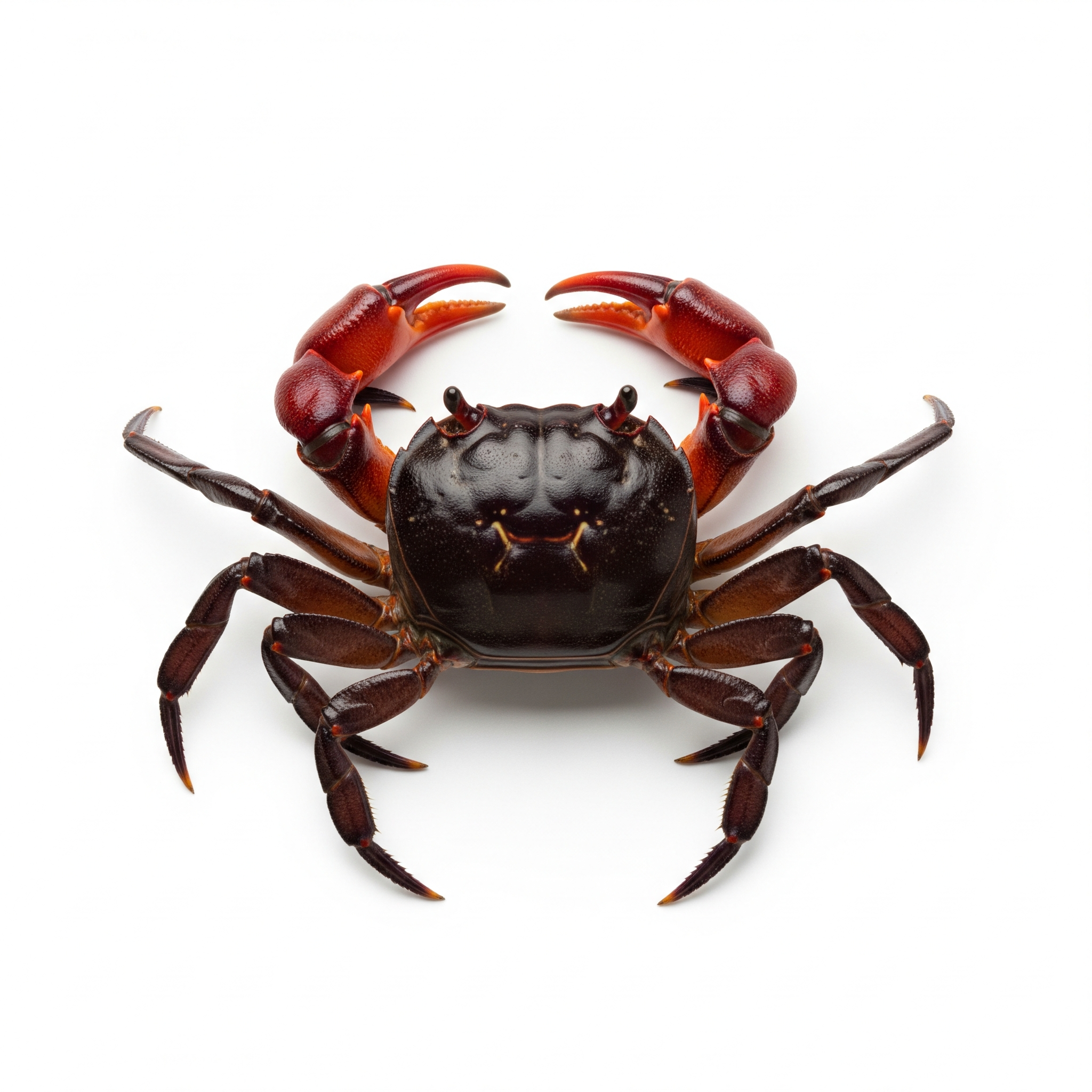
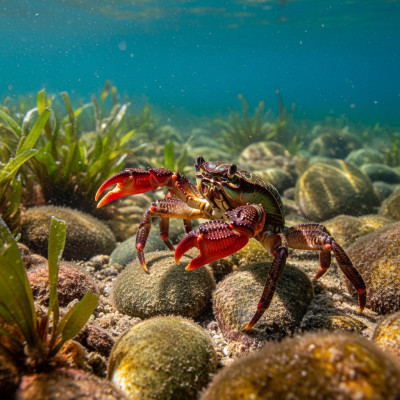
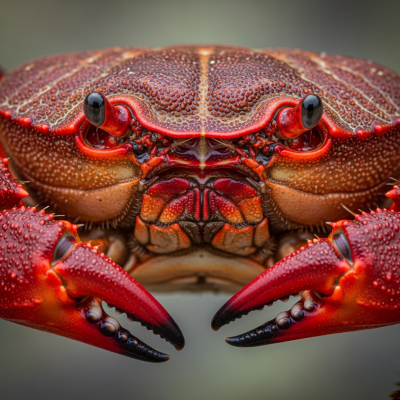
This species features a carapace up to 4 cm wide, typically dark brown to olive in color, contrasted strikingly by its bright red claws. Males exhibit larger claws than females, showcasing clear sexual dimorphism. Its compact body and agile legs support climbing and swift movement.
The Red Claw Crab is semi-terrestrial, thriving in brackish waters with salinity between 5 and 20 ppt. It is an omnivore, feeding on detritus, plant material, and small invertebrates. Known for its agility and climbing ability, it often escapes unsecured enclosures, reflecting its active and curious nature.
Bring this kind into your world illustrated posters, mugs, and shirts.
Archival print, museum-grade paper
Buy Poster
Stoneware mug, dishwasher safe
Buy Mug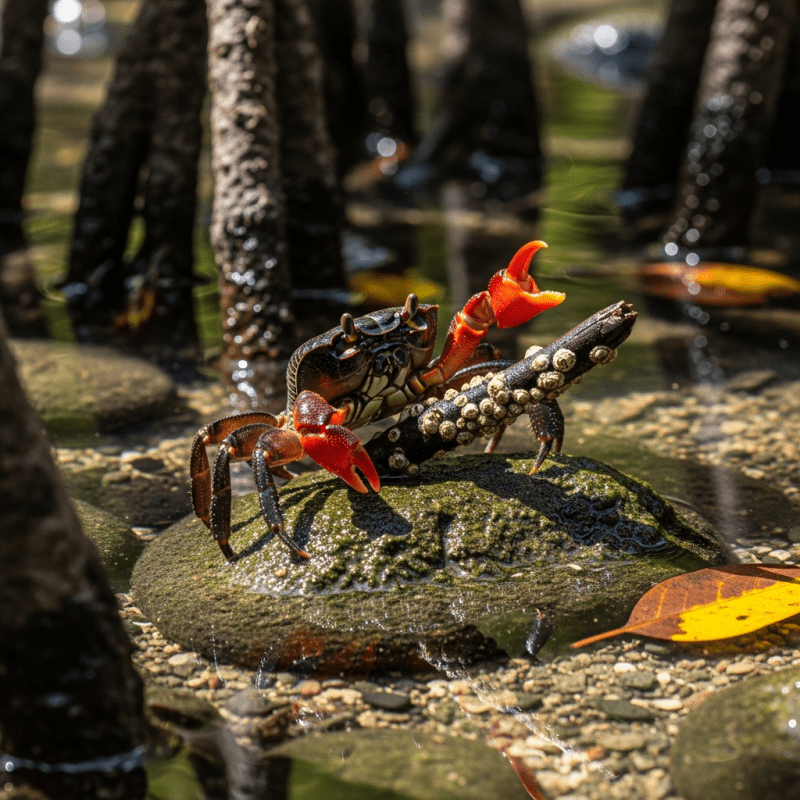
Soft cotton tee, unisex sizes
Buy ShirtWhile not prominent in traditional art or mythology, the Red Claw Crab holds cultural value within the aquarium hobby. Its vivid coloration and dynamic behavior make it a popular pet, contributing to a niche cultural presence among aquatic enthusiasts worldwide.
The Red Claw Crab inhabits mangrove forests and estuarine areas across Southeast Asia, favoring brackish waters with moderate salinity. Its semi-terrestrial lifestyle allows it to forage both on land and in water, playing a role in detritus breakdown and small invertebrate population control within its ecosystem.

Growth in the Red Claw Crab is moderate, with juveniles molting several times annually to reach maturity. While detailed reproductive behaviors are less documented, like many sesarmid crabs, it likely breeds in brackish waters where larvae develop before transitioning to semi-terrestrial life stages.
The conservation status of the Red Claw Crab remains unclear due to limited data. It faces no known major threats and is not currently listed by the IUCN. Its populations appear stable in native habitats, though habitat degradation could pose future risks.
Humans primarily interact with the Red Claw Crab through the aquarium trade, where it is prized for its striking appearance and active behavior. Beyond this, it has no culinary or commercial fishery significance. Proper care is essential, as it requires specific brackish water conditions and secure habitats to prevent escape.