Rainbow Crab
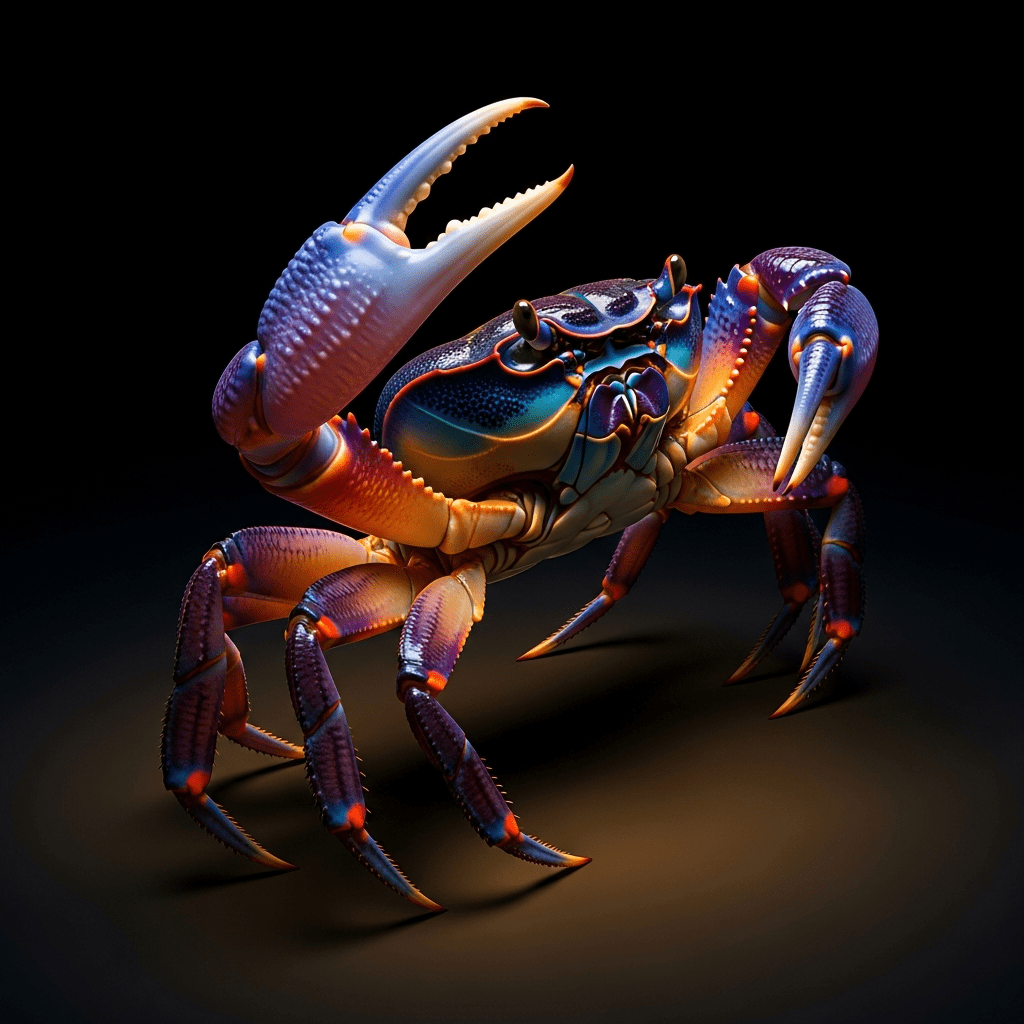
The Rainbow Crab (Cardisoma armatum) is a striking terrestrial crab native to West Africa, renowned for its vivid blue, red, and white coloration and robust claws.
The Rainbow Crab (Cardisoma armatum) is a striking terrestrial crab native to West Africa, renowned for its vivid blue, red, and white coloration and robust claws.
First described by Herklots in 1851, the Rainbow Crab originates from the coastal and inland regions of West Africa. It belongs to a lineage of terrestrial crabs within the family Gecarcinidae, with all known populations sourced from the wild and no records of artificial breeding or institutional releases.
The Rainbow Crab is classified within the infraorder Brachyura, commonly known as true crabs. It belongs to the family Gecarcinidae and genus Cardisoma, a group characterized by crabs adapted to terrestrial life. This taxonomic placement reflects its evolutionary adaptation from marine ancestors to land-dwelling habitats.
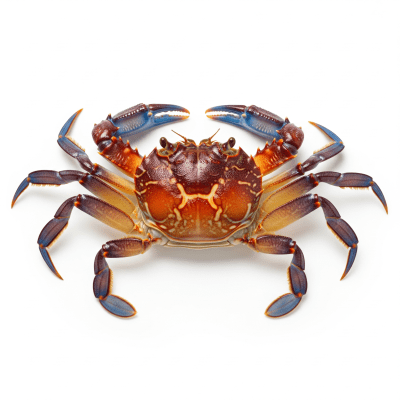
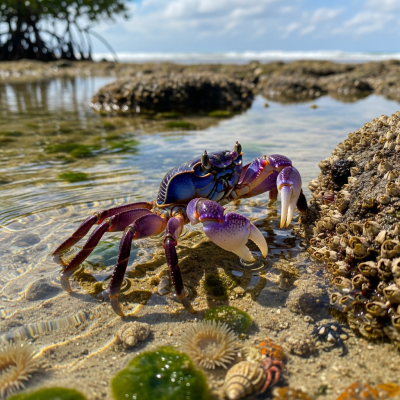
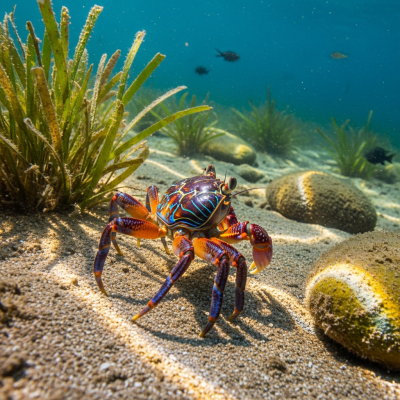
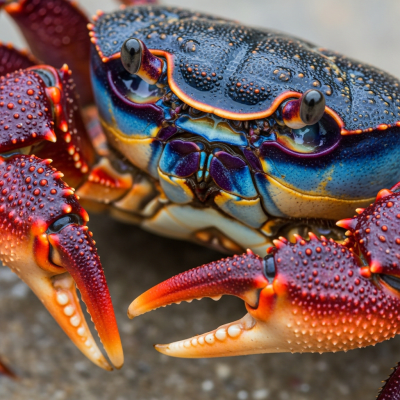
The Rainbow Crab is medium to large-sized, with adults reaching carapace widths up to 20 centimeters. Its carapace displays a bluish to purplish hue, while its legs are brightly colored in red or orange tones, complemented by a white to cream-colored underside. Juveniles exhibit even more vivid coloration. Distinctive features include its large, robust claws and aggressive posture, making it visually striking and unmistakable.
This species exhibits aggressive territorial behavior and is primarily terrestrial, inhabiting burrows near freshwater sources. Despite its land adaptation, it returns to water for breeding. The Rainbow Crab is omnivorous, feeding on plant material, detritus, and small animals, and demonstrates rapid growth with regular molting during early life stages.
Bring this kind into your world illustrated posters, mugs, and shirts.
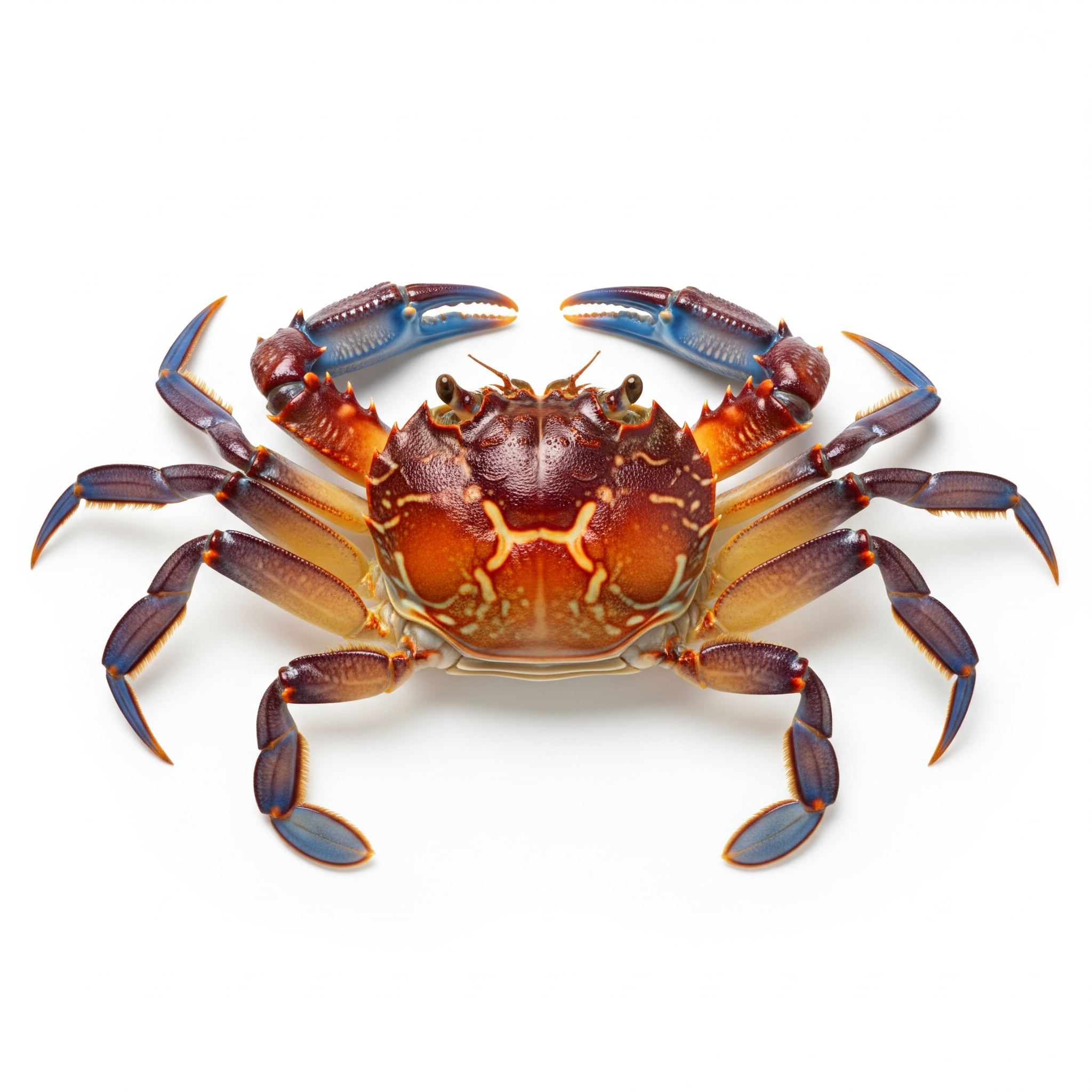
Archival print, museum-grade paper
Buy Poster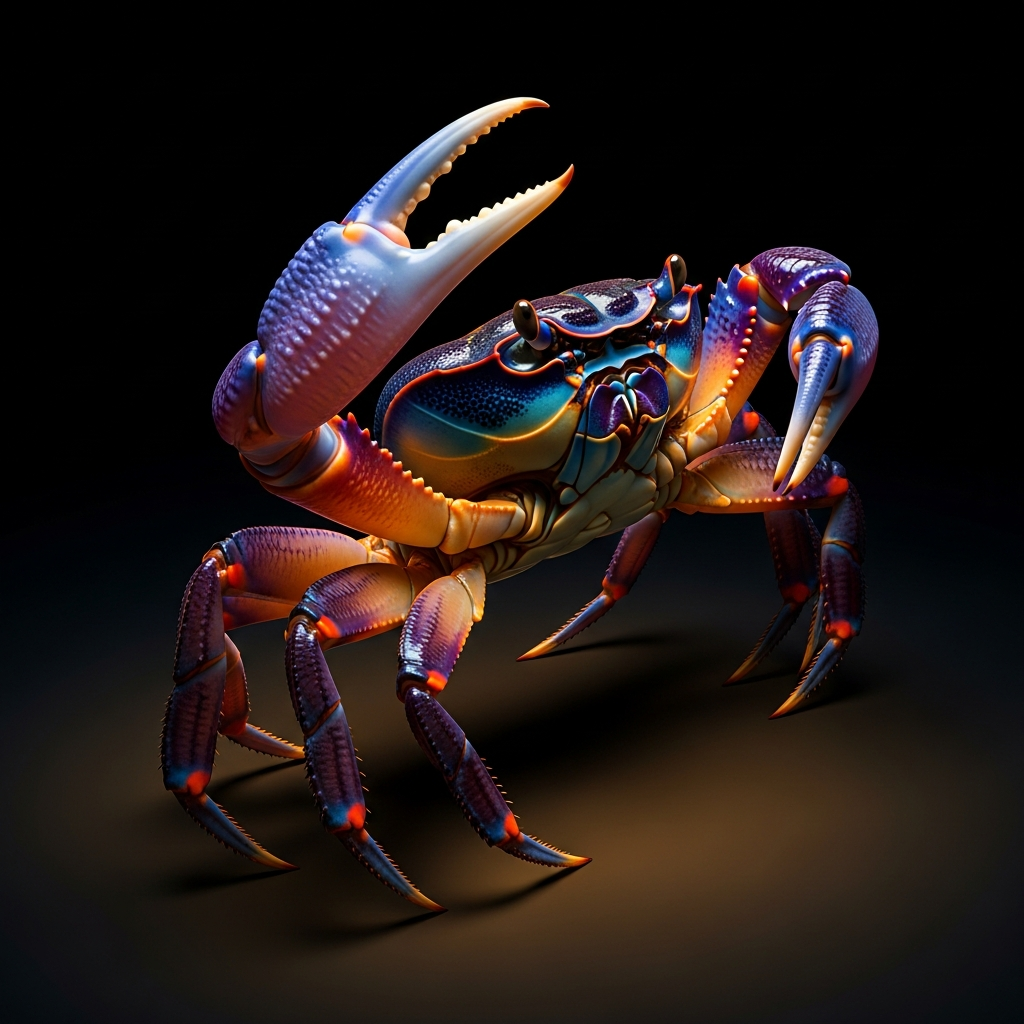
Stoneware mug, dishwasher safe
Buy Mug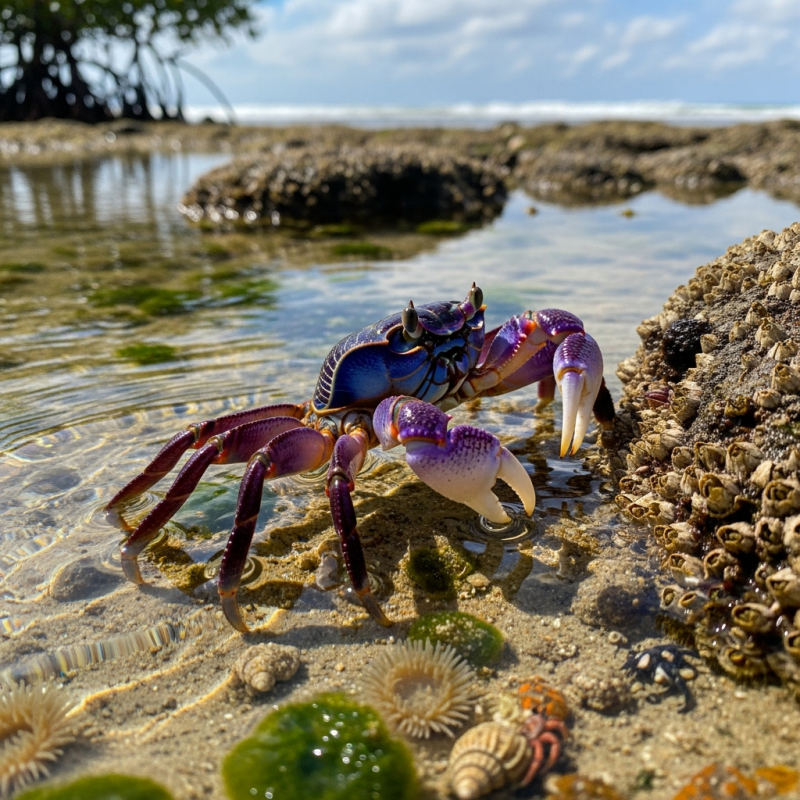
Soft cotton tee, unisex sizes
Buy ShirtWhile not widely consumed as food, the Rainbow Crab holds cultural interest mainly as an ornamental species in the pet trade. Its vivid coloration and terrestrial habits have made it a popular choice for home aquaria and vivaria, especially across Europe and North America, where it is admired for its unique appearance and behavior.
The Rainbow Crab inhabits coastal and inland regions of West Africa, favoring terrestrial burrows near freshwater sources. Its ecological role includes omnivorous feeding on plant matter, detritus, and small animals, contributing to nutrient cycling in its habitat. It tolerates variable humidity and temperature but is vulnerable to desiccation and water pollution, highlighting its dependence on a balanced terrestrial-aquatic environment.
The Rainbow Crab breeds by returning to aquatic environments despite its primarily terrestrial lifestyle. It experiences rapid growth during early life stages, with regular molting to accommodate its increasing size. Juveniles display more vivid coloration than adults, and the species’ lifecycle involves burrowing behavior that supports survival and territoriality throughout its development.
The Rainbow Crab currently lacks a formal conservation assessment by the IUCN. While it faces vulnerabilities from habitat desiccation and water pollution, there are no documented large-scale threats or protective measures. Its populations remain wild-sourced, with no known artificial breeding programs, suggesting stable but unmonitored status in its native range.
Humans primarily interact with the Rainbow Crab through the pet trade, where it is valued for its vibrant colors and terrestrial nature. Exported live specimens are popular in home aquaria and vivaria, especially in Europe and North America. Unlike many crabs, it is not widely harvested for food, and there is no commercial aquaculture. Its presence in the pet market highlights human appreciation beyond culinary use.